Migration

‘European values’ won’t last long without national borders

Fascinating events in Hungary where Prime Minister Viktor Orban continues to come under fire from other EU member states for trying to maintain what we used to call ‘borders’. This has now led Orban into direct confrontation with Hungary’s richest export – billionaire financier George Soros.  Orban identifies Soros as being one among a number of ‘activists’ whose organisations share part of the blame for encouraging migrants to come to Europe and for lobbying Europeans to regard borders and sovereignty as things of the past. Soros has now responded in a most illuminating manner, confirming that the many groups he funds are indeed working for precisely the ends Prime Minister Orban described.

Germany’s dark night of the soul

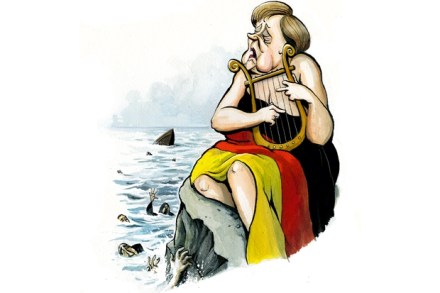
As Angela Merkel approaches her tenth anniversary in power, Germans are talking about a possible Kanzlerinnendämmerung — a ‘twilight of the chancellors’. Anger is growing at Merkel’s handling of the migration crisis. Germany, which has only recently reconciled itself to the idea that it is a ‘country of immigration’, must now integrate vast numbers of asylum seekers, beginning with the million who are expected to arrive this year. At the same time, the country has been hit by two huge corruption scandals, involving Volkswagen and the DFB, the German football federation. The odds are that Merkel will survive — it’s hard to see at the moment who can replace her.

The EU is sucking up to Turkey to help reduce migration – but it could seriously backfire

You might have thought, mightn’t you, that a million arrivals in a year to a single European country, Germany – well, more than 800,000 and counting – would be enough to be going on with, wouldn’t you? After that, you wouldn’t actually be going out of your way to solicit more incomers into Europe in the long term, even if you were going to be sensible about the influx and were admitting refugees on a purely temporary basis until they could safely return home? But that’s not how the EU works. Turkey at present hosts about two million refugees, mostly from Syria.  EU governments would obviously prefer them not all to come here.

Merkel’s folly

[audioplayer src="http://rss.acast.com/viewfrom22/merkelstragicmistake/media.mp3" title="James Forsyth and Holly Baxter debate Merkel's offer to Syrian refugees" startat=38] Listen [/audioplayer]Of all the irresponsible decisions taken in recent years by European politicians, few will cause as much human misery as Angela Merkel’s plan to welcome Syrian refugees to Germany. Hailed as enlightened moral leadership, it is in fact the result of panic and muddled thinking. Her pronouncements will lure thousands more into the hands of unscrupulous people-traffickers. Her insistence that the rest of the continent should share the burden will add political instability to the mix. Merkel has made a dire situation worse.

The truth? Most people don’t want more refugees coming to Britain

I had intended to write something about the refugees, the migrants, for this week’s magazine – but we were well covered on that score. So I wrote about some lesbians instead. What I would have done was marvel at the Dianification of the issue. A potent process which somehow causes politicians to lose grip on common sense; Europe wide, one might add, apart from that singularly sane chap in Hungary. And yet it is not quite Dianification. It is nowhere near the whole country (if indeed it ever was with Diana; a moot point). An opinion poll, broadcast by a plainly incredulous and disgusted BBC, showed that the majority of people in the UK did not want to see more borders opened and more refugees/migrants admitted to the country.

The Great Migration is a sign of increasing wealth, not abject poverty

The migration crisis is about more than Syria. A few weeks ago, Theresa May repeated one of the biggest mistakes in politics: thinking that third-world development will somehow mean fewer migrants. In a Daily Telegraph article, she argued that:- ‘We must help African countries to develop economic and social opportunities so that people want to stay.’ Give aid, not shelter, runs the argument – and she’s not the first to make it. ‘As the benefits of economic growth are spread in Mexico,’ Bill Clinton once assured Americans, ‘there will be less illegal immigration because more Mexicans will be able to support their children by staying home.

The Tories are playing a risky game with their ‘hostile environment’ policy on migration

It comes to something when the rather bizarre Labour leadership contest forces David Cameron to defend his government’s approach to the refugee crisis. Yesterday Yvette Cooper described ministers’ refusal to take more refugees as ‘cowardly’ and ‘immoral’, and today the Prime Minister insisted that ‘I don’t think there is an answer that can be achieved simply by taking more and more refugees’. He said: ‘We have taken a number of genuine asylum seekers from Syrian refugee camps, we keep that under review, but we think the most important thing is to try to bring peace and stability to that part of the world.’ Incidentally, the Prime Minister’s favourite economist Paul Collier offers his solution to the crisis here.

Sorry Owen Jones, but your moral grandstanding won’t solve the migrant crisis

I’m getting tired of the self-righteousness of Owen Jones. His response to the terrible spate of deaths of people fleeing Syria and Africa is to imply that if only everyone were as moral as him, the problem would be solved. He seems to think that the key cause of these people’s deaths is that many people in Britain call them by the wrong word. To call them 'migrants', he says, shows a total disregard for their humanity. 'Those of us who want more sympathetic treatment of people fleeing desperate situations have failed to win over public opinion, and the cost of that is death.'  The implication is that if his right-on attitude was shared by all of us, the deaths would be avoided. This strikes me as completely nuts.

The Tories should have dropped their net migration target long ago

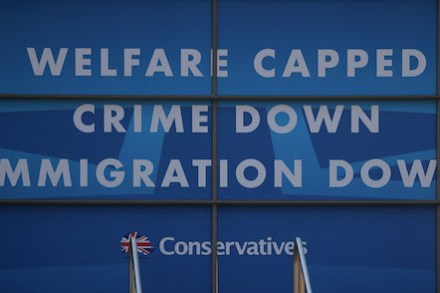
It’s fair to say the Tories won’t be recycling their ‘immigration down’ posters for this year’s autumn conference. Net migration in the the year to March 2015 was 330,000, which is an all-time high and a 28 per cent increase on the previous year. John examines these stats here. The funny thing is that the Conservatives have made this news bad news by re-committing to their pledge to drive net migration down into the tens of thousands. They had no evidence that they would have any better chance of meeting it after the election than they did beforehand, but they stuck with it in what appears to have been a rather stubborn fashion. They should have dropped it long ago.

Immigration hits a record high

There must be an element of masochism in Theresa May that leads her to promise the electorate something she cannot give them: net migration in the tens of thousands. Figures released today show that the balance of people coming into the county rose to 330,000 in the year to March 2015, putting the Home Secretary further than ever—further than any Home Secretary in history—from the target. [datawrapper chart="http://static.spectator.co.uk/6xuHX/index.html"] An increase of 84,000 in the number of people coming the UK, and a fall of 9,000 in the number of people leaving the country made up the 94,000 increase in net migration on the previous year. The balance of migrants from within the EU increased by 53,000 to 183,000.

High life | 13 August 2015

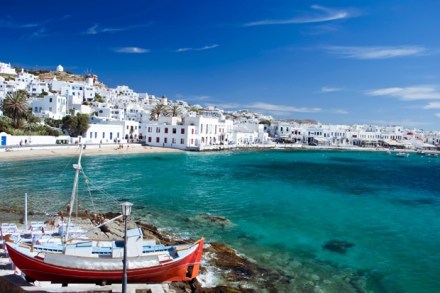
The wind is maddening and constant, and gets stronger as the sun falls below the horizon. The streets are lined with plastic and rubbish, the beaches covered with greasy bodies and sunbeds, and ghastly music blasts away all day and night. Motor scooters without mufflers and cars choke the tiny roads that lead to the centre of town, where literally thousands of sunburned young people wearing expensive rags down tequilas with a thousand-mile look on their unshaven faces. Welcome to Mykonos, once a brothel of an island, now reverting to type after 30 years as a gay paradise. I am on a 125-foot schooner, the Aello, which was built in Hamburg, Germany, in 1921, by Max Oertz, and commissioned by Anthony Benakis, a great Greek benefactor.

Who’s running Libya?

When I covered Libya’s revolution in 2011, I had a driver named Mashallah. Mashallah was a decent and stoical man with an interesting propensity for malapropisms. He was regarded with fondness by us journalists — so when I decided to return to Libya recently, I sent him an email: did he want to work for me again? Unfortunately, replied Mashallah, he was in Paris. This seemed strange. How would he have got a French visa? I emailed again suggesting another week and received another profound apology. That week he was going on to Ankara and Istanbul. A quick look online solved the mystery.

A real rescue plan

[audioplayer src="http://rss.acast.com/viewfrom22/howtofixtherefugeecrisis/media.mp3" title="Paul Collier and Douglas Murray discuss how to fix the migrant crisis" startat=32] Listen [/audioplayer]For all its difficulties, Europe is prosperous and safe: one of the best places on Earth. Many other societies have yet to achieve this happy state: some are murderous and poor. Two of the most troubled zones in the world are near Europe: the Middle East, and the Sahelian belt which spans northern Africa. Unsurprisingly, many of the people who live in these societies would rather live in Europe. Impeded by immigration controls, a small minority of this group are taking matters into their own hands, trying to enter Europe illegally by boat across the Mediterranean.

The madness of the Royal Navy’s rescue mission

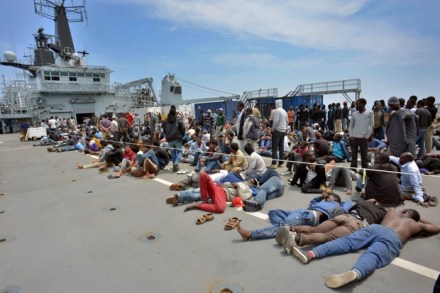
There is a genuine madness in our current operation to ferry as many asylum seekers as possible from North Africa to, eventually, the UK. As I mentioned at the time we dispatched the Royal Navy to the southern Med, we will only encourage more and more people to set sail in upturned bath-tubs and patched-up lilos. Among them will be maniacal jihadis and assorted criminals, all expecting to be rescued by the countries which, in some cases, they wish to destroy. For the ordinary non-jihadi citizens it means a jumping of the queue over those who attempt to gain access to the imperialist west legally. For a fuller exposition of this problem I would direct you to Max Hastings’s article in the Daily Mail. Max also deals with the effect upon our depleted armed services.

Migrants face many dangers. Are we one of them?

A few weeks ago someone very dear to me passed on a question about The Spectator, asked them by a friend. The friend, who I know and like, had read Douglas Murray’s recent report from Lampedusa about the poor Med-faring migrants, and her question was this: ‘Is everyone at The Spectator a racist?’ Some insults brush past without leaving a mark, others pierce the skin and sink in. This one sunk like a splinter, and like a splinter I’ve been worrying away at it ever since, turning what was a small injury into a painful, bloody mess. I can dismiss the accusation easily enough — the Spectator office is multi-racial, the magazine’s editorial line consistently pro-immigration. It’s the questioner who haunts me.

Start-up culture in Ancient Greece

Honduras wants to establish start-up cities to experiment with alternative economic, regulatory, and legal systems. Could this concept help stop mass migration into Europe? Ancient Greeks, living in a time and place when poverty was endemic, were adventurers and readily took to the seas to establish their start-ups abroad, all around the coasts of the Mediterranean. These apoikiai (‘homes from home’), far from being ‘colonies’, were in fact new, wholly independent Greek cities. They were variously motivated by e.g. the search for fertile farming land and profitable raw materials, trade in slaves, metals and luxury goods, proximity to and therefore business with non-Greeks, and so on. They spread around the Med ‘like frogs around a pond’ (Plato).

The people from the sea

 Lampedusa The young hang about in packs or speed around town, two to a scooter. Old women group together on benches around the town square in front of the church. The men continually greet each other as though they haven’t met for years. The likelihood is small. With fewer than 6,000 inhabitants, and as close to Libya as it is to Italy, Lampedusa is the sort of place from which any ambitious young Italian would spend their life trying to escape. Yet every day hundreds and sometimes thousands of people are risking their lives to get here. ‘Please tell people we have nice beaches,’ one islander pleads.

The EU’s asylum policy is to blame for the tragedy unfolding in the Mediterranean

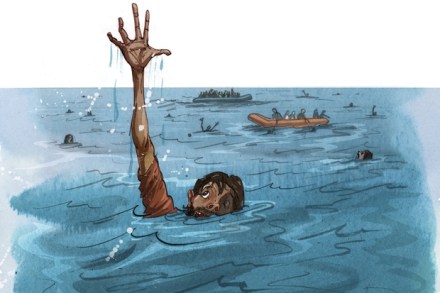
As the leading article in The Spectator this week pointed out, thousands of people are fleeing war and anarchy in Africa and setting sail across the Mediterranean bound for Europe. The latest tragedy comes today, after a boat carrying between 500 and 700 migrants from Libya capsized. So far, only 28 people have been rescued. Coaxed by traffickers who demand huge sums, refugees have been piling into rickety boats which often disintegrate en route. Aid groups, human rights activists, the pope and the EU itself all say the EU-funded rescue operation Triton is inadequate. Well, they're right in a way, but they're also missing the point. The real culprit isn't Triton but the EU's tragic asylum and immigration policy.

Isis’ European recruits are made by alienation

Sweden’s latest attempts to integrate its migrant population have suffered one or two hiccups after it was learned that staff at its ‘assimilation guide service’ were recruiting people into the Islamic State. A partial success, then. According to a recent BBC report, the Scandinavian country now tops the European jihadi league, although others give Belgium that honour. Presumably all those Swedes joining the Islamic State have been radicalised by their country’s relentless military aggression; after all we’re always being told British foreign policy is to blame for our extremism problem.

Never mind Ukip’s immigration policy, Britain has an emigration problem

Ukip has unveiled its new Aussie-style immigration policy, just a week after the latest bad immigration news for the government. The news was bad only in a sense, as high immigration levels are a symptom of a healthy economy; after all, the Venezuelan government doesn’t break into a sweat every time the immigration figures come in, thanks to the genius of Chavenomics. But it’s all bad news for the Tories because most people would like restrictions on the rate of population growth, and of immigration-led social change, and the government made promises it clearly couldn’t keep.