Mexico

The World Cup’s critics must give it a chance

There has been so much controversy in the run-up to the 2026 World Cup that it is sometimes easy to forget that it is actually a soccer tournament. That is why it is something of a relief that the competition is finally underway, allowing fans to focus on the game itself rather than all the off-field goings on. The 2026 competition is being played in North America with thousands of fans descending on the United States, Canada and Mexico to watch their national teams in action. It features 16 host cities, 48 teams, and 104 matches. It amounts to a stupendous orgy of soccer excess. Even so, the build-up to this tournament has been markedly ugly and increasingly politically-charged, despite FIFA’s attempts to paint it as a unifying global event.


world cup
tequila

Tequila slammers all around!

“Tequila, it makes me happy, / Con Tequila it feels fine” goes the student anthem by Terrorvision. It is midnight, somewhere around the turn of the new millennium, and we are on the sticky dancefloor of a grotty union bar in Edinburgh, but it could be Bristol, Cambridge or Newcastle. You get the picture. The song is greeted by whoops and an influx of revelers throwing drunken shapes. Meanwhile, some bastard in your friendship group who’s feeling flush is already elbowing his way to the bar to spank part of the student loan that’s just hit his account on a bottle of José Cuervo tequila, shot glasses, lemons and salt. Slammers all round! Bleurrggghhhhh.

Mexico, the Catholic Church & the rise of the cartel cults

30 min listen

Friend of Holy Smoke Fr. Alexander Lucie-Smith joins Damian Thompson to talk about the complicated relationship between the drug cartels in Mexico and the Catholic Church. The violence of the cartels has led to a flourishing of shrines – and also cults – which have seen Catholic and pagan beliefs fuse together, and which are not always condemned by all church leaders. What motivates the Mexicans who turn to these beliefs? And what does Mexico tell us about corruption across the wider Church? Produced by Patrick Gibbons.

Mexico, the Catholic Church & the rise of the cartel cults

The sham shaman: the fantastic lies of Carlos Castaneda

On a day in the early spring of 1998 I found myself sitting in a hotel room in Hollywood waiting to hear whether or not I would be interviewing Carlos Castaneda. He was the author of The Teachings of Don Juan, published in 1968, a book which recounted his apprenticeship in the deserts of Mexico at the feet of an elderly Indian shaman and his induction through mind-altering substances into ‘the Yaqui way of knowledge’. In revealing the deeper reality behind the illusion of existence, providing a blueprint for the life of ‘a warrior’ free from the fear of death, Don Juan’s teachings were perfectly attuned to the zeitgeist of the age.

How the US is taking on Mexico’s narco-politicians

From our US edition

Soberanía is non-negotiable. That’s what Mexican President Claudia Sheinbaum repeats time and again, at her mañaneras, at speeches, at rallies, on television and in person. She says it, her government says it, her political party says it, her apparatus says it. The agents of the United States of America must never, ever set foot on Mexican soil in any operational capacity. The sovereignty of the nation comes first – even before the security of the nation, even before the nation’s own capacity to police itself, even before the safety and lives of its own citizens. As Sheinbaum herself has noted, the first American intervención in Mexico cost the country half its territory.

mexican

The rise of the cartel cults

From our US edition

“And this,” I was told, five minutes after arriving in Mexico, “is where they murdered the Archbishop.” I was at the entrance to the car park at Guadalajara airport. The archbishop was Cardinal Juan Jesús Posadas Ocampo, who died in a hail of bullets on May 24, 1993, along with six other people. He was murdered for daring to criticize the cartels, at least according to the official narrative. There are other theories: he may have been caught in crossfire between rival cartels, or it may have been a case of mistaken identity, and Posadas was assumed to be a cartel head, many of whom, presumably, look like archbishops; or else it was the work of the government itself, which feared Posadas knew too much about its collusion with the cartels.

cults

El Mencho’s last stand

From our US edition

Jalisco, Mexico No one seems to know exactly how El Mencho was killed. We are told the feared leader of the Jalisco New Generation Cartel was captured by the Mexican army during a firefight in late February, and subsequently died of his wounds. Beyond that, there is very little information. Why are the Mexican and US governments being so secretive about his death? El Mencho – real name Nemesio Oseguera Cervantes – was 59 when he died. He was Mexico’s most-wanted man; US authorities had offered a $15 million reward for information leading to his arrest. I decided I had to go to Jalisco, where El Mencho made his last stand, to look for answers. Most of Mexico’s airspace had been closed after his death, such was the level of unrest.

el mencho

The truth about Mexico’s cartel wars

From our US edition

To understand the latest disturbing spasm of violence in Mexico, it helps to go back six years to an ultra-wealthy colonia called Lomas de Chapultepec, near the heart of Mexico City. Lomas de Chapultepec is protected, partly by a large security apparatus net that has been thrown around it, and partly by the pacto de narco, which protects the high-income neighborhoods in which both cartel leadership and their political partners live, along with their families.

cartel
el mencho

El Mencho’s death plunges Mexico into chaos

From our US edition

Mayhem has erupted across Mexico after security forces eliminated Nemesio Oseguera Cervantes, the drug lord widely known as El Mencho, in a gun battle in the town of Tapalpa. El Mencho was the head of one of Mexico's most violent and sadistic organizations, the Jalisco New Generation Cartel (CJNG). Henchmen forced passengers out of their cars before setting the vehicles alight, leaving them as burning roadblocks Their reaction was about as solemn and dignified as you’d expect. Henchmen forced passengers out of their cars before setting the vehicles alight, leaving them as burning roadblocks. Scorched sedans and toasted trucks lined the highway to the World Cup stadium in Guadalajara, Mexico’s second-largest city that is set to host the tournament this summer.

El Munch

My brush with El Mencho’s sadistic men

From our US edition

In the early hours of Sunday, Mexico’s security forces carried out a daring military operation that ended with the death of El Mencho – the sadistic leader of Cártel de Jalisco Nueva Generación (CJNG). Even as the Mexican government hailed the success of the operation, the country erupted into violence. Armed groups loyal to CJNG blocked highways with burning vehicles, attacked an airport, fought gun battles against security forces and turned villages into ghost towns. Proof that while El Mencho may be dead, the cartel he built into the most ferocious and feared crime organization in North America will not die with him I lived in Puerto Vallarta to report on CJNG recruitment and what I discovered was a narcoterrorist system that will far outlast El Mencho.

Cartel drones vs Texas lasers

From our US edition

Yesterday, El Paso, Texas, was placed under severe restrictions from the Federal Aviation Administration. For unspecified reasons of national security, no aircraft would be allowed in or out for ten days. Washington sources soon confirmed what many suspected: the cause was hostile drone activity from Mexico. Then there was an about turn. Within a few hours, the flight ban was lifted. What actually happened? We know that the Department of War has been working on an anti-drone system for some time, using lasers to shoot down craft. One of these laser systems was actually deployed near El Paso and officials claim a drone was indeed shot down. The FAA, concerned with possible threats to civil aviation, then imposed the ten-day flight ban.

A Brit’s guide to Mexican food

I’m in Mexico City and spoilt for choice as to where to go for a lunchtime taco. Taquerias are everywhere, each entrance best described as a hole in the wall: you step in from the street into a dark, cavernous stone vault and go past the bar, stocked with dozens of bottles of spirits and a fridge full of beer. I honestly feel like I’ve never had Mexican food before, except once in San Francisco. On that occasion, I went to a canteen close to the border with a friend, where we were the only two non-Mexican people eating. The salsas were bright as traffic lights and there was charred corn doused with chilli and lime salt, fresh white cheese and lime butter. The tortillas were the soft corn ones, unlike any I’ve seen in UK outlets, with hard, U-shaped shells made of wheat.

Does running 42 Lakeland fells in less than 24 hours really bring ‘serenity’?

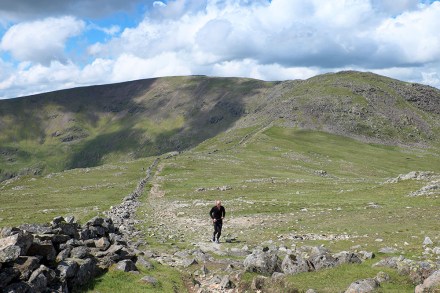
‘We continue to grapple as a species,’ writes Carl Morris, ‘with a knotty philosophical divide between anthropocentric and biocentric approaches to the natural world. Our bodies are both transcendent – seemingly beyond nature and capable of rationalised enhancement – but also immanent – that is within nature and therefore subject to the same frailties and limitations.’ What is he addressing? Space travel? Diving to the bottom of the Mariana Trench without oxygen? Not quite. He is talking about the process of human locomotion. He is talking about running. Stay with me. Books about running can be as dull as a ten-mile road race in the Illinois flatlands, and I say that as a keen fell runner. This book isn’t.

America’s new war on drugs will be tough to win

From our US edition

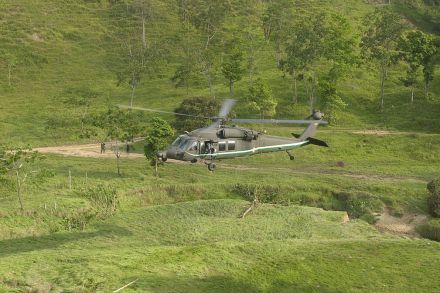
On New Year’s Eve a few years ago, I was in Medellín, Colombia, the city that gave its name to one of the world’s most notorious drugs cartels. Our taxi driver offered us some cocaine to fuel the party we were heading to: $10 for a gram; $15 for the “luxury” product. Our group decided to splash out and get a gram of the really good stuff. I’d tried coke a couple of times in London. It was like snorting drain cleaner. Whoosh… I found that half a line of Medellín’s best was enough to keep you going until sunrise. But the next day it was difficult to be within six feet of another human being, the coke having burned up all the dopamine in my brain. Coke is evil. I imagine a lot of other people were feeling the same in Medellín that New Year.

The long history of kidnapping Latin American chieftains

One of the few benefits of being an anthropologist is the uncanny exhilaration one feels watching novel current events as re-runs from previous episodes in the history of mankind. Donald Trump’s capture of Nicolás Maduro, President of Venezuela, is no exception. Kidnapping Latin American emperors is a continental tradition. It’s simply the most practical method for breaking the chain of command in the region. It triggers succession chaos, enables the extraction of resources and keeps the rest of the hierarchy more or less intact. In earlier centuries, it was Spain and Portugal. Today, it’s the United States. In the colonial era, the objective was to secure enough gold to beat European rivals.

latin american

Jasmine Thee Senate Candidate

From our US edition

Congresswoman Jasmine Crockett of Texas announced her bid for the US Senate yesterday with a video in which she listens implacably while President Trump insults her. The President sarcastically brands Crockett the “new star of the Democratic party.” “Wait until she gives it back,” tweeted Representative Eric Swalwell (D-Moron). “Turning Texas blue is what I want to talk to y’all today. There are people who say ain’t no way. We tried it 50 kinds of ways,” Crockett said in yesterday’s campaign announcement speech. “Let me be clear: y’all never tried it the JC way... they have no idea what Crockett’s crew will do!” Later, on CNN, Crockett said that she doesn’t need to convert Trump’s supporters. “That’s not our goal,” she said.

The Last Westerner captures the American Southwest

From our US edition

 The epigraph to this novel is from Chretien de Troyes’s Lancelot, one of the French author’s Arthurian romances. It is fitting because The Last Westerner is a medieval romance, as well as an epic set in the American Southwest in the closing years of the 20th century. The dedication is to the author’s wife and to the late Edward Abbey, a personal friend. It is equally fitting because The Last Westerner is a western novel in setting and theme and will bring to mind other western novels such as Abbey’s The Brave Cowboy (1956) and Cormac McCarthy’s All the Pretty Horses (1992). Abbey’s book is subtitled, An Old Tale in a New Time. That could be the subtitle for The Last Westerner too, and as for pretty horses, Chilton Williamson, Jr.’s novel is full of them.

horseback last westerner

The stubborn resilience of Mexico

From our US edition

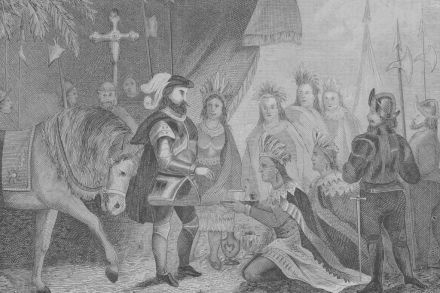
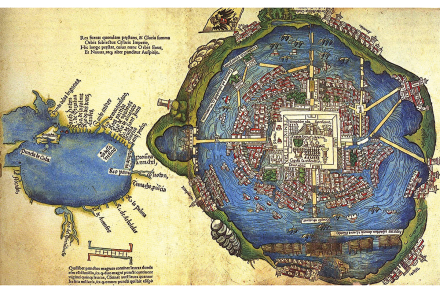
When they looked back, indigenous historians remembered how the fall of the Aztec empire to Hernán Cortés had been prefigured by terrifying omens and portents. The central valley had been plagued by comets, eclipses and supernatural storms. The previous emperor, Ahuitzótl, died after hitting his head on a lintel. A strange woman stalked the streets of Tenochtitlán, the capital, at night, crying “O my sons! We are about to perish.” But there were other signs that might have been heeded, too. The empire itself was only a few decades old when Cortés arrived in 1519. It was a patchwork of rebellious territories and city states, surrounded by yet more hostile peoples. Tenochtitlán fell after a three-month siege in 1521.

Mexico

Inside the gruesome world of the ‘human safari’

From our US edition

“People don’t actually do that, right?” my publisher asked nervously. “No one actually goes on a human safari, do they?” Eight years ago, I didn’t know for sure. There had certainly been rumors for years that wealthy foreigners were traveling to conflict zones to kill civilians at random. Gradually I had concluded that some people were indeed heading off to complete their bucket list of horrors. In my novel To The Lions, I placed the “human safari” in a fictional refugee camp in southern Libya. Concrete proof, however, was almost impossible to find. Several times during my years as an investigative journalist, I heard stories about nightmarish things going on in places where law and order had collapsed.

Is America at war?

From our US edition

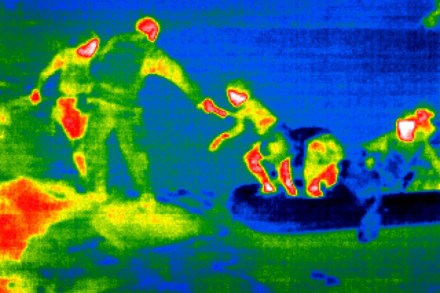
President Trump’s undeclared war on Latin America’s drug smugglers escalated dramatically on Tuesday when US air strikes destroyed four more boats allegedly carrying narcotics – this time in the eastern Pacific Ocean 400 miles south of the Mexican coastal city of Acapulco.At least fourteen crew members died in the attacks, and one was rescued alive by the Mexican navy, bringing the total number killed by the US campaign in the last two months to 57.Mexico’s President Claudia Sheinbaum condemned the attacks as a violation of international law, and said Mexico’s ambassador in Washington would lodge a protest and demand an explanation from US officials.The latest strikes were personally authorized by Trump and announced by War Secretary Pete Hegseth.

Narco