Lockdown

Keeping schools closed until September would hammer poor kids

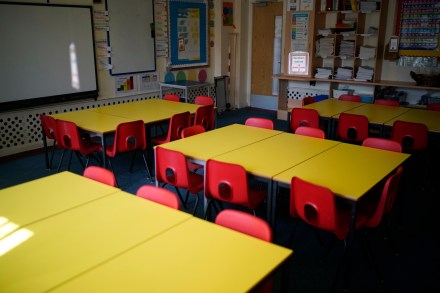
Schools should stay closed until September, according to a big teaching union: In view of the continued and pressing public health challenges and the considerable task that will be required to ensure that every school is ready to admit increased numbers of children and adults into safe learning and working environments, the NASUWT urges ministers to act to end speculation on the reopening of schools beyond the current restrictions prior to September 2020. That’s the latest from Patrick Roach, head of the NASUWT. This is a hardening of the line from teaching unions, and one that I think has the potential to cause significant tensions with the government.
A military guide to surviving lockdown

“Wire your booze cabinet up to the mains so you can’t get into it!” says Jason Fox, the former Royal Marine Commando and Special Forces Sergeant who’s best known for barking orders on Channel 4’s SAS: Who Dares Wins. With wine o’clock starting earlier each day for many of us, as we crawl the walls in isolation, I’ve asked Jason for his take on lockdown drinking. “It’s not the answer really. It’s great fun and I enjoy having a drink, but I won’t allow myself to drink all day. It doesn’t make you feel better about yourself.

How do we know which lockdown measures should be lifted first?

Today, the cabinet has to decide where to go next with the lockdown – although the decision will not be announced until Sunday. Boris Johnson has talked of a ‘menu of options’ for relaxing some of the measures, but we have been warned not to expect too much. The government has also distanced itself from speculation that rules on outdoor exercise will be loosened, as well as garden centres and a few other businesses allowed to reopen. How does anyone know which lockdown measures have been effective and which haven’t? A team of epidemiologists led by Paul Hunter have attempted to do that, and their pre-published paper may well feed into the government’s decision-making today.

In the Covid era, age isn’t just a number

When I told my seven-year-old granddaughter, over Zoom, how much I missed being with her, I added: ‘Maybe it won’t be much longer before I can see you.’ But she said that it would be some time, as ‘the government are going to stop old people seeing anyone because of the virus’. Asked what was meant by ‘old people’, she said: ‘I think anybody more than 54.’ Clearly some misunderstanding. At nearly 25 years beyond 54, I am correctly classed as old; some days I feel it, most days I don’t, but I am well, have most of my marbles and am working hard. Age is just a number. Except that it isn’t.

My toilet ultimatum to the builder boyfriend

The rain showers had a strange and wondrous effect. All the cyclists, joggers and dog walkers that were coming from miles away to take their essential exercise in the countryside magically disappeared. No one we didn’t recognise took any essential exercise in the downpours, but then resumed it when the weather changed. I find this odd because the explanation of the day-trippers for putting their bikes and their backpacks and their hiking equipment and their picnic baskets into the backs of their cars had been that they really, really needed to do that — come hell, high water or Covid. The locked-down inhabitants of towns and cities needed to pedal around the countryside hour after hour, day in day out, so badly that we lot who live here ought to get out of their way.

Professor Lockdown’s spell has been broken

I originally had Neil Ferguson down as a kind of Henry Kissinger figure. The professor of mathematical biology at Imperial College London seemed to have bewitched successive prime ministers, blinding them with his brilliance. Whenever a health emergency broke out, whether it was mad cow disease or avian flu, there he was, PowerPoint in hand, telling the leaders of the country what to do. And they invariably fell into line. In 2001, after the outbreak of foot and mouth, his team at Imperial advised Tony Blair’s government to adopt a strategy of pre-emptive culling, leading to the slaughter of more than six million animals.

Dear Mary: What do I say to the neighbour who comments on my daily exercise?

Q To your correspondent with a guest whose table manners offend (2 May), you suggest screening him off with a well-positioned vase of flowers. Mary, this may work for lockdown but whether or not his peers say that ‘table manners aren’t a thing anymore’, they certainly are still a thing among the sort of people who might give him a job. Someone needs to upset him, in the short term, for his own good in the long. I write as a parent whose daughter’s likeable but slobbish-at-the-table boyfriend will re-enter our orbit when this blessed holiday comes to an end. — Name and address withheld A. The clue is to approach the issue from a humanitarian, rather than a snobbish, perspective.

Hope in a takeaway bag: Mackerel Sky reviewed

You don’t dine in the age of pandemic: you scuttle about in the wreckage. If you can afford food, and you aren’t afraid of your neighbours, who don’t understand the government strategy and believe that if they stay indoors for eight years they will survive, and so should you, you can eat out; or rather you can collect takeaway in the comforting dusk. It is not because I want the food. My husband, with whom I re-enact Sunset Boulevard in lockdown, each taking it in turns to be crazy Norma or Max the butler, is a superb cook. It is that I want local restaurants to survive. It is my version of painting a rainbow in a window and calling it political activism, which it isn’t. It is praying with crayons.

We know everything – and nothing – about Covid

We know everything about Sars-CoV-2 and nothing about it. We can read every one of the (on average) 29,903 letters in its genome and know exactly how its 15 genes are transcribed into instructions to make which proteins. But we cannot figure out how it is spreading in enough detail to tell which parts of the lockdown of society are necessary and which are futile. Several months into the crisis we are still groping through a fog of ignorance and making mistakes. There is no such thing as ‘the science’. This is not surprising or shameful; ignorance is the natural state of things. Every new disease is different and its epidemiology becomes clear only gradually and in retrospect. Is Covid-19 transmitted mainly by breath or by touching? Do children pass it on without getting sick?

Lockdown used to be the norm for new mothers

I laughed when my Spanish midwife mentioned in passing that in Latin American countries they have a custom for new mothers known as la cuarentena — the quarantine. This was back in late February, a few weeks before my daughter Lily was born. I remember thinking it seemed not only ludicrous but archaic for a woman to spend a 40-day period stuck at home after giving birth. Modern mothers got on with life. I planned to do just that. I had invested in all the necessary equipment. The car seat was installed. I had bought the state-of-the-art breast pump which connects to my phone. My husband and I had chosen the pram because the slick adverts boasted that it could fit into the overhead locker of an aeroplane.

Lockdown can be overwhelming for those with autism

National Autism Month in April coincided with our strictest phase of lockdown. My son, 36, who has Asperger’s, has consequently been unable to stick to all his routines — one being the Sunday car boot sale on Brighton Racecourse — and I was worried about how he’d cope. He suggested we watch classic EastEnders together from our separate homes and text each other about the personalities and plot. It worked. The episodes from the early 1990s are fast-moving and the characters very real. One scriptwriter then, Susan Boyd, born in Glasgow, hung out with the Jamaican community in Ladbroke Grove in the 1970s. She died at only 55. I looked up her obituary. ‘The woman comes across as unassuming and unmaterialistic and also very talented. Son.

Why we’ll all be fleeing to Nigeria

I keep thinking what I’ll do when we regain our liberty — and I picture that beer at the end of Ice Cold in Alex, when after surviving his trek through the Sahara, a sweaty John Mills traces his finger up the frosted schooner, drinks the golden liquid down in one and says: ‘Worth waiting for.’ A month ago I had big ambitions for the future at home on the farm in Kenya. We were planting thousands of avocado trees, we were about to start rearing organic broiler chickens, there was a tilapia farm to expand, a new dairy project, and preparations for the Nairobi livestock breeders’ show later this year, when we hoped to compete with a string of Boran beef cattle. The event was cancelled and all my farm plans were delayed when the flights home to Kenya were closed.

internet

I survived a 20-minute internet outage during lockdown

From our US edition

It’s 1 am. I finally finish preparing my sourdough to go in the fridge. Time for some Netflix. What? No connection. Hulu doesn’t connect either. Dear God, no. Amazon Prime? Nope. It’s worse than I thought. Please just be my router, please just be my router. I unplug the router and wait 30 seconds. Plug it back in. Nope. Where did I put that damn manual? Now I need to find something small enough to stick in the reset hole button. I get a toothpick. I say a prayer. It’s not the router. The internet is down. God has abandoned us. I feel a great disturbance in the force. As if millions of gamers suddenly cried out in terror — and were suddenly silenced. I feel something terrible has happened.

Does COVID-19 mean socialism or social collapse?

From our US edition

Inequality is the price we pay for civilization. Property rights, inheritance customs and unequal gains from technological innovation have long divided us into haves and have-nots. Because stability favors such disparities, it usually took powerful shocks to flatten them. The collapse of states wiped out elites. The World Wars slashed returns on capital and imposed heavy-handed regulation and confiscatory taxation. Communist regimes equalized by force and fiat.The greatest plagues also turned into levelers, by killing so many that labor became dear and land cheap. For a while, the rich became less rich and the poor less poor: Europe after the Black Death is the best-known example.

covid

Does lockdown really decrease Covid deaths?

It has become clear that a hard lockdown does not protect old and frail people living in care homes – a population the lockdown was designed to protect. Neither does it decrease mortality from Covid-19, which is evident when comparing the UK's experience with that of other European countries. PCR testing and some straightforward assumptions indicate that, as of April 29, 2020, more than half a million people in Stockholm county, Sweden (which is about 20–25 per cent of the region’s population) have been infected. 98 to 99 per cent of these people are probably unaware or uncertain of having had the infection; they either had symptoms that were severe, but not severe enough for them to go to a hospital and get tested, or no symptoms at all.

Neil Ferguson steps back from Sage after breaking lockdown rules

One of the government’s leading scientific advisers, professor Neil Ferguson of Imperial College London, has stepped down from his government position after breaking lockdown rules. According to the Telegraph, the academic was visited on at least two occasions by a married woman, who lives in a separate household. Ferguson told the Telegraph that: I accept I made an error of judgment and took the wrong course of action. I have therefore stepped back from my involvement in Sage… I acted in the belief that I was immune, having tested positive for coronavirus, and completely isolated myself for almost two weeks after developing symptoms.I deeply regret any undermining of the clear messages around the continued need for social distancing to control this devastating epidemic.

lockdown

Lockdown is over. Someone tell the government

From our US edition

The coronavirus shutdown is over by public demand. There are crowds of sunbathers in the parks of New York City and mobs on the steps of the statehouses. Pedestrian and road traffic are rising and businesses are defying orders by informally reopening. The people are speaking — the people who used to work on a hand-to-mouth economy, the people who cannot afford to stay indoors indefinitely, the people who cannot be bothered to stay in when the sun comes out.These people are not all the people. They are not the doctors, who counsel caution. They are not the state governors, who are terrified of votes being washed away by a post-reopening second wave of casualties. They are not state employees, who can trust that their jobs will be waiting for them.

myself

It’s gonna be a long day with myself

From our US edition

I wake up confused. Oh. This is really happening. I wasn’t dreaming that the entire world is on house arrest. It’s actually real. I’m disoriented. What day is it? What month is it? What is time anyway? I’ve lost all concept of it. Am I in Vegas? Oh that’s right, Vegas is closed. Today is going to be the day. The day I live my best quarantine life. I’ll practice guitar and spend an hour learning Arabic and bake sourdough bread and do some YouTube workouts. This is the 19th day in a row I’ve said that. Who am I kidding? I don’t even own a guitar. And where the hell am I gonna use Arabic other than when I’m binge-watching Jack Ryan? Again. I don’t trust the subtitles. I don’t trust anything anymore. Except the mirrors.