Lockdown

Is this the end of commuting?

The brother of a friend in Durban was once given a generous donation by a wealthy aunt. ‘I hate to see you just hanging around indoors all day. Buy an old Land Rover. Go and see the real Africa.’ The brother took the money but bought an enormous television instead. When my friend visited, he found him watching a wildlife documentary in glorious high-definition Technicolor. ‘Why would I want to go and see Africa when I can bring Africa in here?’ he explained. I have a certain sympathy for this stoner approach to life. The ability to travel within your own mind seems to be a great gift — something

Why shouldn’t Cummings attend SAGE?

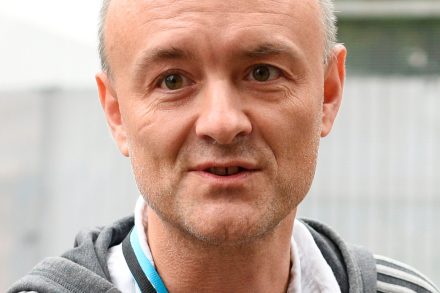
One of the key committees advising the government is SAGE — the Scientific Advisory Group on Emergencies. At the weekend, there was a rumpus after the Guardian reported that Dominic Cummings had been present for some of its meetings; though given the enormity of what was being discussed there would have been problems if no one from Downing Street was at these meetings. Last night, Bloomberg reported on the SAGE meeting of 18 March. Alex Morales and Suzi Ring wrote that Dominic Cummings had at that meeting raised questions, including asking ‘why a lockdown was not being imposed sooner’. I am informed that at that meeting Tim Gowers, a Cambridge maths professor and

The best “unwoke” comedy to watch during lockdown

Comedy is booming during lockdown. The clubs may be closed, indefinitely it seems, but the internet has come into its own. And the backlash against the liberal consensus is gathering pace. Here are seven of the best unwoke comedians. All are available on YouTube. The snag is that each clip is preceded by an advert for Monday.com or a bossy lecture from a web entrepreneur eager to enrol you in a free seminar which will make you a billionaire. Indian-born Sindhu Vee makes jokes about her Danish husband which might be interpreted as racist. ‘His entire parenting method is, “Darling, please be very happy, here’s some Lego.”’. When Vee got

Ten lessons we’ve learned from the lockdown so far

Yep, the end is in sight, courtesy of other countries organising the practicalities for the return to some sort of normal life – shopping and schooling, as in Germany. That means Britain will, like it or not, be playing catchup sooner rather than later. And when this oddly dreamlike existence is over, it’s going to feel like that bit of the Sleeping Beauty when the court wakes up after its hundred year sleep, yawning and blinking and eyeing each other rather shyly. It’s partly the warm weather; being obliged to stay away from work when it’s sunny, with quite a lot of your wages paid by the government (if like

Our impatience will end the lockdown

At the farm shop this morning there was a chap panic-buying a large metal and plaster flamingo. It was the last one in stock and he looked very pleased with himself. I wondered if he had a few score more at home, hoarded in the attic. And then his long-suffering wife saying, when he arrived home: “Did you get the milk and chopped tomatoes?” And him replying with excitement: “No, but I managed to get another one of THESE, love…” As I mentioned in my column this week, the government will be a fait accompli to the ending of lockdown. The glorious silence of two weeks ago is already a

Britain can’t rely on a vaccine to ease lockdown restrictions

Six weeks ago Britain stood as a bit of an outlier among western countries in that our government seemed set to manage, rather than suppress, coronavirus. It rejected the idea that it was pursuing ‘herd immunity,’ but seemed to do just that. Now we stand out for a different reason: we are the only country which appears to be committing itself to remain in lockdown, or close approximation thereof, until a vaccine arrives. In much of Europe, lockdown restrictions are tentatively being relaxed as infection rates and death rates fall. Here, ministers tell us it is far too early for that sort of thing – we will need restrictions on

Felt longer than the lockdown itself: BBC1’s One World – Together At Home reviewed

You have to admire the spirit of the organisers of last weekend’s One World: Together at Home concert. To put on an event that seemed to last longer than lockdown itself is the sort of can-do attitude we love to see. The main event — the really star-studded portion that was shown live on Saturday night on the big three US networks, and then adapted for the UK and shown on BBC1 on Sunday — began only after six whole hours of preamble from slightly lesser turns. Six hours. That’s an awful lot of watching people sit with an acoustic guitar in front of their webcam. Or sometimes not even

Ian McEwan: The strange vocabulary of coronavirus

The vocabulary of Brexit has passed into oblivion. Now there’s fresh work to be done. We all know about ‘flattening the curve’, but are you comfortable yet with ‘fomite’, a word my older son, a virologist, taught the family early on? It’s an object or surface on which an infectious agent like a coronavirus might be lying in wait — just for you. A cheque in the post, next door’s cat, the tennis balls you are about to double-fault with — all good candidates. You knew that already. Then how about ‘lipid envelope’, the outer shell of certain viruses. We learn with relief that the envelope of our coronavirus of

We don’t have lockdown in Surrey

The man was unloading cycles from the boot of his car just as I was about to take the turning for my house. It was the last straw. In the space of a mile and a half drive from field to home, I had passed 79 cyclists. I photographed each swarm as it approached me, pulling over to use the camera on my phone, before anyone accuses me of dangerous driving. At the entrance to the cricket club, a group of three men and a woman in Lycra were standing shoulder to shoulder, bikes propped idle, having a good old chinwag. I pulled up next to them and snapped them

Getting coronavirus does not bring clarity

I had thought that actually getting the coronavirus would bring clarity — that there would be some satisfaction in meeting the enemy, feeling its spectral hands around my lungs. No such luck. Uncertainty is the hallmark of Covid-19. Even its origins are murky: wet markets or the Wuhan Centre for Disease Control? Who knows, and who would ever believe the Chinese government anyway? When you’ve got it, the sense of medieval unknowing only deepens. Is this definitely it? Will it get worse? Will it come back? My version of the virus began with a nasty headache and a grubby feeling of unease, after which I threw up on the bathroom

Real problems erase fake ones

Last week, a friend quoted a two-year-old email of mine: ‘I’m starting to root for a plague or world war to purify western culture, burning to cinders all the petty, neurotic, witch-hunting cliques with the white heat of real problems.’ Depressed by my own foresight, I wrote back: ‘The trouble with this solution is that then you still have the real problems.’ Yup. But since the real problems aren’t going anywhere any time soon, and we’ve so little to celebrate while the world goes to hell without the comfort of even a hand basket, let’s consider the possible benefits. I’ve often remarked that identity politics is the product of prosperity.

When will the public accept an end to the lockdown?

In the weeks leading up to Boris Johnson announcing lockdown measures, ministers and aides wondered how in the world you could enforce a lockdown like the one seen in authoritarian China in a liberal democracy such as the UK. But following Dominic Raab confirmation on Thursday that there will be another three weeks of lockdown, public resistance is the least of ministers’ concerns. The biggest surprise about the lockdown within government has been the level of public support for it. Polling has repeatedly shown that rather than fighting the social distancing measures, Britons are embracing them more obediently than anyone in might have dared imagine. A YouGov poll prior to Raab’s announcement found

Five measures that could prevent future lockdowns

That the World Health Organisation hasn’t exactly shone in the coronavirus crisis is now well-documented. It should remind us of the dangers of following one centrally-guided approach to tackling the disease. Thankfully, given how even experts have been unsure about how to respond to this enormous challenge, there was no unified EU response to Covid-19. Instead, European countries have been dealing with the virus using trial and error. As a result, looking at the responses of European and Asian countries, we can now distinguish five important things that seem to have worked to prevent the need for a strict, economically devastating lockdown. 1. Testing people with mild symptoms Even though

Leaked US document suggests Covid may be less lethal but more widespread

Have we been vastly underestimating the number of people who have been infected with Covid-19 and correspondingly overestimating its mortality? No one knows because we don’t know just how widespread this infection is in the population at large. But a leaked document from the US Department of Homeland Security suggests that the US government, at least, is working on the assumption that the virus is a lot harder to contain – but a lot less deadly – than is widely assumed. The document compares the likely outcome of two scenarios: one in which the outbreak is ‘unmitigated’ – i.e. life carries on as normal – and one in which the government imposes

Dear Mary: How do I get out of bossy chain emails?

Q. Each day while working from home, I have at least one hour-long meeting via Zoom. One of my colleagues has a dodgy internet connection and has become a terrible menace as we all politely sit through minutes of unpleasant white noise while she tries to communicate her thoughts. The meeting chair never seems to take a hard line on this; do you have any advice? — M.C., Fosbury, Wilts A. You would do well to join the Zoom meeting via a computer rather than your phone. Zoom will highlight the person who is speaking at any one time, so when the offender’s name comes up on the screen, you

Why I joined the Jehovah’s Witnesses

The toad who lives at the bottom of the garden in the pile of bricks beneath the potting table was very happy with his new plunge pool. I made it on a particularly slow afternoon when I had run out of ideas for things to do. It was either make a toad Jacuzzi or darn socks, so naturally Mr Toad lucked out. Before that, I tidied the cellar, going through all the laundry bags full of horse tackle. I sorted and bagged rugs, cleaned and polished bridles, reorganised my ever-burgeoning collection of multicoloured lead ropes, overreach boots and numnahs, and even sorted out all the saddle soaps and boot polishes.

I have herd immunity

I am a type. I don’t like groups. I maintain few memberships. I question and resist authority, especially enforcement of rules for the rules’ sake. I’m leery of orthodoxy. I hold back from shared cultural enthusiasms. Everyone’s met such obstreperous specimens — the original self-isolators — and some readers out there are just like me. We’re irksome in emergencies, when the police want the crowd to evacuate and we insist on knowing why. We sometimes spite our own faces; many of us still haven’t seen Hamilton (and now we can’t). We don’t joyously belt out national anthems, and recently, to popular disgust, many of us curmudgeons don’t lean out our

A lesson in survival from pre-21st century Marks & Spencer

When I wrote last week about business-to-business pain-sharing for survival, I was naturally thinking first about UK companies. I say ‘naturally’ because in every aspect of this crisis, ­national interest has, as it were, trumped trans­national co-operation. That’s particularly the case where medical supplies are concerned — as in the US President’s attempt to stop the Minnesota-based manufacturer 3M exporting respirator masks to Canada. But wider questions about global supply chains have been brought into focus by one vivid case: the wipe-out of fashion orders from factories in Bangladesh, Cambodia and Vietnam, whose operatives — low-paid but lifted by their jobs out of greater poverty — are the flagbearers of