Liverpool

Why Stonehenge doesn’t have to go the same way as Liverpool

It has not been a good month for the United Kingdom’s internationally important heritage sites. Stonehenge is teetering on the edge of losing its world heritage site status, with Unesco warning the UK government against a proposed £1.7b, two-mile long road tunnel near to the site. If so, it could go the same way as Liverpool, which lost its World Heritage Site status last week. In a city that boasts more Georgian buildings than Bath, the arguments have quickly polarised.

The disgraceful decision to remove Liverpool’s heritage status

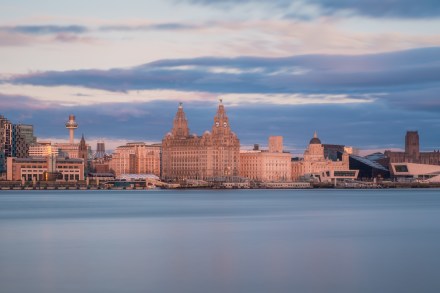
Unesco has cancelled the ‘World Heritage Status’ of the Necropolis at Memphis and the Giza Pyramid because a Radisson Blu hotel has been built in neighbouring Cairo. That’s not true, but for a similarly absurd reason Liverpool has been de-listed from heritage Valhalla by word-mincing bureaucrats. Not many Liverpudlians will care about this imbecilic and ignorant decision – Liverpool is the capital of itself and does not look to London, still less to Paris or Brussels. The tragedy here is not Merseyside’s status, but Unesco’s blindness. In recent years, Liverpool has demonstrated exactly the mixture of respect for the past and optimism for the future that all great cities need.

Why the European Super League is a really bad idea

From our US edition

Billionaire soccer club owners are being accused of self-interest and greed — and I for one am shocked. News of the proposed European Super League stunned sports fans worldwide this weekend. Twelve of Europe’s most historically successful clubs are proposing the formation of a 20-team league to become the new top tier of European competition, superseding the UEFA Champions League and Europa League. The ‘founding members’ of the ESL cannot be relegated — which the British press has dubbed an ‘NFL model’. That doesn’t seem like a fair comparison — the NFL is much more egalitarian. The American sports leagues may not have relegation, but they do operate a draft system which helps keep the rosters even over a 15-year period.

european super league

The questionable ethics of Operation Moonshot

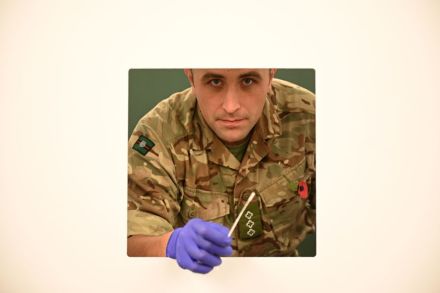
Now that we seem to have two Covid-19 vaccines that work, do we really need Operation Moonshot, the government’s programme to test 10 million people a day by early next year? It’s a poignant question, not least because of the extraordinary sums which appear to have been committed to it: briefing documents leaked to the BMJ in September suggested that it could cost £100 billion, which is close to the annual NHS budget in England. What would be the point of testing the entire population of Britain once a week if the virus was being controlled by a vaccine? The cost aside, there is growing medical opinion against the idea.

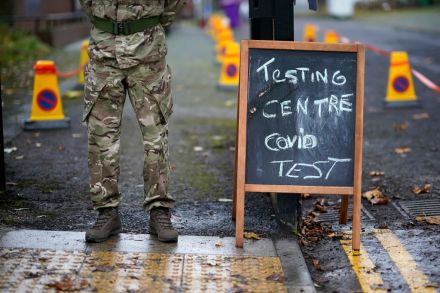
Is the Liverpool mass-testing scheme a gimmick?

The revelation that both Pfizer and Modena have created seemingly effective and safe Covid vaccines that could be here by December is surely the first bit of good news 2020 has brought us. But we are, of course, nowhere near yet out of the woods. Even if a vaccine gets regulatory approval by early December, all our resources and logistics will have to be focused on procuring, delivering, and then monitoring its roll-out. Boris Johnson himself has urged caution about the Pfizer vaccine, saying ‘there is a long way before we have got this thing beat’. But while the PM is displaying a healthy degree of realism about the challenges of deploying a vaccine, is the government still in a make-believe world when it comes to mass-testing gimmicks?

Golden oldie

Film Stars Don’t Die in Liverpool is plainly wonderful, and stars Annette Bening, who is plainly wonderful, as Gloria Grahame, a one-time Hollywood movie star who in later life hits on hard times — ‘a big name in black and white. Not doing too well in colour,’ comments her landlady at one point — and embarks on a romance with a young English actor who is 30 years her junior. It is based on a true memoir. It is a love story, told tenderly, bravely, smartly, movingly. And believably. Older women, it seems, can be interesting, complicated, vital, attractive and sexual. Who knew? (But don’t spread the word, or they’ll all want to be like that, and won’t take the shitty bit-parts any more.

How strict will the new Covid restrictions be?

I have a few points to make about the new three tier system to be announced today for restricting our lives and businesses, to suppress Covid-19. 1) Last Wednesday, the government was so worried about the spread of coronavirus in the north of England that it was planning to impose new restrictions on places like Liverpool, Manchester and Newcastle before announcing the three-tier framework. Because of opposition from city mayors and local authorities, that is now not going to happen. The three-tier framework will come first. 2) However, it is probable that there will be new restrictions announced today for Liverpool, if agreement with the Mayor Steve Rotheram is reached in time – which seems highly likely.

Portrait of the Royal Liverpool Philharmonic – Britain’s oldest and ballsiest orchestra

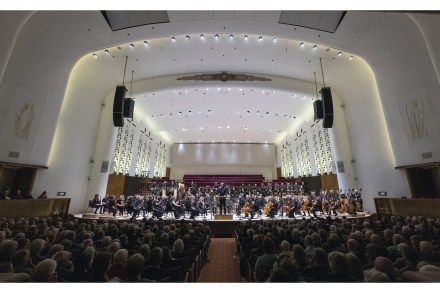
Liverpool’s last ocean liner lies half a mile inland, on the crest of a hill. The Philharmonic Hall, home of the Royal Liverpool Philharmonic Orchestra, sits between two cathedrals on Hope Street, its towers jutting over the city like twin prows. It’s an unavoidable metaphor: when you enter the Hall on a concert night, the first thing you see is a bronze memorial to the musicians of the Titanic. Everything about the Hall — the grand staircase; the long curving corridors; the art deco auditorium that looks like something from Alexander Korda’s Things to Come — suggests that you’re about to steam off on some fantastic voyage. I’ve heard concerts all over the world, but when I dream about music, it’s always at the Liverpool Phil.

Klopp’s childlike enthusiasm – and incalculable savviness

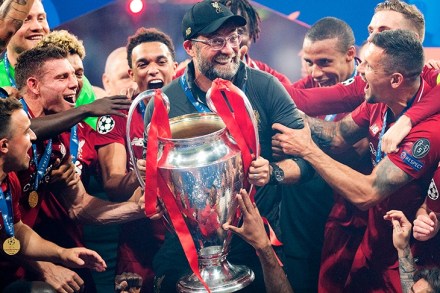
Where were we? Oh yes, Liverpool were running away with the Premier League and a mere three months later have sealed the deal. For Liverpool fans it must have seemed like the longest drum roll in history. A week ago the drum roll ended in an explosion of joy — too literal an explosion for some tastes — for those who worship at the temple of Anfield. Liverpool were champions of England for the first time in 30 years — and the wait for the first English manager to win the Premier League was extended for another year. That last fact must be one of the sorriest statistics in English sport, which is to take nothing away from Jurgen Klopp’s achievement.

Liverpool University shouldn’t cancel William Gladstone

After the fall of the statue of slaver Edward Colston in Bristol, it was only a matter of time before attention turned, once again, to England’s other great slave-trading city of Empire, and the figures behind it. William Gladstone is one of Liverpool’s most famous sons. One of the great Liberal politicians of the age, he was prime minister on four separate occasions in the mid to late 1800s. There are a few reminders of this dotted across the city today, but the most notable are the halls of residence that bear his name, belonging to the University of Liverpool. The university has now announced that it will rename the halls after receiving a letter from a group of students demanding it be changed.

Britten’s Blackadder moment

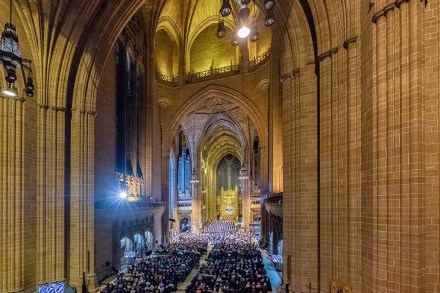
‘What passing-bells for these who die as cattle?’ We’ve heard a lot, lately, of the knell that tolls through the opening bars of Benjamin Britten’s War Requiem, and at Liverpool’s Anglican cathedral it was played on actual church bells. The Royal Liverpool Philharmonic Orchestra’s percussionist Graham Johns has had a set specially cast, and as he struck them video screens relayed the moment all the way down the cathedral’s length. The orchestra was a one-off, assembled half-and-half from the RLPO and the NDR Radiophilharmonie Hannover (the conductor Andrew Manze holds positions in both cities), and this was a major civic occasion, attended by gold chains of all sizes and preceded by speeches from city worthies.

Diary – 2 November 2017

Where better to be than in Liverpool on a crisp autumn evening, haranguing an open-air meeting of students? I hadn’t done a soapbox speech since my Trotskyist days 45 years ago, and had forgotten how exhilarating it is — the questions sharper, the audience more alert, the tempo brisker, and the missionary feeling of spreading the word. Also, the students didn’t cough all the time, which they tend to do in stuffy lecture rooms. But I had never meant to do this. Months before, Tom Willett, of Liverpool University’s politics society, had asked me to come and speak about my favourite subject, the fact that there is no ‘War on Drugs’.

The Bilbao effect

Twenty years ago I wrote of the otherwise slaveringly praised Guggenheim Museum in Bilbao: I’m in a minority of, apparently, one. It strikes me as a consummate gimmick… a fantastically elaborate and rather wearisome joke. Has mankind spent all these centuries perfecting Euclidean geometry and orthogonal engineering in order to have it overthrown by massively expensive crazy cottages clad in titanium? Apparently mankind has. So much for the building. What of the ‘Bilbao effect’, an epithet that I am accused of having coined (I can’t remember, but it’s inappropriate because there is, typically, no effect).

Even in the cesspit of elite football, the Neymar deal has a pungent whiff to it

In a quiet season for business news, the giant cesspit that is the world of elite football can be relied upon to provide a money story with a pungent whiff to it. I refer to the transfer of the 25-year-old Brazilian known only as Neymar from Barcelona to Paris St Germain for a world-record fee close to £200 million. When Neymar was bought by Barcelona from Santos of Brazil in 2013, a £200 million break clause was inserted in his contract in the belief that no club in the world could possibly afford to buy him out. But PSG has done so even though Spanish football authorities refused to facilitate the payment, in the belief that it might breach ‘financial fair play’ rules designed to prevent clubs spending beyond their means.

Diary – 13 July 2017

It has been an unqualified delight, even if it is mildly absurd: I have been chairing the judges for this year’s Forward Prizes for poetry, wallowing in some quite extraordinary writing. It has been like gorging on champagne truffles every day. We are nearly there. Winners are emerging. But the absurd aspect is that everybody being judged is already a fine poet, with much to say and fine technical skill; so, winnowing down to ‘winners’ relies on personal prejudice and chance mood on one particular day. That’s horribly unfair and I think all the judges feel it. So why have such a prize?

Antony Gormley has no right to complain when the public interacts with his public art

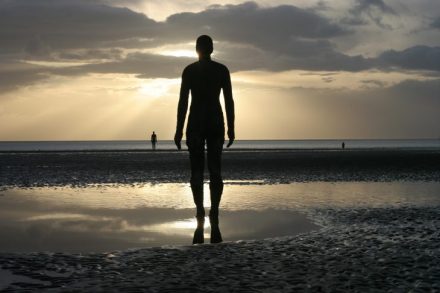
Antony Gormley is not amused. The artist who has installed hundreds of life-sized, cast-iron sculptures of his naked body in cities all over the world is affronted with the way a mysterious member of the British public has responded to one of the artworks. The piece in question, which could be known as ‘Narcissism’ but is in fact called ‘Another Place', consists of 100 figures, spread over 2 miles of coastline, on Crosby Beach, north of central Liverpool, looking out to sea. Someone has given it a make over: at least nine of the statues were recently adorned. One, standing upright at just over 6 feet tall, appears to be wearing a fetching pink polka-dot bikini, with a male appendage; another a pair of bright orange shorts.

Building block | 8 June 2017

Liverpool is the New York of Europe. The business district looks like old Wall Street: a miniature Lower Manhattan on the Mersey. It’s a city of scale, drama, melodrama, tragedy and comedy. Not to mention rich and poor. And often all these effects are simultaneous. No other British city has a similarly contrary architectural character: superb, shabby, romantic, melancholy, proud and mean. You cannot be in Liverpool and not be affected by its buildings. I grew up there and long before I knew what ‘design’ meant, Liverpool had taught me to see — as well as to feel the deadly weight of history. It’s an architectural education. But Liverpool has not treated its architects well.

Letters | 4 May 2017

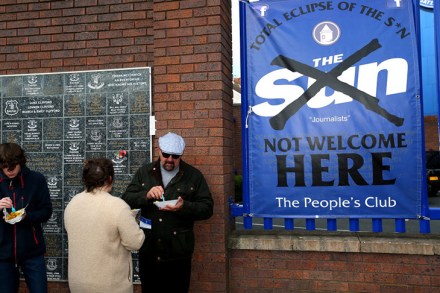
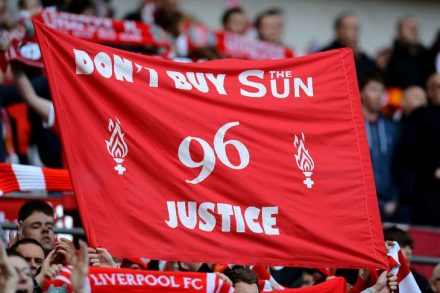
Liverpudlian censorship Sir: I enjoyed Kelvin MacKenzie’s Diary (29 April). The obloquy thrown at him after his criticism of Everton footballer Ross Barkley would be laughable if it were not for the unpleasant undercurrent on Merseyside now. His remark was football banter, not a racist slur as the mayor of Liverpool, Joe Anderson, has alleged. What the mayor (or ‘Fat Joe’, as he is known) has failed to do is speak up for free speech. It is — and I deeply regret to say this about my home town — a scandal that newsagents in Liverpool are threatened by violent thugs if they stock the Sun. There was a ‘Ban the Sun’ campaign in Liverpool before Hillsborough, run by trade unions which opposed Wapping. For a long time the campaign was in decline.

Gary Lineker is the Virtue Signaller of the Year

When Trevor Phillips stood down as chairman of the Equality and Human Rights Commission, he had served nine years. His period remains the longest of any UK equality commissioner. So when the confected outrage started over my Sun column about Everton footballer Ross Barkley I was not surprised to see a text pop up from Mr Phillips. I feared he would join the Liverpool bandwagon claiming I was a racist because I had compared the look in the eyes of Barkley with a gorilla. Actually I and every football fan I had ever met believed Barkley to be white. Unluckily for me, but luckily for my enemies in the north-west, that was not entirely true. It emerged that although Barkley looked white, his grandfather was half-Nigerian.

Why it’s wrong to let Liverpool FC ban the Sun

The comedian Jimmy Carr is not necessarily a guy you would trust on much, but he was spot on the other day when he said that the Hillsborough disaster was something you would never joke about. Of course not, but it seems you can’t have even a sliver of a divergent view. Now, thanks to the timorousness of one of the world’s major football clubs, and the pusillanimity of the Premier League, a bitter little drama is being played out that could have savage implications for freedom of the press. Early in February this year Liverpool FC announced that the Sun would be banned from all home facilities, Anfield and the club’s Melwood training ground; the paper would not be allowed into home games and its Liverpool reporter would be given no access to players or the manager.