Dr Waqar Rashid

Dr Waqar Rashid

Dr Waqar Rashid is a consultant neurologist at St George's University Foundation Hospital NHS Trust, London. This article is a personal view and does not necessarily represent the views of the Trust. He tweets at @DrWaqarRashid1

How Wales’ Covid-19 outbreak spiralled out of control

From our UK edition

Back in October, Wales implemented the 'circuit breaker' lockdown which was rejected by Boris Johnson on the grounds that these things are not long-term solutions. It’s hard to see what good it did Wales now: after a short-term dip, its Covid rates are now at least twice as high as anywhere else in the UK and seem to be spiralling out of control. The situation is particularly concerning because Wales has been swift to impose strict measures in a bid to contain the situation. No one could venture that a lack of caution is to blame for what is unfolding in Wales. The country imposed its ‘firebreak lockdown’ for just over two weeks on 23 October; it was another week before a similar lockdown was announced by Boris Johnson for England.

Is the Liverpool mass-testing scheme a gimmick?

From our UK edition

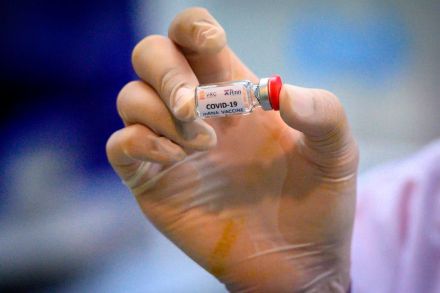
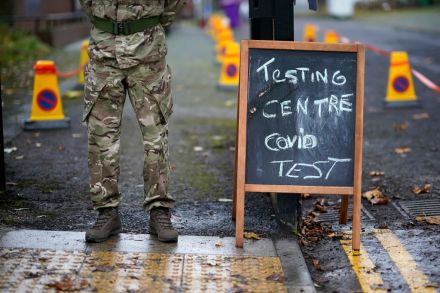
The revelation that both Pfizer and Modena have created seemingly effective and safe Covid vaccines that could be here by December is surely the first bit of good news 2020 has brought us. But we are, of course, nowhere near yet out of the woods. Even if a vaccine gets regulatory approval by early December, all our resources and logistics will have to be focused on procuring, delivering, and then monitoring its roll-out. Boris Johnson himself has urged caution about the Pfizer vaccine, saying ‘there is a long way before we have got this thing beat’. But while the PM is displaying a healthy degree of realism about the challenges of deploying a vaccine, is the government still in a make-believe world when it comes to mass-testing gimmicks?

Should we have abandoned regional restrictions?

From our UK edition

There has been much to question about the government’s policies during the coronavirus crisis, but the decision to announce a second lockdown this week was perhaps the most perplexing. One unusual aspect was that with the announcement of the regional tier policy in October, Boris Johnson had finally managed to distance himself from his increasingly unbalanced scientific advice. Instead, his regional policy actually reflected what was happening on the ground. Covid-19 cases were on the up in England, but in a highly regionalised manner. A one-size-fits-all strategy of closing everything down except schools seemed not to make sense except to the increasingly dogmatic pro-lockdown scientific advisory community.

Are we really seeing a second wave?

From our UK edition

‘Facts are stubborn things, but statistics are pliable.’ There are lots of sayings about statistics, but I think this one by Mark Twain best describes where we are at, regarding hospital figures and Covid-19. There are three questions that currently need answering when it comes to the Covid debate: firstly, are we experiencing a second wave? Secondly, is the NHS under imminent threat either regionally or nationally from a rise in infections? And thirdly, will government restrictions actually help? But the misunderstanding and unrepresentative use of admittedly complex data and statistics is rampant, and we are no closer to getting answers to these questions. When it comes to the existence of a second wave, it is clear that positive case numbers are up.

The end of the Sage supremacy

From our UK edition

Something very significant happened during Boris Johnson’s national address this week. It was not the announcement of the new three tier local risk-based system of restrictions – imaginatively titled medium, high and very high. It was what didn’t happen. The Prime Minister resisted applying a ‘circuit break’ national lockdown which it now transpires was being pushed by the government’s scientific advisors (Sage). In doing so, he rejected this most blunt of tools as a means of controlling this pandemic. I do not know how close the Prime Minister was to calling for a national lockdown.

The Covid testing trap

From our UK edition

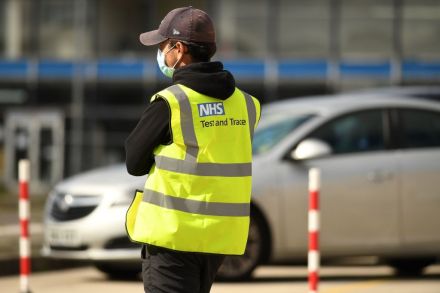
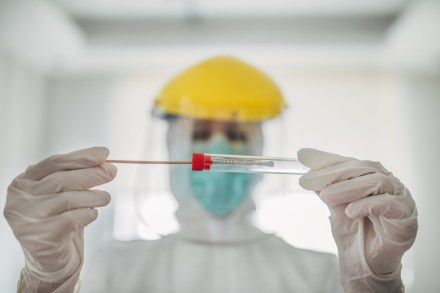
We are in a time where money has lost meaning and value, so perhaps the £10 billion plus spent on Test and Trace doesn’t merit comment. But what do we get for our money? Well, we get a daily case tally which provides headlines for media outlets and endless graphs. We get a regional breakdown which shows us ‘hot-spots’ and we get an army of testers who follow the positive cases. We then find the virus in specific regions, chase it with more targeted testing and usually send the region into local lockdown as more positive cases are identified. This cycle has been going on in some shape or form since the summer, starting in Leicester and then focusing more in areas in the north west of England.

What Iceland’s volcano chaos teaches us about our Covid mistakes

From our UK edition

Remember the Eyjafjallajökull volcano in Iceland? When it erupted in 2010, it caused unprecedented disruption. Millions of people were stranded in various corners of the world. Europe's airspace was shut down. And airlines were left with an estimated £1.2bn bill. Needless to say this is all small beer by today’s standards of financial loss. But can the response to that eruption teach us anything about the mistakes that have been made in response to the pandemic? The circumstances might be different but there are many similarities between the reactions to the two events.

Vallance’s dire Covid warning was a mistake

From our UK edition

The idea on the whole was sound. The execution less so. Boris Johnson was nowhere to be seen at yesterday's press conference. Instead, the honest brokers in this crisis, the medical scientists, were front and centre, in what may be a Downing Street briefing remembered for all the wrong reasons. When chief medical officer, professor Chris Whitty, and chief scientific adviser, Sir Patrick Vallance, had finished their statements, there were plenty more questions than answers – not least as a result of their use of a graph showing how quickly the coronavirus crisis could get out of hand if we fail to act. As a medic, I'm inclined to be supportive of Whitty and Vallance. I know how difficult the job can be and how precarious the situation is.

Don’t blame youngsters if there is a second Covid wave

From our UK edition

Deaths of Covid-19 are overwhelmingly concentrated among the elderly. But now there is a new eagerness to blame young adults trying to live their lives in a normal way for the possible resurgence of the disease. With minimal actual evidence, we are told those under the age of 30 are not socially distancing and, worse still, are actually going out and enjoying themselves with the result that they will bring the virus home to, as Matt Hancock put it, ‘kill granny’. What is clear is that while some young people (as well as older ones) are flouting the rules, many aren’t. Young adults who would normally and reasonably be out enjoying themselves at this unique time of life have had this pleasure removed from them by a virus they did not cause or ask for.

We have lost sight of what a positive Covid case means

From our UK edition

In a year that almost everyone will want to forget there is some emerging good news. Covid-19 related hospital admissions are undoubtedly falling. By the end of August there were barely over 300 people in hospital in England with coronavirus listed as a diagnosis, and only 46 in London. To put this into context, the figure was over 15,000 at the peak of the infection. The virus has not gone, of course, but positive data like this is a reminder of how the challenge is now very different. As a doctor I have over the years come to realise a few different things. The more you learn, the more you realise the limits of medicine. The more experience you have the more reflective you become and are able to question your actions and be open to new ideas and approaches.

The search for a Covid-19 vaccine is coming at a price

From our UK edition

As billions wait with bated breath for the outcome of clinical trials on the new Covid-19 vaccines, many studies on other diseases have been halted. There are several reasons for this, not least the drop in revenue charities are receiving which is then used to fund studies. Additionally, coronavirus continues to dominate the medical landscape both in terms of the availability of doctors to do research and the willingness of patients to visit hospitals. Given the ongoing impact of the epidemic, it’s no surprise that so many resources are being piled into the search for a treatment for coronavirus. But this single-mindedness is coming at a great cost, not just for now but potentially for decades to come.

We’re stuck in a coronavirus time warp

From our UK edition

There is actually some good news emerging from the tragic gloom of the Covid-19 epidemic. Despite some relaxation of lockdown rules in recent weeks, markers of serious infection – hospital admissions and deaths – continue to fall. There are several reasons for this but undoubtedly a learning process has taken place and we now understand much more about the virus. This has completely changed the dynamic compared to when actions were first taken from late February to March. And yet watching the news now with reports of new case surges and local lockdowns it feels like we are stuck in a time warp.

St John Ambulance and the Covid fear factor

From our UK edition

Coronavirus has changed our lives. In fact, there is very little that has been left untouched by this pandemic. A risk assessment has been done for every aspect of life, no matter how mundane. So, it should not surprise that St John Ambulance is no different. Its Covid CPR advice may be matter of fact but nevertheless at first sight it is still somewhat shocking: instead of asking people to selflessly give mouth-to-mouth, it now advises rescuers to place a towel over the mouth of the collapsed person to protect the volunteer from Covid. It may not be exactly the ideal image, but in truth this is a sensible way to protect people from a whole range of infections and, reassuringly, will make precious little difference to the effectiveness of the process.

The scandal of excess deaths at home

From our UK edition

How does one measure health in the midst of the extraordinary times we live in? The usual markers: visits to doctors, waiting lists, and number of people in hospital, have all changed beyond recognition and there is mounting concern that amidst the justifiable concern over coronavirus, other diseases are being forgotten. Trying to determine what exactly is going on is not easy but thanks to the Centre of Evidence Based Medicine (CEBM) at Oxford University and its publishing of an estimate of non-Covid-19 related death figures over the last five weeks, we have been given a dramatic insight into an unseen and largely unreported rise in deaths occurring at home which appear to now outnumber fatalities due to the virus itself.

Immune system regulation could be the key to fighting Covid

From our UK edition

Over the last few months, the management of severe Covid-19 cases has effectively been turned on its head. At first, reports from China and Italy, coupled with initial guidance from the World Health Organisation (WHO), had doctors preparing for acutely ill and breathless patients whose lungs were being starved of oxygen. The natural reaction of any self-respecting intensivist once oxygen levels drop, particularly if the diagnosis is a new and potentially fatal virus, is to put the person on a ventilator to give their immune system time to fight the infection. But it quickly became clear that with Covid, the pattern was somewhat different. The danger was not a direct coronavirus attack on the lung itself but a disordered immune system response to it.

The Oxford vaccine appears to have surpassed expectations

From our UK edition

It has been yet another busy medical day in our ‘new-normal’ coronavirus world. Today, the Phase One results of the University of Oxford vaccine were published, confirming positive reports tantalisingly leaked last week. Also making the news is a press release from the pharmaceutical company Synairgen, touting very positive initial results from its inhaled protein, interferon-beta, in treating hospitalised patients with coronavirus. In days gone by the publishing of results of a Phase One vaccine study would barely generate a ripple, even in the relevant medical speciality. But of course, this is no ordinary trial and we are truly in extraordinary times. All medical products undergo a trial process, starting with studies which look purely at safety (not efficacy).

How hopeful should we be about Oxford’s Covid-19 vaccine?

From our UK edition

A Covid-19 vaccine has always been the great hope to take us to the promised land of alert level one and an end to the 'new normal': no more social distancing or face masks. Unsurprisingly given the scale of the crisis across the world the race is on to find something that works. It's a cliche to say it, but a successful vaccine would be a ‘game-changer’ and being first on the block grants the successful pharmaceutical company many millions in profit and worldwide acclaim. Today's front pages are plastered with talk that Oxford's vaccine trial might be close to a breakthrough. But finding a vaccine is no easy task and it is right to be cautious about this news.

What’s the true cost of lockdown?

From our UK edition

Mental health has always been the pauper when it came to medical provision and its sufferers long stigmatised. Some well-meaning campaigns have been undertaken in recent years to break taboos and stereotypes and help alleviate the suffering of those with mental health conditions. But the fallout from coronavirus and the climate of fear which continues to trouble so many people has almost certainly undone much of this work. Many people are – whether they are at a high risk of falling seriously ill from coronavirus or not – still terrified. People are afraid of venturing back into the outside world. Those who do keep their distance from others. Masks are everywhere, and are compulsory on public transport.

Will more doctors speak out against the lockdown?

From our UK edition

Over the last few months, I have watched events with growing incredulity. So much ‘normality’ has been lost, and even when measures have been eased recently, it has always been with strings attached. This makes it feel like more restrictions have appeared; at the height of the epidemic, we were still able to get on a bus or train with our faces uncovered. Not any more. Let's be clear: the risk from coronavirus is still not zero. It cannot be for any infection. But does that risk justify the measures still in place?  While the government appears to have dropped its strategy of talking about 'following the science’, it is clear that they are still broadly following the particular scientific voices they care to listen to.

Can the mad cow disease outbreak teach us anything about Covid-19?

From our UK edition

When so-called ‘mad cow disease’ hit the headlines in 1996, I was in the final stages of finishing my medical degree. Understandably, I was already fascinated by the brain and its workings so I wanted to know more about this deadly malady which could be transmitted from animals to humans. Information back then was harder to come by without social media, but it was probably more accurate and varied without the echo chambers that are now created. Even so, relative panic ensued and there are parallels to be drawn with the current Covid-19 crisis. The thought of a terrifying illness which we would have no protection against has always been lurking in the recesses of the human condition as one of our greatest fears.