Literature

A lack of national identity has killed off the Great American Novel

From our US edition

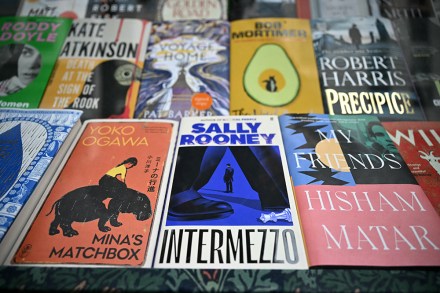
Is there hope for literature in America this century? The forecast looks grim. One walk through the literary fiction section at a bookstore is a testament to the art form’s cultural bankruptcy. Just about every other book on the new release table is a treatise on your racism masquerading as a tale of collective uplift. Fine, if you want to expiate your sins of privilege – but all in all, a snoozefest. Novels held a central place in America as a vital cultural force; novelists were worshipped as electrifying sages Same goes for most of the books on the New York Times list of the 100 best books of the century so far. The subjects of race, gender and oppression generally dominate.

My husband first and last – by Lalla Romano

In 1984 Innocenzo Monti died after a short illness. He and the writer Lalla Romano had been married since 1932 and had met in the late 1920s in her native Piedmont. Romano – a poet, painter and the author of 19 novels – wrote the story of their life together in her 1987 book Nei mari estremi, rendered as In Farthest Seas by the translator Brian Robert Moore. The structure of the book – an auto-fictional memoir – is bifurcated. The opening, shorter, part deals with the first four years of the relationship, from the moment of their first encounter (he was ‘wearing hiking boots, we were in the mountains’), to their early sexual explorations. ‘Discomfort, effort, labour’ is luckily replaced by ‘bliss’ that was ‘beautiful, even a little exalting’.

The short, restless life of Robert Louis Stevenson

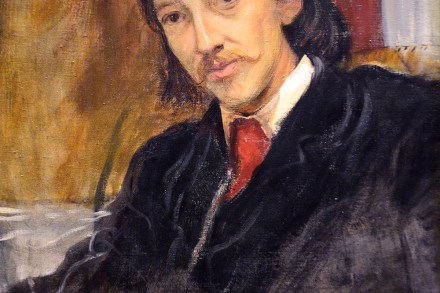
The discriminating Argentinian novelist Jorge Luis Borges once revealed his fondness for ‘hourglasses, maps, 18th-century typography, etymologies, the taste of coffee, and the prose of Stevenson’ – a list that was quirky and eclectic, adjectives that neatly encapsulate Robert Louis Stevenson himself. The story has often been told – but it’s a good one – of how the wiry, velvet-jacketed Stevenson emerged from Edinburgh’s haute bourgeoisie to become a hugely successful writer, before ending his shortish, sickly life on the Pacific island of Samoa in 1894, a revered expatriate married to a wilful American woman a decade his senior.

Exploring the enchanted gardens of literature

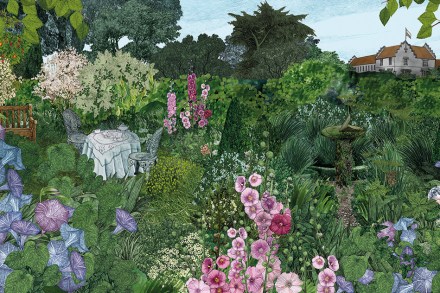
‘If Eve had had a spade in paradise, we should not have had all that sad business with the apple,’ claims the narrator of the novel Elizabeth and her German Garden (1898). The author, Mary Annette Beauchamp, eventually adopted the pen name Elizabeth von Arnim, merging her identity with the fictional character she had created. Both Elizabeths lived in Nassenheide in Pomerania (now Rzedziny, Poland), but whereas the fictional one had a spectacular garden, with a majestic clematis ‘Jackmanii’, giant poppies and delphiniums, the real Elizabeth, according to E.M. Forster (who was briefly employed as a tutor to the von Arnim children), did not have much of a garden at all.

Why Generation Woke loves romantasy

When the willowy human Feyre meets the faerie Tamlin in A Court of Thorns and Roses (known as ACOTAR by fans), he is a ‘snarling gigantic beast with golden fur’. Drama ensues when Tamlin, with his ‘elf-like horns’ and ‘yellow fangs’, kidnaps Feyre. He keeps her in captivity, then claims her: turning up in her room at night and clamping his teeth down on to her neck against her will. Two hundred pages later, the pair finally have sex and Feyre marvels that while ‘his claws were out’ they are ‘devastatingly gentle on my hips as he slid down between my thighs and feasted on me’. She moans his name and he ‘sheathed himself inside me in a powerful, slow thrust that had me splintering around him’.

Public libraries deserve to shut – they’ve forgotten why they exist

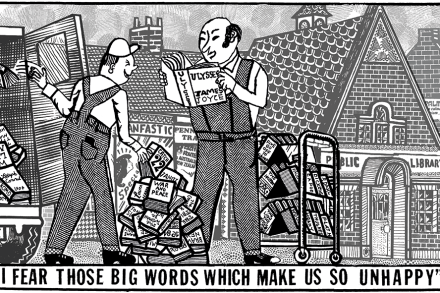
The usual piece about public libraries runs like this. Public libraries are for ‘more than just books’. They are in a desperate plight after years of cuts, or better still ‘Tory cuts’. Librarians, who are heroes, struggle to go on serving their local communities. Libraries are hanging on by a thread, and because of those government cuts can’t be as useful as they once were. The only solution, of course, is more money from central government to local authorities, who, of course, will dash to spend the extra millions on reinstating public libraries and not add it to other things they want to splurge on.

Spare us from ‘experimental’ novels

Some sorts of books and dramas have very strict rules. We like a lot of things to be absolutely predictable. In romantic comedies, a girl chooses between a charmer who turns out to be a rotter and another man she hates at first but then falls for. In the BBC’s long-running Casualty, if a worried patient turns up with his put-upon wife who coughs twice, it’s the wife who’s got an undiagnosed fatal disease. Bertie Wooster falls for a girl that Jeeves doesn’t care for and the valet goes to some lengths to detach his employer. We like these things because they’re safe and a little bit cosy and we all know what the rules are. One of the most rigid genres at the moment is slightly different.

Scuzz Nation, the death of English literature & are you a bad house guest?

40 min listen

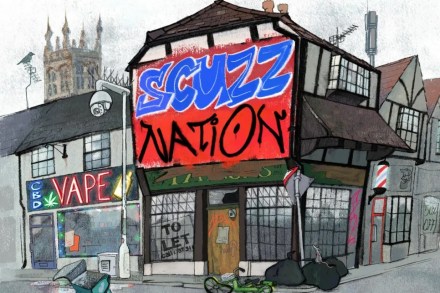
Scuzz Nation: Britain’s slow and grubby declineIf you want to understand why voters flocked to Reform last week, Gus Carter says, look no further than Goat Man. In one ward in Runcorn, ‘residents found that no one would listen when a neighbour filled his derelict house with goats and burned the animals’ manure in his garden’. This embodies Scuzz Nation – a ‘grubbier and more unpleasant’ Britain, ‘where decay happens faster than repair, where crime largely goes unpunished, and where the social fabric has been slashed, graffitied and left by the side of the road’. On the podcast, Gus speaks to Dr Lawrence Newport, founder of Crush Crime, to diagnose the issues facing Britain – and offer some solutions to stop the rot. (01:28) Next: is it demeaning to study Dickens?

Marriage, motherhood and money: Show Don’t Tell, by Curtis Sittenfeld, reviewed

Show Don’t Tell, a collection of 12 short stories by the American writer Curtis Sittenfeld, explores marriage, sex, money, racism, literature and friendship from the 1990s to the present. There is a fine line here between memoir and fiction, with many of the female protagonists being Midwestern, bookish Democrats – quite like Sittenfeld herself. In the eponymous story, Ruthie, a writer, dismisses the notion that ‘women’s fiction’ is perceived as giving off ‘the vibe of ten-year-old girls at a slumber party’. She reflects on internalised misogyny: ‘It took a long time, but eventually I stopped seeing women as inherently ridiculous.

A crisp and refreshing account of the apple

From our US edition

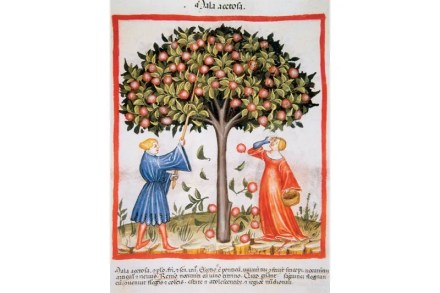
In Food for Life, Tim Spector’s book on the science of eating, the author gives the chemical makeup of a mystery food, listing more than 30 scary-sounding E numbers, sugars, acids and chemicals, before revealing that it is an… apple. Sally Coulthard’s book, The Apple, shows that it’s the apple’s complexity as well as its familiarity, that makes it the ideal punchline for Spector, and, for Coulthard, a perfect vehicle to carry the history of how we grow, trade, cook and eat together and take responsibility for each other and the environment (or not).

apple

Good riddance to literary fiction

In case you hadn’t noticed, the London Book Fair has been gracing our nation’s capital this week, down in Earl’s Court. There, the publishers, agents and buyers of the literary globe (London is second only to Frankfurt in ‘book fair importance’) have been feverishly buying and selling the rights to hot new titles, hot new authors, maybe the odd lucky midlister, while identifying the trends, writers and genres that conceal the ultra-precious kernel of hotness to come. In today’s market it’s likely that buyers have been looking for visually rich comic books for children – enjoying a resurgence – and anything in a newish genre called ‘romantasy’ (think Fifty Shades of Grey meets Game of Thrones, with more vampires and less spanking).

Evie Wyld’s latest novel is unsettling yet hopeful

From our US edition

Evie Wyld’s powerful fourth novel opens from the perspective of Max, a ghost who haunts the south London apartment where he lived with his girlfriend Hannah. A ghost story is new ground for Wyld, the multi-award-winning Anglo-Australian writer, but her signature traits are immediately evident — poetic observations of unusual details; a pervasive sense of grief and palpable trauma, leavened with a wry sense of humor (Max notes his "strong urge to file a complaint" about being a ghost); and an intricate plot that compels readers to delve into complex past events.

Wyld

Ali Smith’s latest novel falls flat

From our US edition

"Gliff" is a word which can mean "a short moment," "a wallop," and "a post-ejaculatory sex act;" to "dispel snow," "to frighten," and to "escape something quickly." It’s "really excitingly polysemous," says one of Ali Smith’s characters. It’s certainly an apt title for a book which can’t seem to define itself. At its center are two children, Briar and Rose, who have been abandoned. Their mother is absent, caring for a sick sister, and their other responsible adult leaves to find her. The children exist in a stock dystopian world (people are surveilled by CCTV cameras and zombified by screens) with a twist: they repeatedly wake up to find that a red line has been painted around their house or camper van. They are on a list of "Unverifiables.

Gliff

Why Goethe matters

From our US edition

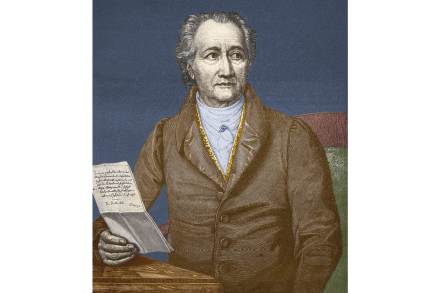
Johann Wolfgang von Goethe bears one of the most famous names in world literature, though he is largely unread by English-speakers. He is most closely associated with the novel and dramatic form, so many would be surprised to know that he primarily spoke of himself, for much of a long life that spanned from 1749 to 1832, as a scientist. He was a pioneering exponent of the science of evolution, and in two wonderful poems, The Metamorphosis of Plants and The Metamorphosis of Animals, he explored his belief that nature evolves from simpler, earlier life forms. This, rather incredibly, was seventy or eighty years before Charles Darwin began to write.

Goethe

The triumph of surrealism

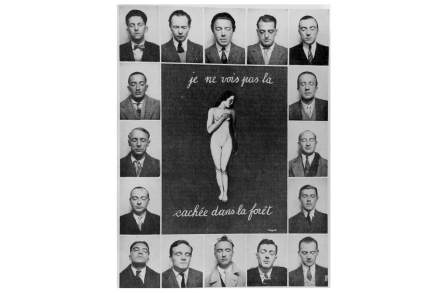
When Max Ernst was asked by an American artist to define surrealism at a New York gathering of exiles in the early 1940s, he pointed across the room at André Breton and said: ‘That is surrealism.’ Even today it can seem as if no other answer is available, so tenacious was his grip. A former student of neurology and psychiatry, with no qualifications other than an instinct for the coming thing (‘an astute detector of the unwonted in all its forms’, as he later described his fellow conspirator Louis Aragon), Breton encountered the early writings of Freud as a medical orderly on a trauma ward, during the first world war, and immediately recognised the significance of his work.

The chameleonic life of Claire Clairmont

From our US edition

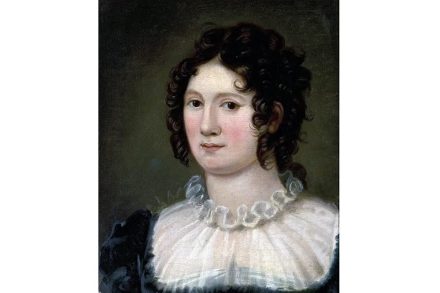
Commentary on the young Romantics can be curiously puritanical. Not on saintly John Keats, who died too young to cause any trouble. But Byron and Shelley? Beastly to women, negligent as parents, destructive as friends, oblivious to their own privilege. Feminist observers tend to resemble the English visitors to Geneva in 1816 who borrowed telescopes to spy on the renegade inhabitants of the Villa Diodati across the lake, hoping to be scandalized. A central character in the summer that saw the birth of Frankenstein was the only non-writer of the villa’s gathering, Byron’s young lover and Mary Shelley’s stepsister, Claire Clairmont.

Clairmont

Who is your favourite character in children’s literature?

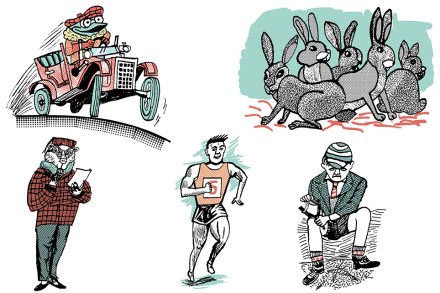
Rod Liddle Rabbits, always rabbits. I remember at age 13 forcing my poor parents to trudge despondently across hilly downland on the borders between Berkshire and Hampshire, with me jubilantly pointing out stuff like: ‘Look, it’s the combe where Bigwig met the fox!’ and ‘I think this could be the Efrafa warren!’ For a while, Watership Down jostled uneasily with the grown-up stuff I was just beginning to enjoy – Jack Kerouac, James Thurber, Ray Bradbury – but it still held a big claim on me and does today. Better than On the Road, isn’t it? Watership Down also took me back from the awkwardness of puberty to the safety zone of post-toddlerdom and, of course, Brer Rabbit.

The problem with westerners seeking enlightenment in Asia

From our US edition

Call it a prejudice if you like. Living in Japan in the 1970s, I had a slight aversion to a particular type of westerner. He — for it was mostly a he — usually lived in Kyoto, sometimes wore a kimono and liked to sit in ancient temples chasing after that presumably blissful moment of enlightenment, awakening, satori, or whatever one wishes to call it. These seekers were less interested in Japan as a society of human beings. They wanted to float in higher spheres. As Christopher Harding explains in The Light of Asia, the Zen adepts, the Buddhist chanters, the rock-garden worshippers, the kimonoed fools (in my no doubt blinkered eyes) were part of a long western tradition.

Asia

The talented Evan S. Connell

From our US edition

When the journalist Steve Paul began his biography of the writer Evan S. Connell, a young librarian was helping him access research material. She happened across a photograph, and remarked, “What a suave-looking dude.” Connell had movie-star good looks. Of his eight novels, two are now packaged as classics of American literature. This on top of a biography of Goya; a 2009 Man Booker International nomination for lifetime achievement; and a bestselling history of a battle in the Great Sioux War of 1876. Acolytes recommend his greatest book, Mrs. Bridge, with the confident smile that looks forward to welcoming another member to the exclusive band of Connellites.

Connell

It feels somehow improper to witness an author groping for the right words

The early stages of a literary work are often of immense interest. It is perhaps a rather tawdry kind of interest, like paparazzi shots of a Hollywood starlet taking the bins out before she’s put her make-up on. Of course it’s extraordinary to think that some of the most famous characters, events and lines in literature weren’t as we now know them but had to be struggled towards. Sometimes these efforts have the anachronistic but unavoidable sense of somebody getting it wrong. Textual bibliographers have carefully classified the different steps a work takes from manuscript to first edition and subsequent versions. Perhaps we could go further in search of a writer’s progress.