Literature

Why does Hollywood ruin literature’s best characters?

From our US edition

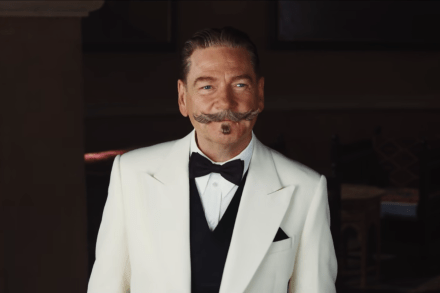
I remember enjoying Murder on the Orient Express a few years ago, when I took refuge from a real-life blizzard in a Jackson, Wyoming theater to watch Kenneth Branagh’s decadent take on Agatha Christie’s snow-covered murder mystery. It was memorably cast with big-name talent (Johnny Depp makes one heck of a sleazy bad guy) and exquisite, if sometimes over-the-top, costumes and décor. If memory serves, the movie ended as a suspenseful and satisfying cinematic treat. Death on the Nile, not so much. Branagh teased his next adaptation of an Hercule Poirot novel at the end of Orient Express, but I found his second attempt wasn't worth the five-year wait.

kenneth branagh poirot hollywood

P.J. O’Rourke mastered the art of teasing

From our US edition

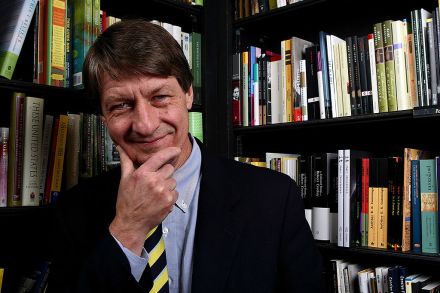
I first encountered P.J. O’Rourke’s writings as a teenager in a copy of Modern Manners my father encouraged me to buy while we were browsing the secondhand offerings of an offbeat little bookstore (looking back, I can’t imagine who in their right mind would part with such a book). “You should get that, he’s funny,” dad said. That evening, I read some G-rated excerpts to my traditionalist parents, who laughed out loud. For me, it was love at first quip. I finished the rest of Modern Manners in one sitting, completely taken by a style of writing I found blended the best qualities of a person. It was smart, perceptive, clever, sensitive and, of course, good-humored. Reading P.J. O’Rourke inspired me to want to write in a way that informs and entertains.

p.j. o’rourke

The deep conservatism of Agatha Christie

From our US edition

Some fiction, regardless of how intimately tethered to a time and place, is timeless. And the work of Agatha Christie certainly seems that way. Christie's novel Death on the Nile is now receiving renewed cinematic treatment under the expert hand of Kenneth Branagh, with the film scheduled for release on February 11. This follows the success of Branagh’s 2017 adaption of Murder on the Orient Express, which grossed $351 million against a production budget of $55 million. “Rest assured," says Belgian detective Hercule Poirot in Christie’s novel Five Little Pigs. "I am the best!” The same might be said of Christie herself, the world’s all-time bestselling fiction author.

The death of literature

From our US edition

The greatest men make the greatest mistakes. One thinks of the late John Lukacs, the Hungarian-American historian who claimed that the age of the book is at an end. That is far from being the case, the electronic book having failed to drive the print version to extinction as enthusiasts had predicted. Indeed, the continuing flood of printed and bound books remains among the greatest threat to books today — good books, that is, books worth an intelligent man’s time.

literature

What Norman Mailer’s ‘cancellation’ reveals

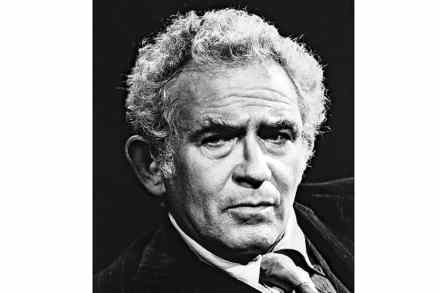
New York Recently a story about my father, the writer Norman Mailer, getting ‘cancelled’ tore across the internet. What started the hoopla was Random House, Mailer’s long-standing publisher, suggesting that his estate bring a proposal for a book. The book was to contain excerpts from several of his political writings and interviews in which he presciently laid out the fragility of democracy. The collection was intended to honour his centenary next year. Random House received the proposal favourably, but then weeks later declined to publish it. The reasons are hearsay. One suggestion is that there were objections by junior executives to the use of the word ‘negro’ in Mailer’s essay ‘The White Negro’.

Why we should study literature, not science

Gstaad Who was it who said good manners had gone the way of black and white TV? Actually it was yours truly after watching the slobs parading up and down Gstaad’s main street. That was last year, but the bad news is that this year slobovia has come to stay again. Mind you, Alexandra and I had planned to have 50 friends for a party to celebrate 50 years of my enslavement, but Mister Omicron arrived and put a damper on our plans. The tent on the lawn and the oompah band were cancelled, and the New Year’s Eve blast turned into a smallish affair. The good news is that there are still a few people who don’t adhere to the online culture of today, that of anger, incivility and non-stop use of the F-word.

On literary cross-dressing

From our US edition

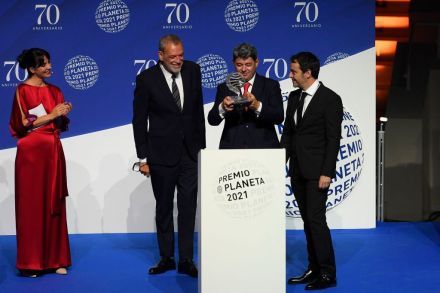
When Carmen Mola won Spain’s Planeta literary prize for her crime thriller, The Beast, it was widely assumed that she was a female professor with a hardboiled literary style. Think again, mis amigas. Mola was the pseudonymous literary creation of three men: Jorge Diaz, Antonio Mercero and Agustin Martinez. The three scriptwriters smirkingly accepted the million-euro prize at a ceremony in October, and the literary world, home of uppity puritans and shrill wokesters, immediately found itself enmeshed in a scandal highlighting issues relating to authenticity and authorial freedom.

literary

Black tie in NYC

From our US edition

Visiting New York for my first black-tie dinner since the onset of the pandemic — a benefit for PEN America, the writers’ organization dedicated to free expression and the promotion of literature — I open my suitcase to discover I am sans black tie. I hit the streets, slaloming through crowds of unflappable Manhattanites who have surely witnessed stranger sights than a frazzled man in a mulberry tuxedo, desperately searching for a cravat. To my shock, Neiman Marcus is out of bowties. I purchase a black necktie. On my way out the door, another customer comes in. “Where are your bowties?” he asks aloud. “You won’t find any here,” I volunteer.

PEN

Why we should venerate Evelyn Waugh

From our US edition

Evelyn Waugh is popularly known today as a comic author, despite the fact that Brideshead Revisited, made famous by the eponymous 1981 television series, is certainly not a comedy. Not everyone agrees. Years ago, a well-read friend of mine remarked to me that he was not fond of Waugh’s work. When I asked why, he replied, ‘Because I don’t think he’s that funny.’ I answered that the way to appreciate the exquisite wit of Evelyn Waugh is to approach him in the expectation of something other than humor, in which case the absurd incongruities, outrageous juxtapositions and ludicrous extremes that occur throughout the novels are in fact supremely funny. Waugh never set out to write comedic stories in the manner of P.G.

waugh
trigger

Why trigger warnings don’t work

From our US edition

The science is in, but don’t expect that to change anything. According to at least 17 recent studies, trigger warnings — those advisories posted ahead of content some readers may find distressing — not only fail to alleviate suffering in the emotionally disturbed but may actually induce greater trauma in those individuals. There are, to date, no studies that indicate trigger warnings work to their intended purpose. They were dreamed up in the 1970s after psychologists began to diagnose a new condition, post-traumatic stress disorder, in Vietnam War vets. But trigger warnings only reached popular consciousness in the 2010s, when feminist blogs used them ahead of content about sexual violence.

How Harvard went woke

From our US edition

On January 1, 1993, I arrived at Harvard to take up a newly endowed professorship in Yiddish literature. It seemed preposterous: me at Harvard, Yiddish at Harvard. The university had never figured in my aspirations. My impressions of the university had been formed mostly from what I knew of its program in Jewish studies, which was jokingly referred to as ‘the Yeshiva on the Charles’ because of its emphasis on Talmudic and medieval sources. Its almost exclusively male Department of Near Eastern Languages and Civilizations felt obliged to appoint a female. My gender played an even more prominent part in the deliberations of the Department of Comparative Literature where I was to hold a joint appointment.

ruth wisse harvard

My literary heroes have led me astray

Gstaad   Good manners aside, what I miss nowadays is a new, intelligent, finely acted movie. Never have I seen so much garbage as there is on TV: sci-fi trash, superhero rubbish, dystopian crap and junk about ugly, solipsistic youths revolting against overbearing parents. The director Jimmy Toback blames the subject matter for the lousy content, driven as it is by the need for diversity. I think lack of talent is the culprit. The non-stop use of the F-word is a given in Hollywood productions. Combined with constant violence, it makes for a lousy and unwatchable film.

Gender neutrality and the war on women’s literature

Education has become embroiled in a culture war and rather than extricating itself politely, it just keeps digging. What gets taught has long been subject to debate: move beyond the basics and you rapidly head into dangerous terrain (although, look hard enough, and you will find those prepared to argue that even maths and spelling are racist). Now it’s not just taught content but the name of modules that is under the woke microscope. One of the UK’s leading exam boards, OCR, has proposed renaming the ‘Women in Literature’ section of its A level English courses. It is taking votes on new titles: ‘gender in literature’ or ‘representing gender’.

It’s impossible not to feel snooty watching ITV’s Agatha and Poirot

Agatha and Poirot was one of those programmes that had the annoying effect of making you feel distinctly snooty. ITV’s decision to dedicate 85 minutes of primetime Easter Monday television to a books-related documentary was never likely to result in a steely Leavisite engagement with literature. Nor, of course, should it. Even so, it was hard to avoid a dowager-like shudder when, for example, one contributor declared that Agatha Christie ‘will never be surpassed as the world’s greatest novelist’ — especially when the contributor was that well-known literary critic Lesley Joseph.

The author in full: Tom Wolfe

From our US edition

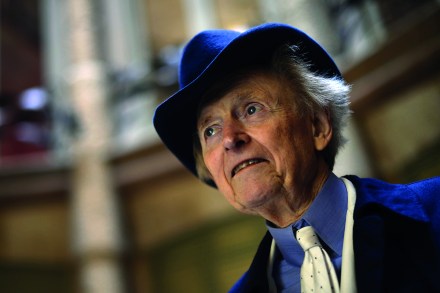
I was introduced to Tom Wolfe in the late 1970s, a year or two after I had begun my journalistic career as the literary editor at National Review, by Timothy Dickinson — an Oxford man working for Lewis Lapham, then editor of Harper’s — who was (as he doubtless remains) the sole ambulatory compendium of the British Museum. As Wolfe was fond of Middle Eastern cuisine, we met for lunch at a Lebanese place in Manhattan’s Garment District. While saying goodbye on the sidewalk out front of the restaurant after the meal, Timothy dropped his walking stick which was headless; only the screw that had once fastened the missing head in place protruding from the top of the shaft.

tom wolfe

How not to run a literary festival

Gstaad A friend of mine who lives here wants to start a literary festival and asked me if I had any advice for him. He’s a nice fellow and very friendly with my daughter, but he’s also the type who, had he been on board the Titanic, would have thought that the engines had stopped in order to take on some ice. In other words, he’s a naive man who believes in literature and writers and doesn’t realise that both commodities are unknown and probably deemed dangerous up here among the glitterati. Perhaps I exaggerate, but I have yet to see any lovers of literature among the new arrivals: pushy, hungry bankers from Geneva, newly minted Brits who can’t pronounce the letter ‘H’, vulgar short and stubby types from the Gulf, and women-abusing Saudis.

The prophetic Raymond Chandler

From our US edition

This article is in The Spectator’s February 2020 US edition. Subscribe here.Laramie, Wyoming In an age of extreme individualism complicated by racial sensitivity and class resentment, ancestry is an uncomfortable subject. But it remains a fact that a man’s ancestors are never irrelevant to who and what he is, though of course they determine neither. Raymond Chandler (1888–1959) said that he was conceived here in Laramie, before being delivered in Chicago following the usual interval of nine months. His American father deserted the family and his Anglo-Irish mother took her son to England, to be educated at Dulwich College.

raymond chandler

Lydia Davis, like an inspirational teacher, tempts her readers into more reading

A good indicator of just how interesting and alluring Lydia Davis’s Essays proved might be my recent credit card statement. It was hard to read very far without being introduced to an unfamiliar author, and the terms of the introduction were frequently so seductive that I found myself breaking off to order several secondhand books. The fee for writing this review had long been swallowed up when I realised that if I read everything that Davis made sound irresistible I would probably never reach the end of this splendid collection — and end up like Achilles chasing the tortoise in Zeno’s paradox.

Spooky stories for Halloween

It is surely significant that Ed Parnell’s first novel The Listeners was an updated examination of themes latent in Walter de la Mare’s famously spooky poem of that title. The author credits this predilection for the macabre to an aunt’s VHS recordings of the Quatermass stories in the 1970s, when he was just a small child. Since then he has become an aficionado of the genre, and in his latest book makes a journey through Britain, from Cornwall to the Scottish Highlands, to pin down his own passion for ghost stories while exploring our national obsession with writings on the supernatural. Ghostland includes many of the genre’s key exponents, such as M.R.

Where are Yeats, Eliot and Plath in a new survey of 20th-century poetry?

Shelley famously and optimistically proclaimed that poets were the unacknowledged legislators of the world. Adorno famously and pessimistically declared that poetry was impossible after Auschwitz. In The Music of Time, his new study of poetry in the 20th century, John Burnside makes a rather more modest claim: that to write a poem at all is an act of hope. By any standards, Burnside’s own career seems cause for hope in poetry’s capacity to transform at least one individual life. Born in 1955, into a working-class family in Dunfermline, he did not start publishing until he was in his thirties, following an addiction-fuelled breakdown and a subsequent attempt at a commuter-belt career in computing.