Literature

Why it’s permissible to betray family secrets

Blake Morrison is the quintessential man of letters. More exactly, he’s a man of genres – poet, novelist, playwright, essayist, librettist and, most notably, memoirist. (Four memoirs so far, each a prize winner and/or bestseller). Although in the introduction to On Memoir he refutes the notion that he established the genre of life writing in the UK (he was professor of creative and life writing at Goldsmiths University, London for 20 years) or that he has ‘encouraged its growth’, he has somehow become its guru, the critic every literary editor turns to on the publication of yet another raw family story or celebrity revelation. He may have popularised memoir, but

The typo that spelled death in the Soviet Union

‘As anyone who has gleefully spotted a typo in a prestigious publication, felt a flicker of schadenfreude at a pompous critic’s downfall, or secretly enjoyed a literary scandal knows, it is possible to love books while delighting in their disasters.’ The sentiment expressed in Rogues, Widows and Orphans is familiar to this reviewer. Rebecca Lee, who has been an editor for two decades, knows very well how words ‘get good’ (to quote the title of her earlier book) and what happens when they go wrong. Her new work ‘offers a lick of every flavour of ick lit’, leaving the reader craving more. Errors and omissions in print have consequences for

The cormorant – symbol of gluttony and the Devil

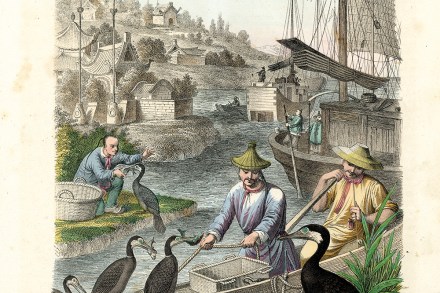
Greed, death, hate and clouds of destruction – this is the cormorant season all right. I was hungry to read Gordon McMullan’s book because I love the birds and looked forward to learning their secrets. But I gathered only a little about the green-glossy, serpentine jewel of a fowl I saw in Hebden Beck recently, hunting in the middle of town where I’d never seen it before. Look elsewhere for the creaturely particulars, such as the spur of bone at the back of the skull from which thick muscles link to the lower mandible, giving the corvus marinus a mighty bitey beak. This book is not concerned with what we

We’ve already given up on novels

Late last year, I was notified that one or more of my novels might have been fed to an Anthropic large language model, because in a class-action suit the company had reached a copyright settlement with authors who’d never given an AI Goliath permission to gorge on their work. Sure enough, a website verified that 11 of my books had been used as silage for this insatiable digital leviathan. Each of the LLM’s tasty Shriver mouthfuls may merit compensation of about $3,000. But before I take out a loan against that $33,000 sure thing to buy myself a Chinese EV, I should read the fine print: ‘court-approved costs and fees’

A literary guide to how to pay your school fees

Another day, another report on how many children have had to leave their private schools, thanks to Labour’s VAT raid on fees. This particular survey, by wealth management firm, Saltus, found that almost one in ten parents have had to take their children out of the independent sector altogether while 65 per cent of those questioned admitted to making ‘significant changes’ to their circumstances to keep their children in private education.    When belts can only be tightened so far, parents need to get creative. Frankly, the only affordable ways of educating your children privately today are either: a) access to masses of inter-generational wealth (which presumably you don’t enjoy, or you wouldn’t have read this far) or b) being

Bring back the book launch

Last week, I had the pleasure of heading to the Freud Museum in Hampstead for the launch of Zoe Strimpel’s much-discussed new book Good Slut. Not only was the venue one of the most splendid I’ve been to for a party of this kind, but the guest list – which included The Spectator’s esteemed editor – was suitably glittering for a Thursday evening in early March. Everyone was on top form, much jollity was had, and by the time the author gave a suitably witty speech from the top of the staircase that Sigmund Freud once ascended and descended, a fabulous time had been had by all.  Would that this

The art of the transatlantic liner

Some time in the next few weeks, a great ocean liner will be lost at sea. One of the greatest, in fact. When the SS United States made its maiden voyage in July 1952, it was the last word in transatlantic liner design. In an age of ocean-going elegance, the ‘Big U’ was the newest, the sleekest and the swiftest. To this day, it holds the Blue Riband – the all-time record for the fastest transatlantic crossing by a passenger ship. Now, after five decades rusting in dock, and a series of unsuccessful preservation attempts, the United States is about to make its final voyage. Stripped of masts, fittings and

From Evelyn Waugh to Elizabeth Day, The Spectator’s enduring place in fiction

There are decades when The Spectator is shorthand for a trait: sex (2000s), young fogeys (1980s), free trade (1900s). But I was surprised to find Henry James, a writer not given to shorthand, deploying the magazine’s name to give a sketch of Isabel Archer, the title character of his Portrait of a Lady: ‘She had had everything a girl could have: kindness, admiration, bonbons, bouquets, the sense of exclusion from none of the privileges of the world she lived in, abundant opportunity for dancing, plenty of new dresses, the London Spectator, the latest publications, the music of Gounod, the poetry of Browning, the prose of George Eliot.’ ‘That half-page is

Do we really need a ‘new spin’ on Jane Austen?

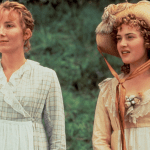
If you like your period dramas butchered, then you are in for a real treat. The 250th anniversary of Jane Austen’s birth falls on 16 December, and we are promised a slew of adaptations, documentaries and lectures to mark it. Inevitably, some of these will try to put a ‘new spin’ on Austen, to make out that she was somehow in line with a particular cause or interest of modernity; Mansfield Park is about saving the whales, Colonel Brandon is actually trans, that sort of thing. This year, Emma Thompson stars in a ‘racy’ new audio drama, Becoming Meg Dashwood, which will focus on the youngest Dashwood sister and her

The joy of a miserable literary Christmas

A Christmas Carol is pretty well unavoidable around now, with Little Women trailing somewhat behind. There’s no shortage of alternative literary Christmases among the classics, however, often less sweetly heartwarming and more invigoratingly grumpy. Nigel Molesworth, it will be remembered, foiled all attempts to inflict A Christmas Carol on him. ‘It is just that there is something about the Xmas Carol which makes paters and grown-ups read with grate XPRESION, and this is very embarassing [sic] for all.’ For the Molesworths among us, there are plenty of alternatives to be had. Sometimes these are depictions of Christmas where no Christmas should be occurring. Arnold Bennett’s sublime The Old Wives’ Tale

The folly of psychology

A young Chinese girl, at school in an English-speaking country, approached me after I gave a talk at a conference and asked for my advice about what she should study. I knew nothing of her, except that she was pretty, with beautiful dark eyes, and was almost certainly of high intelligence. I was touched by her naive assumption that I would answer benevolently and in her best interests. It suggested that she had not yet encountered much of human malignity. ‘What are you interested in?’ I asked. ‘I was thinking of history and psychology.’ ‘Ah,’ I said, ‘definitely not psychology, at all costs not psychology.’ My answer emerged spontaneously, without

My husband first and last – by Lalla Romano

In 1984 Innocenzo Monti died after a short illness. He and the writer Lalla Romano had been married since 1932 and had met in the late 1920s in her native Piedmont. Romano – a poet, painter and the author of 19 novels – wrote the story of their life together in her 1987 book Nei mari estremi, rendered as In Farthest Seas by the translator Brian Robert Moore. The structure of the book – an auto-fictional memoir – is bifurcated. The opening, shorter, part deals with the first four years of the relationship, from the moment of their first encounter (he was ‘wearing hiking boots, we were in the mountains’),

The short, restless life of Robert Louis Stevenson

The discriminating Argentinian novelist Jorge Luis Borges once revealed his fondness for ‘hourglasses, maps, 18th-century typography, etymologies, the taste of coffee, and the prose of Stevenson’ – a list that was quirky and eclectic, adjectives that neatly encapsulate Robert Louis Stevenson himself. The story has often been told – but it’s a good one – of how the wiry, velvet-jacketed Stevenson emerged from Edinburgh’s haute bourgeoisie to become a hugely successful writer, before ending his shortish, sickly life on the Pacific island of Samoa in 1894, a revered expatriate married to a wilful American woman a decade his senior.  Leo Damrosch, a literature professor at Harvard, offers no special sparkle,

Exploring the enchanted gardens of literature

‘If Eve had had a spade in paradise, we should not have had all that sad business with the apple,’ claims the narrator of the novel Elizabeth and her German Garden (1898). The author, Mary Annette Beauchamp, eventually adopted the pen name Elizabeth von Arnim, merging her identity with the fictional character she had created. Both Elizabeths lived in Nassenheide in Pomerania (now Rzedziny, Poland), but whereas the fictional one had a spectacular garden, with a majestic clematis ‘Jackmanii’, giant poppies and delphiniums, the real Elizabeth, according to E.M. Forster (who was briefly employed as a tutor to the von Arnim children), did not have much of a garden at

Why Generation Woke loves romantasy

When the willowy human Feyre meets the faerie Tamlin in A Court of Thorns and Roses (known as ACOTAR by fans), he is a ‘snarling gigantic beast with golden fur’. Drama ensues when Tamlin, with his ‘elf-like horns’ and ‘yellow fangs’, kidnaps Feyre. He keeps her in captivity, then claims her: turning up in her room at night and clamping his teeth down on to her neck against her will. Two hundred pages later, the pair finally have sex and Feyre marvels that while ‘his claws were out’ they are ‘devastatingly gentle on my hips as he slid down between my thighs and feasted on me’. She moans his name

Public libraries deserve to shut – they’ve forgotten why they exist

The usual piece about public libraries runs like this. Public libraries are for ‘more than just books’. They are in a desperate plight after years of cuts, or better still ‘Tory cuts’. Librarians, who are heroes, struggle to go on serving their local communities. Libraries are hanging on by a thread, and because of those government cuts can’t be as useful as they once were. The only solution, of course, is more money from central government to local authorities, who, of course, will dash to spend the extra millions on reinstating public libraries and not add it to other things they want to splurge on. It’s tragic, for instance, that

Spare us from ‘experimental’ novels

Some sorts of books and dramas have very strict rules. We like a lot of things to be absolutely predictable. In romantic comedies, a girl chooses between a charmer who turns out to be a rotter and another man she hates at first but then falls for. In the BBC’s long-running Casualty, if a worried patient turns up with his put-upon wife who coughs twice, it’s the wife who’s got an undiagnosed fatal disease. Bertie Wooster falls for a girl that Jeeves doesn’t care for and the valet goes to some lengths to detach his employer. We like these things because they’re safe and a little bit cosy and we

Scuzz Nation, the death of English literature & are you a bad house guest?

40 min listen

Scuzz Nation: Britain’s slow and grubby declineIf you want to understand why voters flocked to Reform last week, Gus Carter says, look no further than Goat Man. In one ward in Runcorn, ‘residents found that no one would listen when a neighbour filled his derelict house with goats and burned the animals’ manure in his garden’. This embodies Scuzz Nation – a ‘grubbier and more unpleasant’ Britain, ‘where decay happens faster than repair, where crime largely goes unpunished, and where the social fabric has been slashed, graffitied and left by the side of the road’. On the podcast, Gus speaks to Dr Lawrence Newport, founder of Crush Crime, to diagnose

Marriage, motherhood and money: Show Don’t Tell, by Curtis Sittenfeld, reviewed

Show Don’t Tell, a collection of 12 short stories by the American writer Curtis Sittenfeld, explores marriage, sex, money, racism, literature and friendship from the 1990s to the present. There is a fine line here between memoir and fiction, with many of the female protagonists being Midwestern, bookish Democrats – quite like Sittenfeld herself. In the eponymous story, Ruthie, a writer, dismisses the notion that ‘women’s fiction’ is perceived as giving off ‘the vibe of ten-year-old girls at a slumber party’. She reflects on internalised misogyny: ‘It took a long time, but eventually I stopped seeing women as inherently ridiculous.’ This volume can indeed be described as ‘women’s fiction’, whose

Good riddance to literary fiction

In case you hadn’t noticed, the London Book Fair has been gracing our nation’s capital this week, down in Earl’s Court. There, the publishers, agents and buyers of the literary globe (London is second only to Frankfurt in ‘book fair importance’) have been feverishly buying and selling the rights to hot new titles, hot new authors, maybe the odd lucky midlister, while identifying the trends, writers and genres that conceal the ultra-precious kernel of hotness to come. In today’s market it’s likely that buyers have been looking for visually rich comic books for children – enjoying a resurgence – and anything in a newish genre called ‘romantasy’ (think Fifty Shades