Law

An appraisal of judicial vulgarity

From our US edition

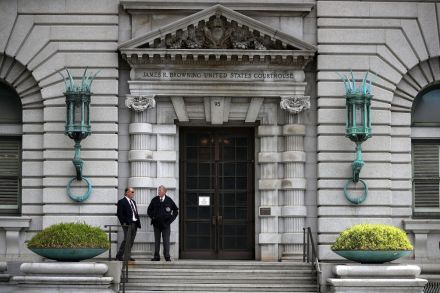
If you follow the courts, you will certainly have come across Olympus Spa v. Armstrong. On March 12, the Court of Appeals for the Ninth Circuit denied rehearing en banc in this case, which began in 2020 when a transgender woman in Washington State alleged that a traditional Korean spa, which requires patrons to be entirely naked, refused her (or is it him?) entry because she (he?) had not yet undergone so-called gender-affirming surgery.

judicial vulgarity

Is ‘international law’ practical?

From our US edition

The acceleration of history and the increasingly rapid advancement of the postmodern project, aimed at the transcendence of humanity by itself, makes consideration of the fundamentals of the progressive project necessary, but also inevitable. Among them is its dedication to the hectic search for hitherto unsuspected “human rights” and their instant realization in the name of “natural law,” a subject the French historian and political philosopher Pierre Manent has studied in depth and brilliantly illuminated in a number of works, most recently Natural Law and Human Rights: Toward a Recovery of Practical Reason.

I burnt a Quran. Now I may have to flee Britain

From our US edition

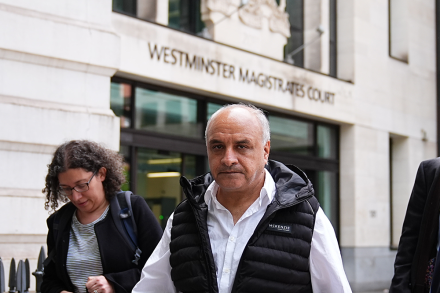
My name is Hamit Coskun and last year I was convicted in a British court of religiously aggravated public order offense. My “crime”? Burning a copy of the Quran outside the Turkish consulate in London. Moments later, I was attacked in full view of the street by a man. I was hospitalized. Then I was arrested and convicted in Westminster Magistrates Court. I managed to get that conviction overturned, with the help of the Free Speech Union and the National Secular Society, but now the Crown Prosecution Service is appealing my acquittal, with the case being heard tomorrow in the High Court. Now I am in discussions with the White House about claiming asylum in America in case the decision goes against me.

AI will kill all the lawyers

It feels, pleasingly, like a scene from a cerebral James Bond film, or perhaps an episode of Slow Horses. I am in a shadowy corner of a plush, buzzy Soho members’ bar. A mild December twilight is falling over London. Across the table from me sits an old acquaintance, a senior English barrister, greying, quietly handsome, in his mid fifties. And he wants to speak anonymously, because what he is about to say will earn the loathing of his entire profession. Let’s call him James. I’ve known him for a few years, and over these years we’ve discussed all kinds of things, from politics to architecture to the misfortunes of Chelsea FC. We’ve also discussed technology and AI. James’s views of AI were always like his politics: centrist, clever, moderate, sceptical.

The Comey dismissal is a miniature constitutional crisis

From our US edition

United States District Court Judge Cameron M. Currie, sitting by designation in the Eastern District of Virginia, yesterday dismissed the federal indictments against former FBI Director James B. Comey and New York attorney general Letitia James. At the crux of the court order is the judge’s finding that President Donald J. Trump’s administration unlawfully appointed Lindsey Halligan, the US Attorney who signed the Comey and James indictments. Taking the now familiar TDS cheap shot, the court order opens with a description of the US Attorney as “a former White House aide with no prior prosecutorial experience.” Attorney General Pamela J. Bondi appointed Ms.

Comey

Trump inherited a weaponized justice system

From our US edition

Has Donald Trump “weaponized” the justice system to go after his political enemies? The answer is no. “What about former FBI director James Comey?” you ask. “What about New York Attorney General Letitia James?” Both went after Trump hammer and tongs. Now both have been indicted by the Trump Justice Department. Are those not textbook cases of “weaponization,” of “retribution,” of using the power of the system to punish people who have punished you? Hold on. I write this in mid-October. By the time you read it, I suspect that the list of indictments will be much longer.

Trump

Is conversion therapy free speech?

From our US edition

Kaley Chiles is a Christian therapist who places the Bible at the center of her practice. To many of her patients, religious faith is often more important than Freud. They see Bible readings, prayer and a focus on spirituality along with traditional principles of psychotherapy as essential elements of any treatment plan.  While outside the mainstream of psychoanalytic practice, Chiles’s technique combining traditional psychotherapy with Biblical precepts for years had been deemed non-controversial, if confined to more conservative regions of the country. But that all began to change in 2019 when the state of Colorado enacted legislation banning so-called conversion therapy for minors, a technique that aims to help gays change their sexual orientation.

conversion

James Comey’s ‘knight in shining armor’ complex

From our US edition

Former FBI director James Comey is in the news again for all the wrong reasons. He’s been indicted for allegedly lying to Congress and obstructing a congressional investigation, which he denies. Comey’s arraignment is scheduled for October 8. Having covered every FBI director since 9/11, I’m reminded of Comey’s difficult relationship with the facts. In May, he was interviewed by the Secret Service after he posted a photo on Instagram that spelled out “86 47” in seashells. According to Merriam-Webster, eighty-six is slang for “to throw out,” “to get rid of” or “to refuse service to.” The dictionary says it originated in the 1930s, but these days to get “86’d” is widely interpreted as a threat of harm. Of course, President Trump is the 47th Commander in Chief.

Comey

Let the retribution begin

From our US edition

Let the retribution begin. A federal grand jury in the eastern district of Virginia, a suburb of Washington, DC, has indicted former FBI director James Comey for lying to Congress about leaking classified information to the press. During his four years at the FBI, Comey became a linchpin of the movement among Democrats in Congress and their legacy press supporters to oust Donald Trump during his first term. Trump never forgives and he never forgets.

Comey

Has deporting illegals become illegal?

The circus around Kilmar Armando Abrego Garcia – whose full name the New York Times likes to trot out as if citing an old-school English aristocrat – speaks volumes about the immigration battle roiling the US. Our friend Kilmar is what we fuddy-duddies insist on calling an illegal immigrant. The Salvadoran crossed clandestinely into the US in 2012. As for what he’s done since, that depends on whom you ask. According to his GoFundMe page, Kilmar is a ‘husband, union worker and father of a disabled five-year-old’. Left-wing media portray ‘the Maryland man’ – a tag akin to Axel Rudakubana’s ‘a Welshman’ – as an industrious metalworker devoted to his family.

My advice to Diddy – by Anna Delvey’s attorney

From our US edition

Sean “Diddy” Combs’ legal team is facing a daunting task. More than 50 witnesses – including A-list stars – are set to testify against him for throwing “freak-off” parties where victims were allegedly sexually abused and drugged. Crystal clear surveillance footage shows him beating up his girlfriend. And it will all play out at trial in the Southern District of New York where the conviction rate hovers above 90 percent.

Diddy

Letters: Our private schools are China’s next target

Ka-shing in Sir: Ian Williams highlights (‘Chasing the dragon’, 3 May) the degree to which the Chinese state has acquired interests in the UK. Yet he overlooks a few tentacles of the Asian octopus that have curled around my home region of eastern England. Swathes of high-quality arable land are being subsumed into solar farms, panels for which are manufactured in China. The resultant electricity will be distributed by UK Power Networks, controlled, as Ian points out, by Li Ka-shing. East Anglia’s biggest brewer, Greene King, has been China-owned since 2019, held by Li Ka-shing through CK Asset Holdings. Our government seems craven in its attempts to lure Chinese fast-fashion retailer Shein to list on the London Stock Exchange.

The law that is choking civil society

If one were to ask for a quintessential display of the British character it would be hard to better the Shrewsbury Flower Show. Officially the world’s ‘longest-running flower show’, according to the Guinness World Records, it is held over two days in August, attracting 60,000 visitors. This summer should be the show’s 150th birthday. Last week, however, the Shropshire Horticultural Society abruptly cancelled it. Rising costs were cited as a factor. But the main reason was the Terrorism (Protection of Premises) Act – known as Martyn’s Law. The legislation, which was given royal assent this month, requires organisers of events with more than 200 people to engage in lengthy bureaucratic and state-monitored protocols to protect visitors from terror attacks.

Let students and professors carry guns to class

From our US edition

Last week, I walked across Florida State University’s campus in Tallahassee, watching students laugh, read and relax in the sun. Today, that same lawn is a crime scene – the latest gun-free zone targeted by a coward intent on terrorizing innocent lives. The son of a sheriff's deputy shot two dead and injured six others in a campus rampage. Last year, Governor Ron DeSantis appointed me to the Florida Board of Education, where I serve the 3 million students who attend our K-12 schools and state colleges. It’s time to get real: gun-free zones do not protect our students – they turn them into defenseless, easy targets. At FSU, the shooter used his mother’s legally-owned service weapon. No law could have stopped him.

guns

Lessons for Keir Starmer from Cicero

The Prime Minister, Sir Keir Starmer, and his chosen Attorney-General, Baron Hermer, both professional lawyers, seem to take the view that lying is just an aspect of public relations and parliament an irrelevance. As the Roman republic collapsed under the assault led by Julius Caesar and Marc Anthony, Cicero reflected, in those perilous times, on the nature of the relationship between civil law (ius civile, the term given to the bulk of statute law in Rome) and government and how it might be enabled to control the situation. He turned, for example, to the jurists. These freelance experts in law, though they had no professional standing whatsoever, provided opinions on legal matters to anyone who wanted them.

The Mad Men theory of drunk decision-making

In electing this government, we seem to have picked the worst of both worlds: higher taxation combined with austerity in the public finances. The one bonus I had hoped to see from a left-wing regime was a healthily indulgent approach to spending. Instead we get a Chancellor of the Exchequer who is a former Bank of England economist. Voting Labour and getting a neo-liberal Chancellor is like going on a Club 18-30 holiday and bringing your parents along. It defeats the purpose of the exercise.

The Supreme Court on not standing for standing

From our US edition

Human beings are animals that often operate by proxy. Here’s a familiar example from the world of — well, I was going to say “the law,” but what I have in mind is not the law but its perversion, so let’s say “the legal bureaucracy.” Everyone has heard the phrase “the process is the punishment.” It covers a multitude of sins. In its core signification, the phrase describes an increasingly common situation in which the machinery of the law is deployed to harass, enervate, stymie and otherwise hobble someone the regime does not like but whom, for the time being anyway, it chooses not to incarcerate. Sometimes it is easier to bankrupt and demoralize an opponent into submission.

standing

Turbulence after the Trump verdict

From our US edition

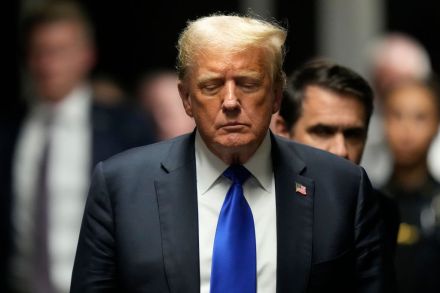
We live in tumultuous times. Donald Trump’s adversaries blame much of it on him — his hyperbole and personal attacks, the unrestrained actions that cross the bounds of propriety — even, perhaps, of the Constitution. Trump’s supporters see the same things and celebrate. They appreciate the brickbats he throws at a judicial system they think is mobilized against him. They love his denunciation of Washington bureaucrats and lobbyists who, they believe, run the country for their own benefit, and not very well at that. Both sides are right that Trump is a destabilizing figure, but there are deeper issues at play, most notably the significant social changes upending norms that have long governed American politics.

Trump

The cunning of the Democrats’ lawfare

From our US edition

It saddens me to admit it, but the evidence is too overwhelming to dismiss: Democrats are significantly more cunning than Republicans. I say “Democrats,” but that is an imprecise, even a misleading, designation. Party affiliation is not now, if it ever was, a really accurate predictor of ideological coloration. What I mean are those people, most of whom happen to belong to the Democratic Party, who have been bitten by the bug of extremism, who are fired by revolutionary fervor, who regard every opponent, every contrary opinion, as a “by-any-means-necessary” fire alarm. It is an attitude that has stirred their creativity, also their vindictiveness. Hercules had to undertake twelve supposedly impossible labors. Donald Trump is fast catching up.

Democrats

The Supreme Court takes on the administrative state

From our US edition

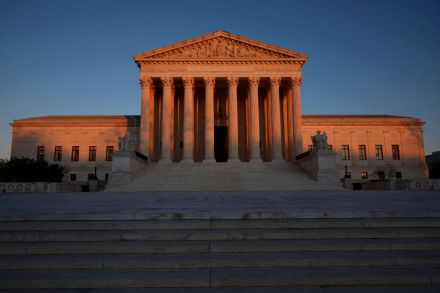
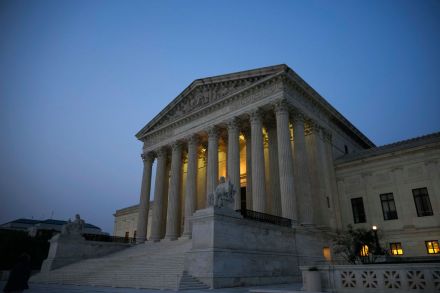
After consecutive Supreme Court terms with major rulings on abortion, guns and affirmative action, the justices don’t have anything on the docket now that will roil the culture wars. (The Trump ballot case to be argued as this goes to press will be a small blip.) Instead, this year our black-robed philosopher-kings are doing battle with the administrative state — which Steve Bannon promised to “deconstruct” when Donald Trump took office last go-round. That shouldn’t be surprising; notwithstanding the media trope that Trump “stacked the court” to overrule Roe v. Wade, it was instead potential nominees’ commitments to reining in the bureaucracy that was White House counsel Don McGahn’s focus.

Supreme Court