Labour party

Rents are falling, in real terms. So why does Ed Miliband want state intervention?

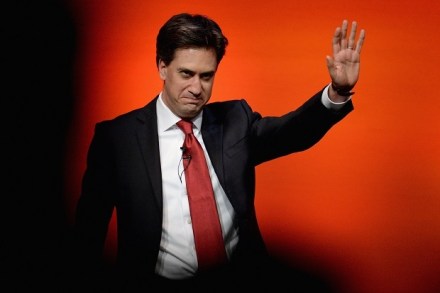
In recent weeks, I have found myself defending Ed Miliband as much as attacking him. I do believe that his election would be a calamity for Britain, but that doesn't mean I think he is an idiot pursuing a stupid strategy. On the contrary, I think what he is doing is bold, coherent, radical and chimes with the emerging populist mood. I also think that it is working – as things stand, he is on course to become the next Prime Minister. I look at this in my Telegraph column today. The rent control policy announced yesterday embodies this bold populism. Britain has a problem with buying houses – one created, in my view, by government policy to keep interest rates nailed to the floor during an economic boom.

Ed Miliband’s price control pattern

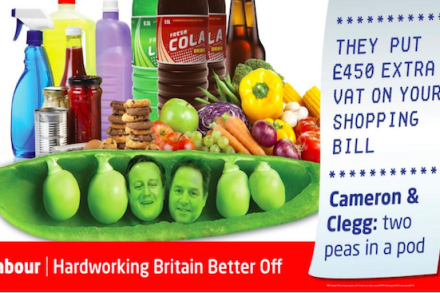
Ed Miliband has got the reaction he wanted to his speech on the private rented sector, which he used today to launch Labour's local election campaign. Landlords and nasty right-wingers hate this latest stage in his 'cost-of-living contract'. The Residential Landlords Association said rent controls 'would critically undermine investment in new homes to rent and are not needed' and the National Landlords Association said 'the proposal for a three-year default tenancy is unnecessary, poorly thought-through and likely to be completely unworkable'. On Coffee House, Policy Exchange's Chris Walker says 'rent controls are at best misguided and at worst could be counterproductive, longer-term'. Grant Shapps suggested that these were 'Venezuelan-style rent controls'.

Labour’s rent control policy will not solve our housing problems

Labour’s decision to impose rent controls will do little to solve our housing problems. Rent controls are at best misguided and at worst could be counterproductive, longer term. Misguided because rents have not actually been rising that fast in recent years. ONS figures show that rents rose by only 1 per cent in England in the year to March (1.4 per cent in London), a real terms fall. Indeed, since the beginning of 2011 they have only 4 per cent. Misguided also because this doesn’t deal with the root problem; a lack of supply in the housing market. Put simply we need to build many more houses, for rent and home-ownership, than we are building currently, around double to match the growing demand.

Labour goes after Cameron over TV debates

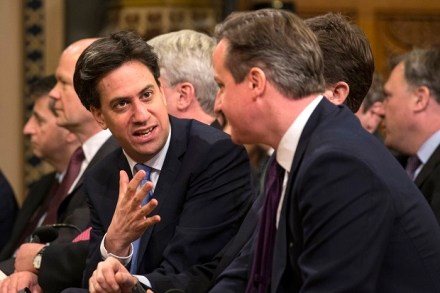
A smart move by Ed Miliband today to put pressure on David Cameron over the televised leaders' debates next year. Every time the Prime Minister is asked about these debates, he makes supportive noises while muttering about the 'right formula', but doesn't commit to anything. He has also said that he felt the debates 'dominated' the coverage of the 2010 election, which is as close as he'll come to saying that Nick Clegg's shiny new qualities at the time rather detracted from Cameron's own appeal which his strategists had been setting so much store by. But as the Prime Minister hasn't agreed to anything, Labour's trying to get ahead of the game and appear to drag Cameron into a studio.

If Ed Miliband is the Union’s saviour then the Union is doomed

With apologies to John Rentoul, Can Ed Miliband save the Union? is a question to which the answer is God help us all. I admit to a blind spot vis a vis the Labour leader: Looks like Gussie Fink-Nottle, thinks like a Marxist Madeline Bassett. Clever enough in a droopy kind of way but, ultimately, a gawd-help-us kind of fellow. I wasn't very impressed last time Mr Miliband came to Scotland and so I wasn't inclined to be impressed by his most recent trip to Glasgow. Which is dandy because I wasn't. I dare say Miliband's belief that Scottish independence would be a bad idea - for Scotland and the rest of the United Kingdom - is sincere. That this belief is in his own narrow, strategic, sectarian interest is beside the point.

Can Ed Miliband save the Union?

When Ed Miliband goes to Scotland and declares that ‘It is Labour that’s got to win this referendum’ it is a statement of political reality as much as it is braggadocio. The Tories have only one MP north of the border and the Liberal Democrats are the fourth party in the Scottish parliament. If this vote is to be won, Labour—as by far the largest Unionist party—will have to get the No camp over the line. Ed Miliband’s decision to take the entire shadow Cabinet to Glasgow last week was meant to show that UK Labour is now engaging fully in this battle. Miliband himself thinks that he has come up with an argument for the Union that is distinctly Labour.

How Nick Clegg missed his chance with Nigel Farage

At the start of the year, some of the air seemed to have gone out of the Ukip balloon. The party’s warnings about the scale of Romanian and Bulgarian immigration to Britain hadn’t been borne out by events. But the debates with Nick Clegg enabled Nigel Farage to get his momentum back. In those debates, Clegg was too passive in the first one and then over-compensated in the second with the result that he ended up losing both of them. Clegg’s decision to not engage with Farage in the first debate meant that he missed his best chance to get under the Ukip leader’s skin.

Why the local elections matter more to the Tories

Forget the European elections, which everyone (particularly those who fancy causing a bit of grief for David Cameron) expects to produce humiliating results for the Conservatives. The elections that have a longer-lasting impact that take place on the same day are the local elections. I look at the emphasis the Tories are putting on campaigning in the locals that goes over and above anything they're doing for seats in Brussels, in my Telegraph column today. But even those areas that don't have concurrent local and European polls on 22 May aren't exhausting themselves on campaigning for the European elections. Last year, the Conservatives tried to manage expectations by suggesting at one point that they would lose up to 750 seats - in the end they lost 335.

Labour’s unimpressive ‘zero hours’ announcement

Labour's announcement on zero hours contracts today as the Shadow Cabinet visits Scotland is supposed to be a demonstration of how much better the UK can be by staying together. Ed Miliband's reasoning is that a border between Scotland and rUK would mean a 'race to the bottom' between the two countries, who would come under pressure from 'powerful interests' to 'worsen wages and conditions for everyone else'. It's part of Labour's 'positive case' for the union which the party wants to make today, and the reasoning does, if you're a Labour type, make sense. The only spanner in the works is the policy that he's announcing, which will hardly set the soul on fire if you're a Labour type who has been expounding on the evils of these contracts.

Who tells Ed Miliband when he’s made a mistake?

Dan Hodges' piece in this week's Spectator on the team around Ed Miliband is a must-read (and we've posted an even longer version online here). As he runs through those working with the Labour leader, a clear pattern emerges. There doesn't seem to be a Lynton Crosby equivalent working with Miliband. One of the many things that make Crosby so important to the Conservative party is his ability to swear at them and tell them they're doing something wrong. Miliband doesn't have a Crosby-esque character in that respect. Instead, all those around him seem keen to either demonstrate that they are the most loyal, in a Uriah Heep-esque display of servility, or to bolster Miliband confidence.

Podcast: Ed Miliband’s radical Old Labour agenda and Clinton vs Bush round two

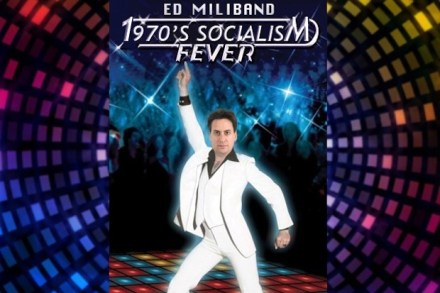
Where has Ed Miliband found the policies to form the basis of his potential government? On this week’s View from 22 podcast, The Telegraph’s Dan Hodges and Marcus Roberts from the Fabian Society debate the current state of Milibandism and whether the Labour leader is successfully crafting an intellectually coherent set of policies for government. Will Miliband limp over the finish line into No.10 with a strategy to win 35 per cent of the vote, or go for a broader One Nation approach? And does he still have any chance of becoming Prime Minister? Harpers’ Magazine John Rick MacArthur also joins to discuss Clinton vs Bush, again, with Freddy Gray. Why is the American political establishment looking increasingly like an oligarchy?

Can Labour really resist class war?

There's something quite amusing about a party that majored on the number of Etonians in the Cabinet as the substantive part of its response to the Budget briefing the Independent that it won't stoop to 'class war' in its 2015 election campaign. Labour, apparently, will occupy the moral high ground next year, which suggests the party will have to change its messaging quite significantly from this: 'What do this lot now call themselves? They call themselves the workers’ party. Who is writing the manifesto for this workers’ party? We have a helpful answer from one Conservative MP: “There are six people writing the manifesto…five…went to Eton”.

How Nigel Farage hopes that immigration can deliver victory for Ukip

Nigel Farage’s strategy for winning the European Elections is based around winning over blue collar workers who normally vote Labour. Ukip believe that they can use immigration as a battering ram to break through Labour’s defences in the north. One of the party’s campaign billboards unveiled last night simply says, ’26 million people in Europe are looking for work. And whose jobs are they after’. (I suspect that Ukip will welcome the controversy these posters are attracting because it will help amplify their message) https://twitter.com/Adrian_Hilton/statuses/458163441531097088 Ukip’s argument is that it is the only party that can actually do something about immigration.

An American, an Australian and a South African walk into a British election

All three main parties have now hired foreign advisers to help run their general election campaigns. These foreign advisers have one thing in common: they’re all from the English speaking world. Despite our membership of the European Union, when it comes to winning elections, all our political parties think there is more to learn from other English speaking countries than France or Italy. Indeed, it is hard to imagine any of them putting a European in charge of their campaign. But they are all delighted to have their American, Australian and South African campaign hands. Partly, this is a language thing. But, I think, it also goes deeper than that.

There’s supposed to be a ‘cost of living crisis’, Ed. Will free gym use solve it?

There was much excitement on Tuesday night when Labour's Pat McFadden, a former business and employment minister, appeared on Newsnight and said: 'I want to see a Labour Party that takes wealth creation every bit as seriously as its fair distribution. I’m all for justice and fairness in the work place. But you have got to create wealth too.' Tory spinners set to work. ‘Miliband needs to show that wealth creation matters,’ they said. ‘Even his supporters are critical.’ Tory spinners would say that, wouldn’t they? McFadden was merely one disgruntled voice (and with some form). But the chorus of concern has built over the last 24 hours; encouraged, no doubt, by the improving inflation, employment and wage numbers.

Foodbank statistics present problems for the coalition – and for Labour

Despite the stream of very good economic news (as described by Fraser and James), you won’t catch ministers saying that the crisis in living standards is ‘over’ because there is plenty of evidence to the contrary. The Trussell Trust, the Christian charity, has today published new statistics on food bank use. The headline figure is shocking: “913,138 people received three days’ emergency food from Trussell Trust foodbanks in 2013-14 compared to 346,992 in 2012-13”. The trust says that this is merely ‘the tip of the iceberg’ because the figures do not account for other foodbank providers. There is also, the trust says, no way of estimating how many people are too ashamed to use a foodbank and prefer to go hungry instead.

Keith Vaz on the smarm offensive

Keith Vaz was in full oil slick mode on Friday night when he found himself as the only Labour MP at the Asian Business Awards in Waterloo. Surrounded by dozens of Tories, including Priti Patel, Alok Sharma and Shailesh Vara, Vaz laid it on thick, telling the audience 'that was the best speech I've ever heard from a politician to Asian audience.' Who was worthy of such high praise? Why, none other than Labour's favourite bogeyman Michael Gove. Vaz continued: 'I was almost tempted to defect; but I'll wait until next year'. Well, creeping around the enemy never did John Bercow's campaign to become the Speaker any harm.

Alex Salmond’s message to Labour supporters: vote ‘yes’ to escape the Tories

When is a conference not a conference? When it’s a rally. Sitting in the hall listening to Alex Salmond this afternoon, it was hard to ignore the feeling that this SNP Spring Conference was about as far away from a party conference as it was possible to get. It really was a political rally – and quite a scary one too. The warm-up acts for the Scottish First Minister consisted of folk singers from the Hebrides singing ‘it’s our country’ and a group of shouty actors putting on extracts from a pro-independence play which will premiere in Edinburgh this summer.

Ed Miliband bungles as Miller’s tale draws to a close

Oh dear. Miliband was all set to give Cameron an almighty hammering at today’s PMQs, but Maria Miller’s resignation blew up his ammunition dump. Mr Bercow rose at the start and begged everyone to ‘show a good example’ as there were ‘children present.’ Indeed there were. All across the green benches. The Miller saga has given us seven days of unseemly viewing. The family is gathered at the bedside of a rich but ailing matriarch. All are affecting tragic expressions while smirking behind their unwetted handkerchiefs and mentally calculating their gains. But the biggest loser was Miliband. He wanted to turn Miller’s capsize into a character issue. He said the PM had made an ‘error of judgement’ that had ‘undermined trust’.