Labour party

Miliband’s sense of humour failure over relatively helpful question

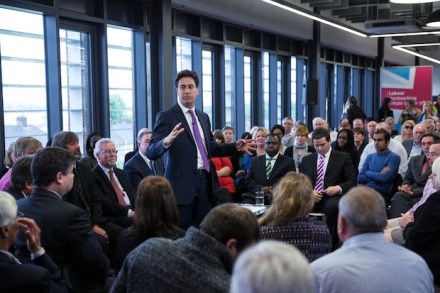
Ed Miliband has just delivered his post-European and local elections comeback speech in Thurrock, to show that he's not afraid to confront the challenges that Labour still faces in the run-up to 2015. I'll post on the details of the speech and what it means shortly, but one exchange in the Q&A told us quite a lot not just about Miliband but politicians in general. Here is a video clip: And here is the transcript: Journalist: 'Peter Dominiczak from the Telegraph. You've been attacked in your party for being too wordy and too academic. I wondered if you could give us here today just one word that defines your leadership and tells voters what makes you different and sets you apart from the other party leaders?

The Ukip ‘earthquake’ must provoke a proper debate about immigration

The ‘debate’ about immigration in recent weeks has failed to focus on the crucial issue – the sheer scale that immigration has reached and its inevitable impact on our future. Perhaps this week’s ‘earthquake’ will prepare the ground for a serious discussion of what has to be done while preserving our open society and economy. The fundamental reality is that, under Labour, net foreign immigration was very nearly four million, while one million British citizens emigrated. Of Labour’s four million, only one third were from Eastern Europe, but those are the only ones that they mention. It cannot have escaped their notice that the other two and a half million are from outside the EU and are heavily inclined to vote Labour.

David Cameron has fewer problems than Ed Miliband and Nick Clegg this morning

For more than year Westminster has assumed that David Cameron would have a Tory crisis to deal with after the European Elections. Whenever anyone remarked on the Tories unifying, someone would say ‘well, wait until after the Euros’. The conventional wisdom was that the Tories coming third would lead to a slew of senior Tories pushing for more robust policies on immigration and Europe and more and more Tory MPs calling for a pact with Ukip. But this morning, Cameron has fewer problems than either Ed Miliband or Nick Clegg. The fact that the Tory party has responded so calmly to coming third in a nationwide election for the first time in its history is partly a triumph of expectation management.

Today’s Westminster projections show that Labour is not in a comfortable place

We now have both the BBC's projected national vote share and Sky's Westminster projection of what this result would mean in parliamentary seats. Both show Labour ahead but not by much. They are on 31 percent of the vote to the Tories' 29 according to the BBC. While Sky's parliamentary projection has Labour a handful of seats short of a majority. With a year to go, and with the economy expected to grow strongly, in the next 12 months, this is not a comfortable place for Labour to be. There's a reason why more Labour MPs than Tory ones have been taking to the airways to sound off about their party's direction. Of course, Labour still has big structural things in its favour. The boundaries give them an advantage and the left-wing Liberal Democrat vote has collapsed.

Labour’s strange response to Ukip’s success

Labour has a strange response today to Ukip's success. Ed Miliband has argued that 'there is deep discontent with the way the country is run and a deep desire to change', which almost suggests that the results have been resoundingly good for Labour. True, the party has won seats - 152 net gains so far - and reeled in big fishes from the Conservatives such as Hammersmith and Fulham Council. But Ukip is stealing votes from Miliband's party, Labour is not doing as well as it could be expected to, and the Labour leader's point seems to be as much about the factors driving voters to Ukip as it is about anything else.

Labour MP warns on party’s failure to equip activists for battle with Ukip

Labour's performance in the local elections is a blessing for the Conservatives. A less impressive showing in the polls for the Opposition a year out from the general election, with key target councils failing to go red and what John Curtice has described as a 'failure to do well enough' means the story is not just about the government getting a pounding. Number 10 sources are arguing that 'Labour are actually going backwards'. Some MPs long known to be vocal critics of Ed Miliband are taking to the airwaves to criticise him. Graham Stringer has attacked the Labour leader's 'unprofessional' team. Simon Danczuk has just told LBC that 'I'm not going to pretend that Ed Miliband as an issue doesn't come up on the doorstep, of course it does'.

Ukip surge as Labour make sluggish progress

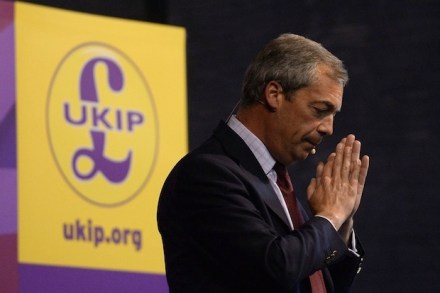
Only one party can be happy with the local elections results so far, Ukip. Nigel Farage’s party has so far added 86 councilors to its tally and these results suggest that Sunday, when the European Election votes are counted, should be a good night for the party. Labour’s results have been mixed to disappointing. Their best news of the night was picking up Hammersmith and Fulham off the Tories. Knocking over one of the Tories’ flagship councils will delight Labour. But Hammersmith is a region where the demographics have been running against the Tories, look at how Shaun Bailey failed to win the parliamentary seat last time. Labour has also gained control of Merton and Cambridge City councils.

Euro elections 2014: final polls put Ukip in first place

The final two polls are out on today’s European elections; both of which put Ukip in first place. YouGov, whose poll at the weekend had both parties tied, has placed Ukip just one point ahead of Labour with 27 per cent of the vote — well within their margin of error: [datawrapper chart="http://static.spectator.co.uk/hgc3p/index.html"] Opinium on the other hand put Ukip seven points ahead of Labour in their final poll, up five points on the last Opinium poll: [datawrapper chart="http://static.spectator.co.uk/W2nre/index.html"] Turnout will be key as to what happens in these elections, and the indications from YouGov’s likelihood to vote ratings are that Ukip supporters remain the most enthusiastic.

Ed Miliband’s weak shadow cabinet batting order

Most of the reshuffle-related excitement in Westminster is focused on a pending Tory one. But does Ed Miliband's top team need a bit of freshening up too? I blogged last week that Labour backbenchers, including a number with serious experience of government, were unhappy with the way many of the Labour top dogs are failing to go out to bat for their leader. Miliband has certainly trodden on his stumps in the past few days with some broadcast gaffes, but he does have a problem with the batting order below him.

Scotching a myth: Scotland is not as left-wing as you think it is

Alex Salmond and David Cameron have more in common than a shared appreciation for Andy Murray's tennis. Not, of course, that you would ever persuade either of them to admit that. At the very least, their supporters are more alike than either man would like you to believe. A new survey commissioned by Dundee University's Five Million Questions project confirms as much. On a range of issues SNP supporters are as close, or closer, to Tory voters as they are to Labour voters: [datawrapper chart="http://static.spectator.co.uk/M9xAk/index.html"] This will not surprise diehard leftists, of course. If the First Minister was ever a socialist he ceased to be a comrade long ago and if SNP voters think* like Tories that may be because a good number of them used to be Tories.

The Axelrod Effect

Are we finally seeing the effect of Ed Miliband’s expensive investment in David Axelrod? As the New Republic pointed out in 2010: ‘Food mishaps are central to the Axelrod mystique. He was famous during the campaign for having disabled a BlackBerry with a stray piece of donut glaze. He once convened a meeting with a gravity-defying clump of oatmeal clinging to the frame of his glasses.’ The magic touch of Obama’s famous strategist, hired at for inordinate sum by the Labour Party, seems to be rubbing off on Ed as he visited Covent Garden Flower Market this morning for a bacon sarnie. [caption id="attachment_8783771" align="alignnone" width="500"] Miliband in difficulty.

Listen: Ed Miliband’s two car crash interviews in one day

Ed Miliband seems to have clambered out of the wrong side of bed this morning. The Labour leader has been touring the TV and radio studios, where his answers have become progressively worse as the day went on. First up, Miliband spoke to Good Morning Britain about the 'cost-of-living crisis'. When asked whether he knew how much the average weekly household grocery bill was, he said ‘it depends on how much you are spending and how big your family is’. Then when questioned on how much the Miliband household spends, he said: ‘We probably spend £70-80 on groceries at least, probably more than that.

Inflation rises – should the coalition be worried?

Inflation has risen for the first time in ten months, with the consumer prices index growing by 1.8 per cent in the year to April 2014, up from 1.6 per cent in March. [datawrapper chart="http://static.spectator.co.uk/09O5L/index.html"] On the surface, this looks like bad news for the Coalition, which has boasted that falling inflation shows that Ed Miliband's cost-of-living crisis is coming to an end. And certainly Labour has tried to capitalise on the rise already, with Shadow Treasury Minister Catherine McKinnell saying: 'These figures underline why this Tory-led government is wrong to be so complacent about the cost-of-living crisis.

Is Labour a racist party?

Is Labour a racist party? The answer, I believe, is ‘no’. Apart from anything else, some of my best friends are in the party and I cannot think they hate themselves or anybody else simply because of their skin colour. Yet the question must be asked. For just this weekend I was rummaging through recent editions of the Gazette Live (the latest news, sport and business from the North East, Middlesbrough and Teesside) when I happened upon this story: ‘Five Middlesbrough councillors resign from Labour Party and will stand as independents.’ You can read about the whole sorry episode here.

Ukip vs Tories vs Labour — how alike are the voters?

How similar are Ukip and Tory voters? Although the party hierarchies are keen to distance themselves from each other, there's plenty of overlap in the opinions of their supporters. Firstly, both groups are enthusiastic about heading to the polls this Thursday. A few weeks ago, Ukip was slightly ahead of the other parties in the likeliness to vote ratings. Now the polling says they're far more likely to vote than the Tories. According to the latest poll, almost three quarters of 'kippers say they will definitely vote on Thursday compared to a little over half for the Tories: [datawrapper chart="http://static.spectator.co.uk/4YxMN/index.html"] The Tories and Ukippers have similar views on Faragiste warnings about Bulgarian and Romanian immigrants coming to the UK: they believe them.

No wonder the Labour Party is broke

“We need to raise £66,000 to make…122,000 calls to Labour voters,” says a super-localised campaign email from the Labour Party. Apparently a donation of £5 will pay for ten phone calls to be made, and a £50 wedge will secure 100 of these vital calls. No wonder Labour is more than £12 million in debt: it is paying 50p per phone call! That hardly inspires confidence about the party’s economic competence.

Westminster still expects Ukip to win

The polls are all over the place this morning. Ukip is either on course for a thumping victory, going to be edged into second by Labour or has fallen into third place depending on which is your preferred pollster. But all three Westminster parties are operating on the assumption that Ukip will win, as I say in the Mail on Sunday. Certainly, Labour are getting their excuses in early. Those close to Miliband are quick to point out that Tony Blair never won a European Election and that the party machine will be concentrating more on Thursday’s council contests than the European Elections as having a strong council base will matter more in 2015 than who has the most MPs.

An NHS tax is just another name for a tax rise

Finding a way to raise taxes that is popular is, for some on the centre-left, the Holy Grail. As the well connected Andrew Grice reports in The Independent today, a growing number of people on the Labour side are attracted to the idea of an NHS tax. Their logic is that the public value the NHS so wouldn’t mind paying more for it. They point out that when Gordon Brown raised National Insurance to fund extra spending on the health service there was none of the backlash you would normally expect to a tax rise. But the reality is that the introduction of a new NHS tax won’t be matched by tax cuts elsewhere. It will simply lead to people paying more tax overall. Demand on the NHS might well be about to rise.