Labour party

Of course Labour doesn’t trust people with their money: the party made little effort to teach them about it

Labour's response to the biggest announcement of the Budget, on pensions reform, was never going to be snappy. It would be unfair to expect an Opposition to deliver an immediate response to such a surprising and complex reform. But that's not to say that the way the party has responded has been exemplary. They were not helped by John McTernan's Newsnight interview on Wednesday night in which he framed the debate about the pension reforms as being about whether or not governments should trust people to manage their own money.

Labour’s campaign pickle

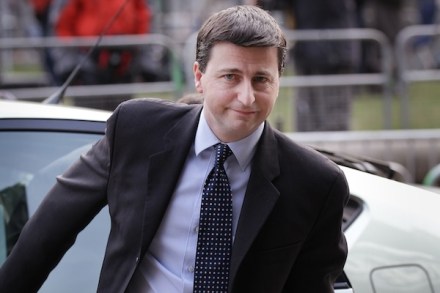
Douglas Alexander has given an interesting interview to the Independent in which he reveals that Labour has set up a team to monitor Ukip. It will go some way to reassuring those at the top of the party who, as I report in my Telegraph column this morning, are growing increasingly nervous about the party's chances in the European elections. There have been awkward confrontations in Shadow Cabinet meetings about the party's election strategy, and demands for something a little more tangible on the doorstep from shadow ministers from all wings of the party, and from candidates. It's interesting that Labour is taking Ukip seriously, as some party chiefs initially read the result of the Wythenshawe by-election as a sign that Nigel Farage's attempt to nick Labour voters wasn't working.

Labour sticks to cost-of-living attack as Budget debate rumbles on

If Ed Balls thought he could have done a better job than Ed Miliband at responding to the Budget, today he got his chance. The debate on the measures announced by George Osborne rumbles on in the House of Commons, and Ed Balls gave his speech on it this afternoon. He started by telling the Chamber that this was 'the Chancellor's last chance to make decisions and announce measures that will make a real difference before the general election'. Balls claimed that 'for all [Osborne's] boasts and complacency, the Budget did nothing to address the central reality that will define his time in office - the fact that for most people in our country, living standards are not rising but are falling year on year'.

Labour doesn’t want to talk about today’s budget

Ed Balls has just delivered quite an odd post-Budget briefing. It was odd because he didn't really want to criticise anything. Of course, when the Chancellor has just unexpectedly announced major reforms to the pensions system, it would be foolish for an opposition to start criticising a reform that it probably doesn't quite understand. But the furthest the Shadow Chancellor would go was that it was 'underwhelming'.

Budget 2014: The Tories gave Ed Miliband licence to become a class warrior

No opposition leader looks forward to responding to the Budget. It's one of the harder gigs as you get little notice of the detailed measures that may cause real rows and are scribbling feverishly throughout the statement to try to make your pre-written speech sound relevant. But it is still an achievement that Ed Miliband in his own response managed to avoid talking about anything in the Budget other than the new design of the pound coins. He started by reminding the House of Commons of how much further the Chancellor needs to go before hardworking families up and down the country feel as cheerful as the Tories. He said: 'But he did not mention one central fact: The working people of Britain are worse off under the Tories. Living standards down: month after month, year after year.

Yes, of course the BBC is biased against you

And it doesn't matter who you are. Conservative, Labour, Liberal, Nationalist, Green or UKIP it's all the same. The BBC is hopelessly prejudiced against you. As it should be. Why only this morning we see Owen Jones complaining that, contrary to what the Daily Mail would have you believe, the BBC is instinctively biased against the left and Lesley Riddoch suggesting  the corporation is reflexively biased against the very idea, let alone the prospect, of Scottish independence. Well, up to a point. But asking whether the BBC is inclined to the left or right is the wrong question. It is a kind of category error. Adding up the number of (presumed) right-of-centre - or Unionist - journalists or presenters on the BBC and supposing this "proves" anything is a fool's mistake.

George Osborne readies his tax dividing line

George Osborne was on Andrew Marr this morning announcing support for a new garden city at Ebbsfleet in Kent and the extension of Help to Buy on new build homes until 2020. The Tories hope that these policies will show both that they are planning for the long term and that they are supporting aspiration. But what struck me as most significant was Osborne’s response when told by Marr that he was sounding more like a Liberal Democrat than a Conservative. He instantly replied, ‘Conservatives believe in lower taxes, Liberal Democrats want to put taxes up.’ We already know that Osborne believes that the rest of the deficit can be cleared without any more tax increases and this reply suggests that the Tories will run in 2015 as the only party that won’t put up taxes.

Polling worries for Miliband – and for Cameron

There’s been much hullaballoo this afternoon over a Populus poll that shows a Labour lead of one point. The usual caveats apply (it’s just one poll!); but, nevertheless, this sample adds to the sense that Ed Miliband is in difficulty. There is, incidentally, only 419 days to go until election day. If the Populus poll was disappointing, then this projection compiled by Stephen Fisher of Oxford University could have Miliband reaching for the scotch: ‘Forecast Election Day Seats: Con : 307 Lab : 285 LD  : 31 Con largest party, but short of a majority by 19’ A dismal prospect for Labour; but there are also worries for the Tories because they are not yet benefitting from Miliband’s malaise and the economic recovery.

Despite his faults, Tony Benn was a real Big Beast

I suppose you could argue, if you were a conservative, that Tony Benn’s greatest contribution to public life was helping to render Labour unelectable for thirteen years. There’s quite a few within Labour who might wryly argue the same thing, frankly. And plenty more who had grave doubts about the man’s 'principled' devotion to Socialism, a principle which seemed to visit itself on him, suddenly, in the early 1970s, when he saw the base of the party was swinging wildly to the left. He had previously been a pretty moderate and competent minister under Harold Wilson. Later he was to become a sort of cartoon bogeyman for the red top press, a role in which he revelled. I interviewed the chap a year or so back and he was terribly frail.

Former Labour minister Tony Benn dies – reaction

Ed Miliband, leader of the Labour party: 'The death of Tony Benn represents the loss of an iconic figure of our age. 'He will be remembered as a champion of the powerless, a great parliamentarian and a conviction politician. 'Tony Benn spoke his mind and spoke up for his values. Whether you agreed with him or disagreed with him, everyone knew where he stood and what he stood for. 'For someone of such strong views, often at odds with his Party, he won respect from across the political spectrum. 'This was because of his unshakeable beliefs and his abiding determination that power and the powerful should be held to account. 'He believed in movements and mobilised people behind him for the causes he cared about, often unfashionable ones.

Tony Benn 1925 – 2014: a politician who actually believed in people

The former Labour Cabinet Minister, author and long-serving MP Tony Benn has passed away today, aged 88. In 2009, our deputy editor Mary Wakefield interviewed Benn about the financial crisis and the basic decency at the heart of all human beings. Here is the article in full. I’m standing in Tony Benn’s front garden, on my way out but dawdling, reluctant to leave. Once I’m back on my bike I’ll be in Broken Britain again, snarling at the buses. But right now I’m still in Benn-land, where all people are kindly and the future is bright with mutual concern. Even the outside of Benn’s house reflects the decency within.

Ed Miliband’s non-policy EU policy

‘You only offer a referendum if you want to ratify your existing policy,’ a Tory veteran told me this morning while discussing Ed Miliband’s recent referendum announcement. The Tory illustrated his point with reference to the Major government’s row over a proposed referendum on the single currency. He said that the pro-European side of the argument ran from a referendum, fearing that the public would say ‘no’ to EMU. His logic was: there isn’t time to change minds during a referendum campaign, so the public backs the status quo.

Is Ed Balls scared of Question Time?

Like it or not, Question Time is Britain’s most popular forum for political debate. Two million viewers regularly tune in, and Thursday evenings on BBC1 is when and where ordinary people are most likely to encounter a secretary of state or shadow cabinet minister. For politicians, it’s a golden opportunity — a huge audience to which they can sell both themselves and their party’s policies. The choice of guests usually causes an uproar on Twitter — mostly along the lines of 'why is X appearing again? ' and ' I’m sick of seeing Y party getting so much airtime' — but who actually appears most frequently?

PMQs sketch: what Tony Blair knew about being a toff, and what Nick Clegg doesn’t

Hattie Harman tried to crack Clegg today. The deputy prime minister, standing in for David Cameron, explained carefully that his boss was visiting, ‘Israel and the Occupied Palestinian territories.’ Not a title the Israeli Tourist board has got round to using. Hattie wasn’t on her best form. She tried to draw Clegg as a hypocritical house-slave attempting to duck responsibility for his master’s actions. But she plodded through her jibes. Over-rehearsal had killed her hunger to perform. And Clegg met all her accusations with a simple ploy. Blame Labour. It worked every time. On the bedroom tax Clegg had the support of the figures. A million and a half are on housing waiting lists. The same number are in homes with spare rooms. Makes sense.

Ed Miliband adopts a rope-a-dope strategy on Europe

Hopi Sen is not alone. There are many people in this country supremely indifferent to the whole and vexatious question of whether or not there should be a referendum on Britain's continued membership of the European Union. Yes, yes, they will tell pollsters that if they must they suppose they might fancy having a referendum some day. But they don't really care. They mumble about a referendum because that seems the done thing to do and because when a pollster asks you if you'd like to have a say on something it sounds better to say Yes than No thanks, I really can't be bothered. And sure, if pressed, they might grumble and chunter about the European Union too and say that it seems to be an unnecessarily invasive institution - or set of institutions, treaties and agreements.

Douglas Alexander’s weasel words on Labour’s EU pledge

Unsurprisingly, Douglas Alexander's Today interview about Ed Miliband's pledge to not give the British people a referendum without saying he's not giving you a referendum wasn't the most edifying performance. Alexander admitted that what Miliband is promising is an 'unlikely' referendum, saying: 'He will say that our priority in government would be tackling the cost-of-living crisis and getting the economy back on track, not getting Britain out of Europe. He’ll set out some very practical and I think needed changes to make Europe work better for the United Kingdom. And he’ll also be open that we are not, as a prospective Labour government, proposing a further transfer of powers to Brussels.

The British constitution has never made sense or been fair. Why expect it to do so now?

Well, yes, Hamish Macdonell is correct. A coherent devo-max option could win the referendum for Unionists. Some of us, ahem, have been arguing that for years. There were, of course, good reasons for insisting that the referendum vote be a simple Yes/No affair. A single question cuts to the heart of the issue and, notionally, should produce a clear outcome. Nevertheless it also greatly increased the risk - or prospect, if you prefer - of a Yes vote. A multi-option referendum would have killed a Yes vote. But if Hamish is correct I am not, alas, so sure the same can be said of Comrades Forsyth and Nelson. James writes that: The lesson of devolution is that we tamper with the constitutional framework of the United Kingdom at our peril.

Coffee Shots: Labour gets tough

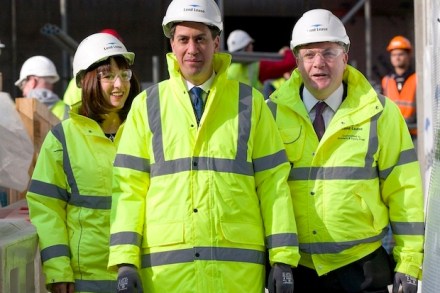
Labour says it is tough on welfare policy. And today, the party launched its tough compulsory jobs guarantee funding pledge by looking tough too. Ed Balls, Ed Miliband and Rachel Reeves would have made a stronger Mr Steerpike quail in these hard-hitting outfits.

Will HS2 become an election issue?

In an interview with The Spectator this week, the Transport Secretary Patrick McLoughlin admits that HS2 will not have been approved by parliament before the next election. This invites the question, will HS2 become an election issue? Both Ed Balls and Andy Burnham have made forays against HS2 in recent months. But both have been slapped down by Ed Miliband's office. His allies believe that Labour can't run on a platform of rebuilding Britain while simultaneously promising to put a stop to the biggest infrastructure project in decades. But one wonders if this Labour position will hold. The Tory election campaign will claim repeatedly that Labour's sums don't add up, they'll constantly accuse Labour of planning to raise taxes or borrowing.

The inconvenient truth at the heart of Miliband’s union reforms

At a special Labour conference last week, Ed Miliband pushed through his much-trumpeted reforms to the party’s relationship with the unions. But, much as he is laying claim to be the victor in this battle, in truth the war is still ongoing. The latest friendly fire has come from Lord Cashpoint, Michael Levy – Tony Blair’s chief tapper-upper of the rich – who spoke out on Monday to urge Miliband to seek more private donations from the super-wealthy, just as Blair and Levy did with so much success. The reality, though, is that Miliband has been quietly doing his best to drum up money from private donors, notwithstanding his very public attack on the Tories as the party of hedge fund managers and property developers.