Labour party

Labour’s gamble for SNP support

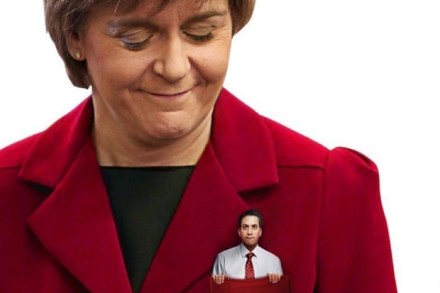
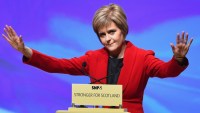
The SNP launches its manifesto today in Edinburgh. Nicola Sturgeon will be arguing that the policies in the document are for the benefit of the whole of the United Kingdom, which is a way of reassuring former no-voters who might back the SNP, and also of appealing to the left wing faction of the Labour party. Scottish Labour will be claiming that many of those policies such as voting for lower tuition fees in England are in fact a theft from their own party's ideas, and that the SNP is in fact using Labour as a think tank for its own manifesto. But what is also interesting is how the party that is scrutinising Sturgeon’s claims today could end up working with her parliamentary colleagues from May.

John Major to enter the electoral fray this week

David Cameron’s inner circle are always keen to talk up the parallels between this campaign and 1992. This week, the winner of that election will enter the fray on their behalf. As I report in the Mail on Sunday, John Major will give a speech warning of the dangers to the Union itself if the United Kingdom ends up with a Labour government propped up by the SNP. The Tories hope that Major’s intervention will elevate this point above the usual party political knockabout. They also believe that a former Prime Minister speaking out will make voters pay attention; they were much struck by how much coverage Tony Blair’s speech on the dangers of an EU referendum received a few weeks back. That the Tories have asked Major to get involved is telling.

Nigel Farage: David Cameron’s ‘fanaticism’ is to blame for Libya migrant crisis

Nigel Farage tends to stick to one line on foreign affairs: no more foreign wars. On the Sunday Politics today, the Ukip leader claimed that the migrant crisis and tragedies in the Mediterranean are the fault of countries such as Britain and France who bombed Libya in 2011: ‘Actually, it was the European response that caused this problem in the first place — the fanaticism of Sarkozy and Cameron to bomb Libya and what they’ve done is to completely destabilize Libya; to turn it into a country with much savagery; to turn it into a place where for Christians the situation is now virtually impossible and we ought to be honest and say have we directly caused this problem.

Angela Eagle: Labour would speak to other parties to get a Queen’s Speech through

On the Sunday Politics just now, Angela Eagle shifted Labour’s position on what it would do in the event of a hung parliament. Previously, Labour has insisted that if it was a minority government it would simply propose a Queen’s Speech and dare the other parties, and in particular the SNP to vote it down. listen to ‘Angela Eagle: we'd speak to any party to get a Queen's speech through’ on audioBoom But Eagle told Andrew Neil that in the event of a hung parliament Labour 'would speak to any party that has got representation in the House of Commons in order to try to build a majority for a Queen's Speech that the country desperately needs'. What makes Eagle’s comments so significant is that she is the shadow Leader of the House of Commons.

Feisty Cameron warns English voters of the ‘frightening prospect’ of the SNP propping up a Labour government

David Cameron has just delivered his feistiest performance of the election campaign yet. In a combative interview with Andrew Marr, the Tory leader repeatedly described the prospect of a Labour government propped up by the SNP as ‘frightening’, telling English voters that the SNP wouldn’t ‘care’ about them and their needs. He implicitly warned that SNP MPs supporting a Labour government would result in less money for English constituencies. He had been given this opening by Nicola Sturgeon, who in her interview had made clear how the SNP would use the fixed term parliament act to give them maximum influence on a Labour government.

The coming battle for legitimacy

Jonathan Freedland has written a compelling column on the challenge that Ed Miliband will face to establish his legitimacy if he becomes Prime Minister despite Labour not having won the most seats or votes. But I suspect that whoever becomes the government after May the 8th will have difficulty in persuading everyone that they have a right to govern. The Tory-Liberal Democrat coalition could claim that 59 per cent of voters had backed its constituent parts. It also had a comfortable majority in the House of Commons with 364 out of 650 seats. Now, unless something dramatic happens, no governing combination is likely to have anything like that kind of support this time round.

‘Naughty’ Nicola Sturgeon reveals the saucy portrait that hangs in her home

Nicola Sturgeon's style transformation over the past decade has been well-documented. The Mail on Sunday journalist Liz Jones went so far as to suggest that she had gone from being a woman with a 'Krankies haircut and orthopaedic shoes' to a 'golden halo of Princess Diana-like loveliness'. However, Mr S suspects that such naysayers may think differently about Sturgeon in her formative years if they take a glance at a portrait of her dating back six years. Speaking to Sky's Kay Burley, the First Minister of Scotland revealed that she has a saucy painting of herself hanging in her home. The oil painting of Sturgeon is by the French artist Laetitia Guilbaud, and went up for sale in 2009 at Glasgow's ArtDeCaf Gallery.

My decision to vote Labour – a further explanation

Missing from my column this week, for reasons of space etc, was this simple point: I am a Socialist. I am not a liberal. Liberalism, or what it has become, makes me heave; I loathe it. More often than not, liberalism is economic self-interest cloaked in faux concern. I do not mean the economic liberalism of Margaret Thatcher (although I’m not keen on that either. Her foreign policies, yes. Her domestic agenda, no.) I mean the totalitarian political correctness and acquired victimhood of the London pretend-left. Yes, that idiotic Thornberry woman and Harman and maybe Ed Miliband included. But that doesn’t quite negate Labour as a party for me.

Diary – 16 April 2015

To the dentist. And for an extraction. I hadn’t had a tooth out in decades. But the twinges when I bit on a nut warned me that my problem molar — much abused by a badly fitted bridge in the 1970s — had finally given way. My usual dentist confirmed as much with a poke and an X-ray. Then came the surprise. ‘I’m going to hand you over now,’ he said. Having a tooth out has ceased to be a hazard of life to be borne and grinned at. Instead it’s become dental surgery. And it requires a specialist. Mine was a man with a mission. ‘My job is to make sure you feel no pain,’ he said. And he proceeded, with skill, charm and patience, to do just that.

Listen: The Spectator’s verdict on the opposition leaders’ TV debate

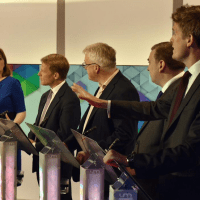
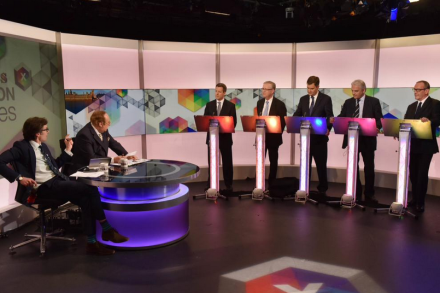
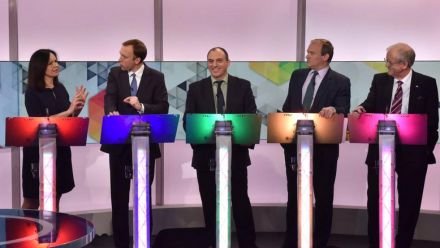
Ed Miliband managed to surpass expectations in tonight's opposition leaders' debate. In this View from 22 podcast special, Fraser Nelson, James Forsyth, Isabel Hardman and I discuss the final televised debate with the party leaders — minus David Cameron and Nick Clegg. Did Nigel Farage target  his core base once again? How successfully did Nicola Sturgeon deal with Ed Miliband's attacks? And did Natalie Bennett and Leanne Wood manage to have their voices heard?

Ed Miliband’s gamble paid off but the Scottish question still haunts him

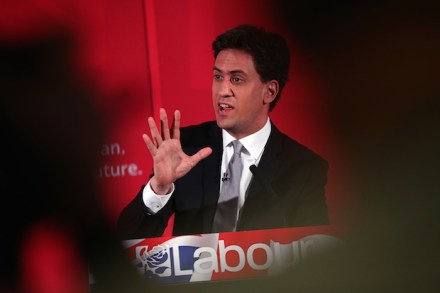
Ed Miliband took a risk by turning up to this debate and until the last question it looked like it had definitely paid off. Miliband avoided conceding too much to the anti-austerity alliance to his left of Nicola Sturgeon, Natalie Bennett and Leanne Wood and parried Nigel Farage’s attacks on Labour pretty effectively. On Trident, he sounded statesmanlike as he explained why in an uncertain world, Britain needed to renew its nuclear deterrent. All the while, he got in regular attacks on David Cameron both for his record in government and not being at the debate. But the last question was about hung parliaments and it is this which caused Miliband some problems. He stuck to his line about Labour wanting an overall majority and warned about the risks of voting SNP.

Tories and Labour keeping policies up their sleeves

Three weeks from now, people will be voting and the parties will just be getting a sense of how this election is shaking out. But in a sign of how both the Tories and Labour are expecting this contest to go to the wire, I understand that they have both held policies back from their manifesto so that they can use them in the final days of the campaign. The thinking is that by keeping some things back they can use these policies to grab the initiative in the campaign at crucial points. At the moment, the polls show no sign of breaking either way. What does seem to have happened, though, is that the Tories have steadied themselves after their mini-wobble last week.

Labour aide picks up Ed Miliband’s drink bill

Taking a break from preparing for tonight’s debate, Ed Miliband has been out about in Hornsey, north London. Trying to look normal by visiting Riley’s Cafe (with an entourage and security detail, just like all normal people), it looked like the Labour leader had dropped the first big election clanger of the campaign. Channel 4's political correspondent Michael Crick tweeted to say that Miliband had failed to pay for his coffee: It turns out Crick’s story was a bit frothy. Mr S understands that an aide picked up the tab to avoid an awkward row. Still, no word yet on whether Miliband's coffee drinking skills rival his aptitude for eating bacon sandwiches.

Labour MP suggests Ed Miliband is not speaking frankly about NHS spending

This morning Sir David Nicholson criticised Ed Miliband for failing to commit an extra £8 billion a year towards the NHS. The former head of the NHS said that Labour needed to follow the example of the Tories and Lib Dems by signing up to the pledge. Now, Frank Field, the Labour MP, has come out in response. However, rather than rush to Miliband's defence, he has claimed that each main party leader, including Ed Miliband, is not being frank about NHS spending.

Exclusive: Where the next generation of MPs think the burden of cuts should fall

What do the next generation of MPs think with regards to public services, government spending and taxes? Coffee House has got its hands on new research by Ipsos MORI on the opinions of prospective parliamentary candidates from the main parties. The pollsters interviewed almost one hundred PPCs - 26 Conservative, 29 Labour, 20 Liberal Democrat and 11 SNP - who are all standing in marginal or safe seats, and therefore stand a good chance of making it to the green benches after the general election. Here are the points that stand out: 1: Defence cuts on the front line Defence cuts lead the way for both Labour and Liberal Democrat candidates who agreed that reductions to public spending need to be made.

Mob rules

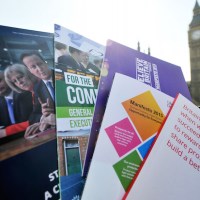
A spectre is haunting Europe — and knocking on the door of Downing Street. It has installed a president in France and a mayor in New York. It is causing mayhem in Spain and Greece and insurgency in Scotland and it may yet halt Hillary Clinton’s march to the White House. This idea — left-wing populism — is a radical, coherent and modern response to the financial crisis and the hardship suffered since. It is being effectively harnessed by Ed Miliband, taking him within touching distance of victory. And it may well become the creed that guides the next five years of British government. The Labour manifesto that was published this week is a response to the new populist mood.

Cameron must show he’s not too posh to push

At 5.45 a.m. Lynton Crosby holds the first meeting of the day at Conservative campaign HQ. The aim is to work out what threats need to be neutralised that day and what opportunities should be capitalised upon. The early start isn’t macho posturing but a reflection of the modern media environment. The news now moves at such pace that a lie can go all the way round the worldwide web before the truth even has its boots on. The political weather is rarely more changeable than in a close election campaign. In this environment, the trick is to work out what actually matters: what might determine the election. But after the past week one thing is clear: the Tories have survived a wobble that could have turned into a death spiral.

Jews against Miliband

When he was seven, Ed Miliband was taken to visit his grandmother in Tel Aviv. Pointing to a black-and-white photograph in her home, young Ed demanded to know who ‘that man in the picture’ was. He was told the man, David, was his grandfather and had died in Poland many years before he was born. Only years later did Miliband realise that his grandfather had been murdered by the Nazis for being Jewish. Miliband’s parents only narrowly escaped a similar fate: fleeing Belgium as the German armies overran it in 1940, his 16-year-old father caught the last boat from Ostend to Britain.