Labour party

Ed Miliband's gamble paid off but the Scottish question still haunts him

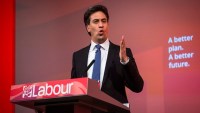
Ed Miliband took a risk by turning up to this debate and until the last question it looked like it had definitely paid off. Miliband avoided conceding too much to the anti-austerity alliance to his left of Nicola Sturgeon, Natalie Bennett and Leanne Wood and parried Nigel Farage’s attacks on Labour pretty effectively. On Trident, he sounded statesmanlike as he explained why in an uncertain world, Britain needed to renew its nuclear deterrent. All the while, he got in regular attacks on David Cameron both for his record in government and not being at the debate. But the last question was about hung parliaments and it is this which caused

Why Ed Miliband is taking part in tonight's TV debate

Tonight Ed Miliband takes one of the big risks of the campaign. He debates with Nicola Sturgeon, Nigel Farage, Leanne Wood and Natalie Bennett. All of these leaders will be aiming to score points off Miliband. Those close to the Labour leader give several reasons for why he is taking part tonight. They argue that he does well whenever he’s given the chance to speak to voters directly. But the main reason for Miliband’s doing this debate is the Scottish situation. Labour feared that without Miliband present, this debate would have turned into a clash between Sturgeon and Farage — which would have benefitted the SNP north of the border.

Tories and Labour keeping policies up their sleeves

Three weeks from now, people will be voting and the parties will just be getting a sense of how this election is shaking out. But in a sign of how both the Tories and Labour are expecting this contest to go to the wire, I understand that they have both held policies back from their manifesto so that they can use them in the final days of the campaign. The thinking is that by keeping some things back they can use these policies to grab the initiative in the campaign at crucial points. At the moment, the polls show no sign of breaking either way. What does seem to have

Labour aide picks up Ed Miliband's drink bill

Taking a break from preparing for tonight’s debate, Ed Miliband has been out about in Hornsey, north London. Trying to look normal by visiting Riley’s Cafe (with an entourage and security detail, just like all normal people), it looked like the Labour leader had dropped the first big election clanger of the campaign. Channel 4’s political correspondent Michael Crick tweeted to say that Miliband had failed to pay for his coffee: It turns out Crick’s story was a bit frothy. Mr S understands that an aide picked up the tab to avoid an awkward row. Still, no word yet on whether Miliband’s coffee drinking skills rival his aptitude for eating bacon

Exclusive: Where the next generation of MPs think the burden of cuts should fall

What do the next generation of MPs think with regards to public services, government spending and taxes? Coffee House has got its hands on new research by Ipsos MORI on the opinions of prospective parliamentary candidates from the main parties. The pollsters interviewed almost one hundred PPCs – 26 Conservative, 29 Labour, 20 Liberal Democrat and 11 SNP – who are all standing in marginal or safe seats, and therefore stand a good chance of making it to the green benches after the general election. Here are the points that stand out: 1: Defence cuts on the front line Defence cuts lead the way for both Labour and Liberal Democrat candidates who

Mob rules

A spectre is haunting Europe — and knocking on the door of Downing Street. It has installed a president in France and a mayor in New York. It is causing mayhem in Spain and Greece and insurgency in Scotland and it may yet halt Hillary Clinton’s march to the White House. This idea — left-wing populism — is a radical, coherent and modern response to the financial crisis and the hardship suffered since. It is being effectively harnessed by Ed Miliband, taking him within touching distance of victory. And it may well become the creed that guides the next five years of British government. The Labour manifesto that was published

Cameron must show he’s not too posh to push

At 5.45 a.m. Lynton Crosby holds the first meeting of the day at Conservative campaign HQ. The aim is to work out what threats need to be neutralised that day and what opportunities should be capitalised upon. The early start isn’t macho posturing but a reflection of the modern media environment. The news now moves at such pace that a lie can go all the way round the worldwide web before the truth even has its boots on. The political weather is rarely more changeable than in a close election campaign. In this environment, the trick is to work out what actually matters: what might determine the election. But after

Jews against Miliband

When he was seven, Ed Miliband was taken to visit his grandmother in Tel Aviv. Pointing to a black-and-white photograph in her home, young Ed demanded to know who ‘that man in the picture’ was. He was told the man, David, was his grandfather and had died in Poland many years before he was born. Only years later did Miliband realise that his grandfather had been murdered by the Nazis for being Jewish. Miliband’s parents only narrowly escaped a similar fate: fleeing Belgium as the German armies overran it in 1940, his 16-year-old father caught the last boat from Ostend to Britain. In Poland, his mother — together with her sister

Call me insane, but I’m voting Labour

Quite often when I deliver myself of an opinion to a friend or colleague, the reply will come back: ‘Are you out of your mind? I think that is sectionable under the Mental Health Act.’ In fact, I get that kind of reaction rather more often than, ‘Oh, what a wise and sensible idea, Rod, I commend your acuity.’ There is nothing I say, however, which provokes such fervid and splenetic derision, and the subsequent arrival of pacifying nurses, as when I tell people that I intend to vote Labour at the forthcoming general election. When I tell people that, they look at me the way my dog does when

Tories are consolidating while Labour are extending leads in key marginals

Lord Ashcroft has released his latest round of polling, looking at ten competitive Tory-Labour seats. In all of the constituencies, Ashcroft has reported swings to Labour, ranging from 0.5 per cent to seven per cent. At present, five of the seats are set to remain with the Conservatives: Cleethorpes, Dover, Dudley South, Harlow and North East Somerset. Some of the Tory leads are considerable: Rob Halfon in Harlow has a ten point lead, while Jacob Rees-Mogg in North East Somerset has a 16 point lead. Use the interactive chart above to see all the latest polls for each seat. Equally, the other half of the seats Ashcroft has polled are looking

Nick Clegg sets out red lines for coalition negotiations with Labour and the Tories

Nick Clegg produced Lib Dem red lines for any coalition with either Labour or the Tories in an interview with Evan Davis this evening. Clegg said that he wouldn’t go into Coalition with the Tories if they insisted on making £12 billion of cuts to welfare in the next two years. But he said that he also couldn’t recommend going into coalition with Labour until they were clearer about how they planned to deal with the deficit, making clear that what Labour said today was not sufficient. As Fraser says, this was an assured performance from Clegg who offered a robust defence of the government’s record. The Liberal Democrats would

Ed Miliband resorts to begging as Labour supporters hiss at hacks

As regular readers will be aware, Mr S has tracked the growing hostility toward the press at Labour Party events. Today’s manifesto launch was no different. The Labour leader took the extraordinary step of pre-butting jeers and boos from audience members toward journalists, by asking them to hear the media out: ‘Now, we’re going to take questions. I just want to say something in advance of these questions. I talked earlier about the kind of country we believe in. And what’s really important in the country we believe in is that we have a press that ask difficult questions and it’s really important that we hear these questions respectfully because

Music to the SNP's ears: Vote Labour, get more austerity

As Jim Murphy tries to turn back the SNP surge, he has been arguing that a Labour government wouldn’t result in endless austerity. He has repeatedly cited the Institute for Fiscal Studies’ finding that Labour couldn’t meet its deficit reduction target with no cuts at all after 2015-16. Now, Ed Balls and Ed Miliband have today been clear that Labour will bring in cuts post 2016. But they have avoided contradicting Murphy by name. Chuka Umunna, however, showed no such restraint earlier today. Under questioning from Andrew Neil, he declared: ‘The leader of the Scottish Labour party will not be in charge of the UK Budget.’ This comment was so

Ten things you need to know about Labour’s manifesto

Labour has launched its election manifesto in Manchester today, entitled ‘Britain can be better’. The document (pdf here) includes some new policies and others already announced. Here are ten key things you need to know, just in case you don’t have time to read all 86 pages: 1. Reducing deficit every year — but for how long? The centrepiece of the manifesto is the ‘budget responsibility lock’, which will ensure that a Labour government will cut the deficit every year. The commitment, which was reportedly added to the manifesto last Friday, doesn’t say by which point Labour will eliminate the deficit: ‘A Labour government will cut the deficit every year. The first line of

Why Labour’s bold manifesto move won’t work

Labour’s manifesto is the most daring move of this campaign so far. The party has decided to try and address one of its biggest weaknesses on page 1 of the document. The decision to make Labour’s fiscal locks, its attempt to show that it is fiscally credible, the major story of the manifesto is a risk. It means that Labour is playing on Tory turf. The party’s hope is that these fiscal locks can reassure voters that Labour wouldn’t spend and borrow too much, removing one of the main obstacles to supporting them. Indeed, with Ed Miliband doing a far better job than expected of assuaging voters’ doubts about his

Is Labour really wise to take on the Tories on the economy?

Ed Miliband gave a good, forceful, well-received speech at Labour’s manifesto launch this morning. It couldn’t have been anything else, given how close we are to polling day. There were some very well-delivered moments, particularly when it came to zero hours contracts and non-doms. The peroration was particularly energetic, with the Labour leader saying: ‘Over the last four and a half years, I have been tested. It is right that I have been. Tested for the privilege of leading this country. I am ready. Ready to put an end to the tired old idea that as long as we look after the rich and powerful we will all be OK.

Campaign kick-off: 24 days to go

The third week of the campaign is going to be all about manifestos. Today, it’s Labour’s turn to launch its plan — while the Tories, Liberal Democrats, Ukip and Greens will take their turns in the coming days. But instead of the traditional strategy for government, folks in Westminster are describing the documents as ‘the opening salvo for coalition negotiations’. To help guide you through the melée of stories and spin, here is a summary of today’s main election stories. 1. The party of fiscal responsibility? There’s one big story to watch today: Labour’s manifesto. Many inhabitants of the Westminster bubble are currently en route to Manchester for the launch this

Labour tries to confound expectations with tough-sounding manifesto front page

Labour’s manifesto launch today sees the party seeking to confound expectations. Even though the party would prefer to fight a comfortable election campaign on the NHS, the fact remains that no party has won when behind in the polls on both the ratings of its leader and on the economy. And so the first page of the party’s manifesto, which was released last night, says this: ‘Our manifesto begins with the Budget Responsibility Lock we offer the British people. It is the basis for all our plans in this manifesto because it is by securing our national finances that we are able to secure the family finances of the working