Labour party

Call me insane, but I’m voting Labour

Quite often when I deliver myself of an opinion to a friend or colleague, the reply will come back: ‘Are you out of your mind? I think that is sectionable under the Mental Health Act.’ In fact, I get that kind of reaction rather more often than, ‘Oh, what a wise and sensible idea, Rod, I commend your acuity.’ There is nothing I say, however, which provokes such fervid and splenetic derision, and the subsequent arrival of pacifying nurses, as when I tell people that I intend to vote Labour at the forthcoming general election. When I tell people that, they look at me the way my dog does when I tell her that it is not right to kill cats. It is something quite beyond the parameters of understanding, of comprehension.

Tories are consolidating while Labour are extending leads in key marginals

Lord Ashcroft has released his latest round of polling, looking at ten competitive Tory-Labour seats. In all of the constituencies, Ashcroft has reported swings to Labour, ranging from 0.5 per cent to seven per cent. At present, five of the seats are set to remain with the Conservatives: Cleethorpes, Dover, Dudley South, Harlow and North East Somerset. Some of the Tory leads are considerable: Rob Halfon in Harlow has a ten point lead, while Jacob Rees-Mogg in North East Somerset has a 16 point lead. Use the interactive chart above to see all the latest polls for each seat. Equally, the other half of the seats Ashcroft has polled are looking beyond reach for the Conservatives.

Nick Clegg sets out red lines for coalition negotiations with Labour and the Tories

Nick Clegg produced Lib Dem red lines for any coalition with either Labour or the Tories in an interview with Evan Davis this evening. Clegg said that he wouldn’t go into Coalition with the Tories if they insisted on making £12 billion of cuts to welfare in the next two years. But he said that he also couldn’t recommend going into coalition with Labour until they were clearer about how they planned to deal with the deficit, making clear that what Labour said today was not sufficient. As Fraser says, this was an assured performance from Clegg who offered a robust defence of the government’s record. The Liberal Democrats would be in a better position to claim credit for the recovery if they had always been this unequivocal.

Ed Miliband resorts to begging as Labour supporters hiss at hacks

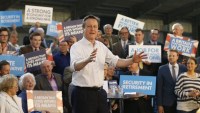
As regular readers will be aware, Mr S has tracked the growing hostility toward the press at Labour Party events. Today's manifesto launch was no different. The Labour leader took the extraordinary step of pre-butting jeers and boos from audience members toward journalists, by asking them to hear the media out: 'Now, we're going to take questions. I just want to say something in advance of these questions. I talked earlier about the kind of country we believe in. And what's really important in the country we believe in is that we have a press that ask difficult questions and it's really important that we hear these questions respectfully because it is who we are as a country.

Music to the SNP’s ears: Vote Labour, get more austerity

As Jim Murphy tries to turn back the SNP surge, he has been arguing that a Labour government wouldn’t result in endless austerity. He has repeatedly cited the Institute for Fiscal Studies’ finding that Labour couldn’t meet its deficit reduction target with no cuts at all after 2015-16. Now, Ed Balls and Ed Miliband have today been clear that Labour will bring in cuts post 2016. But they have avoided contradicting Murphy by name. Chuka Umunna, however, showed no such restraint earlier today. Under questioning from Andrew Neil, he declared: ‘The leader of the Scottish Labour party will not be in charge of the UK Budget.

Ten things you need to know about Labour’s manifesto

Labour has launched its election manifesto in Manchester today, entitled ‘Britain can be better’. The document (pdf here) includes some new policies and others already announced. Here are ten key things you need to know, just in case you don’t have time to read all 86 pages: 1. Reducing deficit every year — but for how long? The centrepiece of the manifesto is the ‘budget responsibility lock’, which will ensure that a Labour government will cut the deficit every year. The commitment, which was reportedly added to the manifesto last Friday, doesn’t say by which point Labour will eliminate the deficit: ‘A Labour government will cut the deficit every year.

Why Labour’s bold manifesto move won’t work

Labour’s manifesto is the most daring move of this campaign so far. The party has decided to try and address one of its biggest weaknesses on page 1 of the document. The decision to make Labour’s fiscal locks, its attempt to show that it is fiscally credible, the major story of the manifesto is a risk. It means that Labour is playing on Tory turf. The party’s hope is that these fiscal locks can reassure voters that Labour wouldn’t spend and borrow too much, removing one of the main obstacles to supporting them. Indeed, with Ed Miliband doing a far better job than expected of assuaging voters’ doubts about his capacity to lead, you can see what Labour are thinking: if they can address their other big negative, then they would be on course for a clear win.

Is Labour really wise to take on the Tories on the economy?

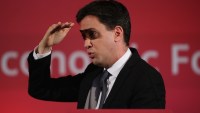
Ed Miliband gave a good, forceful, well-received speech at Labour’s manifesto launch this morning. It couldn’t have been anything else, given how close we are to polling day. There were some very well-delivered moments, particularly when it came to zero hours contracts and non-doms. The peroration was particularly energetic, with the Labour leader saying: ‘Over the last four and a half years, I have been tested. It is right that I have been. Tested for the privilege of leading this country. I am ready. Ready to put an end to the tired old idea that as long as we look after the rich and powerful we will all be OK. Ready to put into practice the truth that it is only when working people succeed, that Britain succeeds.

Campaign kick-off: 24 days to go

The third week of the campaign is going to be all about manifestos. Today, it’s Labour’s turn to launch its plan — while the Tories, Liberal Democrats, Ukip and Greens will take their turns in the coming days. But instead of the traditional strategy for government, folks in Westminster are describing the documents as ‘the opening salvo for coalition negotiations’. To help guide you through the melée of stories and spin, here is a summary of today’s main election stories. 1. The party of fiscal responsibility? There’s one big story to watch today: Labour’s manifesto. Many inhabitants of the Westminster bubble are currently en route to Manchester for the launch this morning.

Labour tries to confound expectations with tough-sounding manifesto front page

Labour’s manifesto launch today sees the party seeking to confound expectations. Even though the party would prefer to fight a comfortable election campaign on the NHS, the fact remains that no party has won when behind in the polls on both the ratings of its leader and on the economy. And so the first page of the party’s manifesto, which was released last night, says this: ‘Our manifesto begins with the Budget Responsibility Lock we offer the British people. It is the basis for all our plans in this manifesto because it is by securing our national finances that we are able to secure the family finances of the working people of Britain.’ That last in particular sounds like the kind of thing the Tories have been saying for a little while.

This week, the Tories must seize the initiative

Even Tory insiders admit that while they broadly had the better of the first week of the campaign, Labour had the better of the week just gone.  This makes it imperative for their hopes of re-election that the Tories wrest back the initiative this week. As I say in the Mail on Sunday, if they don’t, Tory discipline—which is already beginning to fray a bit—will crack, and Ed Miliband will have the keys to Number 10 within his grasp. The Tories have made a decent start to this task. Labour has been unsure of how to respond to the Tories’ commitment to give £8 billion more to the NHS.

Tories try to use their lead on the economy to bolster their position on the NHS

The Tories believe that their record in government and their lead on economic competence means that they can set out spending commitments without having to set out precisely how they would pay for them. George Osborne’s interview on Marr this morning was a demonstration of this strategy. Challenged repeatedly over where the £8 billion for the NHS that he and Cameron pledged yesterday would come from, Osborne simply pointed out that they have managed to increase the amount of money going into the health service every year over the last five years despite having to make significant spending cuts. However much it infuriates their opponents, I suspect that this Tory tactic is quite effective.

The Sun gets cold feet about Labour

Earlier this month the Sun's election website ran a story about their plans to back Labour. In the online article, they teased that the paper was backing Labour, something which would come as a shock given that their owner Rupert Murdoch has an ongoing feud with Ed Miliband. IT'S OFFICIAL: We're first out of the traps... http://t.co/nmQZX3lzAJ #SunNation pic.twitter.com/Tr4oxLI8x5 — Tim Gatt (@TimGatt) April 2, 2015 However, upon further reading of the article it became clear that instead of backing Miliband in the general election, they were simply supporting a rather dashing mutt called Labour in a greyhound race.

Deficit? What deficit? Labour candidates ignore key issue

Ed Miliband famously forgot to mention the deficit in his 2014 conference speech, but you would have thought that at least some prospective Labour MPs consider it to be a crucial issue facing Britain. The country is, after all, spending £46bn a year on debt interest payments alone – the equivalent of the Defence, Home Office and Foreign Office budgets combined. But not so, according to new research presented at a briefing by Ipsos MORI this morning. The pollster interviewed new prospective parliamentary candidates from each of the four main parties - all standing in marginal or safe seats - and asked them to name their political priorities. Of the 29 Labour PPCs surveyed, not a single one brought up the £75bn budget deficit as a key issue facing Britain today.

Labour admit journalists ‘are people too’

Is Labour's war on the media finally over? After Mr S reported this week that journalists were jeered for asking questions at a Tony Blair event, relations between the party and the media appear to have warmed. As Ed Miliband and Ed Balls head north of the border to campaign with Jim Murphy, it fell to the Scottish leader to make peace with hacks. Opening up their press conference in Edinburgh to journalists' questions, Murphy declared they would let some 'people' ask questions too, once the pesky media had been dealt with: 'It's only journalists with their hand up at the moment, but they're people too.' A notable warming in relations, Mr S thanks Murphy for clearing that one up!

Is Ed Miliband really prepared to risk £8.27 billion on an election stunt?

It's a common assumption that non-doms pay little tax. It's certainly an assumption made by Ed Miliband, who has announced plans to scrap the non-dom status for long-term residents. 'There are 116,000 non-doms costing hundreds of millions of pounds to our country. It can no longer be justified and it makes Britain a tax haven for the few,' he said. But how does Miliband explain the £8.27 billion of income tax and NIC paid by non-doms in 2012-13? The average non-dom claiming the remittance basis pays £132,762 of income tax per annum, 25 times more than the average British tax payer. Whether Miliband likes to admit it or not, non-doms make a significant direct financial contribution to the country.

Miliband vs Millwall

I’ve been trying to think of a good football analogy to describe the battle between the two main parties as the general election approaches. One suggestion is the second leg of a Champions League game, with the Conservatives having won the first leg by one goal to nil. If we assume that the Tories are playing at home, that means Labour have to score two goals to win, whereas all the Tories have to do is not concede. Last week’s debate certainly felt like that, with Cameron playing a tight, defensive game and Miliband trying to score at every opportunity. The Conservative leader ended up winning on aggregate because the Labour leader failed to find the back of the net. But a Champions League match suggests two teams of real quality, which is where the analogy breaks down.

Swing time

The age of two-party politics is over: we know that because everyone keeps saying so. We are entering an era of coalitions, apparently, where compromise is king and a wider variety of views will be represented in parliament. These barely comprehensible seven-way television debates are the future, we are assured, and decisive general election results a thing of the past. Look deeper and this analysis falls apart. Even now, Labour and the Conservatives between them have about two thirds of the vote, just as they did at the last general election. What we are witnessing is the collapse of the Liberal Democrats, who have been reduced — on a bad day — to being the UK’s sixth most popular party.

Podcast special: polls and personal attacks

With 28 days to go, is the momentum beginning to move towards Labour? In this View from 22 podcast special, Fraser Nelson, James Forsyth, Isabel Hardman and I discuss the latest polls and campaign developments. Five new polls have been released today, three of which show a Labour lead — should the Tories be worried? Have the two Scottish leaders' debates made any difference to the SNP's vote? And was Michael Fallon's attack on Ed Miliband premeditated?