Italy

How Italy’s most famous coastline stays crowd-free

A five-minute taxi journey costs €50, a single drink can set you back more than €20 – and if you want to avoid shelling out €60 for a plate of pasta, you might struggle to find a supermarket. But the Costa Smeralda offers one luxury that's hard to put a price on at the peak of the summer holiday season – a surprising lack of crowds. Back in the 1960s, this 20km stretch of beaches and pine forest on Sardinia's northern coastline was uninhabited and deemed of little value to the country's farmers. But the Aga Khan spotted a business opportunity. He purchased the land and began the process of turning it into a tourist destination for the upper classes, establishing a consortium to ensure all future development remained tightly controlled.

Why Italy’s Emilia-Romagna beats Tuscany

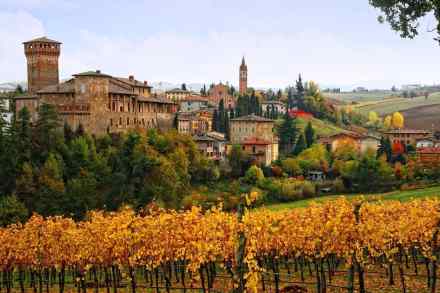
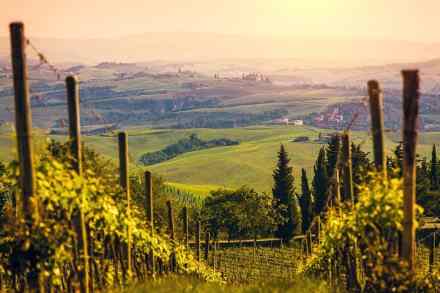
The guidebooks will tell you that Emilia-Romagna is Tuscany without the crowds. It’s generally true, though at the moment – in the peak summer season and when all the world seems to be descending on Italy after years of Covid-imposed separation from la dolce vita – there’s really tourists everywhere in Italy. But yes, with a savvy itinerary, Emilia-Romagna does offer the prospect of lesser crowds than Tuscany or the Amalfi Coast while still getting all the sun, sea, sightseeing and sensationally good food that Italy is all about. Bologna Bologna - a Mecca for foodies Italy’s culinary capital, Bologna is a city in which you can eat exceedingly well.

Nancy Pelosi’s Italian job

From our US edition

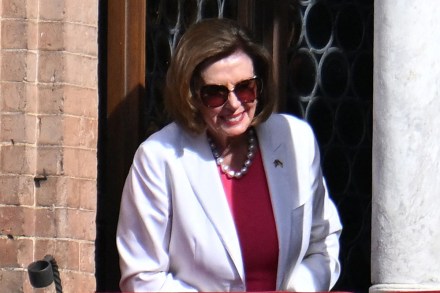
The price of gasoline in California is averaging at over $6 a gallon. Inflation is 8.6 percent. The nation is reeling after yet another mass shooting, and the Democratic base is furious at their party for being caught flat-footed by the Supreme Court on abortion. How are our nation’s leaders responding? Well, Nancy Pelosi and her ample bosom are taking a waterfront stroll at a private beach club in Italy. The Speaker of the House looked well below her eighty-two years as she showcased her tanned figure in a turquoise-patterned bathing suit. Pelosi and her beau Paul are taking a break from, respectively, suspect stock trading and drink driving at the highly exclusive Alpemare Beach Club near Florence, owned by Italian opera star Andrea Bocelli.

nancy pelosi breasts

Where to invest on Italy’s islands

A world away from TV dating reality shows, raucous party boats and the VIP areas of nightclubs in the Balearics, the Italian islands are hard to beat when it comes to understated chic. Harder to reach too, and generally more arduous places to purchase a home in, the islands can offer property hunters something special. TV and film producers know this well: picture the Baroque palazzos of Inspector Montelbano’s Sicily, the private beach of Ischia or the winding cobbled streets of neighbouring Procida used in The Talented Mr Ripley. For wild empty beaches, secret coves and quaint fishermen’s houses lining ancient quaysides, the islands in the Gulf of Naples are a good place to start, reached by ferry from Naples.

Following the seam of the Iron Curtain

From our US edition

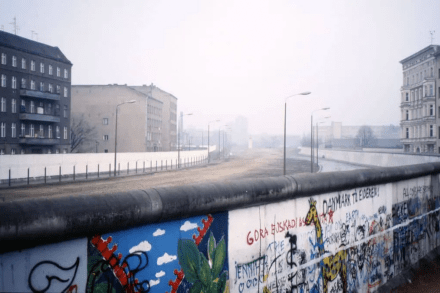
Just before the pandemic, I spent several months traveling through Europe, from the north of Norway to Istanbul and beyond to Azerbaijan. I saw unforgettable sights: the endless daylight of the Arctic summer; the vast Hammershus castle on the Danish island of Bornholm; Vienna’s ornate Prunksaal library; and the sandy beaches of Corfu. But the focus of my journey was precisely those things that most travelers to these places often ignore. I was following the route of the Iron Curtain. My aim was to visit every part of that old great divide, all the places where NATO once abutted the Warsaw Pact, where overwhelming military might stood constantly primed for apocalypse.

Italy’s hostility to Nato is building

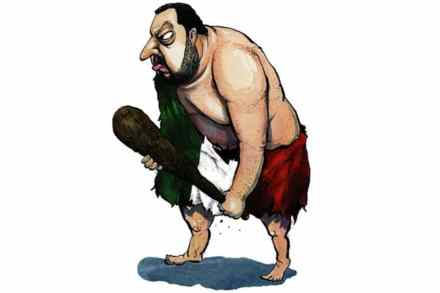
Ravenna, Italy The war in Ukraine has caused an unholy convergence of the left and right in Italy. While there is nothing formal so far about this alliance of enemies, it nevertheless threatens to destroy the unity of Nato. The most high-profile participant is -Matteo Salvini, leader of the Lega – the party with the second-highest number of MPs in Italy’s parliament – which is invariably defined as ‘far right’. Salvini, who has been one of Vladimir Putin’s strongest supporters outside Russia, condemned the invasion of Ukraine and has now come out as a pacifist. He opposes Finland and Sweden joining Nato, or sending more arms to Ukraine, on the grounds that both would make peace less likely.

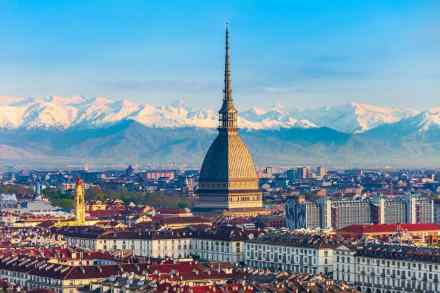
How to spend 48 hours in Turin

This May Turin’s stately boulevards and grand piazzas will be flooded with sequin-clad divas and flag-brandishing fans, as it gears up to host the 66th edition of the Eurovision song contest. This is only the third time ever that Italy has hosted the competition, following Rome in 1991 and Naples in 1965. The country’s first ever capital (from 1861 to 1865) and the urban hub of the stunning Piedmont region (a foodie haven) – Turin is an under-appreciated gem among European city breaks. There's no better to time to discover the best of what the city has to offer ahead of the Eurovision Grand Final on 14 May. What to do With a seductive mix of Renaissance, Baroque, Rococo, Neoclassical, and Art Nouveau buildings, Turin (or Torino) is best explored on foot.

The horror of gluten-free beer

I was reminded of the worst liquid that I have ever consumed. It was the last occasion on which I drank Coca-Cola, nearly 50 years ago. To be fair to Coke, this bottle was at room temperature, and the room was in the Anatolian peninsula, during the ferocity of high summer. A group of us were travelling in a battered old bus, still four hours by bad roads from Izmir, hot water and cold beer. Having run out of bottled water, we needed something to stave off dehydration. The village offered a choice: well water or parboiled Coke. An aristocratic French leftie was moved to a declamation: ‘Moi, j’ai un horreur de Coca-Cola.’ I concurred.

A taste of la dolce vita in Tuscany

Amid the grandeur of old Edinburgh, in the lee of the castle, is one of the finest buildings in Scotland: George Heriot’s School. But Heriot’s is more than an architectural gem. It is an epitome of Scotland as it used to be, before the Scottish esprit de corps succumbed to kailyard grievance-mongering under the rule of Sturgeon the tricoteuse and her Nationalist administration. George Heriot, ‘Jingling Geordie’ as he was nicknamed after the coins supposedly jingling in his pockets, was one of many Scotsmen who went south to make their fortune after the Union of the Crowns in 1603. ‘The noblest prospect a Scotsman ever sees is the high road… to England’ applied then as well as in Dr Johnson’s time.

The relentless march of Europe’s zombie centrists

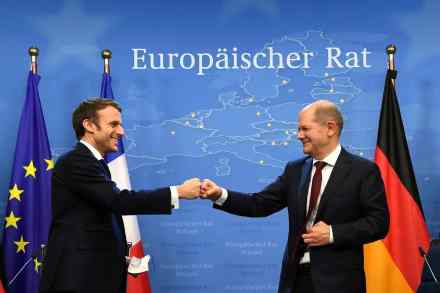
Journalists rarely had it so easy as when it came to writing up the final result of the French presidential election on Monday morning. The copy almost wrote itself: the triumph of moderation, demonstrated by a convincing win for centrist Emmanuel Macron over his far-right challenger Marine Le Pen; the clear defeat of disruptive extremist politics that might otherwise have threatened European stability; and the return to EU business as usual, with euroscepticism once again off the table and the re-establishment of a stable Franco-German axis in charge of Brussels. Easy, but ultimately unconvincing. Centrists who can be trusted not to be too radical may indeed be in power in France, as they have been in Germany since the installation of Olaf Scholz as Chancellor late last year.

The secret to buying in Italy

The best recent advert for the bella vita is surely actor Stanley Tucci sampling regional cuisines in CNN’s Searching for Italy exclaiming ‘oh my god’ at least four times an episode as he swoons over risotto Milanese or Sicilian pasta alla Norma. It's these sun-soaked visions of a foodie paradise that persuade scores of Northern Europeans and Americans to buy a home there. Around 30,000 Britons have moved there – mostly to Lombardy, Lazio or Tuscany – but a raft of incentives is helping draw many buyers to southern Italy, where rural properties are more affordable.

The last American tourist

From our US edition

I was driving along a curvy English road outside a village in Gloucestershire a few weeks ago when a sign loomed on our left. It said: CATS EYES REMOVED My first thought was: What a horrible way to make a living in this day and age, even out here in the countryside. So much for All Things Bright and Beautiful... Maybe those people who said that Brexit would turn the English into depraved monsters were right. I was jumping to conclusions. It hadn’t been put up by an entrepreneur or veterinarian but by the highway authority. Cat’s eyes are what the English call those super-reflective bumps embedded in the stripes on minor highways to keep drivers from drifting across lanes. The sign was a warning that this curvy road had recently become much more dangerous.

tourist
venice

The real food of Venice

From our US edition

A few years ago, I moved to Newlyn, a fishing village in west Cornwall. I didn’t understand why I moved to Newlyn until I returned to Venice. I take almost all my holidays in Venice, and it is a cliché that Venice only slowly reveals her mysteries. You must fight your way past a mass of Renaissance portraiture and mirrored palaces but the mystery it showed me this time is this: like Newlyn, Venice is a fishing village. Venice got rich in the thirteenth century, monopolized the trade routes to the east for two centuries and covered itself in Istrian stone, which Newlyn didn’t. But it’s still a fishing village, founded by people running away from barbarians, into the mud flats of a lagoon to fish for crabs. It is easy to forget that — unless you look for Venetian cuisine.

The story of Tuscany’s all-female winery

The inhabitants of Tuscany and Umbria can claim to be the most civilised beings on the planet, even exceeding the Afrikaners and the Ulster Prods. In the farms, villages and hill towns, there is an easy understanding of life’s pleasures, naturally including food and drink. One might describe it as prelapsarian, except that Adam and Eve did not drink wine – which surely justifies the Fall. Well done, that serpent. It is easy to imagine the course of events on a typical morning in a typical village. Lorenzo has decided to visit the dottore. His wife has been nagging him about his liver, insisting he cuts back on grappa. What nonsense, as he is sure that the dottore will confirm. But when he arrives at the surgery, the nurse is oddly evasive.

The pointless tyranny of Italy’s Covid pass

While most European countries, especially Britain, are relaxing their Covid restrictions, Italy which has the toughest of the lot, this week made them tougher still – even though the data shows they are futile. Perhaps it is because Italy is a country where fortune tellers and faith healers are a multi-billion pound industry that it has the most draconian vaccine passport regime in Europe. Either way, mass psychosis blinds its politicians and people from the truth. In the UK, bogus claims by government scientific advisers about the need for, and benefits of, lockdowns were in the end convincingly demolished and The Spectator played a significant role in the process. It is high time that similar bogus claims about vaccine passports are debunked as well.

How to combine skiing and wine tasting in the Dolomites

When planning a food and wine tour to Italy, the first ideas that spring to mind might be a road trip through the Tuscan hills or feasting at a sun-soaked villa in Puglia. Few would imagine themselves hurtling down a red slope amid rugged snow-capped scenery. And yet, unbeknownst to many, the Dolomites is arguably the gastronomic (and viticultural) capital of Italy. South Tyrol, the local region, has 19 Michelin-starred restaurants (24 stars in total) – making it the most decorated province in Italy. In the small resort of Alta Badia alone, there are four Michelin stars –all attached to one restaurant, the St. Hubertus. Up till recently it had another two star-studded eateries. Not bad for a resort with a population half the size of the Isle of Skye’s.

Are wolves stalking us on the school run?

Dante's Beach, Ravenna The other morning, my wife Carla was driving home after the school run in her battered old Renault Trafic people-carrier when through the fog she saw what looked like a wolf. It was ambling across the fields, which were covered in white ice. The wolf was only about 50 metres away, so she pulled over and took a picture, which she texted to the local dog rescue centre. She then followed the animal as it continued on its way, parallel to the road, in the direction of our house. Eventually it vanished in the fog about half a mile from our front door. ‘Yes, it’s a young wolf,’ said the man from the rescue centre when my wife spoke to him on the phone. ‘You can tell it’s a wolf from its tail,’ he explained.

Mario Draghi and the murky quest to find Italy’s next president

In ancient Rome, a diviner called a haruspex would observe the entrails of sacrificed sheep and poultry, especially their livers, to deduce the will of the gods. But even the finest haruspex would have a hard time deducing the will of the 951 parliamentarians and 58 regional delegates – the so-called grandi elettori – whose task this week is to elect Italy’s 13th president. Italian presidents, who serve for seven years, have largely ceremonial powers and their election is normally of little importance. This time, however, depending on the result, there could be at least one and possibly two seismic knock-on effects.

Can anyone beat Berlusconi to the Italian presidency?

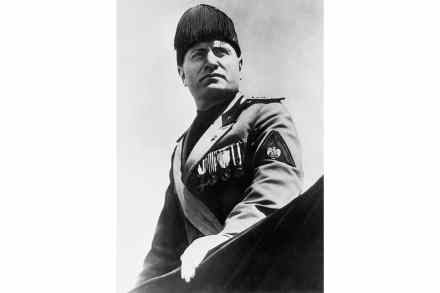
Silvio ‘Bunga Bunga’ Berlusconi was a populist before the word became all the rage. An almost comically divisive figure, he makes spectacular off-the-cuff remarks which thrill his supporters and leave his enemies apoplectic. He called Barack Obama ‘tanned’. He advised a teenage girl that her best bet in life was to ‘marry a rich man’, and once said it is ‘better to stare at pretty girls than be gay’. In an interview with Boris Johnson and me in The Spectator in 2003, he insisted that the fascist dictator Mussolini did not kill his opponents, merely ‘sent them on holiday to the islands’. I wonder if Boris remembers that now.

Italy: where to combine culture and coast

Holiday makers tend to divide themselves into two camps – those seeking culture and those for whom a holiday is not a holiday without a chance to flop on the beach or by the pool (with a good book and a cocktail for company). The good news is that in Italy you rarely have to sacrifice the former for the latter. Travel abroad has been slowly cranking into action again since September. And, whilst Omicron might have put a dampener on immediate holiday plans there's still plenty of opportunity to dream about next summer. Fully vaccinated travellers are currently allowed into Italy without the need to isolate which bodes well for a 2022 getaway.