Italy

The Epstein Files, the naked communist, and me

Dante’s Beach, Ravenna I was parked up in the Land Rover Defender on the narrow road that runs alongside the strip of dense pine forest next to the sea. My three youngest children, Rita (16), Giovanni Maria (14) and Giuseppe (ten), had just been for the first swim of the year and were now inside the forest picking wild asparagus. I could not see the sea, which was about 200 yards away on the other side of the forest, but I could hear the sound of it like the low-level roar of a distant motorway. Then I heard the honk of a car horn. I looked up from my phone, which I was using to help me contemplate the difference between Jeffrey ‘Lolita Express’ Epstein and Silvio ‘Bunga Bunga’ Berlusconi. A small grey car had stopped next to me.
Toni Servillo’s face cannot bore: La Grazia reviewed

Paolo Sorrentino’s La Grazia is about an ageing Italian president who is coming to the end of his seven-year term, and must reflect on decisions made, decisions yet to be made and the moral complexities of life. Unusually for Sorrentino, who has a liking for the showy – Hand of God, The Great Beauty, Il Divo and, for television, The New Pope – this is sober, melancholic and elegiac, and possibly the better for it. Plus, it stars Toni Servillo, which is always a win. I’ve just checked his back-catalogue and can confirm: always, always, always a win.

European culture is being Americanized

Did Mariah Carey mime or not when she headlined the opening ceremony of the Winter Olympics in Milan? That was the main takeaway from last month’s jamboree. Organizers have since suggested that the US singer did indeed lip-sync to Domenico Modugno’s “Nel Blu, dipinto di Blu” and the song that followed, her very own, “Nothing is Impossible.” “The technical, logistical and organizational complexities of an Olympic ceremony are not comparable to a live performance by a single artist,” said a spokesperson for the organizing committee.    Was there also a linguistic complexity in the decision? Perhaps Carey didn’t feel confident singing live in Italian in front of 75,000 spectators in the San Siro Stadium, plus the 9.

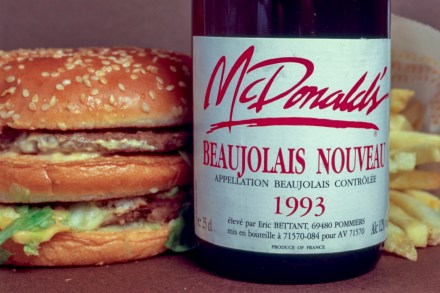
Une bouteille de beaujoulais nouveau à côté d'un repas McDonald's, France, 1994. (Photo by Robert DEYRAIL/Gamma-Rapho via Getty Images)

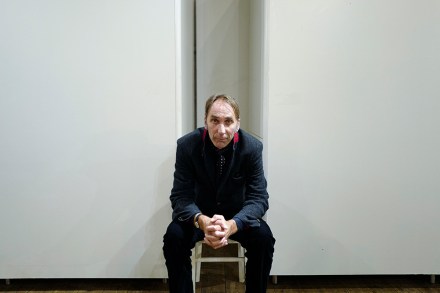
Ghastly middle-class materialism: The Quantity Theory of Morality, by Will Self, reviewed

In ‘Ward 9’, the central story of Will Self’s lauded debut collection, The Quantity Theory of Insanity (1991), it is posited that a society can only contain a finite supply of sanity, and that when it comes to marbles we’re all playing a zero-sum game. His latest novel suggests a limited amount of morality must exist in a world where the avaricious prosper and the meek inherit the debts of those who live unscrupulous lives. In the milieu of the book, these debts are mainly school fees, coke bills and the cost of renting an Italian villa for two weeks every summer.

Le Sirenuse: the loveliest hotel in the world

From our US edition

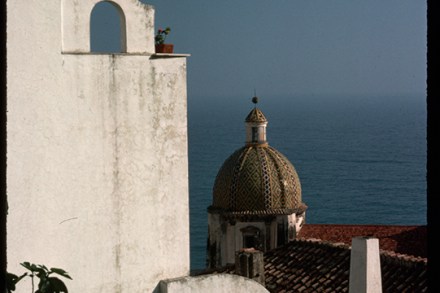
Look out from the balcony of your room at Le Sirenuse and you’ll see the trio of rocks jutting out of the Tyrrhenian Sea that gave the hotel, one of the last true greats in the world, its name. The three jagged islets form an archipelago, which is said by the Greeks to have been the home of sirens whose enchanting songs lured sailors to their deaths. Le Sirenuse, a scarlet palazzo wedged into the cliff-face of Positano, boasts similar powers of attraction. In a place known around the world for its beauty, Le Sirenuse stands out. It has developed a reputation as the loveliest hotel in the world; somehow, it exceeds that billing.

Don’t wait for the chairlift – try a ski ‘safari’

The problem with conventional ski holidays is that every day is more or less the same. You step eagerly out after your hotel breakfast to take the same ski-lifts and ski on the same slopes every day, and return to the same room every night. It can feel like a work commute, albeit a bit more fun.  Ski ‘safaris’, by contrast, offer a far less humdrum experience; but the terrain must be right. In the case of the Dolomites, a ski safari works precisely because the ski area is made up of loosely interconnected resorts with, crucially, a series of rifugi (mountain huts) high up on the slopes providing food and accommodation for an overnight stay.

The lost world of the pinball machine

‘Pinball games, with their flashing lights and unforgettable names, are the one thread that runs together my otherwise fragmentary life.’ So writes Andreas Bernard in the last sentence of this touchingly Proustian memoir. He hymns a life spent flipping small steel balls up and down machines which, despite their clamorous lights, bleeps and honks, amounted to glorified beer coasters and ashtrays, usually in dank corners next to the toilets of some German bar, Italian resort arcade or glum rest stop on California’s Pacific highway. The subtitle is misleading: the book is Bernard’s biography, not the pinball machine’s. He begins his tale as a pre-pubescent, sneaking into Munich bars with his chum Stefan to play these captivating games.

rome

Don’t bother visiting Rome

As a general rule, once a city erects turnstiles to tourist attractions which were once free to visit, it is time to go elsewhere. Never more so than in the case of Rome. Last week the Italian capital introduced a €2 charge to visit the Trevi Fountain. Tight-fisted tourists like me will still be able to see the Trevi from a distance – it happens to stand in a public street. The charge will be only for sad Instagrammers who want to get close enough to chuck their coins in the water. The city’s tourism department has suggested the fee is needed to manage the throngs of vacationers. Even then, God forbid, they won’t be able to take off their sandals and take a dip – that will earn them a €500 fine. Which raises the question: why bother visiting the fountain at all?

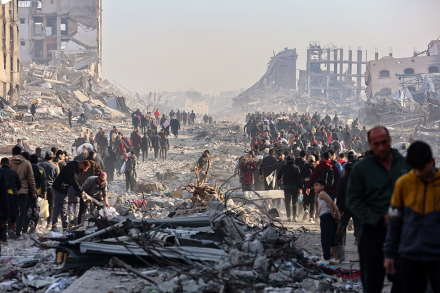
My family is still divided on the meaning of ‘genocide’

Dante’s Beach, Ravenna We were en route to the junk shop in search of a pair of robust tongs for the fire in the kitchen, which is a vital source of heat in winter, and I was rowing with my family about the Jews. There were seven of us inside the Land Rover Defender: me at the wheel in notional control with my ‘Comandante’ Basque beret on my head to cover my bald patch. Next to me was my wife Carla, who has the best deck this side of Rimini, and five of our six children behind. The language being spoken was Italian as usual, but there were frequent shouted bursts of English from the back such as ‘Just shut the fuck up!’ or ‘Jesus fucking Christ!’, often involving several voices in unison like a chorus.

Italian food is revolting

About a week into an open-ended early pandemic stay in Ortigia, the antique, tourist-beloved spit off Siracusa on Sicily’s eastern coast, I had an epiphany. I hated the food. I’d just had a few bites of a clammy aubergine parmigiana, and a plate of oily tuna steak dressed with a bit of lemon was on its way to me. I felt sick and couldn't face another bite – and yet, supposedly, I was right in the heartlands of the finest continental gastronomy. This, at least, is the orthodoxy of the world, of tourists low- and high-end and home cooks everywhere – and especially in Italy itself.

Glamour and intrigue: The Silver Book, by Olivia Laing, reviewed

Olivia Laing has had a productive couple of years. The Silver Book arrives hot on the heels of The Garden Against Time, a memoir-cum-environmentalist treatise published in 2024. It is a novel of stunning imaginative power that was apparently written in just three months. Set in 1975, during the making of two great works of Italian cinema, Federico Fellini’s Casanova and Pier Paolo Pasolini’s Salò, it is suffused with the glamour and intrigue of these filmmakers’ worlds. It offers a fictional retelling of the events that led up to Pasolini’s murder – a crime that remains unsolved – on 2 November.

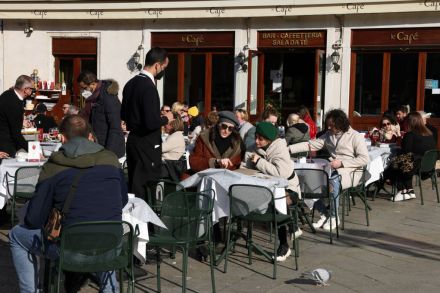
A glutton’s guide to Venice

From our US edition

I have been writing about restaurants that are in or near cultural landmarks: museums, opera houses, historic sites. This column is an exception, as it is about one of the few restaurants in the world that is a cultural landmark in its own right: Harry’s Bar. It is an even more remarkable fact given that the restaurant is in the midst of probably the most culturally dense city in Europe, Venice. I must declare that I have eaten at Harry’s at least once, sometimes twice, on every one of the many trips I have made to Venice since 1977. I love it. Not everyone does – or maybe it’s more accurate to say that not everyone gets it. I took a friend there on his first visit and he complained that “the chairs are too low, the drinks are too small and the prices too high.

venice

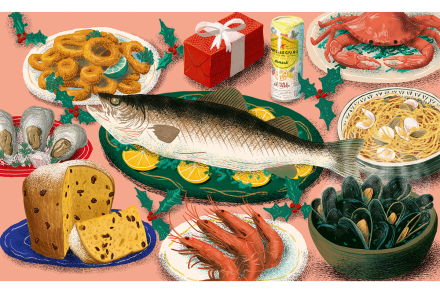
A chef’s twist on the Feast of the Seven Fishes

From our US edition

My Italian-American family gathers every Christmas Eve to cook a Feast of the Seven Fishes. And every year, it’s always just a little disappointing. Sorry, Mom. While the Feast must include seven distinct seafood dishes, there’s no correct way to prepare it. It’s entirely open to personal preference or family tradition and typically relies on whatever fish is readily available in the American northeast. Still, a touch of gourmet precision can help refine some of Nonna’s age-old recipes. The Feast is a quintessentially Italian-American tradition – one rooted ostensibly in Old World Catholicism and the abstention from meat until Christmas Day. Yet there’s very little record of it ever taking place in Italy.

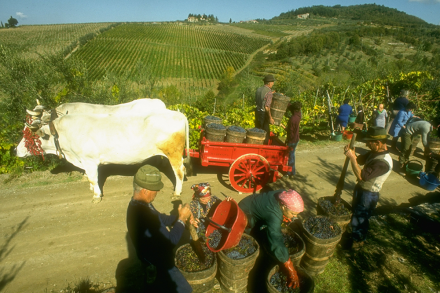
One of the joys of wine is the people who make it

Towards the end of the war, a young Guards officer met some Italian aristocrats. They had much in common. Robert Cecil was the heir to a marquessate. The Principe di Venosa’s daughter was married to an Italian marchese. Lifelong friendships have ensued down the recent generations. Nevertheless, the English family would be the first to concede that when it comes to generations, the Italians are a couple of centuries ahead. In 1385, Giovanni di Piero joined the Florentine winemakers’ guild. The easy movement between the Florentine bourgeoisie and the aristocracy helps to explain that great city’s long success: the Medici are the obvious example, as are the Antinori, who have been making wine for 26 generations, and are still gaining momentum.

Are America’s women heading for the exit?

From our US edition

Life is apparently so disagreeable in Donald Trump’s America that 40 percent of women aged between 15 and 44 want to leave. That is four times higher than the 10 percent who wanted to quit the US in 2014. According to Gallup, which conducted the poll, nearly half the nation’s younger women have “lost faith in America’s institutions.” This disenchantment accelerated after the Supreme Court’s 2022 decision to overturn Roe v. Wade, which enshrined the constitutional right to abortion. Younger American men are bearing up better. Only 19 percent share women’s distaste for the Donald, a 21 percent differential which is the largest recorded by Gallup since it began asking the question in 2007.

Women

Franco Zeffirelli’s slice of paradise in Positano

From our US edition

If you say the name Franco Zeffirelli to anyone under about 40, you’re likely to be met with bemusement. Find any opera or film lover over that age, however, and you will be greeted with a warm exclamation – “Ah!” – followed by a recitation of the Italian director’s greatest achievements. From his emergence in international culture in the 1960s with his seminal film of Romeo and Juliet to his legendary work on stage with such operatic titans as Maria Callas and Plácido Domingo, Zeffirelli became synonymous with tasteful, intelligent productions of the classics, all of which made him, for a time, the best-known cultural figure in Italy. It is fair to say that Zeffirelli, who died in 2019, didn’t always get it right, personally or politically.

The simple flatbread that conquered the world

Pizza is the Italian food that has conquered the world. From Brussels to LA, from Beijing to Buenos Aires, pizzerias are everywhere. But what are the origins of this food, and how did it become so popular? Reading Luca Cesari’sbook made me hungry not only for a thin crust margherita but also to digest the wealth of information about this simple dish. The margherita gets its name from Queen Margherita of Savoy, who, in 1889, on a visit to Naples, summoned Raffaele Esposito, the celebrated pizzaiolo (pizza-maker and hawker) to the palace to try his wares. She so liked the one with tomato, mozzarella and basil (made to represent the colours of the Italian flag) that it was dedicated to her.

Live-translation AirPods are the future

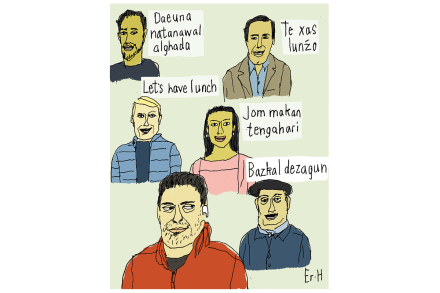
I have arrived in Naples, Italy, after an arduous flight from a chaotic London Gatwick Airport. I’m settled in a glamorous top floor apartment in the Quartieri Spagnoli – the romantic old “Spanish Quarter” – where Vespas fizz over cobbles and laundry hangs across alleys like flags of endless surrender. Most importantly, I’m clutching my Apple AirPods3 in their shiny new capsule. Because I’ve come here to do a grand, futuristic experiment using their much-heralded “live translate” function. Does it really work as smoothly as Apple says? Can I actually slot them in my ears and have them translate the Italian speaker in front of me, in real time? Is it really like the sci-fi Babel Fish from The Hitchhiker’s Guide to the Galaxy?

My Italian family believe Meloni is complicit in genocide

I would like to ask readers for help. My Italian wife and our six children, aged 10 to 22, believe that Israel is guilty of genocide in Gaza and that Italy’s right-wing prime minister, Giorgia Meloni, is complicit in this genocide. I do not. What should I tell them? Once again, I am forced to remember how precious truth is – yet how difficult it is to demonstrate. Also, how easy it is to convince people that an untruth is the truth. And yet, at the same time, how easy it is to doubt the truth when all around you are telling you it is an untruth – especially if they are your own family. Quite obviously, this is terrifying.

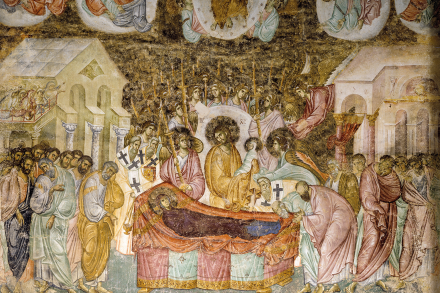
Was Serbia the real birthplace of the Renaissance?

Where did the Renaissance begin? There has been an official answer to that question since 1550, the date that Giorgio Vasari’s Lives of the Artists was first published. According to this version, it all began in Florence and the first painter in the long line that ended with Leonardo, Raphael and Michelangelo was named Cimabue. But here’s another suggestion: you could just as well try looking in the rolling hills of Serbia. My wife and I went travelling there earlier this year. For a couple of nights we stayed in the town of Novi Pazar in the south-east of the country. From the religious point of view this town is a remnant of the Ottoman Empire; according to the census of 2022, nearly 80 per cent of the population is Muslim (with just 71 atheists).