Italy

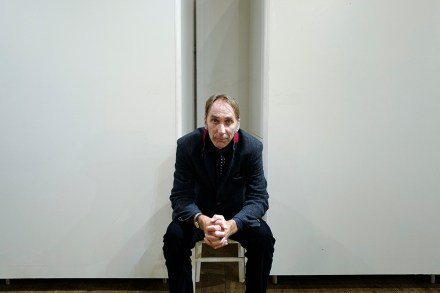
Ghastly middle-class materialism: The Quantity Theory of Morality, by Will Self, reviewed

In ‘Ward 9’, the central story of Will Self’s lauded debut collection, The Quantity Theory of Insanity (1991), it is posited that a society can only contain a finite supply of sanity, and that when it comes to marbles we’re all playing a zero-sum game. His latest novel suggests a limited amount of morality must exist in a world where the avaricious prosper and the meek inherit the debts of those who live unscrupulous lives. In the milieu of the book, these debts are mainly school fees, coke bills and the cost of renting an Italian villa for two weeks every summer. The book follows the fortunes of a cast

Don't wait for the chairlift – try a ski ‘safari’

The problem with conventional ski holidays is that every day is more or less the same. You step eagerly out after your hotel breakfast to take the same ski-lifts and ski on the same slopes every day, and return to the same room every night. It can feel like a work commute, albeit a bit more fun.  Ski ‘safaris’, by contrast, offer a far less humdrum experience; but the terrain must be right. In the case of the Dolomites, a ski safari works precisely because the ski area is made up of loosely interconnected resorts with, crucially, a series of rifugi (mountain huts) high up on the slopes providing food and accommodation for an

The lost world of the pinball machine

‘Pinball games, with their flashing lights and unforgettable names, are the one thread that runs together my otherwise fragmentary life.’ So writes Andreas Bernard in the last sentence of this touchingly Proustian memoir. He hymns a life spent flipping small steel balls up and down machines which, despite their clamorous lights, bleeps and honks, amounted to glorified beer coasters and ashtrays, usually in dank corners next to the toilets of some German bar, Italian resort arcade or glum rest stop on California’s Pacific highway. The subtitle is misleading: the book is Bernard’s biography, not the pinball machine’s. He begins his tale as a pre-pubescent, sneaking into Munich bars with his

rome

Don’t bother visiting Rome

As a general rule, once a city erects turnstiles to tourist attractions which were once free to visit, it is time to go elsewhere. Never more so than in the case of Rome. Last week the Italian capital introduced a €2 charge to visit the Trevi Fountain. Tight-fisted tourists like me will still be able to see the Trevi from a distance – it happens to stand in a public street. The charge will be only for sad Instagrammers who want to get close enough to chuck their coins in the water. The city’s tourism department has suggested the fee is needed to manage the throngs of vacationers. Even then, God

My family is still divided on the meaning of ‘genocide’

Dante’s Beach, Ravenna We were en route to the junk shop in search of a pair of robust tongs for the fire in the kitchen, which is a vital source of heat in winter, and I was rowing with my family about the Jews. There were seven of us inside the Land Rover Defender: me at the wheel in notional control with my ‘Comandante’ Basque beret on my head to cover my bald patch. Next to me was my wife Carla, who has the best deck this side of Rimini, and five of our six children behind. The language being spoken was Italian as usual, but there were frequent shouted

Italian food is revolting

About a week into an open-ended early pandemic stay in Ortigia, the antique, tourist-beloved spit off Siracusa on Sicily’s eastern coast, I had an epiphany. I hated the food. I’d just had a few bites of a clammy aubergine parmigiana, and a plate of oily tuna steak dressed with a bit of lemon was on its way to me. I felt sick and couldn’t face another bite – and yet, supposedly, I was right in the heartlands of the finest continental gastronomy. This, at least, is the orthodoxy of the world, of tourists low- and high-end and home cooks everywhere – and especially in Italy itself. And now their devotion

Glamour and intrigue: The Silver Book, by Olivia Laing, reviewed

Olivia Laing has had a productive couple of years. The Silver Book arrives hot on the heels of The Garden Against Time, a memoir-cum-environmentalist treatise published in 2024. It is a novel of stunning imaginative power that was apparently written in just three months. Set in 1975, during the making of two great works of Italian cinema, Federico Fellini’s Casanova and Pier Paolo Pasolini’s Salò, it is suffused with the glamour and intrigue of these filmmakers’ worlds. It offers a fictional retelling of the events that led up to Pasolini’s murder – a crime that remains unsolved – on 2 November. But at heart the book is a love story

One of the joys of wine is the people who make it

Towards the end of the war, a young Guards officer met some Italian aristocrats. They had much in common. Robert Cecil was the heir to a marquessate. The Principe di Venosa’s daughter was married to an Italian marchese. Lifelong friendships have ensued down the recent generations. Nevertheless, the English family would be the first to concede that when it comes to generations, the Italians are a couple of centuries ahead. In 1385, Giovanni di Piero joined the Florentine winemakers’ guild. The easy movement between the Florentine bourgeoisie and the aristocracy helps to explain that great city’s long success: the Medici are the obvious example, as are the Antinori, who have

The simple flatbread that conquered the world

Pizza is the Italian food that has conquered the world. From Brussels to LA, from Beijing to Buenos Aires, pizzerias are everywhere. But what are the origins of this food, and how did it become so popular? Reading Luca Cesari’sbook made me hungry not only for a thin crust margherita but also to digest the wealth of information about this simple dish. The margherita gets its name from Queen Margherita of Savoy, who, in 1889, on a visit to Naples, summoned Raffaele Esposito, the celebrated pizzaiolo (pizza-maker and hawker) to the palace to try his wares. She so liked the one with tomato, mozzarella and basil (made to represent the

My Italian family believe Meloni is complicit in genocide

I would like to ask readers for help. My Italian wife and our six children, aged 10 to 22, believe that Israel is guilty of genocide in Gaza and that Italy’s right-wing prime minister, Giorgia Meloni, is complicit in this genocide. I do not. What should I tell them? Once again, I am forced to remember how precious truth is – yet how difficult it is to demonstrate. Also, how easy it is to convince people that an untruth is the truth. And yet, at the same time, how easy it is to doubt the truth when all around you are telling you it is an untruth – especially if

Was Serbia the real birthplace of the Renaissance?

Where did the Renaissance begin? There has been an official answer to that question since 1550, the date that Giorgio Vasari’s Lives of the Artists was first published. According to this version, it all began in Florence and the first painter in the long line that ended with Leonardo, Raphael and Michelangelo was named Cimabue. But here’s another suggestion: you could just as well try looking in the rolling hills of Serbia. My wife and I went travelling there earlier this year. For a couple of nights we stayed in the town of Novi Pazar in the south-east of the country. From the religious point of view this town is

Hiding from the Nazis in wartime Italy

When memories come back to you, wrote W.G. Sebald in Austerlitz, his digressive novel about history and how it is remembered, their dreamlike quality sometimes makes you ‘feel as if you were looking at the past through a glass mountain’. Malcolm Gaskill’s exploration of the wartime adventures of his great-uncle Ralph, captured in Italian-occupied Libya in 1942, came from just such a memory, a ‘haunting’ dream experienced by his mother about her long-dead uncle. Finding a diary kept by Ralph while a prisoner, and fascinated by the ‘imperfections of memory’, Gaskill set off on a seven- year forage into the past that took him from archive to archive, retracing Ralph’s

My husband first and last – by Lalla Romano

In 1984 Innocenzo Monti died after a short illness. He and the writer Lalla Romano had been married since 1932 and had met in the late 1920s in her native Piedmont. Romano – a poet, painter and the author of 19 novels – wrote the story of their life together in her 1987 book Nei mari estremi, rendered as In Farthest Seas by the translator Brian Robert Moore. The structure of the book – an auto-fictional memoir – is bifurcated. The opening, shorter, part deals with the first four years of the relationship, from the moment of their first encounter (he was ‘wearing hiking boots, we were in the mountains’),

How to survive Florence with your family

There are many destinations which spring to mind when considering the options for a weekend away with a young family. There are beaches by the dozen, theme parks and glamping opportunities galore. But there is only one Florence. And I cannot say this strongly enough: when it comes to the kids, the Center Parcs of the Renaissance will not let you down. It begins with Tuscany itself, a place so beautiful that you can get Stendhal syndrome on the bus on the way from the airport. And even if your children are glued to their screens, eventually motion sickness will force them to look up and they may glimpse its

Reform’s motherland, Meloni’s Italian renaissance & the adults learning to swim

46 min listen

First: Nigel Farage is winning over women Does – or did – Nigel Farage have a woman problem? ‘Around me there’s always been a perception of a laddish culture,’ he tells political editor Tim Shipman. In last year’s election, 58 per cent of Reform voters were men. But, Shipman argues, ‘that has begun to change’. According to More in Common, Reform has gained 14% among women, while Labour has lost 12%. ‘Women are ‘more likely than men… to worry that the country is broken.’ Many of Reform’s most recent victories have been by women: Andrea Jenkyns in the mayoral elections, Sarah Pochin to Parliament; plus, there most recent high profile

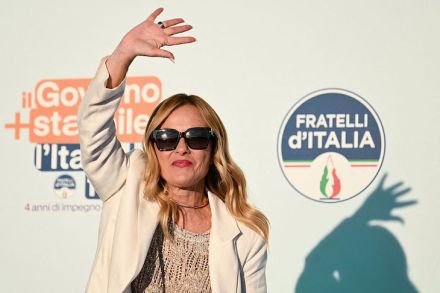
Giorgia Meloni’s Italian renaissance

Rome Last weekend, Rome hosted nearly a million young pilgrims to celebrate the Papal Jubilee of Youth. Part Woodstock festival, part giant outdoor mass and all-night vigil, crowds of students from all over Italy and beyond gathered to listen to Christian rock music, sing hymns and receive the blessing of the new Pope. Leo XIV, arriving in a white papal helicopter, was feted like a rock star. The event was orderly, joyous and a sign of a society at peace with itself and proud of its heritage. The way Italians carry on, you’d think the country was booming. The Lombardy and Veneto regions are gearing up to host the 2026

The wolf as symbol of European anxieties

On 19 December 2011, at around 3.30 a.m., a young wolf in the mountains of southern Slovenia trots away from his pack and never looks back. For the next 90 days or so, Slavc (after Slavnik, the mountain of his home) lopes onwards, hardly stopping, fording fast rivers and traversing high passes, until at last, having cut a horseshoe loop through Austria, he crosses into Italy and stops in the picturesque Alpine plateau of Lessinia. More than a decade later, Adam Weymouth follows in the same wolf’s padded footsteps. For Slavc, this is a journey into a landscape of confusing novelties, full of motorways and noise and anti-wolf country folk.

To rehydrate, drink beer

‘The nuisance of the tropics is/the sheer necessity of fizz.’  Over the past few days, during which England endured sub-tropical sweltering, it was more a matter of beer. I do not wish to denigrate water, which is all very well in its place. I often drink it. But for urgent, nay life-saving, rehydration, nothing beats beer. Now that almost all beer is properly made, I just tend to order any pint that catches my eye. In recent temperatures, the eyes have been busy. As I may have written before, there is one curiosity about beer. The Belgians, Czechs and Germans – plus other European countries – produce lager-style beers that

My daring escape from the Italian police

Dante’s Beach, Ravenna I often feel as if I know what it was like to be a member of La Résistance in Nazi–occupied France because I have three disco-age daughters. Last week, the call-to-action stations flashed up on WhatsApp at 03.06, just as the cockerels were beginning to crow and the enemy was setting up his road blocks. ‘Papà, can you come and get me?’ It was Rita, aged 16. ‘Where are you?’ ‘Marina.’ Cristo bloody Santo! A 25-minute drive away. ‘I can walk towards you,’ suggested Rita, the little sweetie. ‘No! Not if you’re wearing a miniskirt,’ I messaged back. ‘Or hot pants.’ She had gone with a girlfriend

Venice deserves Jeff Bezos

Venetians are once again revolting. Not, this time, against cruise ships, wheeled luggage, over-tourism or rule from mainland Mestre. No – according to a small but vocal contingent of the island city’s eternally discontented, it is Amazon’s billionaire founder Jeff Bezos who embodies all that threatens La Serenissima. Bezos’s offence is that he is planning to marry Lauren Sánchez, a former TV journalist, in a three-day celebration in central Venice beginning on 24 June. His 250 guests will include many of the most famous and wealthy people on the planet. The celebrity-obsessed Italian press, deprived of such a world-class spectacle since George Clooney’s Venetian nuptials with Amal Alamuddin in 2014,