Israel

A Third Intifada looms in Israel

Peace has never seemed further away for Israel, the West Bank and Gaza. Several dreadful incidents recently have made that point sadly obvious. The most vicious was a terrorist attack: a horrific shooting in which seven people were killed and many injured outside a Jerusalem synagogue on Friday. We don’t know the organisational affiliation of the attacker, Khairi Alqam. He could have been Hamas. He could have been Islamic Jihad. None of those organisations claimed this attack. Some observers – on the basis of speculation, or possibly evidence not in the public domain at the moment – believe that he was a member of the Islamic State. What we know for sure is that this was a dreadful crime – one which shocked the world.
Israel’s wake-up call to America

From our US edition

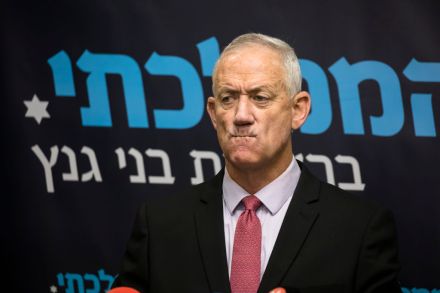
Last month, then-Israeli defense minister Benny Gantz made headlines when he said that Israel may strike Iran’s nuclear infrastructure within two to three years. Gantz has made readying Jerusalem for this contingency a priority, and in November said that Israel had “achieved preparedness, we have [more] capabilities we are developing and we have long-term processes I don’t want to elaborate on.” But while Israel may have the capability to hit Iran, the US should not force it to risk such a strike.

Edward Luttwak, the uncontained strategist

From our US edition

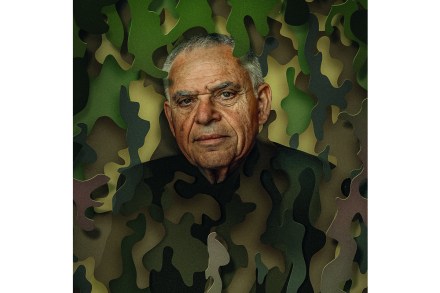
“Christ, Edward! No!” Edward Luttwak has just lunged at me with a knife in the study of the house he shares with his wife in a suburb of obdurate anonymity near Washington, DC. He is giving an unsolicited demonstration of how to most effectively stab someone. “Let your hand go limp, then feint a punch with your non-knife hand,” he says with gusto, his left fist fluttering around my face, “then stab into the diaphragm upwards. The air will go out of them like a balloon and they’ll drop to the floor. They may live another twenty years, but they’ll certainly be out of action for the next twenty minutes.” The demonstration has come after a brief typology of knives for my benefit — also unsolicited.

Luttwak

The inevitable return of Bibi Netanyahu

From our US edition

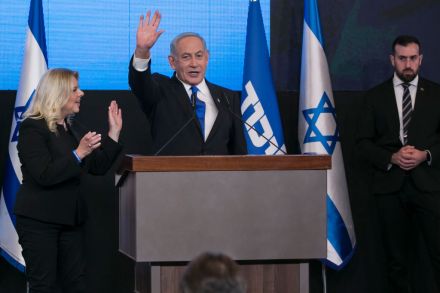
With about 90 percent of the vote counted as of this morning, former Israeli prime minister Benjamin "Bibi" Netanyahu appears set to return to power in a stunning comeback. Having lost power in May 2021, and facing mounting legal challenges, his political career seemed over. Now, with his right-wing alliance set to secure a majority — likely between 61 and 65 seats in the 120-seat Knesset — his return to the premiership seems almost inevitable. The party he leads, Likud, is likely to receive around 32 seats. While Bibi may once again lead his country, his coalition will be different this time around. The far-right Religious Zionist Party (RZP), led by firebrands Betzalel Smoltrich and Itamar Ben Gvir, will have around 14 seats, up from seven before the election.

It looks like Bibi is back from the dead

Could it really be over? As Israeli political reporters stand before their cameras or hunch over their keyboards, their brains screaming with caffeine, that is the one question they’re asking. As are millions of voters, who remarkably turned out on Tuesday in impressive numbers, despite their election fatigue.    As I write this, there are still a quarter of the votes in Israel’s general election waiting to be counted. Many of the ballot boxes come from Bedouin communities in the Negev desert and other Arab communities. Who knows, perhaps they could still change the outcome? Mathematically it’s certainly possible.

Why Israel won’t give lethal aid to Ukraine

From our US edition

Israeli defense minister Benny Gantz announced this week that Israel would maintain its policy of not supplying weapons to Ukraine. This drew criticism, including charges that Israel has a moral obligation to help Ukraine and is instead foolishly prizing its relations with Russia. Critics also note that Israel’s archenemy Iran is providing weapons and advisors to Russia. They further point out that Israel’s Ukraine arms embargo puts it out of step with Israel’s most important partners in the West, especially the United States. Yet aiding Kyiv is a far riskier bet for Jerusalem than for most Western capitals. This is no easy call, and the one Israel made is probably the right one.

The agony and frustration of reporting from the Middle East

For 25 years, Abed Takkoush assisted foreign reporters like Jeremy Bowen when they arrived to cover the chaos and conflicts in Lebanon. He drove them around in his battered Mercedes, pointing out with grim relish the places where dark deeds had taken place: the assassinations, atrocities, kidnappings and slaughter of civilians that scar this mesmerising nation. During one Israeli onslaught in 1996, Abed sped past a gunship firing at cars on the highway between Sidon and Tyre, laughing with relief when shells exploded on the road rather than the car. ‘We laughed with him,’ writes the veteran BBC reporter. ‘It was a calculated risk. The alternative was turning back to Beirut without a story.’ Four years later their luck ran out on the last day of Israeli occupation.

Can Israelis trust the UN?

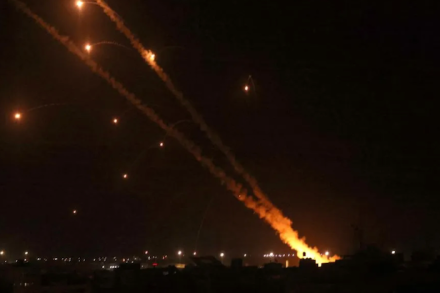
You probably think you’ve heard every story there is to hear about people getting fired over their tweets. Well, here’s the story of Sarah Muscroft. She’s got them all beat. Until last Friday, Muscroft was the head of the UN Office for the Coordination of Humanitarian Affairs in the Occupied Palestinian Territory (OCHA). For 72 hours beginning on 5 August, Islamic Jihad fired 1,000 rockets into Israel and Israel responded with 170 counterstrikes, with the terrorist group citing as its pretext Israel’s targeted killing of two of its senior commanders and the arrest of dozens of its members. Eventually, a ceasefire was brokered with the assistance of Egypt.

Learning to live with a nuclear Iran

From our US edition

A mere four years after President Donald Trump withdrew the United States from the Joint Comprehensive Plan of Action (JCPOA), the international agreement that had constrained Iran’s nuclear program, Iran is closer to building a nuclear weapon than ever before. Both the Trump administration’s pressure and the Biden administration’s diplomatic campaigns have failed to yield Iran’s capitulation, yet still the United States has not changed tack. Instead, it has only raised fears of a cataclysmic clash in the Middle East. To be sure, while the Trump team’s maximum pressure strategy had great success in “crushing” Iran’s economy, it was far less effective in achieving any of its stated objectives.

Where in the world is J.D. Vance?

From our US edition

Cockburn loves campaign gossip, and the latest gossipy article from the Daily Beast does little to inspire confidence in Ohio GOP Senate hopeful J.D. Vance. Last week, Vance made a speech at the Conservative Political Action Conference in Israel, which is pretty far from his home state in the Midwest. And apparently the fact that he wasn't campaigning in the Buckeye State has ticked off more than a few Ohioans. This isn’t the first of Vance’s abandonment issues. He’s been missing from Ohio speaking events and conferences, and even ghosted some of his donors according to the Beast’s source in the GOP. This comes a few days after the Beast posted about Vance’s finance issues, stating plainly in the very first line that “The J.D. Vance Campaign is broke.

Don’t expect much from Biden’s Middle East trip

From our US edition

It took Barack Obama less than three months to fly to the Middle East for a visit, landing in Iraq to visit the tens of thousands of US troops stationed there at the time. Donald Trump’s first overseas trip as president was to the Kingdom of Saudi Arabia (also three months into his tenure), where he basked in the limelight, watched in awe as his face was plastered on buildings in Riyadh, and hovered over a glowing orb with King Salman. Now, eighteen months into his presidency, Joe Biden will be spending a few days this week in the region, making stops in Israel, the West Bank, and Jeddah, Saudi Arabia, for a summit of the Gulf Cooperation Council.

Are the Abraham Accords working?

Two years ago, UAE citizens were barred from entering Israel. No longer. The inaugural Emirates flight touched down in Tel Aviv last week, a Boeing 777 carrying 335 passengers. For much of the 20th century, the only thing that the Middle East could agree on was the destruction of the Jewish state. But attitudes are changing. The purported reason is the so-called Abraham Accords, signed in 2020 after Donald Trump decided to solve the seemingly intractable problem of the Middle East. If Don the Dealmaker couldn’t do it, who could? Seven decades of antagonism had failed, the White House argued, and the Palestinian cause seemed as troubled as ever, so why not try a different approach?

The odd couple: Israel and Turkey’s tentative alliance

 Jerusalem On Friday night, when the Israeli government usually shuts down for Shabbat, the Prime Minister’s office issued an emergency briefing. An attack on Israeli tourists in Istanbul was ‘imminent’, it said. Israelis in Turkey were ordered to stay in their hotel rooms for fear of assassins, sent by Iran. There was no attack that night, as it happened, but the threat to the many Israelis in Turkey remains. Iran’s Islamic Revolutionary Guards Corps has become increasingly enraged by Mossad’s assassinations of IRGC officers in Iran, and decided that the best and easiest way to get revenge is to target the thousands of Israelis in Istanbul. Both Turkish and Israeli intelligence confirm this. This is not as strange as it might sound.

Biden of Arabia

From our US edition

When news broke that President Biden was planning a trip to Saudi Arabia to visit the crown prince Mohammed bin Salman (known as MbS), members of his party were horrified. Representative Adam Schiff, the chairman of the House Intelligence Committee, was especially disturbed and recommended the White House cancel it outright. "I wouldn't go. I wouldn't shake his hand,” Schiff told CBS on June 5. "This is someone who butchered an American resident, cut him up into pieces in the most terrible and pre-meditated way.” That resident was Jamal Khashoggi, a former Saudi royal family insider who used his perch as a columnist at the Washington Post to raise awareness about the crown prince’s ruthless ways.

arabia

Is a return to power in Netanyahu’s grasp?

Jerusalem ‘Netanyahu’s coming back soon, and he’ll be back with a vengeance!’ Simcha Rothman’s eyes flashed as he made his bold prediction. The normally mild-mannered lawyer, an ultra-nationalist Knesset member, was convinced. ‘He’s coming back and it’s all the left-wing’s fault for demonising him. If it wasn’t for them, the right-wing would have found a different leader by now. But the left made him into an icon and much more dangerous.’ Will Rothman be vindicated soon? It’s been a year since Benjamin ‘Bibi’ Netanyahu, Israel’s longest-serving prime minister, was forced into opposition by an eclectic coalition of parties united only by their determination to keep him out office.

Israel is an apartheid state

If you’re after evidence of apartheid in Israel, you don’t have to look very far. Amid rioting by Palestinians and Arabs, the Israel Police has declared the Temple Mount in Jerusalem off-limits. For ten days, only practitioners of one religion will be allowed to visit. For context, Temple Mount is home to the Holy of Holies, the most sacred site in Judaism, and is where the First and Second Temples stood until their destruction by the Babylonians and Romans, respectively. Following Jerusalem’s conquest by Islamic imperialists in the 7th century, a succession of caliphs worked to Islamise the Temple Mount by erecting Muslim worship sites including the Dome of the Rock, built on top of the old Jewish temple, and Al-Aqsa Mosque, the third-holiest site in Islam.

How Israel’s Prime Minister got burnt by bread

Jerusalem For nearly ten months now, ever since his surprising elevation to the Israeli prime minister’s office, Naftali Bennett has been focused mainly on one thing. He has been trying to prove to Israelis that he can be every bit the master statesman his predecessor, the eternal Benjamin Netanyahu was. And by all accounts that has worked well. He’s had two successful meetings with Joe Biden and met twice with Vladimir Putin as well, the second of those meetings, a surprising flight to Moscow after the invasion of Ukraine began, was made in the hope of brokering a ceasefire between the two countries.

Is Israel facing a new Intifada?

Dizengoff Street is one of the busiest thoroughfares in Tel Aviv, a strip of bars, restaurants and Bauhaus architecture that is typically bustling with young people on a Thursday evening. Last night, it was the scene of the latest Palestinian terror attack when a gunman opened fire outside the Ilka bar, killing three and wounding nine. One of those killed was Olympic kayaker Barak Lopen, who represented Israel at Beijing 2008 and London 2012. In the past two weeks, 14 Israelis have been killed by a mixture of Palestinian and Israeli-Arab terrorists. For comparison, there were 17 terrorism-related fatalities in the entirety of last year. I asked on Coffee House last week if Israel was in the midst of another wave of terrorist violence. Dizengoff Street answers that question.

Why is Biden copying Obama’s mistakes with Iran?

There was a picture taken on Tuesday that says more than just a thousand words. The photograph was snapped in Sharm el-Sheikh and shows Abu Dhabi Crown Prince Mohamed bin Zayed Al Nahyan and Israeli Prime Minister Naftali Bennett seated either side of Egyptian president Abdel Fattah el-Sisi. According to the Egyptian president’s office, they met to discuss ‘the repercussions of global developments, especially with regard to energy, market stability, and food security’ but ‘they also exchanged visions and views on the latest developments of several international and regional issues’. That’s a very wordy way of saying ‘Iran’.

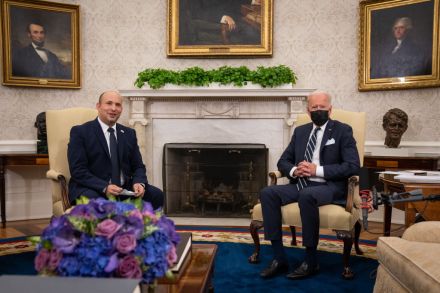
Israel and America are drifting apart

From our US edition

Israeli Prime Minister Naftali Bennett has revealed what members of his country’s national security elite have been chatting about behind closed doors for quite a while. “The United States has been, and will always be our best friend,” the Israeli PM said in a speech delivered before the Institute for National Security Studies (INSS) at Tel Aviv University. Then came the big “but”: “Washington has its own set of interests, which we must honestly admit do not always overlap with ours.” “We are speaking honestly and understand one another,” Bennett elaborated. America’s “interest in the region is dwindling. The United States is currently focused on the Russian-Ukrainian border and it is in a strategic conflict with China.