Israel

Democrats and the media unite against new GOP speaker

From our US edition

It took a few weeks, but Republicans got their act together and did the impossible: elected a new speaker of the House, Louisiana’s Mike Johnson. Johnson and his team have an incredible amount of work ahead of them — from funding the government to fundraising for House Republicans. What’s particularly noteworthy to me in the hours ahead of Johnson becoming speaker is the all-out effort Democrats and their media mouthpieces are making to define him — mostly by spreading provable misinformation.  Johnson’s Democratic counterparts on the Judiciary Committee immediately lashed out at him for being a member of the Freedom Caucus, which is an outright lie.

Keir Starmer’s Israel problem is growing

13 min listen

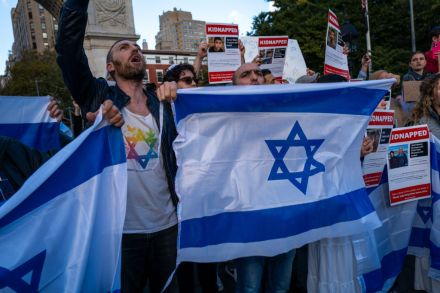
Today, Keir Starmer held a long meeting with some Muslim Labour MPs over their concern on his stance on the Israel-Hamas conflict, first ignited by comments he made on LBC which seemed to justify Israel's electricity and water blockade of Gaza. The Labour leader has made huge progress to move his party on from the reputation of anti-Semitism forged during the Corbyn era – but can he find a middle way to please all wings of his party on this deeply emotive issue? Cindy Yu talks to Katy Balls and Isabel Hardman. Produced by Cindy Yu.

Portrait of the Week: Tory by-election misery, ‘jihad’ chants and emergency aid

Home Rishi Sunak, the Prime Minister, on his return from Israel (where he spoke with Benjamin Netanyahu, the Prime Minister) and to Saudi Arabia (where he spoke with Mohammed bin Salman, the crown prince), told the House of Commons: ‘Hamas is not only a threat to Israel, but to many others across the region. All the leaders I met agreed that this is a watershed moment. It’s time to set the region on a better path.’ Twelve Britons had died in the Hamas attack, and five were missing. Of the blast at Gaza’s al-Ahli hospital on 17 October, which killed numbers of people into the hundreds, he said it was likely to have been caused by a missile fired from within Gaza. He announced £20 million extra in emergency aid to Gaza.

What Hamas promised to its electorate

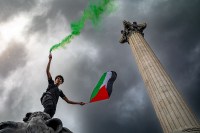
Things you do not hear very often, number one: a pro-Palestinian protestor denouncing Hamas for the barbarity of its incursion into Israel on 7 October, appalled at the savagery of those attacks upon children, grandmothers, etc. It may seem as if, in saying this, I am stating the obvious – because support for that pogrom was, I would suggest, strong among some of those carrying Palestinian flags on marches through London and elsewhere. Six Arab language journalists were suspended by the BBC when it was discovered that they retweeted messages glorifying in that day’s murder. They were not members of Hamas. Ordinary Palestinians interviewed, cowering in the rubble of Gaza, were not quoted condemning the attacks which led directly to their present misery.

Britain should back a ceasefire

Six weeks ago, I invited Ahmed Alnaouq, a young diplomat who recently joined the Palestinian mission in London, to stay for a cricket weekend in Wiltshire. He resisted all entreaties to play the game but was in every other way a delightful guest. On Sunday, Ahmed learnt that his family in Gaza has been wiped out by an Israeli bomb. His father, siblings, and more than 15 nieces and nephews had all been killed. Twenty-three dead, no injuries. Another brother was killed by an Israeli bombing in 2014. His mother died three years ago because, he says, Israel denied her medical treatment. When I sent him a text message saying that he and his family were in my thoughts and prayers – it felt hopeless, but what else can one say? – he replied: ‘My family is gone Peter. All of them.

Why I don’t trust the BBC’s Trusted News Initiative

You almost certainly haven’t heard of the Trusted News Initiative (TNI), although you probably should have. It’s a BBC-led consortium of the world’s most powerful news, social media and technology companies that seeks to cleanse the internet of ‘disinformation’. It carries out this mission by doing its best to discredit sites that challenge the prevailing narrative on topics like lockdowns, Covid vaccines, electoral fraud, the Ukraine war and climate change. It was founded in 2019 by Jessica Cecil, a senior BBC executive who, in 2021, was part of the Counter Disinformation Policy Forum, a shadowy group of ‘experts’ convened by the Department for Culture, Media and Sport to monitor criticism of the government’s pandemic response.

Homer’s take on theology

The Hamas charter does not mince its words: ‘The Prophet, Allah bless him and grant him salvation, has said: “The Day of Judgement will not come about until Moslems fight the Jews (killing the Jews), when the Jew will hide behind stones and trees. The stones and trees will say O Moslems, O Abdulla, there is a Jew behind me, come and kill him.”’ A return to the ancient pagan gods would surely be an improvement, but the modern world adopts the Hamas line. Consider the current deities of the bigots whose opponents, hiding behind a clearly sacrilegious belief in rational argument, must be condemned to eternal cancellation. The Greek and Roman gods of myth were far more accommodating. Take Homer’s Iliad and Odyssey, the first works of what we call western literature (c.700 bc).

No one should trust the camera in the age of AI

This war is being fought with pictures more than words. The poignant shots, often selfies, of families, children, even babies, who were to become victims of Hamas butchery, the wailing mothers and children on stretchers in Gaza, the missile strikes and collapsed concrete buildings. We know politicians on all sides lie, but photography is a mechanical process; these pictures must, surely, be the truth? Almost all these photos have been taken with mobile phones. To a rough approximation, everybody now has a smartphone. There are said to be seven billion smartphones in use around the world – there are only eight billion people. (Sales of what we used to know as cameras have crashed by 85 per cent.

biden obama resize

Time for Biden to change course from Obama’s failed Middle East policies

From our US edition

When a long-silent former president finally speaks out, the public listens. So do foreign leaders, especially when the former president is closely tied to the current one. That’s why Barack Obama’s comments on the war in Gaza attracted attention.  Anyone who remembers President Obama’s foreign policy knew what to expect: criticism of Israel and a delicate dance around Iran’s malign behavior. In fact, he did not mention Iran at all. He totally ignored their role. His audience expected him to add a few words of moral self-righteousness, warning Israel about future civilian casualties, as if Israeli Defense Forces hadn’t taken enormous and costly steps to avoid them.

How is Joe Biden handling the Israel-Palestine crisis?

27 min listen

This week Freddy speaks to Dennis Ross, former Middle East coordinator under President Clinton and current Professor of the Practice of Diplomacy at Georgetown University. They discuss Biden's visit to Israel this week, how his policy towards the Middle East borrows from Trump and Obama, and how we can discern between the public posturing and private desires of Middle Eastern states.

Biden’s Oval Office address was a sales pitch

From our US edition

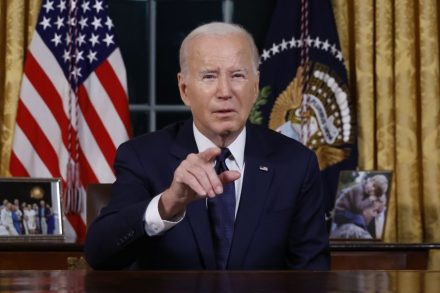
A primetime address in the Oval Office is the pinnace of presidential speechifying. Ronald Reagan used the room in 1986 to console the nation after the Challenger blew up on live television. George W. Bush declared the global war on terrorism there. Donald Trump leveraged the weight of the Resolute Desk as he talked to Americans about a deadly but mysterious virus called Covid-19 for the first time.   Tonight, it was Joe Biden’s turn. The topics, the wars in Ukraine and Israel, couldn’t be more different with respect to the players, the stakes or the circumstances leading up to them. Even so, Biden tried to convince the American people on the idea that the two wars were one and the same.

oval office joe biden

A return of the hawks?

From our US edition

Welcome to Thunderdome, where a week and a half after the chilling attacks on Israel, the American people have had time to digest the scenes from across the world — from the Middle East and fiery scenes at embassies, to protests on campuses and now on Capitol Hill, fueled by lies from progressive Democrats — and their concern is enormous. The polls show 85 percent of Americans are concerned the Israel-Gaza conflict will erupt into a wider war in the Middle East. And while supermajorities of Republicans, Democrats and Independents still believe it's important to support Israel, Republicans approve of sending Israel weapons by a roughly twenty points more than other factions. (The Quinnipiac numbers are here.

gaza hospital

Protests and confusion follow the Gaza hospital blast

From our US edition

On President Biden's last-minute trip to Israel Wednesday, the commander-in-chief pledged America's support to the Jewish state alongside Prime Minister Benjamin Netanyahu. Following what the world’s media covered as Tuesday’s massive explosion of the Al-Ahli al-Arabi hospital in Gaza, Jordan abruptly canceled a summit set to be held in Amman with leaders from Egypt and Palestine. The country’s king, Abdullah II, called off the four-way summit, blaming the Israeli Defense Forces for the explosion that, according to the Hamas-run Health Ministry, killed around 500 Palestinians. The Jordanian demanded an immediate end of Israel’s offensive, labeling the event a “shame on humanity.

The media accuracy crisis around Israel mirrors how it got BLM wrong

From our US edition

After an explosion in Gaza this week, Hamas asserted that an Israeli airstrike had targeted a hospital, killing up to 500 civilians. Outraged at this evidence-free claim, news outlets such as the New York Times, Washington Post and Associated Press all repeated it, without confirmation or investigation. Several members of Congress, including Palestinian sympathizers Rashida Tlaib and Ilhan Omar, condemned the “attack,” again, without waiting for confirmation.As evidence began to mount that Israel had not committed this act, the New York Times began to stealth-edit their original story — updating their original headlines several times.

Why do I need security guards so I can play Shylock?

These are very odd times. The project of my life – The Merchant of Venice 1936, which sets Shakespeare’s play in East End London during the rise of Oswald Mosley’s Blackshirts – was postponed because of Covid, but is now alive and kicking. It’s kicking hard. We’re on a ten-week tour and I’ve been moved beyond words at the reactions of audiences and critics. Yet for the last week, the production has had to have security men around keeping an eye on things. It’s like a dystopian nightmare. A Jewish actress putting on a play about anti-Semitism which needs to be made secure because of Jew-hating extremists. As one reviewer said: ‘Written in 1600, set in 1936, as relevant today in 2023.’ Ain’t that the truth.

Europe needs to step up on Ukraine

Vasyl, a burly, tattooed infantry commander who lost a leg to a Russian mine on the eastern front, sits swinging his remaining leg on the edge of the treatment table in the ‘Unbroken’ rehabilitation clinic in Lviv. He’s been inside the Russian trenches 50 times, he tells me. His stories are reminiscent of the first world war. I ask him what Ukraine needs for victory. Answer: ‘Motivated people.’ His T-shirt proclaims ‘no sacrifice, no victory’. After we shake hands and I wish him luck, he suddenly jumps off the table and starts skipping at amazing speed, his blue skipping rope whizzing around under his one foot, while he looks at me with a broad grin, as if to say ‘Here’s your answer’.

Ukraine’s fight has been eclipsed by the ‘Other War’

The first indication that this was a literary festival like no other came with the request to provide ‘proof of life’ questions in case of kidnap. I’ve been to some unusual festivals – earlier this year I found myself discussing war-rape, ancient and modern, with the classicist Mary Beard on a barefoot island in the Maldives – and had some unusual festival encounters, such as the woman who asked me to sign a book to her dead husband, adding that he was reading it when he died. This, however, was my first in a war zone. There was a polite warning from the Lviv Book Forum organisers: ‘If there is an airstrike, we will interrupt the event.’ It’s all part of the resilience of Ukrainians, determined in the face of Russian aggression that life must go on.

Keep your politics à la carte

It’s a truism that the Anglosphere has developed a ‘tribalism’ that rivals the divisions between the Kikuyu and Luhya in Kenya. One pernicious aspect of mutually hostile groupsterism is prix fixe politics. Your side shares a rigid, prescribed collection of beliefs, and joining the club entails embracing every single one, while despising a compulsory roster of enemies and backing the folks on your team – whatever friend or foe may say, whatever friend or foe may do. As in French restaurants, there are no substitutions. Letting go of indefensible positions your gang is ‘supposed’ to maintain is a relief Rarely has set-menu morality been put on more vivid display than last week.