Islamophobia

I stand by my comments about Islamic public prayer

Following my appointment as shadow justice secretary, I was moved to a bigger office in parliament. Where once I enjoyed a tiny room directly above the chamber (perfect for rushing to votes), now I have a plush room much further away. It is directly above the irksome Steve Bray, who continues his noisy campaign against Brexit. Of course his anti-social behaviour should mean he is moved on by the police, but these days officers balance the public interest against Bray’s ‘rights’. I recently relied on some Anglo-Saxon vernacular to tell Bray what I thought of his protest, and realised afterwards in today’s upside-down world the police would probably finger my collar – not his. Opponents of Labour’s ‘Islamophobia’ definition warned it would stop us debating religious ideas.
Am I an extremist?

On Monday, the Communities Secretary Steve Reed rose in the House of Commons to unveil ‘Protecting What Matters’, the government’s new ‘action plan’ to ‘strengthen social cohesion’ and ‘tackle division’. According to the accompanying press release: ‘Millions of families, friends and neighbours will feel a stronger sense of community, unity and national pride thanks to renewed efforts to stamp out extremism, hate and division announced today.’ I was not among those millions. Conspicuous by omission in the announcement was any mention of Islamism.

Are Switzerland and France really ‘Islamophobic’?

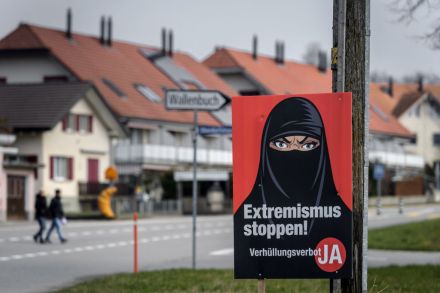
Is Switzerland 'Islamophobic'? Critics of the country's decision to outlaw face coverings think so. The 'Burqa ban', which passed into law this week as a result of a narrow vote in a referendum, applies to any form of face covering in a public gathering, unless worn for health reasons, at religious congregations, or carnivals. The legislation is not, at least directly, aimed at Muslims. And, what's more, very few Swiss Muslims wear a burqa or niqab: almost no-one in Switzerland wears a burka and only around 30 women wear the niqab, according to research by the University of Lucerne. But the condemnation has nonetheless been swift. It was 'a dark day' for Muslims, the Central Council of Muslims in Switzerland has said.

The trouble with criminalising ‘Islamophobia’

When I first heard that Angela Rayner had been tasked with creating an advisory council that will draw up an official definition of ‘Islamophobia’, I assumed it was another poisoned chalice handed to her by No. 10, particularly as Dominic Grieve has been suggested as the chair. Is that the same Dominic Grieve who was leader of the awkward squad in the Commons and spent three years doing everything in his power to thwart Brexit? He’s bound to make the Deputy Prime Minister’s life just as miserable as he made Theresa May’s. If I wanted to see Rayner off as a leadership challenger, this is precisely the kind of crap I’d dump in her lap. But I suspect that is wishful thinking.

Minouche Shafik and the great tragicomedy of Diversity in our time

From our US edition

Minouche Shafik has reigned as president of Columbia University. Culture wars, like the kind involving actual armies, have casualties. Shafik is the fourth Ivy League president to step down in the last nine months. She was proceeded by Liz Magill at the University of Pennsylvania and Claudine Gay at Harvard. Magill and Gay were casualties of their hapless testimony before the House Education and Workforce Committee hearing on December 5 and, in Gay’s case, the subsequent revelations about her serial plagiarism. She was also proceeded by Martha Pollack, president of Cornell University, who hung up her mortar board in June, without an assist from the House committee but citing the “enormous, unexpected challenges” of having to deal with antisemitism and Islamophobia.

Letters: the courts are not trying to subvert parliament

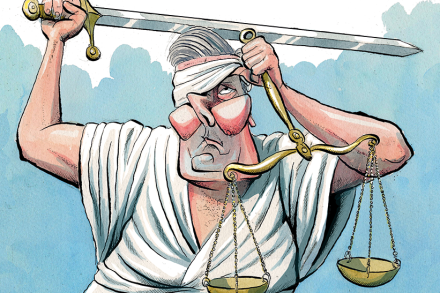
Judge not Sir: The claim by Ross Clark (‘Keir’s law’, 22 June) that the left can achieve what it wants by relying, in part, on ‘judicial activism’ is uninformed and misleading. I can assure Mr Clark and those who might share his sentiments that the courts are, in general, at pains to respect the separation of powers and the will of parliament. A cursory consideration of recent decisions from the Supreme Court would have revealed this.

White House announces effort to counter Islamophobia as antisemitism rises

From our US edition

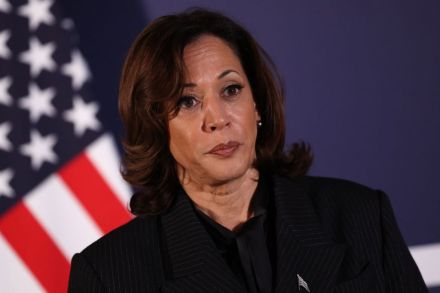
War is raging in Israel and Kamala Harris is holding down the home front with the same political aplomb she handled the border crisis — that is to say, poorly. With thousands of lives lost in Israel and an increasing number of antisemitic attacks in the US, Harris is proud to announce the White House's new program to target... Islamophobia.   “Taking on hate is a national priority. Today, @POTUS and I are announcing the country’s first National Strategy to Counter Islamophobia. This action is the latest step forward in our work to combat a surge of hate in America,” Harris shared in a post on X Wednesday evening.   https://twitter.

kamala harris islamophobia

The university fighting back against the diversocrats

From our US edition

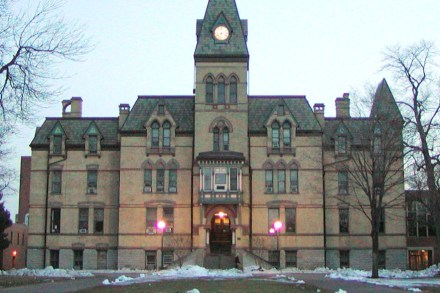
The latest news in the Hamline University saga is that a large majority of the faculty — seventy-one of ninety-two members — have called on university president Fayneese Miller to resign. Miller had played the principal part in the dismissal of art history instructor Erika López Prater, after Prater had shown two images of the Prophet Mohammed in her online art history class. One image was a slide of a fourteenth-century painting by a Muslim artist; the other was Muslim painting from the sixteenth century in which the Prophet is veiled. Condemnation of the Hamline administration for dismissing Prater has been nearly universal in American higher education.

Art history is now ‘Islamophobic’

From our US edition

At a private liberal arts college in Minnesota, art history is now Islamophobic. In October, an art history professor at Hamline University was teaching Islamic art, a segment that included two depictions of the Prophet Mohammed in fourteenth- and sixteenth-century paintings with significant historical value. The professor alerted her students beforehand, careful to ensure that observant Muslims who object to the depiction of their prophet would not have to see him on screen. It seems that the professor had done everything right: providing images of famous paintings for her students’ edification but allowing students to opt out of viewing them if doing so ran contrary to their religious beliefs. But who are we kidding? This is a liberal arts college in the twenty-first century.

Quaran

What the demise of Quilliam teaches us about Britain and Islam

There was much rejoicing among Britain’s Islamists last week when the thinktank and campaigning organisation Quilliam announced that it was closing. The Islamists were pleased because for the 14 years since its founding Quilliam has been the most prominent Muslim-run organisation arguing for a progressive, non-Islamist Islam. The exact reasons why Quilliam has shut down are not clear. The co-founder, Maajid Nawaz, has blamed the difficulties of sustaining a non-profit in the era of Covid. Perhaps it is that, or perhaps it is something else. The group never had an easy ride. But the fact that it didn’t, and that so many prominent British Muslims are celebrating its demise, points to a problem worth noting. I was there in 2007 when Quilliam started.

The creeping criminalisation of causing offence

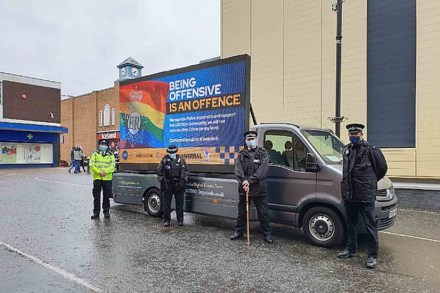
At a time when resources are scarce, the Merseyside Constabulary must have thought long and hard about its recent advertising campaign: a stern message to the people of the Wirral. ‘Being offensive,’ it declared, ‘is an offence.’ The slogan was put on a van along with text urging the public to inform on transgressors. Four officers posed beside it for a photograph, as if standing ready to enforce its orders. The police only recognised their error after a public outcry. ‘We would like to clarify,’ said Superintendent Martin Earl, ‘that “being offensive” is not in itself an offence.’ On its own, the incident is merely an embarrassment, but it represents a worrying general trend.

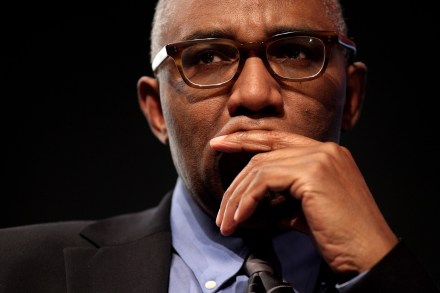
Full text: Labour’s suspension letter to Trevor Phillips

News broke this morning that the former head of the Equalities Commission Sir Trevor Phillips had been suspended from the Labour party over allegations of Islamophobia. Phillips has spent his career documenting the realities of race and integration in British life.  The think tank Policy Exchange has now released the correspondence between Sir Trevor and the Labour party disciplinary department. Phillips is a senior fellow at the research institute.

Why I’m cynical about politicians ‘doing God’

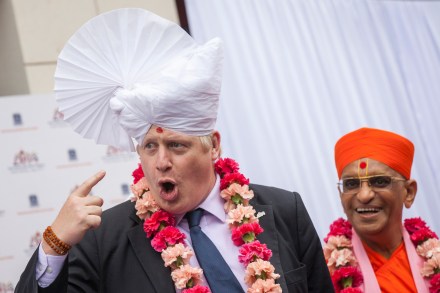
Alastair Campbell famously declared that ‘We don’t do God', yet it is customary that part of an election campaign includes wooing Britain’s minority faith communities – be they Sikhs, Hindus or Muslims. Boris and Corbyn are no exception. In recent weeks, both party leaders have donned saffron headscarves while visiting Sikh temples (gurdwara). Both have published congratulatory tweets on the 550th birthday of Sikhism’s founder, Guru Nanak, and participated in the langar or free kitchen (always a good photo op). Boris even had a go at making the notoriously elusive round chapati with worshippers in Milton Keynes and Southall.

The problem with ‘Islamophobia’ and the Tory party

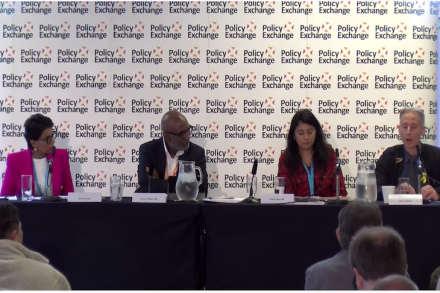
On Sunday, Policy Exchange held three events at the Conservative Party Conference in Manchester – one on the Irish backstop with Arlene Foster, Leader of the DUP; one with Michael Gove talking to Iain Martin on how to deliver Brexit; and one on the subject of Islamophobia. There were some fascinating moments throughout the afternoon. But the most memorable speech of the day was at the session on Islamophobia – an event which is now being horribly misrepresented on Twitter, including by the NUS president, Zamzam Ibrahim, who claims that it denied 'the existence of anti-Muslim bigotry'. She could not be more wrong.

Why was a GCSE student disqualified for criticising halal meat?

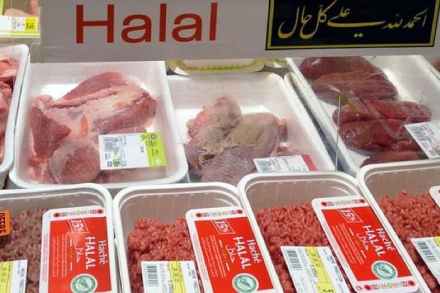
We have to talk about the schoolgirl who was disqualified from a GCSE exam on the grounds that she had made ‘obscene racial comments’ about Islam. This bizarre incident is being chalked up to overzealous wokeness on the part of some GCSE examiners. But it’s more than that. It tells us a bigger story about 21st-century Britain and the creeping criminalisation of any questioning of Islam. Too many institutions now believe it is their role to monitor and even punish anti-Islam ‘blasphemy’. The girl — Abigail Ward — is 16 years old and a strict vegetarian. In her GCSE Religious Studies exam she wrote some critical comments about halal meat. She described the butchery involved in the preparation of halal meat as ‘absolutely disgusting’.

The Tories are right to reject the flawed definition of ‘Islamophobia’

As a Muslim, I find the term ‘Islamophobia’ an etymological fallacy. Islam, by the definition of its founder the Prophet Mohammed and its greatest philosophers (al-Farabi, Ibn Tufayl, Averroes), is considered to be a ‘natural way’.  Humans cannot have a phobia against nature. It is the height of moral insanity for an intelligent Muslim to place the word ‘Islam’ and the word ‘phobia’ together in a single phrase. The term ‘Islamophobia’ was lifted from discrimination against homosexuals: homophobia. The parallels do not stand up to serious scrutiny between Islam as an idea, a faith, a civilisation, a motivator for behaviour and homosexuality as a private practice of consenting adults that had led to punishment and killings.

China’s war on Islam

From our US edition

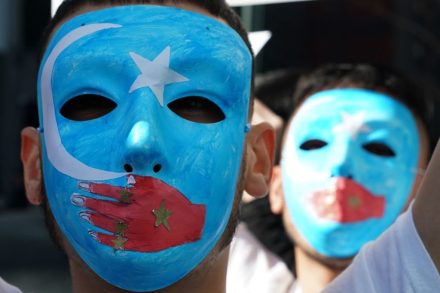
The Reuters photo could be mistaken for a shot of one of America’s ‘supermax’ prisons, the ones where the most dangerous criminals are held. An endless green security fence, topped with coils of barbed wire, punctuated by soaring octagonal guard towers with 360-degree views, all fronting what looks like a massive concrete wall or side of a building. Yet the Chinese workers walking outside the fence give away the truth. The picture is not of a US prison, but rather a Chinese ‘re-education’ center in vast Xinjiang, in the country’s far west. According to research by the Australian Strategic Policy Institute, there are 28 such massive detention camps in Xinjiang, most built within just the last several years.

uighurs

Why do terrorists attack houses of worship?

From our US edition

With the mosque shooting in New Zealand, the bombings of churches in Sri Lanka and the attack on a synagogue in Poway, California, each of the major monotheistic religions have had places of worship attacked by terrorists almost within a month. Houses of worship are a common target for racial and religious supremacists. In the United States, there have been, within the last decade, neo-Nazi shootings at a gurdwara in Oak Creek, Wisconsin, a black church in Charleston, South Carolina and the Tree of Life synagogue in Pittsburgh, Pennsylvania. These events have kept alive a grim tradition, going back to the 16th Street Baptist Church bombing of 1963, where Ku Klux Klansmen attacked a church with dynamite and killed four little girls.

places of worship

The Muslim leader who offers an example on how to tackle Islamism

The Christchurch attack has prompted a considerable degree of soul-searching in the West about the potential impact of anti-Muslim rhetoric. The need to tackle deadly far-right conspiracy theories is clear for all to see and the debate about how to do so continues. But what lessons might we learn from the response to Christchurch in the Muslim world, where I spent many years of my professional life working? Yahya Cholil Staquf, the general secretary of Nahdlatul Ulama – the largest independent Muslim organisation in the world – wrote a good piece in the Daily Telegraph this week under the headline, “Don’t weaponise the term ‘Islamophobia’”.

Jacinda Ardern’s hijab shows what New Zealanders really think of Muslims

From our US edition

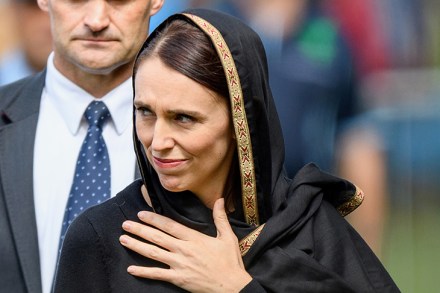
The reaction of New Zealand’s vast non-Muslim majority to the terrorist attack at the Al Noor mosque in Christchurch is both inspiring and alarming. Inspiring because, faced with a group of mostly recent arrivals who constitute a mere 1 percent of New Zealand’s population, the other 99 percent have chosen not to ignore their loss and distress, but to commiserate and console at a time when liberal democracies are beset by factional resentments. What is alarming is the form the reaction has taken. When New Zealand’s prime minister Jacinda Ardern observed Friday prayers in the park outside the mosque, she and many other non-Muslim women wore a hijab.

jacinda ardern