Iran

Is the special relationship over?

From our UK edition

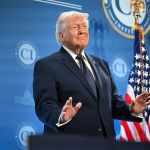
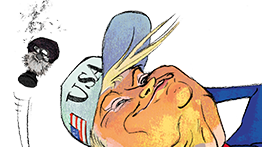
The US Defense Secretary Pete Hegseth has said today will be the most intense day yet of American strikes on Iran. Over the weekend, Donald Trump claimed the war could soon be over – and suggested the US has already effectively won. He also took aim at Keir Starmer, accusing Britain of joining wars America has ‘already won’. Deputy and US editor Freddy Gray joins the podcast to explain what’s really happening in Washington and why he believes the ‘special relationship’ may be over – and not coming back. Economics editor Michael Simmons also joins to discuss the fallout. As oil prices surge and markets react, Reform UK is seizing on renewed pressure over the cost of living. What does the crisis mean for Rachel Reeves – and how serious could the economic consequences become?
Is the special relationship over?

Putin is enjoying the Iran war

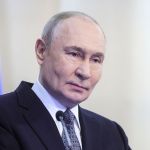
After Iran unleashed a torrent of missiles against its neighbors – including those with whom it had enjoyed friendly relations such as Turkey and Azerbaijan – few regional leaders are in the mood to congratulate the new Supreme Leader Ayatollah Mojtaba Khamenei. Few, but not none. "At a time when Iran is confronting armed aggression, your work in this high office will undoubtedly require great courage and dedication," wrote Vladimir Putin in an official message of congratulation to Khamenei Junior. "I am confident that you will honorably continue your father’s legacy and unite the Iranian people in the face of these severe trials.

neocon

I spent 25 years fighting neocons. Then Trump became one

Like everyone, I’m glued to the news coming out of Iran. I’m experiencing some depression, as one might, upon realizing that much of what one has worked on for 25 years has suddenly gone up in smoke, destroyed when Donald Trump discovered he was pretty much a neocon after all. Like everyone else, I have no idea what will happen in Iran, whether Trump’s bombing and perhaps breaking apart a very unpopular regime will lead to something better, or just chaos, a failed state spitting out a cohort of embittered men.

Will the war in Iran really weaken China?

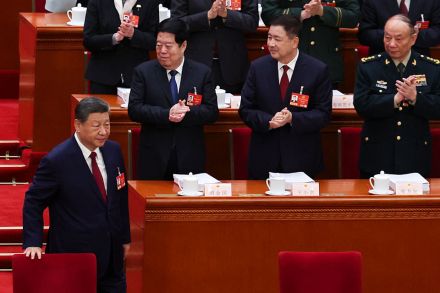
Analogies in international politics are tricky and easily abused, yet they remain irresistible because they can illuminate patterns that are otherwise hard to see. Consider the present moment.  Just as Ukraine has become a growing burden for Washington and its Western allies, Iran is now a strategic burden for Moscow and Beijing. The US, particularly under the Trump administration, appears to be placing less emphasis on supporting Ukraine. Something similar may be happening in reverse with Iran.  Moscow continues to provide Tehran with assistance – most notably intelligence on US military targets – but the broader pattern suggests caution rather than deep commitment.

China Iran
MAHA

MAHA, stay in your lane

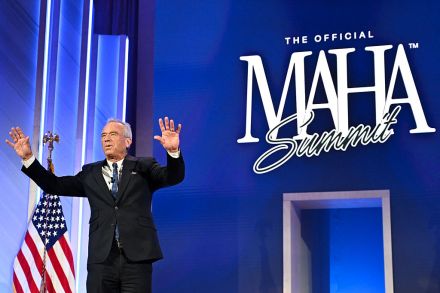
MAHA ("Make America Healthy Again") is not a foreign policy doctrine, nor should it become one. Nevertheless this week the movement experienced a split with some members urging Congress to introduce a war powers resolution to curb US military action in Iran. But they should be aware that mission creep – the gradual expansion of objectives beyond the original scope – has derailed many well-intentioned efforts in Washington. For MAHA to entangle itself in the complexities of the Iran war risks diluting its message and alienating supporters who joined for healthier schools, cleaner water and safer vaccines.

Geoffrey Cain, Justin Marozzi, Alex Diggins & Sam France

From our UK edition

30 min listen

On this week’s Spectator Out Loud: Geoffrey Cain explains why Trump’s real target with Iran is China; Justin Marozzi argues ancient history might be on the side of Ayatollah Khamenei’s supporters; Alex Diggins warns about the catastrophic consequences that may befall the Palace of Westminster; and finally, Sam France celebrates the 50p coin. Produced and presented by Patrick Gibbons.

Geoffrey Cain, Justin Marozzi, Alex Diggins & Sam France
britain

If only Britain was as important as Iran thinks it is

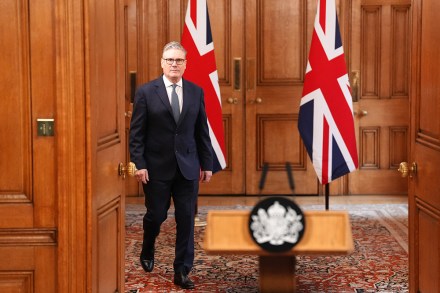
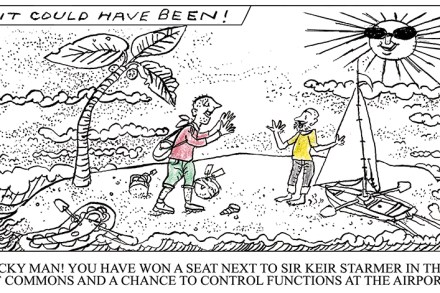
I am becoming rather fond of Prime Minister Starmer’s major foreign policy announcements. In early January, after US forces swooped into Venezuela and took President Maduro to New York to face trial, Keir Starmer was keen to get straight out in front of the cameras. There he said that he wanted to stress that "the UK was not involved in any way in this operation." As though the whole world had been expecting to hear that the British armed forces were indeed central in snatching the narco-terrorist from Caracas. This week it was again Starmer’s turn to stand behind a podium, British flags behind him, and deliver another statement that absolutely no one thought necessary. Speaking about the US-led strikes on Iran, he announced solemnly: "I want to set out our response.

The Iran war has exacerbated the failure of European energy policies

The history of the global trading system is a story of narrow and vulnerable waterways: the Suez and Panama Canals, the St. Lawrence Seaway, the Straits of Dover and the Skagerrak, which defends the entrance to the Baltic. But none has the power to seize up the global economy as much as the Strait of Hormuz. Barely 30 miles wide at the narrowest point and bounded on one side by the state of Iran, this passage is used for a quarter of the world’s oil supplies and a fifth of its liquified natural gas (LNG).

energy
Iran: is Trump's ultimate target in this war China?

Iran: is Trump’s ultimate target in this war China?

30 min listen

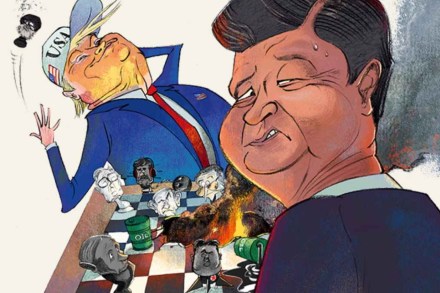
As the crisis in the Middle East has escalated, Donald Trump's posturing has led many to question his strategy – and if he even has one. Geoffrey Cain, former foreign correspondent, expert on authoritarian regimes – and the author of this week's cover piece in the Spectator, joins Freddy Gray to explain why Trump's ultimate target in the war is China. From the Belt and Road development initiative to more tacit bilateral support, President Xi has been playing a game of chess, to try to check America's power. With Nicolas Maduro arrested and Ayatollah Khamenei assassinated, President Trump is showing his willingness to project American power, at whatever cost – so far. Cain raises questions for those who assume we're moving to a multipolar world.

Trump isn’t the greatest threat to the Special Relationship

Britain’s refusal to fully back the United States over strikes on Iran has triggered an unusually public transatlantic row. It has also revived an old question about the future of the so-called "Special Relationship." When Donald Trump returned to the White House last year, many in Westminster doubted Keir Starmer could build a workable relationship with him. The two men could hardly be more different in temperament or politics, and predictions of an early rupture were widespread. For a time, however, Starmer appeared to defy those expectations. Britain weathered Trump’s latest tariff wars better than most countries, and the Prime Minister seemed to have found a cautious way of managing Washington’s unpredictability.

special relationship

Israel wants to destroy Hezbollah once and for all

At around 2:30 a.m. on March 2, Israel bombed Beirut’s mostly Shia southern suburbs in response to a Hezbollah rocket attack on northern Israel. The road heading into Beirut from South Lebanon and the city’s southern suburbs was jammed with cars filled with Lebanese fleeing further reprisals. Some 52 civilians were killed and 154 injured, a hefty butcher’s bill even in this part of the world. Most Lebanese are happy Hezbollah has been defanged, even if they wish it wasn’t thanks to Israel Hezbollah’s actions were a demonstration of their ongoing support for Iran, but goading Israel was a cataclysmic miscalculation.

Is it wise for Spain to goad Donald Trump?

Spain’s refusal to allow the United States to use its military bases at Morón de la Frontera (Seville) and Rota (Cádiz) for its war on Iran, arguing that the US-Israeli attacks are "unilateral military actions outside the United Nations charter" has brought the simmering conflict between Pedro Sanchez, Spain’s socialist Prime Minister and President Trump to a head.   Sanchez’s carefully calculated strategy has been to position himself as one of Trump’s leading opponents on the world stage On Wednesday Sanchez followed up by delivering a stunning rebuke to Trump. Speaking for ten minutes on national television, he said that his government's position could be summed up in four words: "No a la guerra" (No to war).

neoconservative

America’s last war in the Middle East

Win or lose, Donald Trump has begun the last war the United States is ever likely to fight in the Middle East. That might sound wildly optimistic, but what it really means is that war with Iran has been decades in the making. If the mission succeeds, it will mark the end of an era. And if it fails, this war will have exhausted what’s left of America’s willingness to remake the region by force. It’s not just that Iran puts the case for regime change to the ultimate test. America’s relationship with Israel is also on trial.

China is next – Trump’s Iran strategy explained with Maurice Glasman

Iran: Why Trump’s ultimate target in this war is China – with Maurice Glasman

From our UK edition

50 min listen

As the conflict in the Middle East escalates, what is Trump’s game plan? The Spectator’s cover piece this week, by Geoffrey Cain, argues that Trump’s ultimate target in this war is China; every dictator gone, weakens the Chinese regime. As Freddy Gray explains further on the podcast, Trump’s worldview is shaped by the events he grew up with – including then President Nixon’s visit to China in the 1970s. As well as making sense of Trump’s plan, the Spectator team take us through the dramatic events of the past week, including how Starmer appears to have alienated Britain’s allies over Iran. Plus – Lord Glasman makes the case for Reza Pahlavi, the Crown Prince of Iran, declaring he is 'devoted to the restoration of the Shah’.

Does Trump really have ‘whatever it takes’ to win in Iran?

With Operation Epic Fury in its sixth day, it is hard to tell how long the current United States military campaign against Iran will last. It may not be swift; yesterday, the Senate rejected a resolution to halt further action. Meanwhile, President Trump has been alarmingly indifferent to the question: Whatever the time is, it’s OK, whatever it takes. Right from the beginning we projected four to five weeks, but we have the capability to go far longer than that. We’ll do it. Secretary of Defense Pete Hegseth struck a different note with reporters: "This is not Iraq, this is not endless." Yet he has refused to rule out deploying ground forces to Iran and later said, "We have only just begun to fight.

iran

Why Iran marks the end of neoconservatism

45 min listen

Spectator World columnist – and Heritage Foundation fellow – Daniel McCarthy joins Freddy Gray to explain how Trump's war with Iran could mark the end of an era, that of neoconservatism. For Daniel, there is no contradiction between Trump's 'America First' policy and its overseas interventions: Trump is pursuing a version of hegemony that will reduce the need for future interventions. If all goes to plan, this could mark an ideological watershed that stretches back to the first Gulf War in the early 1990s – but it's a big 'if'. What if the conflict spirals out of control? To what extent was this driven by Trump, or by Netanyahu? And what are the dynamics at play between the leadership figures in Maga? Produced by Patrick Gibbons.

Why Iran marks the end of neoconservatism

Iran: has Starmer alienated Britain’s allies?

From our UK edition

21 min listen

As the conflict in the Middle East escalates, the British government continues to face questions about its response. Was the UK too slow to act, and if so – why? Tim Shipman reveals in the Spectator today that Keir Starmer was initially minded to approve American use of British bases but was persuaded not to by other figures, including Ed Miliband. How much damage has this done with the Americans and also wider European allies? Defence Secretary John Healey has landed in Cyprus today on a damage-limitation mission – or in a show of strength, depending on your viewpoint. Has Starmer been weakened by these events? Plus – Home Secretary Shabana Mahmood has revealed further asylum reforms. Will the reforms neutralise the issue of immigration for voters?

Iran: has Starmer alienated Britain's allies?

Trump’s ultimate target in this war is China

The United States and Israel killed Ayatollah Khamenei, and Xi Jinping’s decade-long project to build an alternative to the American-led order died with him. For years, Beijing quietly assembled a network of dictatorships and client states designed to blunt American power. Iran supplied China with cheap oil and kept Washington bogged down in the Middle East. Russia waged war on Ukraine with Chinese materiel support, a gamble that was supposed to cement a powerful anti-western axis but has instead bled Moscow into dependence on Beijing. Regional proxies from Lebanon to Gaza added just enough chaos to stop Washington focusing on China. The Chinese Communist party (CCP) propped up Nicolas Maduro’s Venezuela, too, as it funneled narcotics and other ills into America.

Portrait of the week: Iran attacked, Iran attacks and Starmer fumbles

From our UK edition

Home Britain was not involved in the attack on Iran, Sir Keir Starmer, the Prime Minister, said, but a day later he gave America permission to use British bases (including Diego Garcia) ‘to prevent Iran firing missiles across the region’. He told the Commons, ‘This country does not believe in regime change from the skies,’ and ‘the only way forward is a negotiated outcome’. ‘This is not Winston Churchill that we’re dealing with,’ said President Donald Trump of America. A drone hit RAF Akrotiri in Cyprus; the destroyer HMS Dragon was dispatched there. At least 300,000 British citizens were said to be in the Gulf.