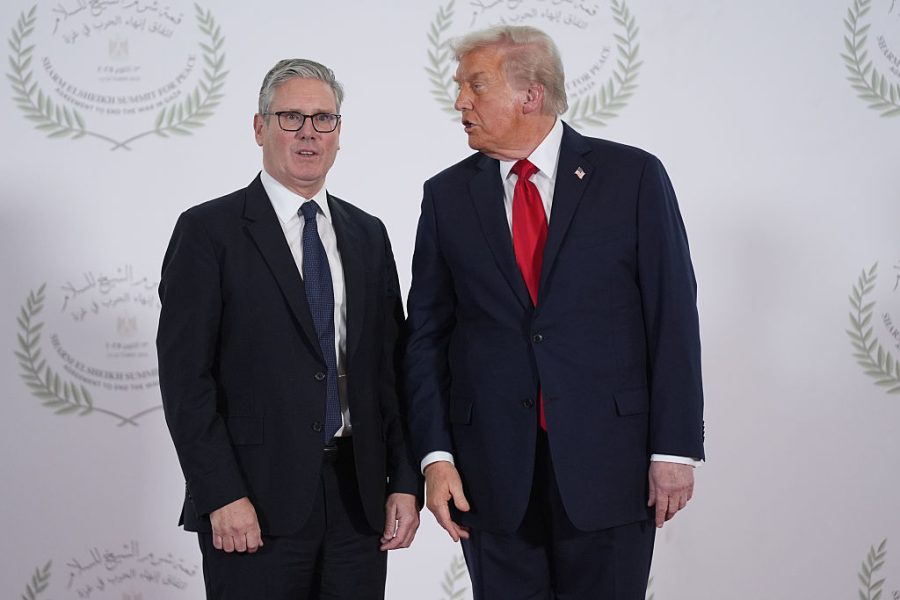
Britain’s refusal to fully back the United States over strikes on Iran has triggered an unusually public transatlantic row. It has also revived an old question about the future of the so-called “Special Relationship.”
When Donald Trump returned to the White House last year, many in Westminster doubted Keir Starmer could build a workable relationship with him. The two men could hardly be more different in temperament or politics, and predictions of an early rupture were widespread.
For a time, however, Starmer appeared to defy those expectations. Britain weathered Trump’s latest tariff wars better than most countries, and the Prime Minister seemed to have found a cautious way of managing Washington’s unpredictability. But the dispute over Iran suggests that fragile equilibrium may now be breaking down.
At the diplomatic level, the Special Relationship is spoken of reverently. Yet beneath the rhetoric there has long been unease in Britain about the country’s closeness to Washington.
In Donald Trump’s world, legitimacy is something Washington believes it can supply for itself
Critics have long worried that Britain behaves less like an equal ally than a dependable auxiliary. The sentiment was captured in the 1986 song “51st State” by New Model Army, mocking the idea that Britain had become an appendage to the United States. The anxiety resurfaced during the Iraq war, when Tony Blair was widely caricatured as George W. Bush’s “poodle.” Two decades later, the argument persists. What has changed is the context: the dispute over Iran suggests Britain may no longer be willing – or able – to follow Washington so readily.
Yet the more interesting question may be the opposite one. If Britain is no longer automatically lining up behind the United States, does that mean the Special Relationship is weakening? Or does it reflect something deeper about how the relationship itself is evolving?
For most of the post-war era, the partnership between London and Washington rested on a simple bargain. The United States provided overwhelming military power and global leadership. Britain, in return, offered diplomatic alignment, intelligence cooperation and – crucially – political legitimacy. When Britain joined American interventions, it signaled that Washington was acting as part of a coalition rather than alone. During the Cold War and the decades that followed, this symbolism mattered.
But that model assumed a particular kind of American leadership, one that valued alliances not only for their capabilities but also for the political cover they provided. The return of Donald Trump suggests that assumption may no longer hold.
Trump has never been sentimental about alliances. His approach to international politics is far more transactional. Instead of asking whether allies lend diplomatic support, the question becomes what they actually contribute: do they spend enough on defense, share the burdens of power and bring capabilities the United States finds useful? In that world, historical ties matter less than tangible strategic value – and Britain must demonstrate that it remains a partner worth having.
This is where much of the debate in Britain misses the point. The central question is not whether Britain chooses to support the United States politically, but whether it still possesses the national power required to matter in the partnership.
For decades, Britain could rely on a combination of military capability, diplomatic reach and economic weight that made it a natural partner for the United States. Today that position is less secure. Economic growth has been weak, productivity stagnant and investment lagging behind competitors, while Britain’s armed forces have steadily shrunk and the military has fallen to levels not seen for generations.
The crisis in the Middle East offered a telling illustration. After a drone strike hit the RAF base at Akrotiri in Cyprus this week, Britain announced it would send the destroyer HMS Dragon to reinforce air defenses in the eastern Mediterranean. Yet the ship was not ready to sail immediately, and critics argued it should have been deployed weeks earlier as tensions escalated. The delay prompted comparisons with countries such as France, which had already moved faster to reinforce the region.
This episode reinforced an uncomfortable perception: Britain still talks like a global security actor, but increasingly struggles to act like one. But the deeper issue is not only military weakness. In a transactional alliance system, influence flows from national strength across several domains at once. Military capability matters, but so do economic dynamism, technological leadership and industrial capacity. Countries that command these assets are treated as partners; those that lack them become followers.
Britain still possesses formidable advantages: world-class universities, a powerful financial center, a strong scientific base and a global diplomatic network. Yet many of these strengths have eroded as productivity stalled, industrial capacity shrank and investment in advanced technologies lagged.
In Washington these things matter: the American administration respects countries that bring real capabilities to the table. A Britain that leads in emerging technologies, maintains credible military power and sustains a dynamic economy is a Britain that America will want as a partner. A Britain that cannot project power or sustain technological leadership will find its influence diminishing, regardless of how often politicians invoke the special relationship.
The irony is that the steps required to sustain the relationship with Washington are largely the same steps Britain should be taking anyway in a more competitive global order. Rebuilding defense capability, investing in technological leadership, and strengthening economic dynamism are the foundations of national power in the 21st century.
The real question, then, is not whether the Special Relationship survives the latest quarrel between London and Washington. It is whether Britain can adapt to the way the relationship, and the world itself, is changing.
For much of the post-war era, Britain’s value to the United States lay partly in political support and diplomatic legitimacy. But in Donald Trump’s world, legitimacy is something Washington believes it can supply for itself. What matters instead is capability – and here the irony is uncomfortable for London.
Britain is already under criticism for its shrinking armed forces, delayed deployments and chronic underinvestment in defense. Yet the special relationship can only endure if Britain does precisely what the new strategic environment already demands: rebuild military strength, technological capacity and economic resilience. In that sense the future of British-American relations depends less on diplomacy than on whether Britain gets its own house in order.
The uncomfortable truth is that the greatest threat to the Special Relationship is not Donald Trump. It is the possibility that Britain may cease to be a country America actually needs.





Comments