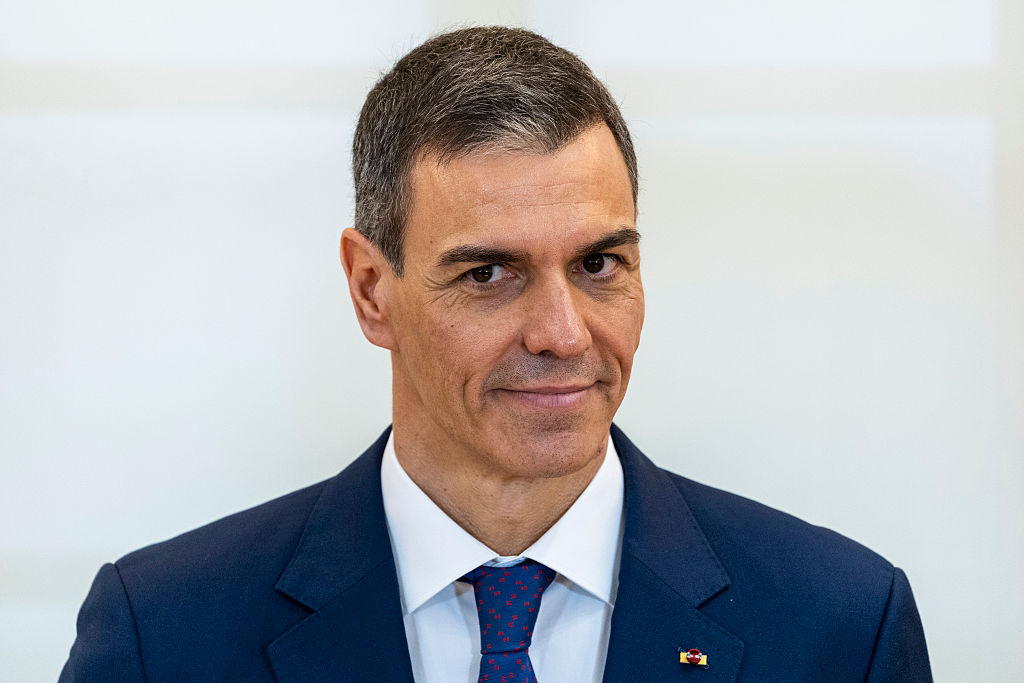
Spain’s refusal to allow the United States to use its military bases at Morón de la Frontera (Seville) and Rota (Cádiz) for its war on Iran, arguing that the US-Israeli attacks are “unilateral military actions outside the United Nations charter” has brought the simmering conflict between Pedro Sanchez, Spain’s socialist Prime Minister and President Trump to a head.
Sanchez’s carefully calculated strategy has been to position himself as one of Trump’s leading opponents on the world stage
On Wednesday Sanchez followed up by delivering a stunning rebuke to Trump. Speaking for ten minutes on national television, he said that his government’s position could be summed up in four words: “No a la guerra” (No to war). He described the attacks on Iran as a flagrant violation of international law that threaten to plunge the entire Middle East into terror, hinting that the real aim of the war is to line the pockets of a plutocratic oligarchy. He went on to demand – he was at pains to emphasize that he was demanding – that hostilities cease immediately “before it is too late.” It was an eloquent, impassioned plea that seemed to come from the heart: pacifism has deep roots in Spain.
Meanwhile a furious President Trump has lost no time in announcing that his administration is cutting off all dealings with Spain which he has described as a “horrible” and “unfriendly” ally. “We are going to cut all trade with Spain,” he clarified: “Spain has absolutely nothing that we need other than great people but they don’t have great leadership.”
This is not the first time that Trump has described Spain’s left-wing administration as “terrible.” Prime Minister Sanchez went out of his way to infuriate President Trump at last June’s NATO summit when he was the only one of the 32 leaders to refuse to increase defense spending to 5 percent, arguing that actually 2.1 percent would be quite sufficient. The two leaders are in opposite corners on a whole range of issues including Gaza (Sanchez misses no opportunity to refer to Israel’s “genocide”), trade with China (“You’ll be cutting your own throat,” Treasury Secretary Scott Bessent warned when Sanchez became the first world leader to visit Beijing after the tariff war broke out) and immigration as well as diversity, equity and inclusion regulations.
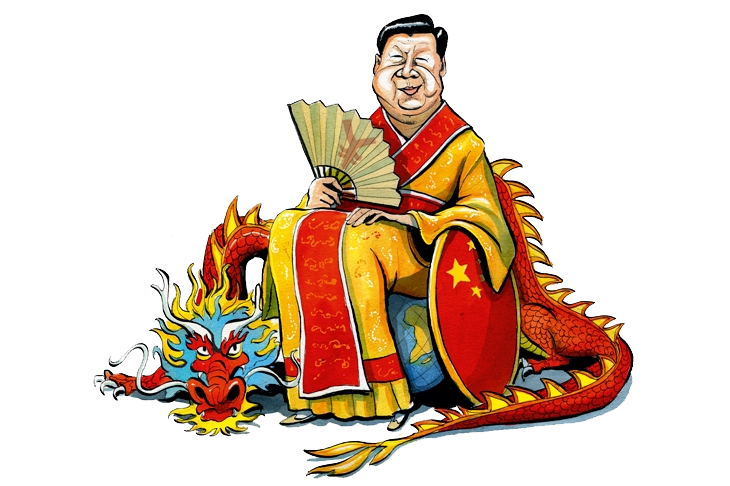
Sanchez for his part relishes taunting Trump, promising, for example, that rather than “Drill, baby, drill” it’s going to be “Green, baby, green.” He has also claimed that the European Union is going to “Make social media great again;” when he announced plans to ban under-16-year-olds from social media, Elon Musk called him “a tyrant and traitor to the people of Spain.”
Indeed, Sanchez’s carefully calculated strategy, ever since Trump’s re-election, has been to position himself as one of the President’s leading opponents on the world stage. He likes to frame Trump’s presidency as part of a dangerous global rise in far-right populism that it is his duty to confront. Presenting themselves as heirs to the Republicans who fought against General Franco during the Spanish Civil War, Spain’s socialists, led by Sanchez, suggest that they are uniquely well-placed to understand and resist what they describe as a “fascist threat.”
This narrative serves as a useful justification for Sánchez as he clings to power. Against all the odds he has now been prime minister for nearly eight years. With his fragile minority coalition government beset by serious corruption scandals, there is enormous pressure on him to call a snap election. But Sanchez has sworn to see out his term (a general election is not due until August 2027). He suggests that it is his moral duty to remain in office as long as possible since an early election would, opinion polls indicate, lead to a right-wing government that included Vox – a party with close ties to Trump.
Meanwhile, standing up to Trump plays well with the Spanish electorate. A YouGov poll last year showed that 81 percent of Spaniards regard Trump unfavorably and, in this profoundly pacifist country, that figure has surely risen over the last few days. In any case so far Trump’s bark has been worse than his bite. After Sanchez refused to increase Spain’s defense spending, Trump threatened to make Spain pay “twice as much” in tariffs but he has not yet followed through on that threat. And on Tuesday José Manuel Albares, Spain’s minister for foreign affairs, announced confidently that the Spanish government doesn’t believe that there will be any reprisals for preventing the US using its bases in Spain. The Spanish government thinks that the deeply interconnected structure of European supply networks will make it difficult for the US to single out Spanish goods without hurting other EU countries.
But if Washington is bent on punishing Spain it has of course a well-stocked toolkit at its disposal. Spain’s Achilles’ heel could, for example, be energy: in January the US supplied 44 percent of Spain’s liquefied natural gas. Despite his repeated promises Sanchez might have to go to the polls early if soaring energy prices force his hand. And Chatham House has suggested that the €33.7 billion investment in Spain that Amazon recently announced could also be in danger.
On Thursday, Press Secretary Karoline Leavitt claimed that Spain, having had time to reflect on the President’s words, had come to its senses and decided that it would, after all, cooperate with the US military. The Spanish government, however, swiftly and categorically denied that that was the case, doubling down on its total opposition to this war.
Sanchez has clung to power in the hope that something will turn up to prevent what otherwise looks like certain defeat in the coming general election. If this war spirals out of control, as he confidently predicted that it will during his television address – he referenced the Second Gulf War and its aftermath – then, he also predicted, the world will see that he was right all along.
On the other hand, this time Trump may well follow through on his threats to punish Spain – after all, as Bessent has said, Spain is putting “American lives at risk.” In that case, it may well turn out that Sanchez has just made a very big mistake.





Comments