At around 2:30 a.m. on March 2, Israel bombed Beirut’s mostly Shia southern suburbs in response to a Hezbollah rocket attack on northern Israel. The road heading into Beirut from South Lebanon and the city’s southern suburbs was jammed with cars filled with Lebanese fleeing further reprisals. Some 52 civilians were killed and 154 injured, a hefty butcher’s bill even in this part of the world.
Most Lebanese are happy Hezbollah has been defanged, even if they wish it wasn’t thanks to Israel
Hezbollah’s actions were a demonstration of their ongoing support for Iran, but goading Israel was a cataclysmic miscalculation. Not only did it guarantee that the Jewish state would tear up what was left of the ceasefire agreement that ended the 2024 war, but it also prompted Lebanese Prime Minister Nawaf Salam to double down on his commitment to terminating Hezbollah’s resistance “contract.”
“We announce a ban on Hezbollah’s military activities and restrict its role to the political sphere,” he said, adding that the Lebanese army would “prevent any attacks originating from Lebanese territory.”

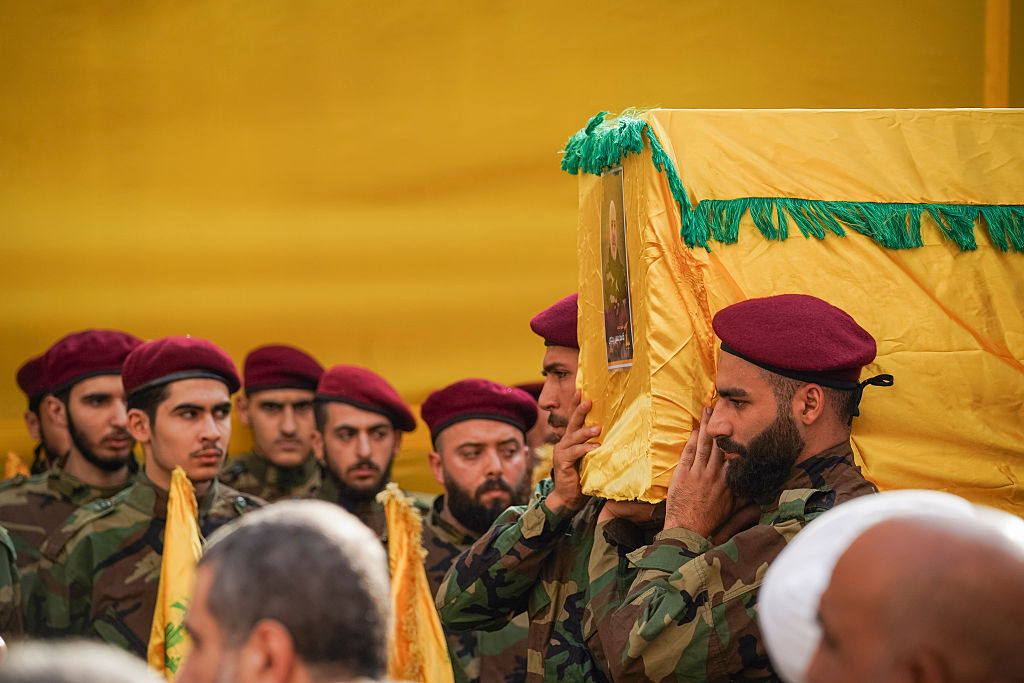
Hezbollah supporters were quick to accuse Salam and President Joseph Aoun of being “traitors” and “Israeli agents,” but the fact that a Lebanese prime minister can now make such an announcement shows how Hezbollah has gone from being Tehran’s untouchable regional enforcer to busted flush in the space of 18 bloody months.
Hezbollah’s military activities were sanctioned after the 1989 Taif Agreement, which ended the 1975-90 civil war. It was the only militia allowed to retain its weapons so it could “resist” the Israeli occupation in the mainly Shia Southern Lebanon which had begun in 1985.
Thereafter, the Syrian regime of Hafez, and then Bashar al-Assad, which effectively occupied Lebanon from 1990 to 2005, gave it political cover and logistical support. In May 2000 – after a 15-year low-intensity war – Hezbollah forced an Israeli withdrawal from its self-proclaimed security zone in Southern Lebanon. Overnight, the party’s armed wing had succeeded where Arab armies had failed; its fighters were hailed as stout defenders of Lebanese integrity, and the Shia, for so long the underclass, had found dignity.
But Hezbollah found multiple excuses not to disarm and it soon became clear to anyone not drinking the Kool-Aid that the whole resistance shtick was less about defending Lebanese land and more about establishing Iranian muscle in the Levant.
When Syria reluctantly left Lebanon in the wake of the 2005 Cedar Revolution, Hezbollah was forced to play a more high-profile political role to defend its interests. Successive governments, which by then included Hezbollah ministers, made it policy to include the “right of Lebanon, its people, its army, and its resistance to liberate occupied land and defend the country” in every ministerial statement until January 2025, when Salam was appointed.
The words meant nothing. For 20 years, like the PLO in the 1970s and early 1980s, the party rode roughshod over Lebanon, driven by a self-serving and bogus “resistance” narrative. It controlled nearly all the levers of power, eroding the legitimacy and self-determination of the state; stifling economic growth; taking Lebanon into wars it didn’t want and influencing the political process with the veiled threat of violence.
But for those willing to see it, the resistance mask slipped quite early on. In 2008, when the government tried to shut down its illegal phone network, Hezbollah took to the streets, spilling Lebanese blood for the first time since the civil war. In 2010, when it went in to bat for the Assad regime in the Syrian civil war, mothers of Hezbollah fighters asked why the party had gone off-script and was sending their sons to kill other Arabs. In 2019, it dispatched its thugs onto the streets to quell demonstrators demanding the resignation of the government following the financial collapse. On August 4, 2020, 2,750 tons of Hezbollah-owned ammonium nitrate exploded at the Port of Beirut, wiping out a segment of the city in one of the biggest non-nuclear blasts ever recorded.
But retribution would soon follow. Immediately after the October 7 attacks in 2023, Hezbollah joined the battle by bombing Israel’s northern border towns in support of Hamas, forcing the evacuation of nearly all the residents. In September 2024, Israel made its move, starting with Mossad’s by-now infamous pager and walkie-talkie attacks on the party’s rank and file, followed by the assassination on September 27 of Hezbollah’s leader, Hassan Nasrallah, along with most of the executive Shura Council and an entire Beirut block.
Two months later, after a seven-week war during which Hezbollah’s military capacity was further degraded and more civilians died, a tentative ceasefire was agreed.
Most Lebanese were, and still are, happy that Hezbollah has been defanged, even if they privately acknowledge that they would rather they didn’t have to thank Israel for it. Israel’s actions in Gaza have left many, even among those who would happily make peace with the Jewish state – and there are many – feeling uncomfortable. The majority of Lebanese were delighted with the ceasefire and appalled it effectively ended on March 2.
It remains to be seen whether Hezbollah, which still has an impressive arsenal of ballistic missiles and a thick seam of messianic zeal running through its ranks, will do the smart thing and step back from the brink or if it will take the war to Israel – and to hell with the rest of Lebanon.
Even if it does stand down, that doesn’t mean it will voluntarily disarm. Hezbollah weapons are still symbols of Shia dignity and forcing the issue could very easily ignite a civil war. Then again, it is no secret that Israeli Prime Minister Benjamin Netanyahu wants to expand ground operations against Hezbollah and finish the job once and for all. This war has given him that chance.




Comments