Sam Olsen

Sam Olsen is the host of the States of Play substack and chief analyst at Sibylline, a consultancy firm

Donald Trump would regret leaving Nato

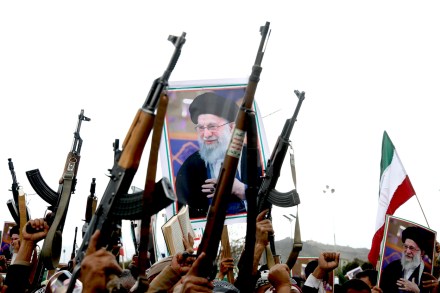
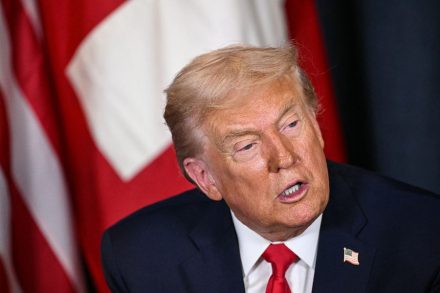
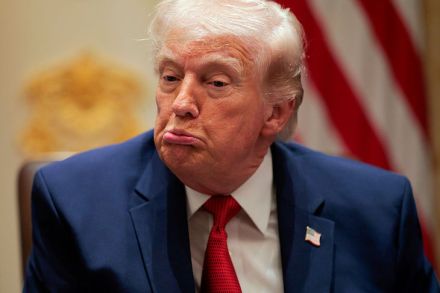
Donald Trump has yet again raised the prospect of the United States leaving Nato. The US president called the alliance a 'paper tiger' and said he 'was never swayed by Nato'. It is tempting to dismiss it as political theatre. But this time feels different. Trump’s frustration with European allies has sharpened, particularly over their reluctance to back his approach to Iran, where the absence of a clear political end-state has made support difficult to sustain. That hesitation has deepened transatlantic irritation. Combined with tensions over Greenland and Denmark, this is no longer an abstract complaint about burden-sharing but an accumulation of grievances. What once sounded like brinkmanship now carries the weight of intent.
Trump isn’t the greatest threat to the special relationship

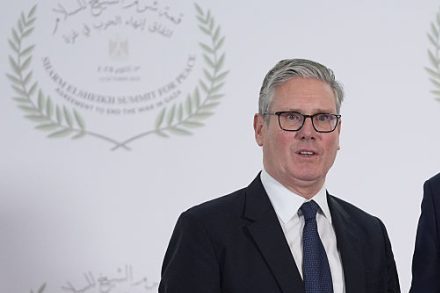
Britain’s refusal to fully back the United States over strikes on Iran has triggered an unusually public transatlantic row. It has also revived an old question about the future of the so-called 'special relationship'. When Donald Trump returned to the White House last year, many in Westminster doubted Keir Starmer could build a workable relationship with him. The two men could hardly be more different in temperament or politics, and predictions of an early rupture were widespread. For a time, however, Starmer appeared to defy those expectations. Britain weathered Trump’s latest tariff wars better than most countries, and the Prime Minister seemed to have found a cautious way of managing Washington’s unpredictability.

The war in Iran should teach Britain some lessons

From our UK edition

This weekend has seen the eruption of what has been building for months: a regional war in the Middle East. The United States and Israel have struck Iranian targets. Iran has retaliated not only directly but by widening the theatre, hitting Arab neighbours who assumed diplomacy and economic integration would shield them from escalation. RAF Akrotiri in Cyprus has now reportedly been targeted by Iranian drones. What began as a confrontation between Israel and Iran now entangles American assets, Gulf states and British infrastructure.  Thankfully, this is not world war three. Russia and China are watching rather than mobilising. There is no sign of escalation in Europe or the Indo-Pacific. But that reassurance misses the point.

Britain’s managed decline can’t continue

From our UK edition

Britain is on course for its weakest decade of growth in a century, according to the latest GDP figures. The headlines will duly register alarm, and politicians will promise fresh strategies, convening panels and relaunching initiatives under reassuring new names. Yet for all the activity very little will change. In a more forgiving era, this might have been survivable. But the international environment is hardening What has taken hold is something more insidious than crisis: a culture of managed decline. The numbers disappoint, the rhetoric adjusts and expectations are lowered once again. Instead of confronting the structural causes of stagnation, the political class calibrates around them.

How should the UK manage its relationship with China?

From our UK edition

17 min listen

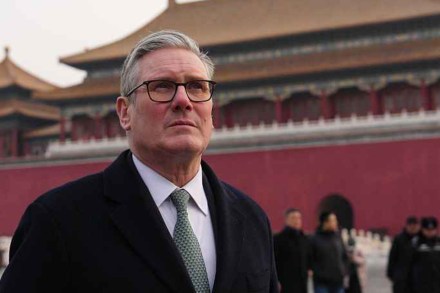
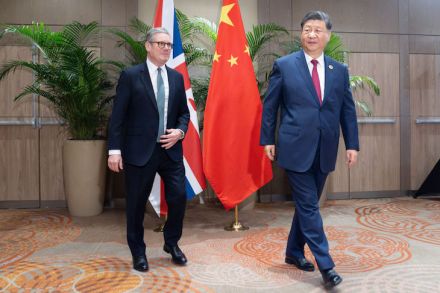
As Keir Starmer's visit to China draws to a close, Sam Olsen – who runs the States of Play substack – and Times columnist Cindy Yu join Patrick Gibbons to discuss how the UK should manage its relationship with China. Starmer's visit has drawn criticism from various China hawks – and from President Trump – but is there a way for the UK to balance legitimate security concerns with the need to trade with the world's second largest economic power? Plus, to what extent to the British public care about these geopolitical concerns? Cindy and Sam explain why is it important for policymakers to explain how these trips link back to domestic issues – and Cindy name checks James Cleverly as she highlights the importance of consistency amongst the political class.

How should the UK manage its relationship with China?

Where Britain should position itself in Trump’s new world order

From our UK edition

When Donald Trump stood up at Davos today and repeated his ambition to acquire Greenland, he did more than revive one of his own fixations. He offered a live demonstration of how the world now works. Here was a US president discussing the future of allied territory in the language of interest, security and leverage, not law or precedent. He may have ruled out the use of force, but that did not alter the underlying point: power, not process, was doing the talking. If anyone still doubts that the post-Cold War rules-based order has given way to something more transactional and harder-edged, Greenland should put the matter beyond dispute. It was an unmistakable reminder of hierarchy, one the liberal order was meant to have erased.

Iran, the Shah and the revival of kingship

From our UK edition

Earlier this week in Los Angeles – home to the largest Iranian community in the United States – thousands gathered in solidarity with protests unfolding in their homeland. Amid the sea of national flags and chants against the Islamic Republic, some demonstrators carried Lion and Sun banners and invoked a return to the pre-1979 monarchy, signalling a strand of sentiment that looks back to Iran’s last Shah. The rally took a darker turn when a truck drove into the crowd, underscoring the depth of division within the diaspora debate over Iran’s future. For some Iranians, particularly in the diaspora, the monarchy represents a lost period of national pride and state capacity Similar scenes have appeared elsewhere.

What Bazball tells us about Britain’s decline

From our UK edition

As many predicted, England has yet again lost the Ashes in Australia. But listen closely to the criticism of the defeat and a curious vocabulary emerges. The problem, we are told, was not simply misjudgement but recklessness; not failure but irresponsibility. England did not merely lose – they behaved wrongly. This is striking language to attach to a sporting approach. It suggests that something more than tactics or results is at stake: a sense that England should not play like this at all, even if it sometimes works. That British instinct – to recoil from assertiveness when it produces visible risk – runs far beyond cricket. Australia’s series win has generated a familiar national mood: irritation, self-reproach, and the rapid revival of old certainties.

Putin is warning Britain – but we’re not listening

From our UK edition

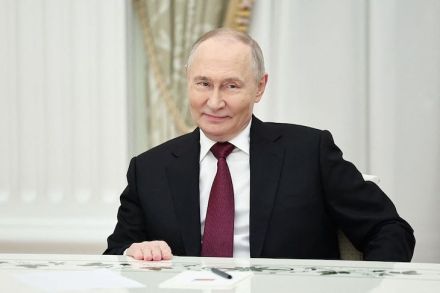
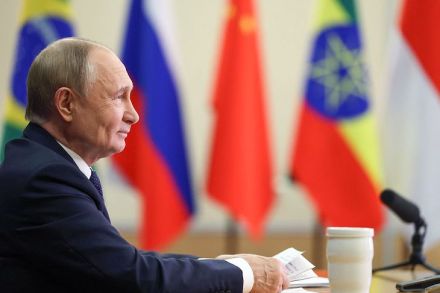
When Vladimir Putin declared this week that Russia was 'ready' to fight a war in Europe, the remark barely seems to have rippled the surface of Britain’s political consciousness. It should have sent a shockwave. The US delegation that had flown to Moscow in the hope of reviving a peace plan left empty-handed. Putin’s message was not bluster but a statement of intent: Russia is preparing for possible escalation now. Yet Britain continues to behave as though danger is tidily scheduled for years in the future, safely beyond the horizon of any present responsibility. It is a comforting delusion, but a very dangerous one.

Lara Brown, James Heale, Sam Olsen & Toby Young

From our UK edition

19 min listen

On this week’s Spectator Out Loud: Lara Brown reports on how young women are saying ’no’ to marriage; James Heale takes us through the history of the Budgets via drink; Sam Olsen reviews Ruthless by Edmond Smith and looks at Britain’s history of innovation and exploitation; and, Toby Young questions the burdensome regulation over Politically Exposed Persons (PEPs).  Produced and presented by Patrick Gibbons.

China today is following Victorian Britain’s industrial pattern

From our UK edition

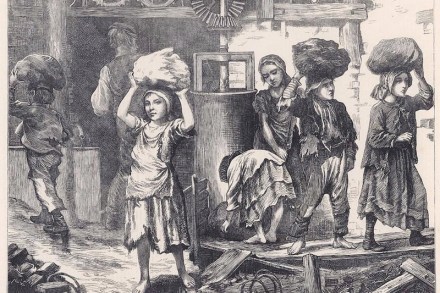
On a damp Derbyshire day in 1771, Richard Arkwright watched the world’s first water-powered mill begin to turn, setting in motion a force that would remake the world. The tailor’s son from Preston had become one of Britain’s first industrialists, his spinning frames driven by water and his workers by hunger. Within those mill walls, as Edmond Smith argues in Ruthless, the modern economy took its first breath. Yet the real invention was not mechanical but social. Arkwright had helped pioneer the system that would propel Britain into the lead in the first Industrial Revolution – web of investors, miners, shippers and merchants, bound by credit, trust and the push for profit. In Smith’s phrase, it was ‘networked capital’, the invisible machine behind the visible one.

The American empire is consuming itself

From our UK edition

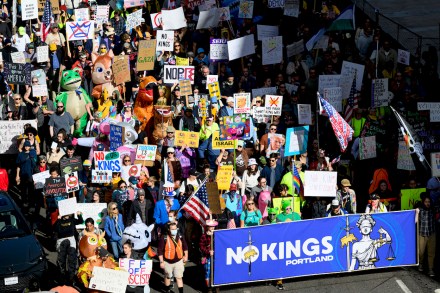
Over the weekend, millions of Americans took to the streets in more than 2,000 ‘No Kings’ marches nationwide, protesting what they regard as the creeping authoritarianism of President Trump. The marches – which Trump’s allies called ‘the hate America rally’ – were notable for their scale, but more importantly they are a symbol of something deeper: the erosion of political legitimacy in the world’s pre-eminent democracy. For China and Russia, the spectacle of Americans turning on their own institutions confirms a long-held belief, namely that the United States is entering a phase of irreversible decline and may soon hesitate abroad. The data bear them out.

China really is a threat to Britain

From our UK edition

When Dominic Cummings claimed this week that China had hacked into Britain’s most secret systems, the government rushed to deny it – understandably, given the political heat over the collapsed Chinese spy trial. But even if Cummings’ story proves false, the underlying truth remains: China has been systematically targeting Western networks for years, and extracting vast quantities of sensitive information. What is striking is not the allegation, but the reaction by a government so anxious not to call China a threat that it pretends not to see one. It is a surreal position, because the danger has been obvious for years.

What the China spy case farce says about Britain

From our UK edition

Only in Britain could a spy trial collapse because no one in government could decide who the enemy was. The case against two men accused of passing secrets to China did not fail for lack of evidence or investigative effort, but because the Crown Prosecution Service could not extract from Whitehall a simple statement that China was, at the time, a ‘threat to national security.’ Without that label, the law would not allow the case to proceed. A nation that once prided itself on clarity of purpose now finds itself paralysed by its own semantics. A nation that once prided itself on clarity of purpose now finds itself paralysed by its own semantics The farce is revealing.

Donald Trump’s new world order

From our UK edition

The United Nations General Assembly is meant to showcase international consensus. This week it became a stage for its fiercest critic as Donald Trump returned to New York not to flatter the global order, but to flay it. He accused the UN of bankrolling migration, derided climate policy as hoax, and warned that if Russia refused to end its war, America would impose 'powerful tariffs' and force Europe to do the same. The rest of Donald Trump's UN speech made the pattern impossible to miss Later the same day, after meeting Ukraine's president Volodymyr Zelensky, Trump struck a different but complementary note: Ukraine, he declared, could recover all of its lost territory, dismissing Russia as a 'paper tiger'.

Sucking up to Trump is not in Britain’s interest

From our UK edition

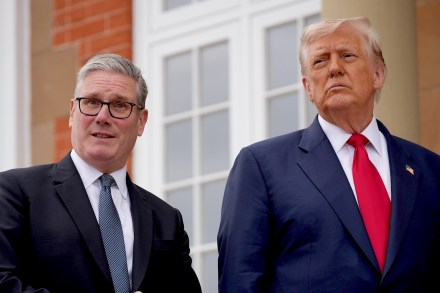
Donald Trump’s second state visit to Britain this week is a spectacle, but the real significance lies away from the pageantry and protests. Instead, it forces a harder question: what does Britain want from America, and what does America want from us? The visit is a reminder that Britain’s relationship with Washington is not just a sentimental bond, but a strategic choice made in a world defined by geopolitical rivalry. That rivalry is sharpening. The 1990s dream of a unipolar, American-led order has long gone. We are drifting into a world shaped by competition between two great powers, the United States and China. The logic of that contest is already evident: a world split into spheres of influence, one anchored in Washington, the other in Beijing.

Will Nato pass – or fail – Russia’s great test?

From our UK edition

Poland woke yesterday morning to what its prime minister, Donald Tusk, called an “unprecedented violation of Polish airspace.” In the early hours, a “huge” swarm of Russian drones – at least 19 by Warsaw’s count, perhaps 23 according to Polish media – crossed the frontier during overnight strikes on Ukraine. Polish and Nato fighters scrambled, including Dutch F-35s, to bring them down. Airports were closed as air-raid sirens wailed. In one village, falling debris from an intercepted drone crashed into a residential block. For Vladimir Putin, Ukraine is not the goal but the stepping stone This was not business as usual. Drones have strayed into Poland’s skies before, but this was the first time Polish and Nato forces together have shot down multiple aircraft.

The centre of gravity is shifting to Beijing

From our UK edition

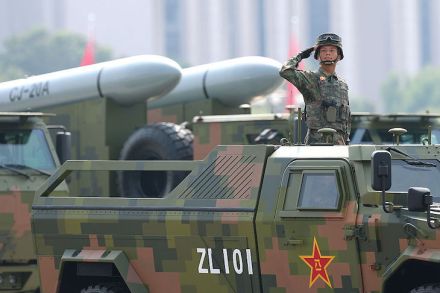
Beijing gave us a glimpse of the future this week. Across Tiananmen Square rolled column after column of tanks, missile launchers and robot dogs. Above, sleek new J-35 stealth fighters cut through the smog, together with drones and surveillance aircraft. The centrepiece was unmistakable: gleaming hypersonic and ballistic missiles, designed to extend China’s military reach across continents. Reviewing all this was Xi Jinping, flanked by Russia’s Vladimir Putin and North Korea’s Kim Jong-un. It was military theatre, yes. But it was also a declaration: China is no longer just a regional power. It intends to set the rules of a new world order. Trump staged a piece of political nostalgia; Xi orchestrated a global summit with missiles attached This was no isolated spectacle.

British shipbuilding is booming again

From our UK edition

'Pigeons, beaten to a fine lead by hunger, flickered amongst the rusted girders of the railway bridge… rubble was being trucked from busted gable ends, and demolishers worked in a fume of dust and smoke. You would’ve thought that the Ruskies had finally lobbed over one of their big megaton jobs.' Jeff Torrington’s brutal poetry in Swing Hammer Swing! captured the death of Glasgow shipbuilding, when the Clyde’s cranes fell silent and the yards were written off as relics. Half a century on, the noise is back. The clang of cranes, the hiss of welders, the shuffle of apprentices in overalls: the Clyde is stirring again. Shipbuilding jobs in Scotland have risen from 6,000 to more than 7,200 in the past decade.

France can’t solve Britain’s reliance on America and China

From our UK edition

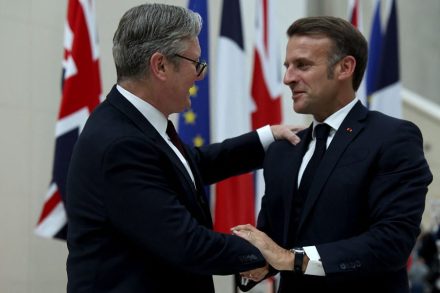
When President Emmanuel Macron of France addressed the British parliament this week, he emphasised the need for both countries to reduce the risk from their 'excessive dependencies on both the US and China'. This reliance on the Great Powers, Macron suggested, was a threat for Europe to be able 'to invest in key technologies of the future' and 'avoid strategic dependencies and disengagement that would put us at risk of a slow death'. In many ways President Macron is right. The UK and Europe are absolutely dependent on America and China for critical technologies and industrial inputs.