Jim Lawley

Jim Lawley is a former university lecturer who has lived and worked in Spain for 40 years.

Can a new national selector save English cricket?

From our UK edition

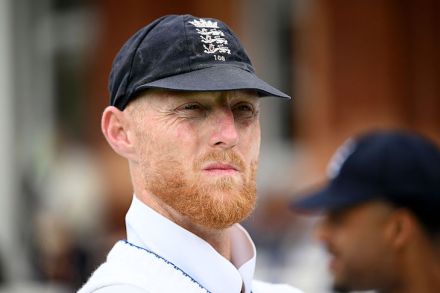
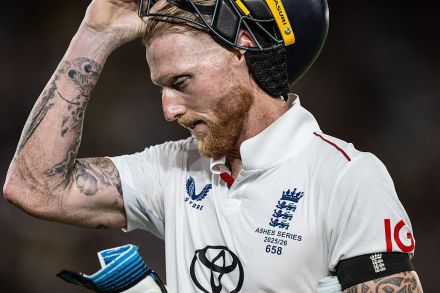
The England Cricket Board is appointing a new national selector: the window for applications closes today. If they get a good man in position quickly, it’ll make all the difference: a team’s performance is determined, obviously, by the 11 players on the field so it’s essential to get the right ones out there. Crass errors in selection led to an embarrassingly poor England side being comprehensively outplayed, yet again, in last winter’s Ashes series. Against an Australian side lacking several of its best players, we were 3-0 down – the five-match series already a dead rubber – after barely 11 days of cricket.

Will Spain’s migrant amnesty backfire?

From our UK edition

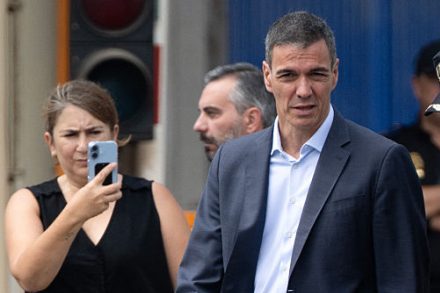
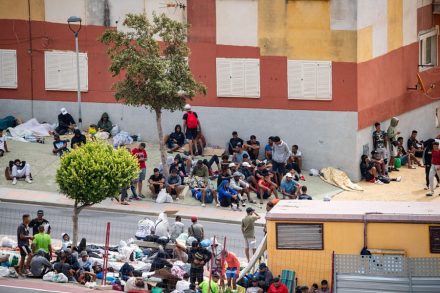
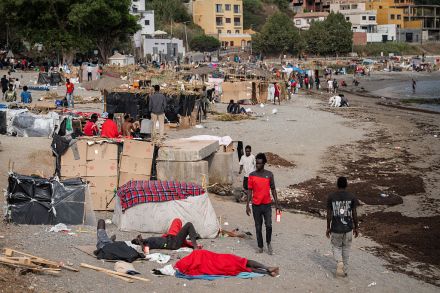
Spain’s cabinet has just approved a law that allows over half a million undocumented migrants and asylum seekers already in the country to regularise their status, giving them temporary residence and the right to work. Applicants now have until 30 June to prove that they do not have a criminal record and that by the end of 2025 they had either been in Spain for at least five months or had sought international protection.

I lost the will to live watching The Rest is Politics and Pedro Sánchez

From our UK edition

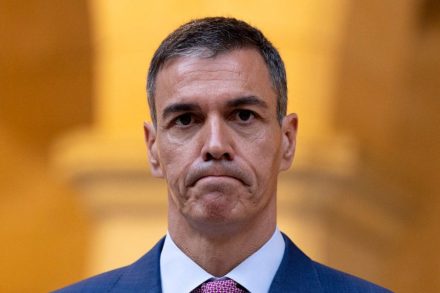
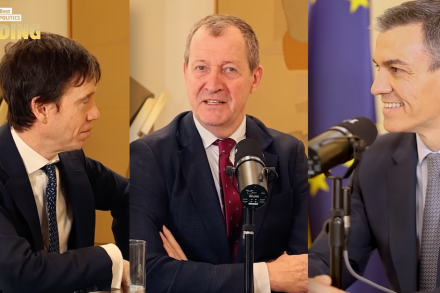
If Alastair Campbell and Rory Stewart’s recent interview of Spanish Prime Minister Pedro Sánchez is anything to go by, I don’t think I’ll be watching The Rest is Politics again. The interview started off okay. After noting Trump’s threat to punish Spain for refusing to let the US use military bases for attacks on Iran, Campbell invited Sánchez to speculate about what the punishment will look like. So far so good: it’s an important question that many of us here in Spain are asking. But instead of answering it, Sánchez talked about Greenland, Ukraine, the EU’s relationship with the US and the pressing need to strengthen the transatlantic relationship.

Is it wise for Spain to goad Donald Trump?

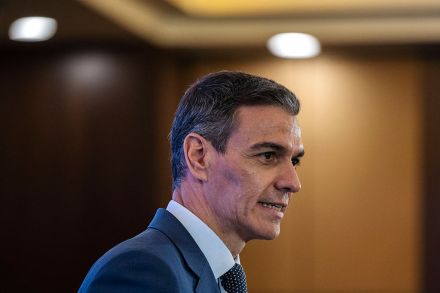
Spain’s refusal to allow the United States to use its military bases at Morón de la Frontera (Seville) and Rota (Cádiz) for its war on Iran, arguing that the US-Israeli attacks are ‘unilateral military actions outside the United Nations charter’ has brought the simmering conflict between Pedro Sanchez, Spain’s socialist Prime Minister and President Trump to a head.   Sanchez’s carefully calculated strategy has been to position himself as one of the US president’s leading opponents on the world stage On Wednesday Sanchez followed up by delivering a stunning rebuke to Trump. Speaking for ten minutes on national television, he said that his government's position could be summed up in four words: ‘No a la guerra’ (No to war).

Why Iran is applauding Spain

From our UK edition

Spain has refused outright to support the United States and Israel’s military operation against Iran. The move has been applauded by Iran’s ambassador to Spain: ‘They have rejected the aggression and that is valuable to us.’ The Pentagon meanwhile has withdrawn aircraft deployed at its bases in Morón de la Frontera (Seville) and Rota (Cádiz). Pedro Sánchez, Spain’s socialist prime minister, rarely misses an opportunity to goad Trump Justifying Spain’s refusal to cooperate, José Manuel Albares, the foreign minister, insisted that, ‘A logic of violence, as we are seeing, only leads to a spiral of violence, when unilateral military actions outside the United Nations Charter… have no clear objective.

Growing up with thieves, murderers and heroin addicts

From our UK edition

‘You can’t pick your parents, but they get to pick your life,’ Jonathan Tepper points out at the beginning of this extraordinary coming-of-age story. And: ‘If your parents are missionaries, it changes everything... They decide where you’ll live, when you’ll pack your bags and go, and you’ll get roped into their work saving the lost.’ In the 1980s and 1990s Jonathan’s parents, Elliott and Mary, were American missionaries in San Blas, then the poorest part of Madrid: ‘Our neighbourhood was the biggest drug supermarket not only in Spain but in all of Europe.’ At a time when Spain hadn’t started spending on prevention or rehabilitation, Jonathan, aged seven, along with his two older brothers – all of them blond and blue-eyed – saw junkies lying dead in ditches.

Don’t expect England to learn anything from their Ashes drubbing

From our UK edition

England’s cricketers have just lost the final Test match in Sydney. So the five-match series, a dead rubber ever since the Aussies retained the Ashes over a fortnight ago by winning the first three games, has ended 4-1 in Australia’s favour. This drubbing was entirely predictable: we lost the previous series ‘down under’ 5-0, 4-0 and 4-0 and we never learn. Our bowlers may be inexperienced but our feckless batsmen have no such excuse Nevertheless, as Sir Geoffrey Boycott says, ‘There is every chance that the suits at the ECB will… carry on as normal.’ Attempts will be made to explain away and put a positive spin on England’s performance.

The diminutive dictator who ruled Spain with an iron fist

From our UK edition

General Franco died on 20 November 1975, and with the 50th anniversary just passed, this biography – the first in years – of the man who ruled Spain with an iron fist for nearly four decades is timely, incisive and authoritative. Written by a former Madrid correspondent of the Economist, it’s also an up to date and highly accessible introduction to 20th-century Spanish history. Born in 1892 into a middle-class family, Francisco Franco shared a bedroom with his younger brother Ramon, who later won international fame as Europe’s ‘equivalent of Charles Lindbergh’. There were few signs, however, that eminence also awaited Francisco. A weedy child, who dutifully got by at school, he had a difficult relationship with his domineering Freemason father.

England’s Ashes Test triumph is long overdue

From our UK edition

England have just won the fourth Test match against Australia by four wickets. In a bizarre, low-scoring game at Melbourne that was completed inside two days they recorded their first Test win in Australia in 15 years. The pitch was freakish; this was the first Test match on Australian soil without an individual half-century for nearly a hundred years. England recorded their first cricket Test win in Australia in 15 years Set to score 175 in conditions which, to put it mildly, made batting extremely difficult, openers Zak Crawley (37 runs off 48 deliveries) and Ben Duckett (an even more quick-fire 34 off just 26) set the tone with aggressive ‘Bazball-style’ batting, scoring at over seven an over. Then Jacob Bethell became one of the game’s top scorers with 40 off 46.

The Bazball experiment has failed

From our UK edition

England’s cricketers have lost the Ashes, after being defeated in the third Test match in Adelaide by 82 runs. The Adelaide defeat follows humiliating routs by eight wickets in both Perth and Brisbane, leaving us 3-0 down; after barely 11 days of cricket, the five-match series is now a dead rubber. We lost the previous three Ashes series ‘down under’ 5-0, 4-0 and 4-0. Apparently England’s cricket management learned nothing from those reality checks. The Bazball experiment has just been stress-tested, found wanting, pulverised and buried And to make it all worse, we’d been told that this tour would be different. Regaining the Ashes was to be the culmination of a project that began in June 2022 when Brendon McCullum took over as coach.

Why Christmas comes early for thousands in Spain

From our UK edition

Every time I hear about someone winning ten million pounds/euros/dollars in a lottery, I think (and I’m sure I’m not alone in this): ‘Yeah, but… wouldn’t it have been better if ten people had won one million?’ Well, that’s more or less what happens in Spain. Tomorrow nearly 2,000 people will share the first prize in the Christmas lottery, each winning €400,000 (£350,000). The same number stand to share the second (€125,000 each) and third (€50,000 each) prizes. So in total almost 6,000 Spanish households will suddenly be looking forward to a much better life. No wonder there are such explosions of joy the length and breadth of Spain every year on 22 December.

Most of the England cricket team should be dropped

From our UK edition

England’s cricketers have just crashed to a second humiliating defeat against Australia, leaving them 2-0 down in the five-match series. With occasional exceptions, we have batted, bowled and fielded atrociously. It was, as Sir Geoffrey Boycott has written in the Telegraph, ‘a horror show’. England only narrowly avoided an innings defeat, in the end losing this second match by eight wickets – the same massive margin as in the first Test. As I suggested before the series began, on their home turf the Aussies are approximately twice as good as we are: they usually do more in one innings (or one innings and a bit) than we can manage in two. It’s true that theoretically we could still regain the Ashes by winning the last three matches in the series.

Spain’s post-Franco democracy is on the rocks

From our UK edition

‘Fine weather in Malaga’ proclaimed the banner headline of a Spanish newspaper in 1974 – that was the day’s big story. There was nothing about the country’s social and economic problems or the Carnation Revolution bringing democracy to neighbouring Portugal. After almost four decades in charge, the dictator Francisco Franco had effectively depoliticised Spain. ‘A century and a half of parliamentary democracy,’ Franco said, ‘accompanied by the loss of immense territory, three civil wars, and the imminent danger of national  disintegration, add up to a disastrous balance sheet, sufficient to discredit parliamentary systems in the eyes of the Spanish people.

Give Andrew Miller the Booker

From our UK edition

The winner of this year’s Booker Prize will be announced tonight. Of the six shortlisted novels, Andrew Miller’s The Land in Winter looks like a good bet for the £50,000 award. It might even be a contender for best Booker novel ever. The prize’s judges have been known to make strange calls – and always bet responsibly! – but the odds on Miller are good. The story takes place against the backdrop of snowbound Britain’s ‘Big Freeze’ between December 1962 and February 1963. ‘For a mile from the Kent coast,’ Miller writes, ‘the sea had turned to pack ice.’ This was the time of Beeching, Babycham, Benny Hill, Acker Bilk, Dr Kildare, the Daily Herald, the Kray twins, London smog, shillings in the meter, the H-bomb and flying saucers.

A love letter to Ronda

From our UK edition

‘I have searched everywhere for the “city of dreams” and found it here, in Ronda,’ Rilke wrote. Hemingway was more practical: ‘[Ronda] is where you should go if you ever go to Spain on a honeymoon or if you ever bolt with anyone. The entire town and as far as you can see in any direction is romantic background…’ Sixty miles inland from Málaga, encircled by mountains, Ronda stands on a plateau cut by a steep, narrow gorge some two hundred yards deep. Eroded over a period of five million years by the river that runs through it, this ravine divides the town in two and ends in a sheer cliff drop to the plain below. Cacti and fig trees grow out of its sides; birds wheel and swoop down the chasm to their nests on the rock face.

At last, a garden without the gimmicks

From our UK edition

‘Never join a queue.’ It’s not a bad motto. It keeps me away from tourist-choked hotspots. It means I don’t visit venues that offer free admission for children, advertise fast-track entry or are just one stop on ‘a multi-attraction sight-seeing experience’. My advice? If they want you to book a time slot, don’t go. As Bertrand Russell points out in The Conquest of Happiness: ‘Noise and the constant presence of strangers cause fatigue.’ It’s certainly difficult to appreciate great art or admire magnificent architecture in such circumstances. And when I’m studying the text explaining the significance of the Rosetta Stone, I don’t want someone leaning over my shoulder trying to read it at the same time. Especially when they’re chewing strawberry-flavoured gum.

Spain’s wildfires have exposed the inadequacy of its politicians

From our UK edition

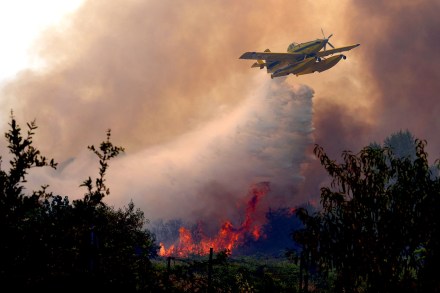
Since early August, Spain has been reeling from its worst forest fires in decades. Exact estimates vary but so far more than 360,000 hectares – an area the size of Mallorca – have been destroyed in dozens of blazes. The flames have forced the evacuation of thousands of villagers, wiped out tens of thousands of hectares of farmland and killed at least four people. The Camino de Santiago pilgrimage, a major source of tourist revenue, has been partly closed and the high-speed rail link between Madrid and the north-west was suspended for seven days. The financial cost is expected to run to hundreds of millions of euros. The forests may take decades to regenerate.

How England can finally win the Ashes

From our UK edition

With the summer’s Test matches over, England’s cricket coach and captain will now be wondering how to avoid our usual trouncing in Australia this winter. Normally we try to win and we get walloped. On the last three occasions we’ve ventured Down Under, Australia have either whitewashed us 5-0 or beaten us 4-0 with one game drawn. And, weather permitting, Australia don’t just win – they usually crush us by massive, embarrassing margins: an innings and 123 runs, ten wickets, 381 runs… These humiliations show that on their home turf Australia are approximately twice as good as we are. Australia often score more runs in one innings than England can manage in two. Unless we take drastic measures, that could well be the fate that awaits us this winter too.

The lesson that changed my life

From our UK edition

Ávila, Spain At school I wasn’t much good at anything – until, that is, I had the good fortune to land in Mr Hodges’s French set. It wasn’t just the ten words of vocabulary and the irregular verb we learnt every day, it was the whole structured Hodges approach which gave me confidence, showing how the apparently unmanageable job of learning a language could be broken down into small, achievable tasks. Since Mr H also taught Spanish O-level, when the time came I opted for that rather than German. The scenes of Spanish life in the textbook fascinated me; they were only black and white line drawings but they promised something romantic that I knew I’d never find in cold, wet 1970s Birmingham. I pored over those pictures.

Spain won’t escape Trump’s wrath for its Nato rebellion

From our UK edition

At yesterday’s Nato summit in The Hague, all but one of the 32 leaders agreed to increase their defence spending to 5 per cent of GDP as President Trump has been demanding. The exception was Spanish Prime Minister Pedro Sánchez. His insistence that actually 2.1 per cent will be enough has enraged President Trump.  Trump described the Nato summit’s achievements as ‘tremendous’, celebrating its recognition of the need for other Nato members to take up the burden of the defence of Europe. He added that ‘it was 2 per cent [of GDP] and we’ve got it up to 5 per cent’. But he had harsh words for Spain, describing the country as ‘terrible’ and threatening to use trade tariffs ‘to make them [Spain] pay twice as much’.