Iran

The outrageous cynicism of the Democrats on Iran

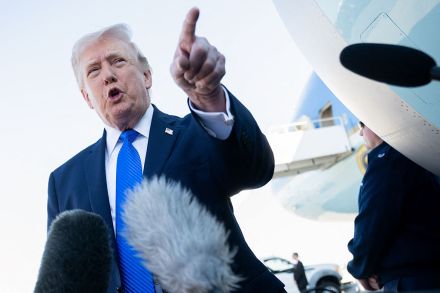
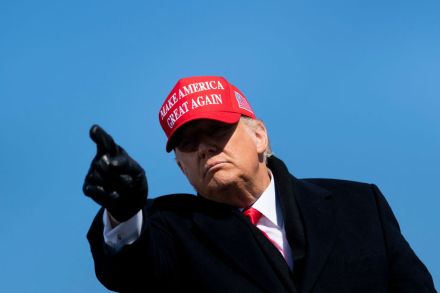
Given my longstanding disgust with America’s lawlessly interventionist and self-destructive foreign policy, I should be outraged by Donald Trump’s cavalier remarks justifying – and weirdly minimizing – his surprise attack against Iran in collaboration with Israel. After all, a president stupid enough to mock the new Supreme Leader as “damaged” and only “alive in some form” – while simultaneously urging sitting-duck oil tanker captains to “show some guts” by running the Iranian blockade of the Strait of Hormuz – is someone who logically should be rebuked in the firmest possible terms. But this wildly unstable solipsist is very different from other politicians.

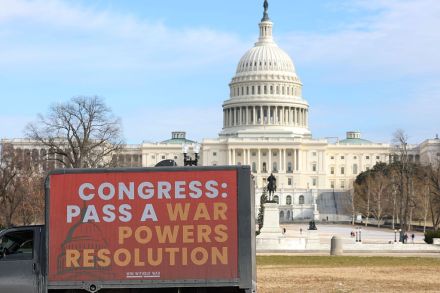
war powers

Why the Afghanistan-Pakistan war matters

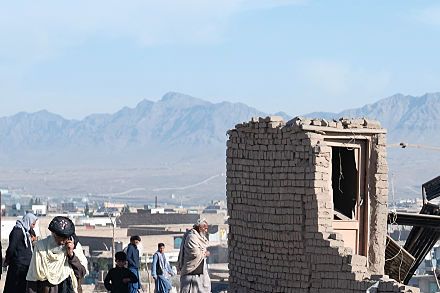
More than a decade ago, during a tense visit to Islamabad as secretary of state, Hillary Clinton gave Pakistan’s leaders a warning: "You can’t keep snakes in your backyard and expect them only to bite your neighbors." She was referring to the Taliban and other militant groups that Islamabad had long tolerated as part of its "strategic depth" policy aimed at countering India’s regional dominance. Now, as Pakistan’s jets strike targets inside Afghanistan and the Taliban mobilize forces along the border, that warning seems like a prophecy.

Is ‘international law’ practical?

The acceleration of history and the increasingly rapid advancement of the postmodern project, aimed at the transcendence of humanity by itself, makes consideration of the fundamentals of the progressive project necessary, but also inevitable. Among them is its dedication to the hectic search for hitherto unsuspected “human rights” and their instant realization in the name of “natural law,” a subject the French historian and political philosopher Pierre Manent has studied in depth and brilliantly illuminated in a number of works, most recently Natural Law and Human Rights: Toward a Recovery of Practical Reason.

Iran isn’t Trump’s only ‘imminent threat’

President Trump thought it would be a cakewalk. Far from capitulating, his nemesis seems to be on the comeback trail. Gabbard acknowledged that there was no compelling evidence that Iran was seeking to reconstitute its nuclear program Federal Reserve Chairman Jerome Powell thus announced on Wednesday that unless a successor is confirmed by the Senate, he has “no intention of leaving.” The bad news keeps mounting for Trump. Inflation is ticking up, King Charles’ upcoming visit is starting to look rather iffy, the President's gilded ballroom project looks as though it will be smacked down by a federal judge, and energy prices are rising precipitously.

Joe Kent’s resignation was an act of political positioning

Reflecting on the resignation of Cyrus Vance, James Thomson, the American historian and journalist, wrote in the Washington Post that the former secretary of state “has done us all a great public service.” In doing so, Thomson argued, Vance gave “new life and spine to a somewhat rare and weak convention in our nation: resignation in protest of an issue of principle.” The year was 1980. Vance had resigned in protest over the Carter administration’s decision to authorize Operation Eagle Claw, the ill-fated mission to rescue American hostages held in Iran after the Islamic revolution. The mission ended ignominiously. President Carter pulled the plug after equipment failures and a deadly helicopter collision killed eight service members. Vance was vindicated.

Joe Kent

Why Iran will hasten MAGA’s demise

Readers may disagree with the cover line of this issue. Pronouncing “the end of Trumpism” feels somewhat similar to declaring “the end of history” – a provocative, albeit less grandiose, statement that risks being mocked in the near future. We should start by saying we hope that we are wrong. Trumpism, as this magazine understands it, has been a boon to America. As Christopher Caldwell argues, the rise of Donald Trump was a healthy democratic response to a fetid political system. On many fronts, the Trump administration, now in its second and more dynamic term, has made great progress. It has fought illegal immigration with vigor.

Trump should ditch the faux concern for the people of Iran

From our UK edition

Live long enough and all your cherished memories of childhood will end up besmirched somehow. For many of us Boomers the 1970s are now nothing but a long, brownish and noisome stain. We might have expected Gary Glitter would be outed as a nonce and ditto the unequivocally foul Jimmy Savile. But come on, who would have thought there was a darker side to Benny Hill? His harmless and uplifting degradation of women was one of our regular delights, especially the bits where semi-naked babes chased him around parks, with a silly expression on his face, accompanied by fruity music. How we laughed. And so to find out now that all the time he was living a double life as a murderous IRA terrorist is kind of too much to bear.

The only living being on our banknotes should be the monarch

From our UK edition

This Middle East conflict ought to be much easier than the oil embargo which followed the Yom Kippur war of 1973. The Arabs came quite close to winning, whereas Iran has no chance. The embargo, imposed on all countries, including Britain, which had supported Israel in the war, was backed by almost all Arab states, few of which were fanatically Islamist, and by the Soviet Union. It lasted for six months. America depended on Saudi Arabia alone for 25 per cent of its oil (only a bit over 5 per cent of imports today). The price rose by 400 per cent. The economic disruption was massive. In 2026, by contrast, almost all Middle Eastern states detest Iran and want their oil to flow without let or hindrance. There is plenty of money and power in the world to reopen the Strait of Hormuz.

How we wage war in space

Operation Epic Fury marks a turning point in the art of war. The key to 20th-century battles was air power. In the past, space and cyber activities have traditionally played supporting roles as so-called force multipliers. But this is no longer the case. In this conflict they have become mainstream, carving out new fronts for the wars of the future. The use of space is no longer something that is just nice to have, because everything from comms to intel to navigation uses space and cyber assets. Along with the National Reconnaissance Office, which manages US spy satellites, the US Space Force uses a global sensor network of ground-based telescopes and radar on every continent except Antarctica.

Dinner in Tehran, anyone?

Who wants to join me for dinner in Tehran or Havana? I suspect that both will be open for business very soon. I suppose we could even go to Caracas. As I write, the American flag has been raised at the American Embassy there for the first time in seven years. Amazing, isn’t it? And in Cuba? In mid-March, protesters were setting fire to the office of the Communist party in the town of Morón in the Ciego de Ávila province. Elsewhere across the island, protesters were in the street shouting, “Down with communism!” The nervous Cuban government released dozens of political prisoners. Since Donald Trump cut off its supply of Venezuelan oil, much of the country has been without electricity. This saddened Greta Thunberg.

Decapitating Iran’s leadership might not topple the mullahs

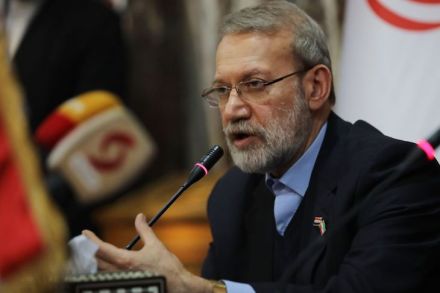
Iran’s most powerful leaders are being picked off one by one by Israeli and American military strikes. The latest scalp claimed by Israel is Ali Larjani, Iran’s security chief, and widely believed to be the most powerful figure in the present Iranian leadership. The reported killing comes just days after Larjani went on a public walkabout in Tehran, all defiance and bombast as he greeted members of the public during the Quds Day rally last Friday in the capital. Larjani also spoke to state media during the march, claiming that the Americans and Israelis were “running out of steam”. Well, not quite in his case, it turns out. Few will mourn the demise of Larjani.

larjani
Europe

Iran and the crisis in the European mind

The politics of the Iranian war feature an observable gap between interest and action for nearly all parties. The Americans possessed overwhelming casus belli versus Iran for nearly half a century, and did not act upon it until three weeks past. The Iranians possessed none against America for just as long, but exerted themselves with religious fanaticism to bring this war upon themselves. The Arab autocracies of the Persian-Gulf region find themselves under direct attack from the Iranians, but do not respond in kind. The Chinese observe a core strategic proxy and key commodities supplier taken off the chessboard – for the second time in under 90 days – and refrain from direct engagement.

Why is America always at war?

Sizable minorities on both the left and the right want America to intervene in fewer foreign conflicts and to exercise more restraint in foreign policy. In the 2006 midterm elections, antiwar voters contributed to the Republicans’ loss of both houses of Congress. They also helped defeat Hillary Clinton in the 2008 Democratic presidential primary contest and the Republican nominee, John McCain, at that year’s general election. While McCain styled himself a “maverick,” the label could be more accurately bestowed upon the anti-interventionist Republican Ron Paul, who shocked the GOP establishment by showing that an unstinting critic of the Iraq War could mount an insurgency within the party of George W. Bush.

Should NATO help America defend the Strait of Hormuz?

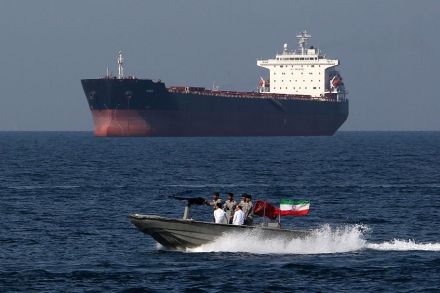
As soon as Operation Epic Fury, America’s latest campaign against the Islamic Republic of Iran, got underway on the last day of February, political, military and economic minds around the world should have turned their attention to the Strait of Hormuz. The waterway provided the only shipping route from the Persian Gulf to the Gulf of Oman and the open seas beyond. That has long made the strait the dagger Iran holds at the throat of the world. At its narrowest, it is less than 25 miles across, and Iran controls the northern shore; to the south is the Musandam Peninsula, shared by the United Arab Emirates and an exclave of Oman.

NATO STRAIT

Iran’s first gayatollah?

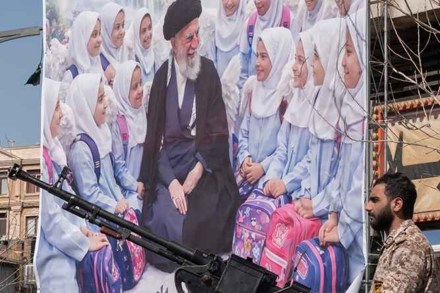
Something queer’s afoot in the Islamic Republic. As Mojtaba Khamenei was announced as Iran’s new Supreme Leader last week, reports emerged that his own father, the late ayatollah Ali Khamenei, didn’t want him to take power and even went as far as making this explicit in his will, according to the New York Post. Now, the Post reveals that his father’s qualms were over Mojtaba’s alleged sexual attraction to men.  When President Trump was briefed that Mojtaba may be gay, he “couldn’t contain his surprise and laughed aloud” while others in the room joined in his reaction, sources close to the intelligence community and the White House told the Post.

How Iran could end the AI boom

While Americans anxiously watch the price of gasoline tick higher as the war in the Middle East squeezes the global oil supply, the conflict has highlighted another energy vulnerability that could prove just as costly: Taiwan’s dependency on foreign natural gas. At first blush, energy issues an ocean away seem peripheral to American interests. They are anything but. Though the effect on the American economy won’t be immediate, energy insecurity in Taiwan is a looming disaster. Qatar, the source of 30 percent of Taiwan’s natural gas, has been effectively bottled up The reason is that AI – in fact, virtually all modern computing – is highly reliant upon the steady production of semiconductors in the world’s only true hub, Taiwan.

Semiconductors

What Signalgate tells us about Iran

Remember Signalgate? It was quite the story, and worth revisiting now in light of Operation Epic Fury, the ongoing crisis in the Strait of Hormuz and its dire implications for the global economy.  In March last year, Donald Trump’s then National Security Advisor, Mike Waltz, somehow added Jeffrey Goldberg, the editor-in-chief of the Atlantic, to a Signal messaging group for senior government officials to discuss top secret military action against the Houthis in Yemen. The group included the Vice President J.D. Vance, Secretary of State Marco Rubio, Defense Secretary Pete Hegseth, Director of National Intelligence Tulsi Gabbard, White House Chief of Staff Susie Wiles and deputy chief of staff Stephen Miller, among others.

hegseth signalgate walt

How the Islamic Republic tried – and failed – to destroy Iranian culture

The Islamic Republic in Iran is not only at war with the United States and Israel. For years, the country's government has been waging war on Iranian culture. Music, poetry, storytelling, dogs, dancing, singing, art, dice and card games, romance, tolerance and the honoring of women are central to Persian culture and its ancient history. Yet under the Islamic Republic, these cherished expressions are banned or stigmatized, especially when pursued by women. The departure of Iran’s enlightened and educated from the country they love is one of the most poignant brain drains in history In the dark, dystopian times immediately following the Islamic Revolution in 1979, couples holding hands or a man so much as looking at a woman could lead to arrest, or worse.

The right’s Israel fracture

As the joint American-Israeli military campaign in Iran continues, President Trump’s coalition is starting to exhibit some cracks. The war in Iran has emerged as a proxy battle over a broader, long-simmering conflict within the right about Israel. And the fight over Israel is, in some important ways, a proxy battle about Jews in general. Big picture, what we’re seeing now is that the traditional divisions on the right between paleoconservatives and neoconservatives, between hawks and doves, are being reshaped into a battle over Israel specifically. It’s a very difficult subject; this issue has become highly emotional and personal for those on both sides, and even in my world, it’s set friends against one another. How far do the emerging divisions go, and how should we respond?