Iran

How Trump loses friends and alienates people

It is a long haul until the midterm elections in November. Many threats and deadlines will have been issued to Iran in that time, many cycles of optimism and pessimism will have been completed. The war may be over, or Donald Trump may be bogged down in an intractable conflict which he privately wishes he had never started. Regardless, his administration must start preparing for what looks to be an increasing certainty: that the Republicans will suffer a heavy electoral reversal. That was looking likely even before Iran and its effect on oil prices. The President’s tariff wars have protected some, but the overall effect on blue- collar jobs has been negative. Moreover, at 3.3 percent, consumer inflation is back at the sort of levels which helped stop Kamala Harris from winning.
trump

Who’s actually winning the wars in the Middle East?

If you read the New York Times or watch the foreign policy establishment’s “best and brightest,” you will be told, with imperious certainty, that America is losing the war in Iran and was stupid to begin it. The conspiratorial wing on both the right and left add that it is all the Jews’ fault, although they usually remember to mutter they mean “Israel” instead of all Jews, a gossamer cloak over what they really mean. If, on the other hand, you watch Fox News or read blogs by conservatives or military analysts, you will be told with equal certainty that America and its ally, Israel, are actually winning – and winning decisively.  So, who is right? The answer, of course, is Carl von Clausewitz. What that old Prussian says goes to the heart of the issue.

middle east
fighting spirit

What happened to Britain’s fighting spirit?

When war is in the air, young men traditionally sign up – and they traditionally sign up, disproportionately, from the northeast of England, where I grew up. The country must be prepared for war, says Air Chief Marshal Sir Richard Knighton, head of our armed forces. But what use is all this puffed-up talk of a battle-ready Britain if we have no soldiers? In the northeast, the supply of soldiers has slowed not just to a trickle but to a drip. Sunderland, for instance, home to nearly 11,000 veterans, sent just ten men into the army in 2025. A reporter called Fred Sculthorp went to Sunderland for Dispatch magazine last month, to work out what had happened to the northeast’s fighting spirit, but all Fred found was apathy: why sign up when you can sign on?

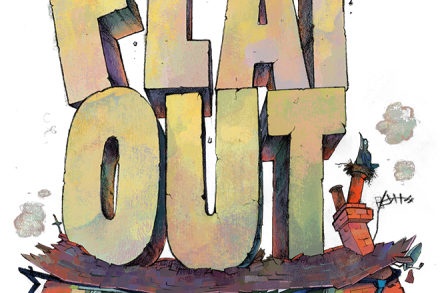
Flat out: the property squeeze crushing the young

From our UK edition

Last month, a new account called London Price Drop appeared on X. It has already gained more than 14,000 followers simply by posting screenshots from Rightmove, which illustrate how properties in the capital are falling sharply in value. One of these is a leasehold flat in Shepherd’s Bush purchased for £425,000 in 2017, before being re-listed for £395,000 in May 2024, and eventually sold for £325,000 last August. Adjusted for inflation, that represents a real terms loss of close to £250,000. The London Price Drop account is so popular because it contradicts an assumption that many in Britain hold dear. Young or old, owner or renter, almost all of us believe that buying property is the route to wealth, and that house prices, in the long run, always go up.

Trump’s goals in Iran have always been clear

The bombing of the Revolutionary government in Iran is drawing comparisons with the war in Iraq. But the comparisons are with the wrong war. In 1981 there was an attack on Iraq which much more closely resembles what Donald Trump is trying to achieve in Iran. The story goes back to 1976, when the government of Jacques Chirac in France sold a nuclear reactor to the Iraqis – a deal for which the French have always managed to avoid much criticism. The French charged the Iraqi government twice the going rate. But as one of the Iraqi nuclear team later recalled: ‘We were happy to pay. After all, who else was going to sell us a nuclear reactor?’ Who indeed.

Sorry, but America still holds all the cards

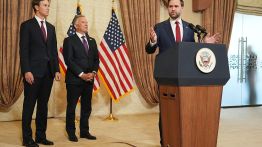
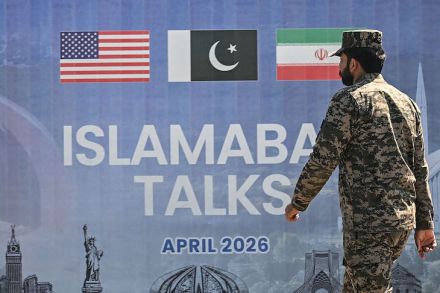
“Negotiations.” Are you heartened or dismayed by that word? Those who remember or who have read up on the seemingly interminable Paris Peace Talks designed to bring an end to the Vietnam War have reason to be dubious. A negotiation, if it is to be successful, requires that both sides be candid and in earnest. The Vietnamese were not candid participants. They stalled. They prevaricated. They acted out. It seems that the Iranians are hoping to reprise that melodrama. They will be profoundly disappointed. On the second weekend in April, Vice President J.D. Vance, Steve Witkoff and Jared Kushner met some 70 Iranian representatives in Islamabad to hammer out a peace deal.

Iran negotiations

What’s Britain’s place in the post-Iran world order?

From our UK edition

Midway through James Joyce’s Ulysses, the character J.J. O’Molloytips his hat to ‘Our watchful friend, the Skibbereen Eagle’, a playful reference to an obscure provincial newspaper in the west of Ireland. Under an ambitious new editor, the Skibbereen Eagle had risen fleetingly to prominence in 1898 for its robust response to Tsar Nicholas II’s attempts to gain a warm-water port for the Russian navy by encroaching on China’s Yellow Sea. As its editorial warned in a chiding tone, the Eagle would ‘keep its eye on the Emperor of Russia and all such despotic enemies – whether at home or abroad – of human progression and man’s natural rights’.

If Trump hates the Wall Street Journal, why is its editorial board dictating Iran policy?

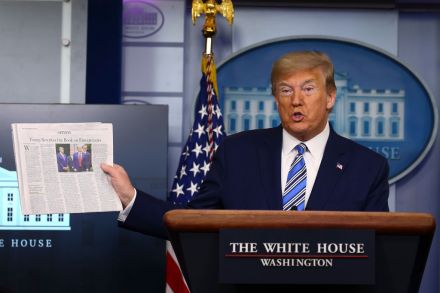
For the better part of a decade, Donald Trump has been an avid, if irascible, reader of the Wall Street Journal – particularly the columns overseen by its long-time editor Paul Gigot. Because the Journal is among the few American conservative outlets willing to criticize Trump – on everything from tariffs to temperament – he has developed a habit of denouncing it in public while devouring it in private. The Journal, Trump recently declared on Truth Social, is "one of the worst and most inaccurate editorial boards in the world." The ritual extends to annotated hard copies – margins filled with indignant scrawl – before the offending pages are FedExed back to News Corp headquarters in Midtown Manhattan.

wall street journal

The truth about Pakistan’s role in the US-Iran conflict

Pakistan was always an unlikely mediator for peace negotiations between the United States, Iran and sotto voce, China. It would not be an exaggeration to describe Pakistan as a failed state. Having outperformed India economically in the aftermath of partition, Pakistan went into steep decline after the arrival on the political scene of a corrupt chancer, socialist and demagogue, Zulfikar Ali Bhutto. Today, bankrupt Pakistan is kept afloat by loans from the IMF, China, and the Gulf States. Trump can be in no doubt that, with regards to political power in Pakistan, it is Munir who wears the pants Bhutto’s political dynasty continued under the aegis of his daughter Benazir and later his grandson.

pakistan

If only TACO were true

A useful rule, when trying to understand current affairs, is AAL: Acronyms Always Lie.A case in point would be the acronym of the year so far: TACO (Trump Always Chickens Out). It means that Donald Trump is always bluffing and, when push finally comes to shove, he folds.TACO has caught on since Liberation Day and the onset of Trump 2.0’s tariff agenda, and is now deployed again and again to describe the President’s latest ceasefire with Iran. Over free trade, Greenland, and the Middle East, he’s shown himself to be a playground bully who loves to intimidate adversaries only to cave whenever the going gets tough.

Taco

The Pentagon’s holy war with Rome

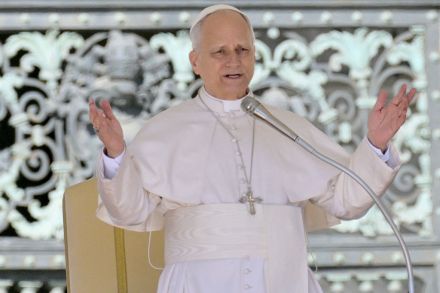
America is having its Golden Age, Iran is about to get blasted into the Stone Age... and Elbridge Colby wants to go back to the Late Middle Ages? According to a Free Press report by Mattia Ferraresi, the Under Secretary of War for Policy summoned Cardinal Christophe Pierre, the Vatican’s then-ambassador to the US, to a meeting in which the Avignon Papacy was invoked. (For those of you who didn’t go to Catholic school: in the 1300s the king of France had Pope Boniface VIII captured and beaten after the pope excommunicated him; a few years later the papacy moved to Avignon amid continued threats from the French crown and instability in Rome.

pope leo catholic rome pentagon

Get ready for Epic Fury Part II

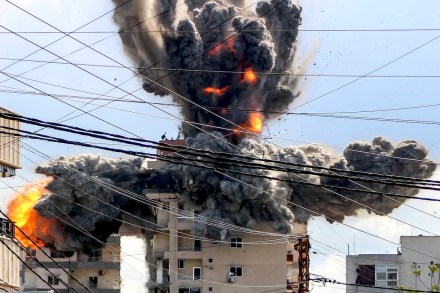
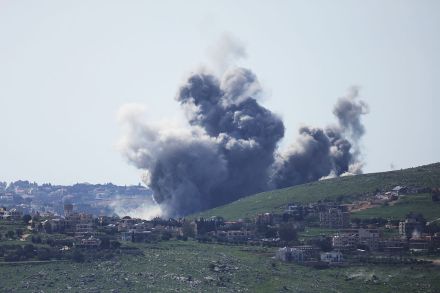
It could be the shortest negotiation in history. The United States and Iran, with their respective peace plans, are so far apart that it’s difficult to see how their differences can ever be squared.  A two-week ceasefire, which has already been broken, brought relief after five weeks of war and steadied the oil and stock markets. But the agreed ceasefire is looking fragile, as US Vice President J.D. Vance admitted. There had been “legitimate misunderstanding,” he said yesterday, over whether the ceasefire extended to Israeli action in Lebanon.

We’re stuck at the worst possible oil price

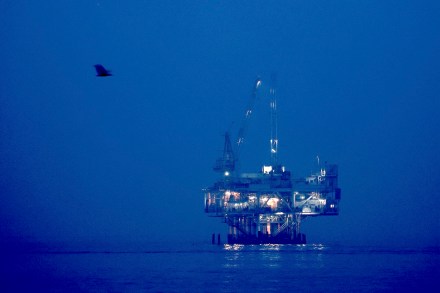
A ceasefire has been agreed with Iran. The Straits of Hormuz will reopen. And the oil market will get back to normal very quickly. By Wednesday morning, it looked as if the energy crisis was over. Finance ministers will be breathing a sigh of relief as the crisis abates. But hold on. In reality, the truce is fragile, and huge amounts of supply have been taken out of the market. So long as that remains true, the price of oil, and with it the global economy, will remain stuck. The average price of $90 to $100 a barrel is not what anyone really thinks a barrel of oil is worth The price of oil has been on a wild ride ever since the United States and Israel started the attack on Iran a month ago.

oil

The winners and losers of the Iran ceasefire deal

The abrupt announcement of a two-week ceasefire in the war between the US, Israel and Iran resolves none of the issues which caused the conflict. Beyond an agreement to cease attacks, the arrangements that will hold during the two-week period appear themselves unclear. Each side in the last hours seemed to commit to different versions of the ceasefire in key areas. Iran remains an aggressive and dangerous power, with the ambition of expelling the US from the region, dominating the Gulf states and destroying Israel From Israel’s point of view, the bottom line is clear. The Iranian regime has been significantly weakened in its capacities in a number of key areas. At the same time, the regime has not been destroyed or even severely damaged in its continued ability to rule Iran.

ceasefire

Trump’s fantasy of victory

Among the many gifts the Watergate scandal gave us was Nixon’s White House press secretary declaring: "This is the operative statement. The others are inoperative." That was after months of sticking to increasingly threadbare denials. In Donald Trump’s White House, operative statements become inoperative from one day to the next. That’s especially true of Iran. In 24 hours, from Tuesday to Wednesday this week, Trump went from "a whole civilization will die tonight" to "this could be the Golden Age of the Middle East!!!" TACO: Trump Always Chickens Out, as the meme has it.  The two-week ceasefire agreed this week with Iran is a lesson that you can win every battle but lose the war. (This is the lesson the United States learned in Iraq and Afghanistan, only to forget it again.

Portrait of the week: Trump threatens Iran, Kanye is banned and Artemis II heads to the Moon 

From our UK edition

Home The government withdrew an offer to create 1,000 more training posts for doctors in England after the British Medical Association refused to call off a six-day strike by resident doctors. In a speech at a White House Easter lunch, President Donald Trump of America mocked Sir Keir Starmer, the Prime Minister, for having to consult his team about sending ‘two, old broken-down aircraft carriers’ to the Middle East. Seven people protesting at Lakenheath RAF base were arrested on suspicion of supporting the proscribed group Palestine Action. Chris Rokos, the billionaire hedge fund owner, is to donate £190 million to the University of Cambridge to found a school of government.

Trump: the boy who cried war

From our UK edition

Did Donald Trump ever intend to obliterate Iranian civilisation?  Some will see the past week as one in which the world pulled back from the brink, when an unhinged US president experienced a rare moment of lucidity at the last crucial minute. Trump’s oscillation is, his defenders argue, the ‘madman theory’ in operation. This was the name given to the approach employed by Richard Nixon in Vietnam, when he tried to persuade the North Vietnamese that he had become so unstable he was capable of just about anything – nuclear annihilation included. Nixon believed his foe would have no option but to come to the negotiating table. Trump has succeeded in convincing many western commentators that he is genuinely on the point of lunacy – heedless of slaughter.

What do you do with a captured soldier?

From our UK edition

What do you do with a captured soldier? In 255 BC, fighting the Carthaginians, the Roman consul and general Marcus Atilius Regulus was taken prisoner near Tunis. They sent him back to Rome, having sworn an oath that he would ensure the release of some important Carthaginian prisoners; but if he failed, he himself would return to Carthage. Regulus went back, informed the Senate of his mission, took no part in the discussions or the vote, except saying that the prisoners were fine, active young officers, while he was bowed with age. The Senate decided not to return them, and Regulus made his way back to Carthage, well aware of the consequences.

ceasefire

What will the Iran ceasefire cost Trump?

Might Donald Trump travel to Tehran this spring to open an American embassy and declare that he’s fallen in love with the new Iranian leadership? His volte-face on Tuesday night – announcing a two-week ceasefire with Iran – suggests that Trump is embarking upon a new course in the Middle East. After threatening to bomb Iran back to the Stone Age, Trump announced that it’s time to call the whole thing off: “We received a 10-point proposal from Iran, and believe it is a workable basis on which to negotiate.”  What that negotiation will look like is an open question.