Iran

Trump isn’t the greatest threat to the Special Relationship

Britain’s refusal to fully back the United States over strikes on Iran has triggered an unusually public transatlantic row. It has also revived an old question about the future of the so-called "Special Relationship." When Donald Trump returned to the White House last year, many in Westminster doubted Keir Starmer could build a workable relationship with him. The two men could hardly be more different in temperament or politics, and predictions of an early rupture were widespread. For a time, however, Starmer appeared to defy those expectations. Britain weathered Trump’s latest tariff wars better than most countries, and the Prime Minister seemed to have found a cautious way of managing Washington’s unpredictability.

special relationship

Israel wants to destroy Hezbollah once and for all

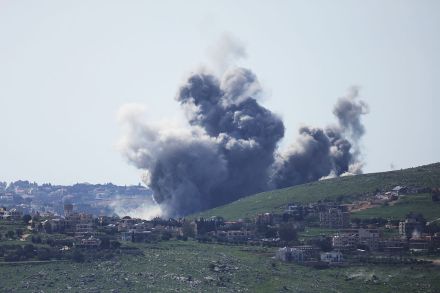
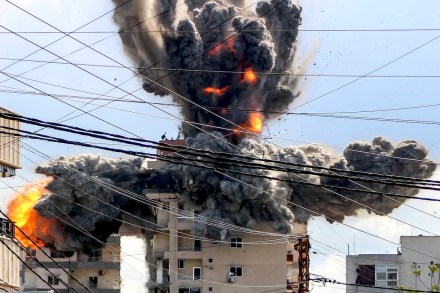
At around 2:30 a.m. on March 2, Israel bombed Beirut’s mostly Shia southern suburbs in response to a Hezbollah rocket attack on northern Israel. The road heading into Beirut from South Lebanon and the city’s southern suburbs was jammed with cars filled with Lebanese fleeing further reprisals. Some 52 civilians were killed and 154 injured, a hefty butcher’s bill even in this part of the world. Most Lebanese are happy Hezbollah has been defanged, even if they wish it wasn’t thanks to Israel Hezbollah’s actions were a demonstration of their ongoing support for Iran, but goading Israel was a cataclysmic miscalculation.

Is it wise for Spain to goad Donald Trump?

Spain’s refusal to allow the United States to use its military bases at Morón de la Frontera (Seville) and Rota (Cádiz) for its war on Iran, arguing that the US-Israeli attacks are "unilateral military actions outside the United Nations charter" has brought the simmering conflict between Pedro Sanchez, Spain’s socialist Prime Minister and President Trump to a head.   Sanchez’s carefully calculated strategy has been to position himself as one of Trump’s leading opponents on the world stage On Wednesday Sanchez followed up by delivering a stunning rebuke to Trump. Speaking for ten minutes on national television, he said that his government's position could be summed up in four words: "No a la guerra" (No to war).

neoconservative

America’s last war in the Middle East

Win or lose, Donald Trump has begun the last war the United States is ever likely to fight in the Middle East. That might sound wildly optimistic, but what it really means is that war with Iran has been decades in the making. If the mission succeeds, it will mark the end of an era. And if it fails, this war will have exhausted what’s left of America’s willingness to remake the region by force. It’s not just that Iran puts the case for regime change to the ultimate test. America’s relationship with Israel is also on trial.

Does Trump really have ‘whatever it takes’ to win in Iran?

With Operation Epic Fury in its sixth day, it is hard to tell how long the current United States military campaign against Iran will last. It may not be swift; yesterday, the Senate rejected a resolution to halt further action. Meanwhile, President Trump has been alarmingly indifferent to the question: Whatever the time is, it’s OK, whatever it takes. Right from the beginning we projected four to five weeks, but we have the capability to go far longer than that. We’ll do it. Secretary of Defense Pete Hegseth struck a different note with reporters: "This is not Iraq, this is not endless." Yet he has refused to rule out deploying ground forces to Iran and later said, "We have only just begun to fight.

iran

Trump’s ultimate target in this war is China

The United States and Israel killed Ayatollah Khamenei, and Xi Jinping’s decade-long project to build an alternative to the American-led order died with him. For years, Beijing quietly assembled a network of dictatorships and client states designed to blunt American power. Iran supplied China with cheap oil and kept Washington bogged down in the Middle East. Russia waged war on Ukraine with Chinese materiel support, a gamble that was supposed to cement a powerful anti-western axis but has instead bled Moscow into dependence on Beijing. Regional proxies from Lebanon to Gaza added just enough chaos to stop Washington focusing on China. The Chinese Communist party (CCP) propped up Nicolas Maduro’s Venezuela, too, as it funneled narcotics and other ills into America.

Will Turkey intervene in Iran?

With the exception so far of a single missile intercepted over Turkish airspace and a strike on an Azeri-controlled territory near the Iranian border, Tehran has so far declined to mess with the Turks, and for good reasons. Turkey is a member of NATO and attacking it would trigger Article 5 mutual defense measures. And it is NATO’s leading member, the United States, which is attacking Iran in the first place. A more serious restraining factor is Turkey’s own large and highly effective army – and its proven willingness to use it against weakened neighbors. Over recent decades Ankara hasn’t hesitated to send troops and launch bombing raids into both Syria and Iraq, occupying border regions when it decides that Turkey’s internal security is threatened.

Iranian attacks aren’t worrying Washington

Many commentators are already claiming that the war with Iran is “spiraling out of control.” I try not to be uncharitable: I am a Catholic, after all, and the Church tells me it is a sin. But if I were tempted, I should say that the only thing spiraling out of control is cliché. You could argue that drone attacks are a sign that Iran’s ballistic and cruise missiles aren’t actually proving that effective Iran said it would hit out wildly if it were attacked. It also made clear that direct attacks on the leadership of the Islamic Republic would be treated as an existential threat.

President Trump’s game of telephone

How are you “monitoring the situation,” four days into the joint US-Israeli offensive against Iran? Our Commander-in-Chief has adopted an unorthodox approach: evading the press in person as the strikes and counterstrikes fall, while taking phone calls from basically any journalist with his personal number. By Cockburn’s count, President Trump has given at least 20 “exclusive” telephone interviews to reporters since the early hours of Saturday morning. Old habits die hard. The starting gun was fired by the Washington Post’s Natalie Allison and Tara Copp at 4 a.m., three hours after the bombs started to hit. “All I want is freedom for the people,” Trump told them. Since then, he’s offered a variety of other reasons for US involvement.

telephone

Chaos in Iran spells trouble for the Taliban

The US-Israeli attack on Iran presents an opportunity to get rid of the Taliban in Afghanistan. If there is a collapse of central authority in Iran, tens of thousands of Afghan former soldiers living in exile there could use the power vacuum to mobilize, return home and fight against the Taliban. There are several resistance groups who have advanced plans to fight but need a reliable haven outside the country to launch attacks inside Afghanistan. Iran, which has a 600-mile border with the country, could be the launchpad they need. This represents a unique opportunity for Afghanistan, as for the first time the country faces conflict on both sides.

When will Kash Patel unleash epic fury on the FBI?

As I write, the Washington Post is carrying an obituary about the Ayatollah Ali Khamenei – or maybe it is about Santa Claus? You tell me. “With his bushy white beard and easy smile,” the Democracy Dies in Darkness paper told its readers,  “Ayatollah Khamenei cut a more avuncular figure in public than his perpetually scowling but much more revered mentor [Khomenei], and he was known to be fond of Persian poetry and classic western novels, especially Victor Hugo’s Les Misérables... Some Iranians who knew Ayatollah Khamenei before he became supreme leader described him as a ‘closet moderate.’” Did they now? Many other Iranians, some say about 250,000, did not have a chance to describe him at all because they were murdered on his orders.

Who will lead Iran now?

The longest-serving autocrat in the Middle East, Iran’s Supreme Leader Ayatollah Ali Khamenei, is dead. This is a historic moment for the Iranian people, the region, America, and US allies and partners around the world. Given the unprecedented nature of this US and Israeli military operation, it remains hard to predict events in Iran. But several developments give us clues about Iran's direction of travel in the near-term. Khamenei was a brutal ruler who not only abused his people and fomented terror around the world but was also a tyrant to his own family. His estranged sister Badri Khamenei once recounted how Qassem, a good friend of her brother, was murdered by the Iranian regime in the early years of the Islamic Revolution.

Could Iran descend into civil war?

Ayatollah Ali Khamenei, a man whose life has been defined by the harshness of his rhetoric against the West (specifically, the US and Israel) and his ruthless rule, has died a martyr’s death under the rubble of his compound in Pasteur, Tehran.  It was always going to end this way. Khamenei came to prominence as a revolutionary first and then second as a wartime leader when he assumed the role of President of Iran during the Iran-Iraq war. What is needed is a clear plan that can unite Iranians behind a shared, inclusive vision of their country The Islamic Republic is facing its most serious crisis since January, when it set about killing its way out of nationwide protests.

Is this Trump’s Sarajevo moment?

Here we go again. Switch out Saddam Hussein for the Ayatollah Khamenei and Ahmed Chalabi for Reza Pahlavi and you have a fresh war for regime change in the Middle East, this time with Israel as America’s sidekick. With Operation Epic Fury, the American and Israeli bombing of Iran and push for regime change, the self-proclaimed “President of Peace” runs the risk not only of triggering wider upheaval in the Middle East, but also globally. Is this a new Sarajevo moment? With Trump’s own generals having warned him that attacking Iran could be a debacle, he may have torched his own presidency Unlike George W. Bush in 2003, who worked to bolster domestic and international support for attacking Iraq, Donald Trump has disdained the slightest effort to justify his war publicly.

iran

Trump launches a remote-control regime-change war on Iran

"We’re going to destroy their missiles and raze their missile industry to the ground," said Donald Trump, as he stood at the lectern in his white USA cap and announced the launch of a "massive and ongoing" military operation against Iran.  "It will be totally, again, obliterated." He had to say "again" because he has insisted over and over that Iran’s nuclear facilities had been "utterly obliterated" last summer, after Operation Midnight Hammer.  But the objective of these latest midnight or very early morning strikes, conducted again by US and Israeli forces working together, is already far broader than the wiping out of weapons of mass destruction – whether that be uranium enrichment sites or Iran's ballistic missile capabilities.

Iran is ready for war – is America?

In 2001, Iran’s Supreme Leader Ayatollah Ali Khamenei met privately with Spain’s then-prime minister Jose Maria Aznar. Aznar recounted how Khamenei dubbed Israel a "cancer condemned to disappear" and said that an open confrontation with Israel and the United States was inevitable. Iran, the Supreme Leader insisted, would prevail. Fast forward to 2026, and the war that Khamenei prophesied is getting closer by the day. The Islamic Republic is already operating under the assumption of a US military operation For decades, durable diplomacy between America and Iran has failed because of the ideological nature of the Islamic Republic. It makes its decisions based on a mix of ideology and a desire for self-preservation.

Trump’s worrying appetite for war

As The Spectator goes to press, a great fleet of American war machines is whirring through the skies toward the Middle East. More than 50 fighter jets, plus stealth bombers and support aircraft, are joining what Donald Trump called an “armada” of US naval forces in the Arabian seas. The White House continues to say that it is pursuing a diplomatic solution with Iran. It’s possible that this latest military escalation is another of President Trump’s elaborate bluffs, designed to pressure the Iranian regime into accepting American and Israeli demands. But the President has been unusually mute about the situation on Truth Social.

war

US troops finally leave Syria

In December 2018, to the shock of pretty much everybody in the US national security establishment at the time, President Donald Trump publicly ordered the withdrawal of all US troops from Syria. The announcement caused a panic within the Defense Department, State Department and National Security Council, whose officials teamed up to dissuade Trump from going through with it. A similar story unfolded ten months later, in October 2019. Again, the bureaucracy pushed back; in October 2019, the House went so far as to pass a resolution opposing a US withdrawal, with senior Republican lawmakers signing onto the measure. Fast-forward more than six years later, and the US troop withdrawal Trump floated about during his first term is finally coming to fruition in his second.

Syria

Will Trump ‘totally obliterate’ Iran’s nuclear program – again?

Donald Trump spent much of the second half of last year boasting about the total and utter success of his military strikes on Iran. “As you know,” he said in August, “we took out the nuclear capability of Iran, and to use the term that people try to dispute without any knowledge, it was obliterated.” Iran’s nuclear program, he assured the world, had been set back by “decades.” Yet yesterday, just six months on, there he was again – meeting Israel’s Benjamin Netanyahu once more to discuss the urgent need to prevent Iran from developing a nuclear weapon.