Iran

How far will Trump go in Iran?

From our US edition

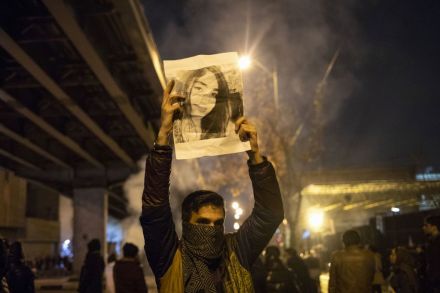
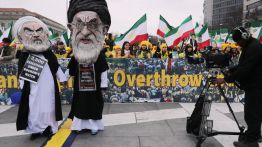
This article is in The Spectator’s February 2020 US edition. Subscribe here. ‘Get lost ayatollahs!’ ‘Death to Khamenei!’ The bravery of the anti-government demonstrators in Tehran is incredible, each one knowing that their actions could end with a bullet or a noose. I reached one through their favored encrypted app, Telegram, the interview arranged by a leading Iranian opposition group outside the country. ‘Elias’ — not his real name of course — is 25 and a postgraduate politics student in Tehran. The security forces were everywhere, he told me; everyone was very afraid. Still, he went on, ‘There is only one way this ends: toppling the regime.

iran

Shaken Saudis hedge their bets on détente with Iran

From our US edition

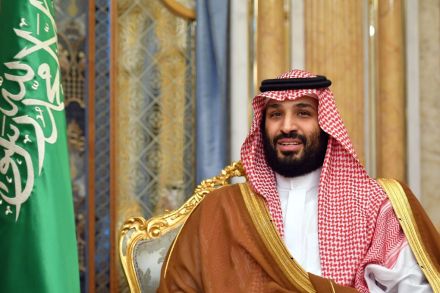
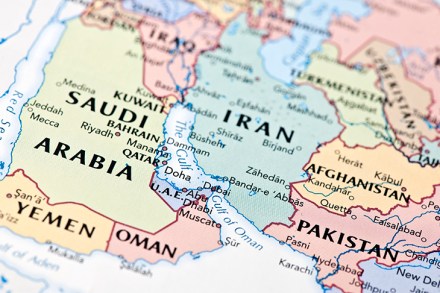
After the assassination of General Qasem Soleimani a month ago, Iran offered Saudi Arabia and its Sunni Gulf allies a stark choice. Stick with your newfound ally Israel and risk having your cities bombed to smithereens in the event of military escalation with the United States, or work on a peace deal with Tehran and stay out of the fray. The Iranians had already proven their ability to launch devastating missile strikes against Saudi Arabia's oil facilities, and the ineffectiveness of the US defensive anti-missile systems supposedly protecting them. Now it is clear that the shaken Saudis have decided to hedge their bets on détente with Iran.

saudis

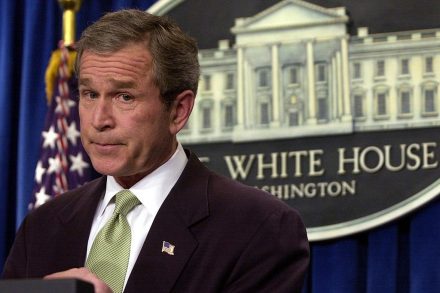
Donald Trump, president of peace

From our US edition

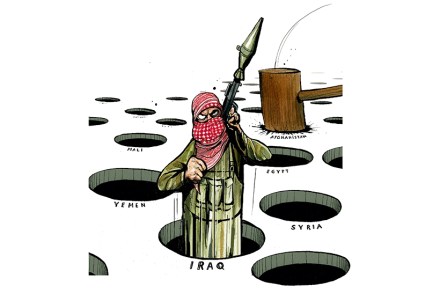
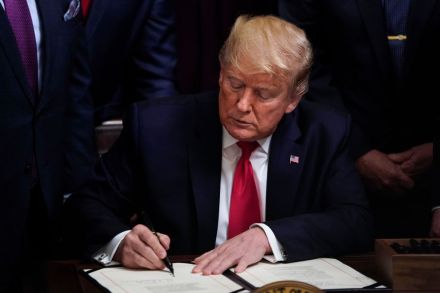
This article is in The Spectator’s February 2020 US edition. Subscribe here. Groupthink is the last thing a country needs when debating questions of war and peace. But groupthink is what America’s pundits have succumbed to once again. In 2003, voices of opposition to the Iraq War struggled to be heard, with even the progressive cable news channel MSNBC silencing its most outspoken critic (Phil Donahue) and telling a right-wing dissenter from President Bush’s war (Pat Buchanan) that he was expected to represent Republican opinion — which is to say, pro-war opinion. So much for press freedom. Today, groupthink is on the side of peace, or rather on the side of caricaturing President Trump as a warmonger.

peace

The ‘Iran Spring’ delusion

From our US edition

What a difference a week makes when it comes to the western media narrative on the Middle East. When countless millions were mourning Gen. Qasem Soleimani in what was possibly the biggest funeral in history, we were told that Iran and its leadership had never been more united. Now, amid smaller protests inside the country against the mistaken downing of a Ukrainian airliner with mostly Iranian students on board, we are told that the Iranian people are rising up en masse to overthrow their hated leaders. Have the famously sophisticated Iranian people really become so absurdly fickle overnight? There is another explanation for the self-contradictory nonsense we are being told. Whatever happens in the Middle East, there is only one constant.

iranian

The Middle East mess has nothing to do with Donald Trump

From our US edition

Last week, like millions of others across the globe, I emerged blinking and stumbling from my fallout bunker to assess the destruction wrought by World War Three. There were a few surprises in store. Nukes had failed to rain from the sky. Critical infrastructure remained intact. Rationing was not yet in force. People still weren’t going to see Cats. World War Three, historians will note, consisted of: an assassination, a poorly organized funeral, the histrionic launching of a few sketchy rockets, an Everest of bad tweets and the downing of a passenger plane. But one thing remained as permanent as the second law of thermodynamics: all of this was Donald Trump’s fault.

middle east messs

Iran’s mullahs are right to be rattled about what is unfolding on the streets of Tehran

On the streets of Tehran the real story from inside the Islamic Republic is being written. And Iran's Mullahs are worried. The people are rioting, as they have for the last year. And as commentators struggle to project their own views onto Iranians, Iranians themselves are finally making their voices heard. Events following the assassination of Qassem Soleimani has shown us the ability of some Western commentators to make any drama in the region about themselves. As each stage of the crisis has developed, they have assured us of impending consequences that suit their own agendas rather than any reality on the ground. We were told that Soleimani's killing would bring war to the region, as if Soleimani had not already been inflicting war on the Syrian people.

Corbyn’s Stop the War protest speech was his worst yet

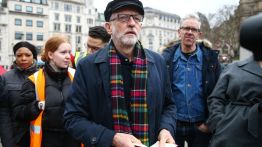
About a hundred Stop the War activists gathered outside BBC Broadcasting House on Saturday to protest against a possible conflict with Iran. They were the usual ragbag of idlers, dreamers, misfits and malcontents. Many of these people are unable to grasp the illogicality of their political positions. A chap selling the Socialist declined to give me a copy for free. ‘In future everything will be shared,’ I said, ‘so start with this paper.’ ‘I’ll share it with you,’ he smiled, ‘after you’ve shared your pound with me.’ I paid up and pointed out that the transaction had merely strengthened capitalism. ‘No, it’s building a system that will overthrow capitalism.

In pictures: Iran’s anti-government protests

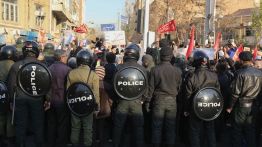
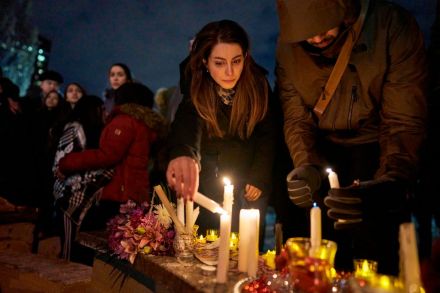
The Iranian government has faced growing internal pressure following the downing of a civilian jet last week. The Ukraine International Airlines flight was shot down on Wednesday shortly after takeoff, killing all 176 passengers on board. The regime has since taken responsibility for the deaths, blaming 'human error' amid rising tensions with the US following the assassination of Qasim Soleimani. Some have suggested that the regime's tragic error could signal the beginning of the end for Iran's theocratic dictatorship as increasing numbers of Iranians take to the streets. Over the weekend, the British ambassador was arrested while attending a vigil for those who died on the Ukrainian flight, including four Brits.

Iran must pay the families of flight 752

From our US edition

After the Ukrainian crisis and the Iranian crisis, we now have the Ukrainian-Iranian crisis. For the second time in six months, Ukraine finds itself inexplicably — and inextricably — in the midst of a world-historical crisis that it had no part in crafting. As it was with Trump’s inquiries into Hunter Biden’s business activities, Kyiv is marooned politically and facing difficult and even unpalatable choices between warring opponents, neither of whom it wants to antagonize. The American airstrike that killed Qasem Soleimani had threatened to set off a conflagration which many observers — 99 percent of them never having heard of the most interesting man in the Middle East — histrionically predicted as ‘World War Three’. Blessedly, that did not happen.

flight 752

Could this be the beginning of the end for Iran’s mullahs?

It is easy to construct a scenario in which tit for tat actions by the Americans and Iranians lead to all-out war, close off the Gulf, send oil prices soaring, crash the global economy – and, if you are really going to go for it, end in nuclear conflagration. But what about the alternative outcome: that conflict between Iran and the West precipitates a counter-revolution against the mullahs and leads to and end to the 40 year Iranian theocracy? The overthrow of the Iranian regime is the black swan event – or maybe it ought to be called a white swan event – which no-one is talking about, which is odd given that there have been plenty of indications over the past couple of years that ordinary Iranians are finally growing fed up with their regime.

The downing of a civilian jet only adds to Tehran’s desperation

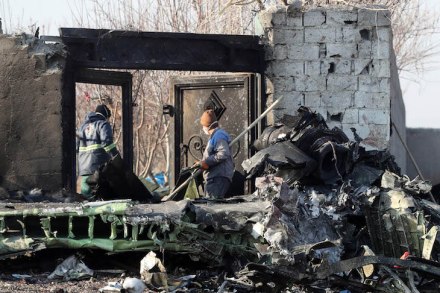
Drama and tragedy continue to envelop Iran. Just hours after the regime struck two US bases in Iraq on Wednesday, Ukraine International Airlines flight PS752 crashed after taking off from Tehran en route to Kyiv. All 176 passengers and crew members on board were killed. Iran almost immediately claimed that the plane had suffered a technical malfunction but this was greeted with scepticism. The aircraft was a Boeing 737-800 - one of the international airline industry's most widely used and reliable models. Dozens of Canadians were on board and on Thursday Canadian Prime Minister Justin Trudeau said evidence indicated that an Iranian missile had brought down the aircraft by accident.

Few have ‘empowered’ Iran more than Lindsey Graham

From our US edition

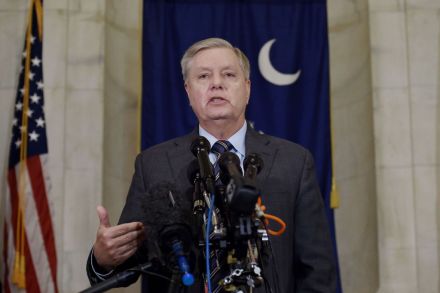
When Republican senators Mike Lee and Rand Paul walked out of a military briefing Wednesday over the recent US attack that took out top Iranian general Qasem Soleimani, they were not happy about how that exchange went.Sen. Paul said the briefing was 'less than satisfying', blasting the meeting as 'insulting to logic and the Constitution'.A fiery Sen. Lee elaborated further. 'I had hoped and expected to receive more information outlining the legal, factual, and moral justification for the attack,' Lee said. 'The briefing lasted only 75 minutes, whereupon our briefers left. This, however, is not the biggest problem I have with the briefing, which I would add was probably the worst briefing I've seen, at least on a military issue, in the nine years I've served in the United States Senate.

lindsey graham

All forecasts are off if Iran shuts the Strait of Hormuz

From our US edition

Just when you thought it was safe to go back in the water…late last year, a range of forecasts suggested that the likelihood of recession in the US, with knock-on effects for the rest of the developed world, had significantly diminished. Last summer, many economists were putting the chance of a substantial downturn at 50 percent but by November, Goldman Sachs had marked it down to 24 percent and Morgan Stanley to ‘around 20 percent’. Underlying this shift were strong corporate earnings and consumer spending, plus rising hopes of a settlement of US-China trade tensions. Last month saw a sell-off of safety-first government bonds reflecting the mood, and the FT’s end-of-year forecasts included a confident ‘No’ to ‘Will the US go into recession?

hormuz

The Middle East for dummies

Gstaad   The French have a saying: ‘Il n’y a rien de plus bête que le sourire du gagnant.’ In other words, gloating is for dummies. Hence I won’t be doing it, despite the drubbing handed to the Bercows of this world by so-called common folk. Mind you, at a lunch in a gentlemen’s club in the Bagel on the very day the drubbing was being administered, an Anglo-American friend, Bartle Bull, asked me what I thought would be the outcome: ‘Hung parliament,’ answered the great electoral expert, ruining Bartle’s lunch and driving the rest of the guests to more drink. A month down the road, everything’s hunky-dory, at least for those of us who don’t like to be told what to do by Brussels-based bureaucrooks.

Portrait of the week: Crisis in Iran, fires in Australia and Manchester rapist jailed

Home Dominic Raab, the Foreign Secretary, who had not been told in advance of America’s killing in Iraq of Qassem Soleimani, the leading Iranian military leader, said that America ‘had a right to exercise self-defence’. British troops were put on standby to be sent to the region, and the frigate Montrose and the destroyer Defender sent to the Strait of Hormuz. Boris Johnson, the Prime Minister, returning from holiday in Mustique, said: ‘Given the leading role he has played in actions that have led to the deaths of thousands of innocent civilians and western personnel, we will not lament his death.’ England secured a 189-run victory over South Africa on the fifth day of the second Test in Cape Town, levelling the series 1-1.

Is there method – or madness – behind Trump’s actions in Iraq?

Leaders are often accused of escalating a conflict abroad in order to distract from headaches at home. On Tuesday, before Iran’s missiles were fired, Donald Trump seemed to be doing the opposite. He and his media surrogates started their now all-too-familiar yabbering about impeachment and the Democrats. It felt as if they were trying to move the news cycle away from the Iran crisis. We’re in an election year after all, and the polls suggest a large majority of American voters don’t want more war. Then Tehran launched what it is calling ‘Operation Martyr Soleimani’, which at first prompted a rare nervous silence in Washington. The White House led reporters to believe the President would gravely address the nation that night, but he postponed.

Donald Trump has just blown up his goal of isolating Iran

A blood red flag was raised over the Jamkaran mosque in the Iranian holy city of Qom last week, one normally reserved to commemorate the death of martyrs. This time, it was intended as a call to arms. ‘We have unfurled this flag so that all [Shia] believers in the world gather around it to avenge Qassem Soleimani’s blood unjustly shed,’ said the mosque’s leader. In Tehran, there were calls for bloody retribution for the air strike that killed Iranian general Soleimani — and everywhere, talk of all-out war. If it was also intended to strike the fear of Allah into the hearts of Iran’s Sunni Arab enemies, it certainly succeeded. In Riyadh, there was panic.

This bungling Iranian regime is a threat only to the Iranian people

If this is the start of the third world war, as some quivering liberal commentators seem to believe, then my suspicion is that it will be over quite quickly, such is the majestic impotence of our opponents. I realise it is unwise to underestimate one’s enemy, but come on. In the immediate aftermath of the killing of Iranian military commander Qassem Soleimani, a couple of cheap rockets were lobbed in the direction of the US embassy in Baghdad — they missed, succeeding only in causing a handful of casualties including, presumably, similarly foam-flecked anti-American residents, i.e. people on their own side.

All forecasts are off if Iran shuts the Strait of Hormuz

Just when you thought it was safe to go back in the water… Late last year, a range of forecasts suggested that the likelihood of recession in the US, with knock-on effects for the rest of the developed world, had significantly diminished. Last summer, many economists were putting the chance of a substantial downturn at 50 per cent but by November, Goldman Sachs had marked it down to 24 per cent and Morgan Stanley to ‘around 20 per cent’. Underlying this shift were strong corporate earnings and consumer spending, plus rising hopes of a settlement of US-China trade tensions. Last month saw a sell-off of safety-first government bonds reflecting the mood, and the FT’s end-of-year forecasts included a confident ‘No’ to ‘Will the US go into recession?