Iran

Why this Iranian assassination is all about Trump

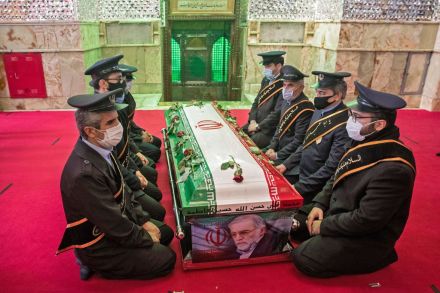
The news that Iran’s top nuclear scientist, Mohsen ‘father of the bomb’ Fakhrizadeh-Mahabadi, met his end in a hail of bullets near Tehran today comes as no surprise. As with so many things these past four years, this is all about Trump. Whoever carried out the hit, it is all but certain that Trump gave it the nod. Once again, he is trying to put a stamp on the Middle East that Biden will find difficult to scrub out. His actions would hardly be without precedent; Obama, Clinton and Reagan all made last-gasp moves in the region to shape it in their image. But none of these Presidents were anywhere near as belligerent or pro-Israel. First there was intense speculation that Trump was building up to a last-minute attack on Iran.

Biden would be a fool to reverse Trump’s foreign policy wins

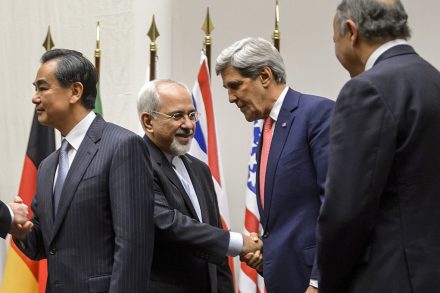
‘We’re going to be back in the game,’ our presumptive and somewhat previous new president tells us. ‘It’s not America alone.’ But America was never out of the game under Donald Trump and never alone. Look who is also back in the game: Tony Blinken, Barack Obama’s deputy secretary of state, will be Biden’s secretary of state. Jake Sullivan, once one of Hillary Clinton’s closest aides, is going to be Biden’s national security adviser. John Kerry, the disastrous diplomat who gave us the Iran nuclear deal, is Biden’s climate emissary. And it was all going so well.

Will Israel attack Iran before Trump leaves office?

From our US edition

We should pay attention when someone like H.R. McMaster, the former national security adviser, says that ‘it’s a possibility’ Israel will attack Iran’s nuclear facilities before President Trump leaves office. McMaster was using a television interview to tell a future Biden administration it would be a mistake to revive the Iran nuclear deal, which he said had been ‘a political disaster masquerading as a diplomatic triumph’. Israel’s prime minister, Benjamin Netanyahu, has always argued that the agreement — ‘based on lies’ — gives the ayatollahs cover to build a nuclear bomb.

iran

Is AppleTV’s Tehran the new Fauda?

If you love Fauda — and of course you do — you’re in for a long wait for season four, which isn’t due to arrive on Netflix till 2022. That’s why I had such high hopes for Tehran, which is written by one of Fauda’s co-authors Moshe Zonder. What, after all, could there possibly be not to like about a hot female Mossad agent struggling to survive after a botched mission in the hostile Iranian capital, where all Israelis are seen as emissaries of ‘Little Satan’? It starts promisingly, once you’ve got over the technical difficulties of signing up to Apple TV. (For some reason, my characters now speak with English subtitles but in German. The other options it gives me are all the Latin languages but not English.

Pompeo’s principles

From our US edition

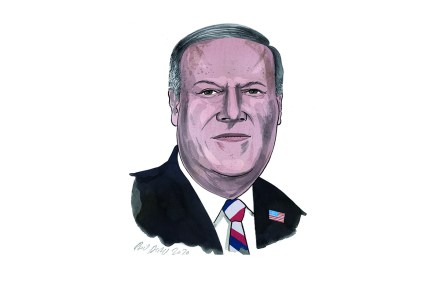
‘Come in.’ Burly, brisk and maskless, Mike Pompeo indicates a chair before the marble fireplace. ‘It’s all right if we’re six feet — or two meters — apart.’ We are meeting at the State Department the day after Pompeo’s return from Qatar, where US negotiators have opened discussions with the Taliban and other Afghan factions on an end to the war in Afghanistan. It’s also the day before the signing of the Abraham Accords between Israel and the UAE and Bahrain. Cheerful and perhaps a little tired, Pompeo exudes forceful confidence: a man who knows what needs to be done. As Secretary of State since 2018, Pompeo has been the strategist who has translated Trump’s generalities into the specifics of policy.

What Bahrain’s deal with Israel really means

From our US edition

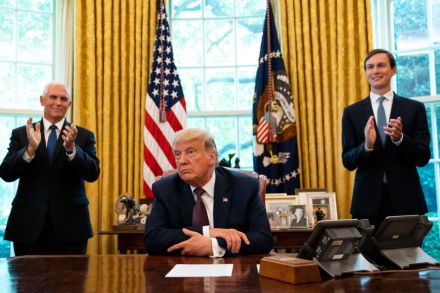
On September 15, representatives from the oil-rich Kingdom of Bahrain will meet Israeli leaders at the White House to sign a historic peace deal. It will normalize relations between the Muslim state and the Jewish one, not long after the United Arab Emirates concluded a similar pact. Expect more such 'normalization deals'. They supplement other White House initiatives, such as the deal it brokered between Serbia and Kosovo, which includes both countries establishing closer relations with Israel. The deals are significant for several reasons. First, they represent a common regional front against the Iranian threat, which has been developing beneath the surface for some time.

bahrain

Sources: Atlantic editor Jeffrey Goldberg weeps in his office ‘all the time’

From our US edition

This week, the Atlantic’s Jeffrey Goldberg dropped what could be his biggest piece since he won a major award for drawing bogus links between Saddam Hussein and al-Qaeda. The piece claims that during a 2018 visit to France President Trump canceled a visit to an American war cemetery, dismissing the dead who lie there as 'suckers' and 'losers' unworthy of passing beneath his presidential shadow. Outsiders have expressed skepticism of the story for many reasons. For starters, in Goldberg’s account, Trump also questioned America’s pointless and enormously costly involvement in World War One. If Trump really said that, it would be an unprecedented display of historical knowledge and insight on the President’s part.

The Foreign Office has lost the plot in the Middle East

Last Friday the UN Security Council rejected any extension of the arms embargo on Iran. That embargo — imposed in 2007 — began to get phased out after the 2015 Iran nuclear deal. But a ‘snapback’ provision was put in place intended to allow the return of all such sanctions should Iran violate the terms of the deal. Iran has been violating those terms for some time, but on Friday, when the United States hoped that its allies would join it in deploring this fact, only the Dominican Republic voted with it. The UK, like France and Germany, chose to abstain. On the question of whether Russia and China should once again start selling arms to Iran, this country apparently takes no view. It would be nice to be able to say that this was peculiar. But it isn’t.

Get ready for the return of the Iran Deal

From our US edition

The Trump administration has the first successful foreign policy of any administration since that of George H.W. Bush. It must be stopped.This, incredibly, is the message from the Democrats. And that, disastrously, is what will happen if Joe Biden wins the elections. Get ready for the revival of the failed foreign policy of the Obama administration, and brace yourself for the return of the Iran Deal.Visionaries like Obama, Susan Rice and Ben Rhodes thought it would be smart to have the Muslim Brotherhood in charge of Egypt. They thought it would be strategic to smash up Libya because the French asked nicely. Obama reckoned he had ‘bonds of trust’ with Recep Tayyip Erdogan of Turkey, an Islamist and neo-Ottoman imperialist.

iran deal

Why the US assassination of Iran’s top general didn’t spark a war

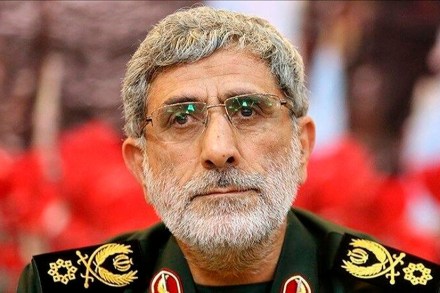
Iran’s new meddler-in-chief in Iraq is a bespectacled general called Esmail Ghaani. Brought in to replace Qassem Soleimani after his death in a US airstrike in January, he has the same green uniform as his predecessor, the same grey beard, and the same orders to make Iraq’s Shia militias do Tehran’s bidding. That, though, is where the similarities end. Soleimani was a legend among his followers in Iraq — he spent years building contacts with local commanders and joined them on the battlefield against Isis in Mosul. Ghaani, by contrast, is an owlish, uncharismatic figure who looks like he might be happier behind a desk. Unlike Soleimani, he doesn’t speak Arabic and has to rely on a translator during his visits to Baghdad.

In memory of the man who never slept

The enforced boredom of lockdown has been replaced by a feeling of loss. My nephew by marriage, Hansie Schoenburg, died aged 33 from a brain tumour, and then there was the death of my close friend Shahriar Bakhtiar, aged 72. Hansie was tall, blond, a Yale grad, and extremely handsome. Recently married, he died surrounded by his family. He was very close to both my children. Shahriar was the Persian Boy who, as a slender, bright-eyed six-year-old with not a word of English, was dispatched from Persia to an English school known for its cold rooms and strict rules. The Persian Boy learned early to do without parents. The bitter irony of their respective deaths was that while Hansie had been willing himself to live these past 15 years, Shahriar had had enough.

J’Accuse Barack Obama!

From our US edition

When President Obama was in his 75-day transition to the Presidency, he initiated correspondence with Supreme Leader Khamenei of Iran to explore, at the least, some form of what French diplomats call détente, or even entente. But Iran remained an adversary to the United States. Instead of rapprochement, the Shia theocracy  was sanctioned by UN Security Council resolution 1803 on March 3, 2008. As it happens, this was prologue to l’affaire Flynn, a scandal whose events resemble those of that affaire to remember, the notorious Affaire Dreyfus. That’s Alfred Dreyfus the army officer, not Richard Dreyfuss the actor.

obama

Dear dictators: don’t lecture the US on how to treat its people

From our US edition

If you’ve been watching the news, you would think the United States is a third world nation on the verge of collapse. Less civilized countries all over the world have noticed American policing problems and the volatile riots we’re having; riots that they either experience on a weekly basis — or their governments don’t allow to take place at all. Take Iran, for instance. Foreign Minister Mohammad Javad Zarif tweeted, ‘some don’t think #BlackLivesMatter. To those of us who do: it is long overdue for the entire world to wage war against racism.

china

Oil on troubled waters: the US-Saudi alliance is crumbling

Donald Trump said in October 2018 that the Saudi royal family ‘wouldn’t last two weeks’ without American military support. Last week, on the back of the collapse of the US fracking industry, he finally acted on his long-standing anti--Saudi instincts. He ordered the immediate withdrawal of two patriot air defence batteries, sent to defend the kingdom’s oil infrastructure in September after a missile attack blamed on the Iranians. He also recalled hundreds of US troops and said the US Navy presence in the Persian Gulf would be scaled back. Leaving with the ships were dozens of US fighter jets, which would have been crucial for defending against any full-scale Iranian assault.

Could President Trump lose the oil war?

From our US edition

In a cover story for The Spectator that appeared just after Saudi Arabia launched an oil war against Russia in March, I wrote: 'One wonders how Donald Trump — who hates personal disloyalty more than anything — will react when he wakes up to the fact that the Saudi leader he has stuck with through thick and thin is now out to destroy the domestic industry Trump is most proud of.' Well, now we know. By the first week of April, Trump was so concerned about the impact of dramatically lower prices on the domestic fracking industry that he called the Saudi leaders and gave them a stark ultimatum. Unless they pressured OPEC members to cut oil production, he would be powerless to stop lawmakers from passing legislation to withdraw US troops from the kingdom.

oil

What is the US Navy doing in the Persian Gulf?

From our US edition

American alliances and security commitments tend to live on long after the world has changed. Many of our far flung military bases are legacies of a Cold War that ended decades ago. With the collapse of the Soviet Union, the Nato alliance became all but obsolete, so it eagerly embraced conflicts in the Balkans, Libya, Syria and other locations far from the Central European theater it was originally designed to protect. However, none of these holdover security commitments seem as absurd as US military operations in the Persian Gulf during a COVID-19 oil market.As recently as last month, the United States was keeping two aircraft carrier battle groups deployed near the Persian Gulf.

navy persian gulf

The next American revolution will be televised

From our US edition

Is America becoming a developing country? We’re seeing increasing evidence of reverse convergence. We used to think that the developing world would in time become like America, but it now seems that the United States has developed an emulation complex of its own. What has not been explained are the reasons. In some fundamental areas America does resemble a traditional society, with its belief in transcendence and its quaint ways of enforcing justice and delivering public goods. The US executes prisoners on a scale matched only by China, Iran and Saudi Arabia. Guns are more readily available than in Pakistan and more than half of Americans pray every single day. No other state spends so much money on health care, yet Americans’ life expectancy keeps falling.

trump television

The director of Persepolis talks about her biopic of Marie Curie: Marjane Satrapi interviewed

The problem with making an accurate film about science is that science is rarely exciting to watch, explains director Marjane Satrapi. Movie convention tends to insist on the climax of the eureka moment and the fiction of the solitary male genius, who doggedly closes in on his discovery in the same way that a detective might doggedly close in on a killer. ‘It doesn’t happen this way,’ says Satrapi. ‘It’s a result of lots and lots of work, which most of the time is repetitive and most of the time you know you don’t know where you’re going, and it’s lots of collaboration.’ Satrapi studied mathematics in her birthplace of Iran, and has a scientist’s intolerance for dramatic licence.

Will coronavirus lead to a US war with Iran?

From our US edition

In a roundabout way, coronavirus may have been responsible for the deaths of two American service personnel and a British soldier in a rocket attack in Iraq on Wednesday. This triggered a prompt US military retaliation — American forces launched strikes at five sites in the early hours of this morning — and the prospect now is of an escalation while the rest of the world is consumed with a global health crisis. What's going on? It was Gen. Qasem Soleimani’s birthday on Wednesday and a Shiite militia — probably Kataib Hezbollah — chose to mark the occasion by firing Katusha rockets at Camp Taji, the US base just north of Baghdad.

war with iran coronavirus

The Shia Krays: The whole of Iraq is being held to ransom

It’s been only six weeks since the death of the Iranian general Qassem Soleimani, but already there are a number of local hardmen vying to take his place. Most notable are his sidekicks, the Kray twins of the Shia world: Qais al-Khazali and his brother Laith. Qais and Laith who? Unless you’ve scanned Washington’s latest list of designated global terrorists, these two names won’t be familiar. Yet when I mentioned the brothers in a Baghdad teahouse a few weeks ago, folk lowered their voices and looked surreptitiously around, as if discussing the Krays in a pub in 1960s Bethnal Green. The Khazalis lead an Iran-backed Shia extremist group called the Asaib Ahl al-Haq, or League of the Righteous.