Iran

Tehran is repeating the Shah’s mistakes

The Iranian province of Khuzestan is oil-rich but water-poor. At the best of times, the southwestern region is a problem for Tehran. On the border with Iraq, it’s home to an Arab minority that has long been targeted. The province has separatist inclinations, which led to a failed uprising in 1979 and sees the occasional attack continue to this day. Unsurprisingly, it is not favoured by central government. It’s impoverished and lacks many basic services; quality of life is poor. Khuzestan is now in its sixth straight day of protests after water shortages in its major cities.

raisi

Iran’s president is a mass murderer

From our US edition

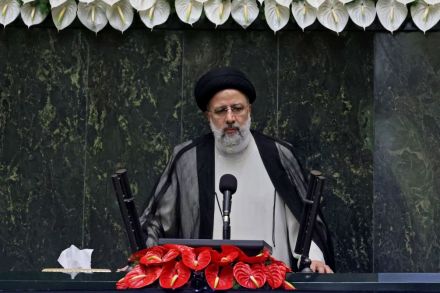
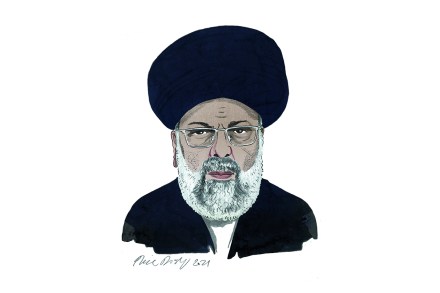
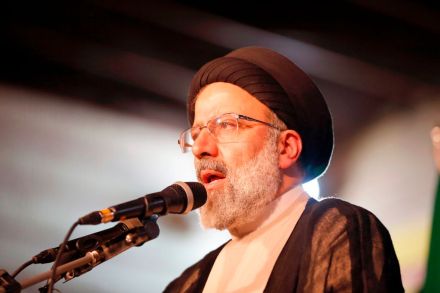
The US and other western countries are faced with a dilemma: how to bring to justice a man with the blood of thousands on his hands when you have to do business with him. Ebrahim Raisi’s path to the presidency of Iran is strewn with corpses. He comes to office this month already under American and European sanctions for the mass murder of prisoners in 1988. Some 5,000 may have been killed, though we can only guess at the true number of dead. It was a crime against humanity in the strict legal meaning of that term. At an earlier stage in his career, Raisi is said to have personally supervised the torture of dissidents, but in the 1988 case his responsibility was bureaucratic. He was a grim fanatic, eager to carry out orders. He was — and remains — Iran’s hanging judge.

The Afghan withdrawal will only embolden the West’s enemies

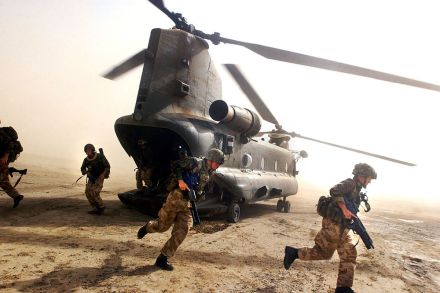
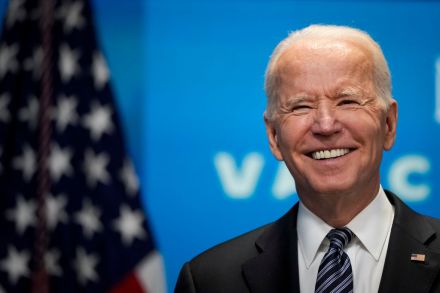
‘How many thousands more Americans, daughters and sons, were you willing to risk?’ Biden asked critics of the decision to withdraw forces from Afghanistan last week. He has the support of the American public – most of whom also wanted to see troops leave Afghanistan after 20 years of fighting and 2,400 fatalities. This risk aversion is one of the reasons America decided to withdraw its forces from Afghanistan. There’s a diminished appetite in the US for prolonged military involvement in the Middle East, especially large-scale deployments of ground troops that inadvertently cost lives.

Raisi’s election confirms the futility of returning to the Iran Deal

From our US edition

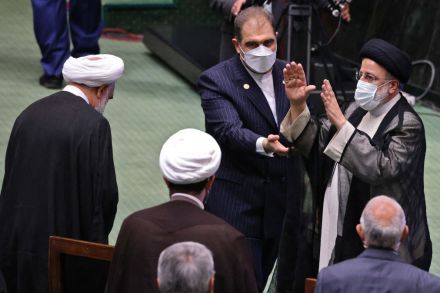
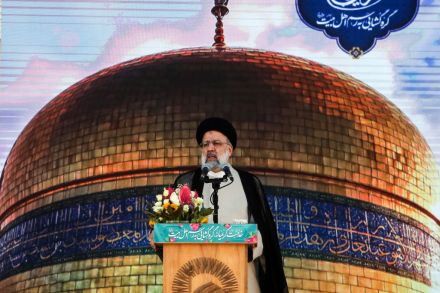
The president is a placeholder for the people who really run the country. The elections were rigged. And most of the American media cheers along. No, not the United States: Iran. The peace-loving, centrifuge-spinning, flag-burning regime has a new president, Ebrahim Raisi. The Biden administration did promise us a new era in US-Iranian relations, and here it is: Raisi will be the first Iranian president to take office while under sanctions for mass murder. In the 1980s, Raisi was a young regional prosecutor. He was part of a four-man ‘death committee’ which ordered the disappearance and killing of thousands of the Islamic revolution’s enemies. You may be shocked to hear human rights’ groups claiming that due process was frequently ignored during this judicial massacre.

ebrahim raisi

The dark past of Iran’s new presidential favourite

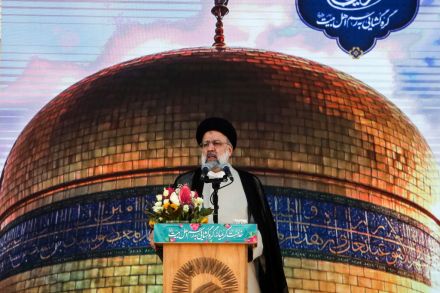
'Each vote counts...come and vote and choose your president. This is important for the future of your country.' These were the words of Iran’s Supreme Leader Ayatollah Ali Khamenei this morning as he urged people to make their voices heard in today’s presidential election. Each vote doesn’t count, of course. The regime makes sure of that. Iran ‘manages’ its elections. This year, 600 people registered as candidates, now only seven remain. The unelected Guardian Council, which consists of 12 ‘jurists’ (clerics), is responsible for ensuring all candidates are compatible with 'Islamic values'.

Is the worst yet to come in the Middle East?

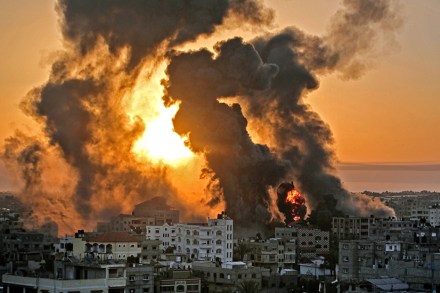
Beirut We can’t say yet if the latest fighting between Israel and Hamas is the start of ‘the big one’, a new Palestinian intifada, or uprising. That possibility was raised by the grandest of Middle East commentators, Thomas Friedman, in the New York Times. Friedman is sometimes mocked for his prognostications. A ‘Friedman’ is defined as six months because of his repeated statements that the ‘next six months’ would be critical for the US in Iraq, the light at the end of the tunnel visible only then. He also praised the ‘new ideas’ of Saudi Arabia’s ruler, Mohammed bin Salman, before it turned out that one of those new ideas was to dismember his critics with a bonesaw.

How are we enjoying the Biden presidency so far?

From our US edition

Well, that didn’t take long. Less than four months into the Biden-Harris deep-state maladministration and we have roaring inflation, the most disastrous jobs report in recent memory, rising unemployment, spiking gas prices, an imploding stock market, devastating cyber attacks on critical infrastructure and a janus-faced crisis on our Southern border in which tens of thousands of disease-ridden illegal migrants are huddled into cages while thousands more fan out across the fruited plain taking jobs from Americans even as they infect us with COVID. Quick work, Joe! And of course that is just the tip of the proverbial North Atlantic iceberg into which His Senileness is steering the ship of state.

biden

Prisoners dilemma: should we pay kidnappers?

British-Mexican national Claudia Uruchurtu Cruz disappeared on the night of Friday 26 March in the town of Nochixtlan, Oaxaca State, Mexico. Claudia had been seen attending a rally protesting the beating of a local labourer, allegedly by security elements linked to the local municipal president. Unconfirmed witness statements claim she was grabbed and pushed into a red car. Claudia never arrived home and her family and friends have not heard from her since.  What is the right response for the British government? The most debated issue is whether to pay ransoms. Some governments refuse, others pay, or at least turn a blind eye to families that do. In Mali, where British troops are now operating, France has paid millions of dollars to Al-Qaeda in the Islamic Maghreb.

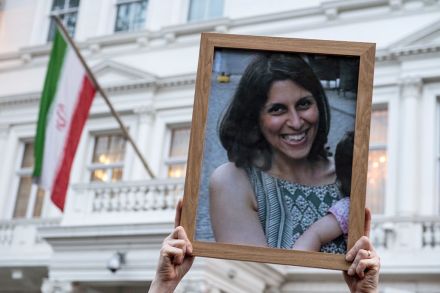
Britain shouldn’t pay out to secure Zaghari-Ratcliffe’s release

In January 2016, $400m (£290m) was flown by the United States to Tehran in the dead of night. Loaded on to wooden pallets on an unmarked plane, it was the first in a series of instalments to satisfy an unfulfilled American-Iranian arms deal signed in 1979, before the Shah was replaced in the revolution. On the morning after the payment, four American prisoners were released, boarding planes back to their homeland. The White House insisted the payment and the release were coincidental. But General Mohammad Reza Naghdi, a commander in the Islamic Revolutionary Guard Corps (IRGC), took to Iranian state media to proclaim:  'Taking this much money back was in return for the release of the American spies.

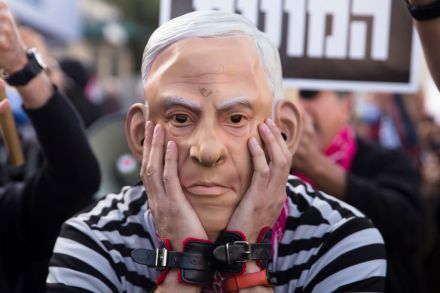
Can Iran help keep King Bibi in power?

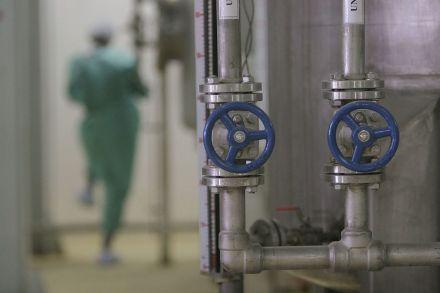
Benjamin Netanyahu has a problem: he doesn’t have sufficient support to form a coalition. With 20 days left to complete this near impossible task, he is desperate; and, when backed into a corner, Netanyahu looks to Iran as his saviour. The timing of the recent explosion in Iran’s Natanz’s nuclear facility – and particularly the fact that Israel has done little to dispel the notion that it was to blame – suggests that the motivation was at least partially political.  This isn't to say the attacks on Iran aren’t normally motivated by interests of national security. The threat of a nuclear-capable Iran is substantial: according to Iran, the Natanz nuclear site holds thousands of advanced centrifuges.

Israel’s shadow war with Iran explodes into ‘nuclear terrorism’

If time flows at an even pace, then history does not. Joe Biden may still be new in the job, but he finds himself at the centre of a war between Israel and Iran in everything but name. After a comparative lull, events are not so much accelerating as whirling around the president, drawing him inexorably in. Last night, Iranian officials reported that the Natanz uranium enrichment plant – a lynchpin of its nuclear programme – had been the victim of what they described as 'nuclear terrorism'. According to US officials quoted in the New York Times, an explosion destroyed the independent power system that supplied the centrifuges for enriching uranium.

The West’s shameful Iranian capitulation

On a sweltering day in July 2018, German police pulled over a scarlet Ford S-Max hire car that was travelling at speed towards Austria. The driver, Assadollah Assadi, the third secretary to the Iranian embassy in Vienna, was arrested at gunpoint and taken into custody. Although unusual, there was a good reason for detaining the diplomat: Assadi had used his immunity to smuggle a bomb on a commercial airliner from Tehran to Austria, intending to carry out what would have been one of Europe’s worst atrocities in recent years.

Back to tit-for-tat in the Middle East

From our US edition

Plus ça change, plus c'est la même chose. President Biden may have promised that ‘America is back’, but the United States’ decades-long shadow war with Iran never left. Last month’s reciprocal strikes in Iraq and Syria, and a further 10 rockets launched at a US base in Anbar Province last week, were notable only for their normalcy. Far from being Biden’s ‘Hour One Crisis’, this kind of geopolitical hair-pulling via high explosives is all too normal in the post-Iraq War, post-Arab Spring hash of the Middle East. Two American contractors and at least one Iraqi Shia militiaman are now dead. More casualties are likely to come in the weeks ahead. This first Biden counter-strike was no more than violent messaging, perhaps primarily to a domestic audience.

iran tit-for-tat

Iran doesn’t hate Israel

The decades since the Islamic revolution have weighed heavy on the people of Iran. Living in fear, under extreme levels of surveillance and oppression, ordinary citizens have seen their quality of life plummet and their horizons shrink, as their country became an international pariah. Those who dared to protest have been brutally repressed by regime goons with knives, axes and heavy weaponry. And while forced to suffer the deprivation of draconian sanctions, hardworking families could only look on as their despotic leaders splurged billions of dollars on military meddling overseas. When the senior Hamas leader Mahmoud al-Zahar boasted in December that the regime had given him £15.8 million of government money, Farsi social media lit up in rage.

Iran’s missile diplomacy

It’s a time for delivering messages in the Middle East, where messages rarely come without their near constant attendant: violence. On Monday night a volley of rockets struck a base hosting US troops in Erbil, the capital of Iraqi Kurdistan. International media reported that one rocket landed in the base and another on residential areas nearby; one civilian contractor was reportedly killed, and six others were wounded, including a US service member. At least five Iraqi civilians were also injured, with one in a critical condition. The militia group Saraya Awliyah al-Dam has claimed responsibility for Monday’s attack. The group remains, superficially at least, a mystery.

Revealed: how Mossad eliminated Mohsen Fakhrizadeh

The Mossad is not known for its touchy-feely approach. Whether it was the kidnap of Adolf Eichmann in the sixties, hunting down and executing the Black September terrorists in the seventies and eighties, or dispatching a Hamas chief while disguised as tennis players in a Dubai hotel in 2010, the agency has built a reputation as the most feared secret service in the world. Yet its underlying moral imperative in this most morally difficult of professions must not be overlooked. Former Mossad chief Meir Dagan used to show spies about to embark on a mission a photograph of his grandfather kneeling in front of Nazi soldiers before they shot him. This sense of ethical purpose has always been at the heart of the agency, even when it has been driven to play dirty.

Al Qaeda and Iran’s chilling new alliance

What does the world’s foremost Shia power and the most notorious Sunni terror group have in common? Given that the two great branches of Islam rarely see eye to eye, the layman would be forgiven for thinking that the answer is ‘not much’.  It isn’t just the layman who has concluded that Iran and Al Qaeda are oil and water either. When reporting on the assassination of an Al Qaeda chief in Tehran last year, the New York Times remarked: ‘That he had been living in Iran was surprising, given that Iran and al-Qaeda are bitter enemies.’ Surprising to the New York Times, perhaps. But not surprising to the intelligence community, which has been tracking the development of this dangerous collaboration for 30 years.

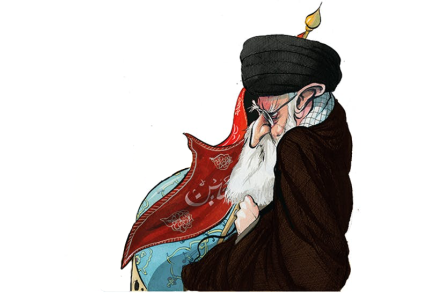
Iran’s people will pay a heavy price for Khamenei’s vaccine politics

The Middle East is changing. Israelis now splurge at Gucci and Rolex in Dubai. Saudi women speed down desert highways; and once again Turkish leaders kneel before the call to prayer. One thing, however, remains unchanging: the Iranian government’s ability to find new and evermore sadistic ways of persecuting its own people. Yesterday, Iranian Supreme Leader Ayatollah Ali Khamenei announced on live TV that Iran would reject the American BioNTech-Pfizer and British Oxford-AstraZeneca vaccines. 'Imports of US and British vaccines into the country are banned. I have told this to officials and I'm saying it publicly now,' he said. This statement is typical in that it both defies belief and is yet utterly unsurprising. Coronavirus hit Iran hard.

Iran vs the rest: the Middle East has reached a tipping point

Last year, in the cigar bar of an opulent London hotel much favoured by visiting Arabs, an interesting conversation took place. My friend was rich enough to have two private jets and claimed to be doing private shuttle diplomacy between Israel and one of the Gulf states. Smoke curled around our heads and a young Qatari in Gucci trainers passed by with a woman my friend assured me was a Russian prostitute. My friend’s phone was out now and he was on a video call with a man he said was a senior official in the Iranian Revolutionary Guard. He asked him about a drone strike on Saudi Arabia’s two biggest oil refineries. The man chuckled. ‘Ah yes, that was us.

Why does Britain refuse to swap hostages?

In the last days of November, Dr Kylie Moore-Gilbert was released from Tehran’s Evin prison and flown back to a welcome in Australia. A dual Australian-UK national, she had served two years of a ten-year sentence for espionage — pronounced after a secret trial. She had been in Iran for a conference and was detained as she was about to leave. She had strongly protested her innocence. So why, many Britons might ask, is the Australian-British academic suddenly free after two years in which the Iranian security services tried in vain to 'turn' her — while the UK-Iranian dual national, Nazanin Zaghari-Ratcliffe, remains under house arrest in Tehran, with the prospect of another trial and a return to prison.