Iran

Alan Dershowitz: when Israel must consider the nuclear option

Professor Alan Dershowitz is one of Israel’s most prominent defenders outside the Jewish state. He has just written — in record time — a book about the events of October 7: War Against the Jews — How to End Hamas Barbarism. It will be published next month and will argue, among other things, that the Hamas attack “has required Israel to consider its nuclear option as a last resort to assure its survival.” I spoke to Professor Dershowitz and asked him first, about another of the book’s arguments, that there should be no absolute distinction between civilians and combatants in Gaza, but instead “a continuum of civilianality.” "It existed in Nazi Germany," he said.

dershowitz nuclear option

Time for Biden to change course from Obama’s failed Middle East policies

When a long-silent former president finally speaks out, the public listens. So do foreign leaders, especially when the former president is closely tied to the current one. That’s why Barack Obama’s comments on the war in Gaza attracted attention.  Anyone who remembers President Obama’s foreign policy knew what to expect: criticism of Israel and a delicate dance around Iran’s malign behavior. In fact, he did not mention Iran at all. He totally ignored their role. His audience expected him to add a few words of moral self-righteousness, warning Israel about future civilian casualties, as if Israeli Defense Forces hadn’t taken enormous and costly steps to avoid them.

biden obama resize

Joe Biden’s Middle East diplomacy is a wreck

From our UK edition

Joe Biden prides himself on his decades of foreign-policy experience, his ability to talk tough yet be kind, and his talent for bringing opposing sides together. Touching down in Israel today, he gave Bibi Netanyahu a big hug – quite the gesture – and promptly told him he believed that ‘the other team’ – i.e. Hamas, not Israel – was responsible for the bomb that struck a hospital in Gaza last night, killing many of non-combatant Palestinians and inspiring another wave of anti-Israel protests. Biden will now set about trying to help release the hostages held by Hamas and persuading local powers to allow a secure flow of humanitarian aid into Gaza.   Israel will be grateful for Biden’s show of support.

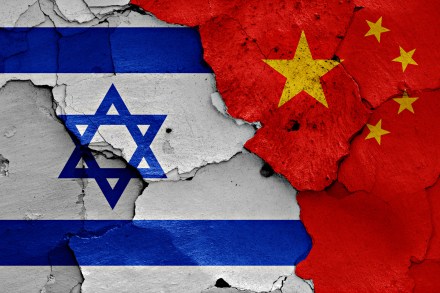
‘The mask has slipped’ – Tuvia Gering on China, Israel and Hamas

From our UK edition

43 min listen

When China brokered a historic detente between Saudi Arabia and Iran earlier this year, it seemed that a new phase in world history – and certainly in Chinese foreign policy – had opened up. Instead of the US being a policeman of the world, it was the rising power, China, that was stepping into that role. Whereas Chinese foreign policy had previously only really cared about promoting trade and silencing dissidents, it seemed that perhaps, now, Beijing was taking a more leadership role in global diplomacy and security issues. And yet the events of the last week and China’s response to them have shown that perhaps the country isn’t ready for that responsibility just yet.

Paul Wood, James Heale and Robin Ashenden

From our UK edition

23 min listen

This week Paul Wood delves into the complex background of the Middle East and asks if Iran might have been behind the Hamas attacks on Israel, and what might come next (01:11), James Heale ponders the great Tory tax debate by asking what is the point of the Tories if they don’t lower taxes (13:04) and Robin Ashenden on how he plans to introduce his half Russian daughter to the delights of red buses, Beefeaters and a proper full English (18:36).

What Iran gains from the conflict in Israel

From our UK edition

A little more than a week before Hamas carried out its Operation Al-Aqsa Flood, the US National Security Advisor, Jake Sullivan, said: ‘The Middle East region is quieter today than it has been in two decades.’ Sullivan was expressing a consensus view, one apparently shared by the Israeli government. Then came the attacks of last weekend and, as the Israeli President, Isaac Herzog, said, ‘Not since the Holocaust have so many Jews been killed in one day.’ The surprise attacks have been called Israel’s 9/11, its Pearl Harbor, and so the question Israelis are asking is: how could this happen? And of more consequence, perhaps: who was really behind it? The sheer scale of the attack may not have been planned.

joe biden middle east foreign policy

Biden must rethink US policy in the Middle East

Responsibility for the catastrophe now unfolding in the Middle East belongs to Hamas and its sponsor, Iran. The atrocities we are now discovering — the deliberate killing of innocents, the capture of hostages — were an integral part of Hamas’s military strategy and grew directly out of its vicious hatred of all Jews — and of Western civilization. These are acts of true evil and, in committing them, Hamas has the full backing of Iran. President Biden spoke for America when he said, bluntly, “The brutality of Hamas’s blood thirstiness brings to mind the worst rampages of ISIS. This is terrorism.” It is important to begin with these basic points before discussing mistakes made by Israeli and American leaders.

Has VR finally come of age?

From our UK edition

A heavily made-up Iranian woman in bra and knickers is dancing seductively before me. We’re in some vast warehouse, and she’s swaying barefoot. But then I look around. All the other men here are in military uniforms and leaning against walls or sitting at desks, smoking and looking at her impassively. I slowly realise we are in a torture chamber and this lithe, writhing woman is dancing, quite possibly, for her life. Me? I have become one of her tormentors. You can immerse yourself in war-ruined Ukraine, go on the run from the Holocaust, become a mushroom Welcome to The Fury, a bravura attempt by Iranian artist Shirin Neshat to use virtual technology in her art. ‘Have you ever experienced VR before?

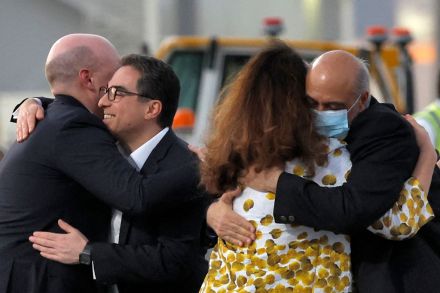
The truth about the US-Iran prisoner deal

Negotiating with Iran can be the diplomatic equivalent of a day-long migraine. While Iran policy often strikes a chord in Washington, DC, people across the political spectrum come together on this basic proposition: the Iranians are some of the best hagglers on the planet. Wendy Sherman, a career US diplomat who played a major part in negotiating the now-defunct Iran nuclear deal, referred to the Iranians as legendary for their skill at the bargaining table. Donald Trump alluded to their skill, too: “[T]]he Iranians, frankly, are great negotiators,” he said in 2016. And former ambassador (and now CIA Director) William Burns commented the same year, “The Iranians are very skilled negotiators, very tough.

Kamikaze drones are the future of warfare

From our UK edition

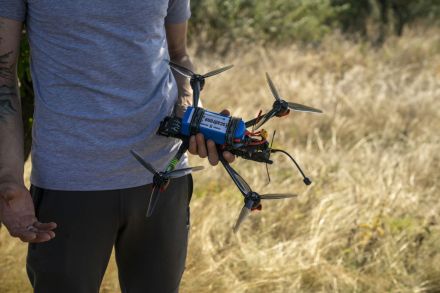
The West is struggling to confront the modern military technologies of Russia, Iran and China. A year and a half of the war in Ukraine has proved it. Iran has exported cheap Shahed-136 kamikaze drones to Russia, and they have been used to terrorise Ukrainians. Putin appears ready to invest further in procuring thousands more. Sir Tony Radakin, chief of the defence staff, said this week that, in response, the British Army wants to create regiments of kamikaze drone pilots. He's right to do so. Iran’s drones are cheap to make, estimates say around £15,000 each, but the air defences needed to shoot them down are far more expensive.

An exposé of drug smuggling and terrorism reads like a first-rate thriller

From our UK edition

The crucial moment in this vivid exposé of the murky world of transnational crime comes in 2015. Mustafa Badreddine, one of two Lebanese Shia cousins who for three decades had led the deadliest Iranian-linked terrorist network in the Middle East, was finally indicted by a UN special tribunal investigating the assassination of the Lebanese prime minister Rafic Hariri a decade earlier. After an extraordinary career of mayhem, Badreddine had spent the previous three years leading an elite Hezbollah militia shoring up President Bashar al-Assad’s regime. But the tide had turned, and in July 2015 Qasem Soleimani, the commander of the Iranian Quds force in Syria, secretly flew to Moscow to beg for Russian military support.

The hijab is not a feminist symbol

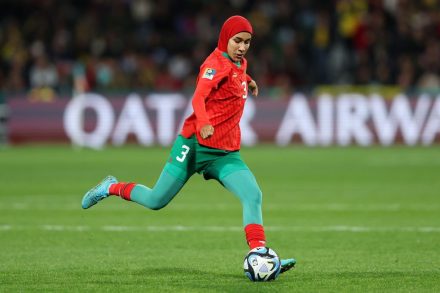
The Women’s World Cup has tied a bow around a summer of own goals in feminist ideology. Barbie — yes, that plastic blonde with impossible proportions — became the feminist icon of the summer, trans women silenced the voices of biological females and the story of Lia Thomas’s prowess remains etched in our minds. But for the grand finale of this summer's theater of the absurd? White Western women elevating the hijab onto the pedestal of feminist glory. For those who may not know, the hijab is a religious headscarf traditionally worn by Muslim women. While the practice dates as far back as the fourth century AD, the popularity of the hijab is actually quite new, with a stark rise beginning in just the 1970s.

hijab

The immigrant’s experience of Europe

From our UK edition

Meet Ibrahim, from Syria. He fled Aleppo just before the bombs began to fall. A clean $4,000 in cash to a smuggler got him a fake passport and, voilà, a ticket to Europe – briefly in Greece, then in Germany (‘the people, they looked different’), now in Spain. Immigrant life was tough at first: the strange language, the alien norms, the overt racism. ‘He was not on their level. Just a refugee.’ Then a lucky break. He starred in a homemade porn video that went viral: ‘100 per cent real Arab bull.’ Next, he’s earning close to a seven-figure salary, owns a flash car and has women dripping off his arm. In Ben Judah’s illuminating depiction of modern-day Europe, almost everyone has a dream.

Will Biden make the same mistakes as Obama on Iran?

The Biden administration seems to be bumbling on all diplomatic fronts these days. Not only is it trying to magic into existence a thaw in the US-China relationship, while Beijing is only throwing on the liquid nitrogen, but it's also trying to resurrect a version of the nuclear deal with Iran. Concrete details are scant, but reporting from both the New York Times and the Wall Street Journal gives a decent sketch of what the White House is contemplating. It’s not pretty. Under the outlines of the agreement, the US would “avoid tightening sanctions,” stop impounding Iranian ships and release billions in cash currently frozen by US sanctions for humanitarian applications.

Iran islamic republic

Making a home through food

At the age of sixteen, chef and restaurateur Forough Vakili, now forty, left Iran to meet a brother she barely knew, eventually settling in America. She didn’t return for eleven years. As a member of the minority Baháʼí faith, which teaches the value of all people, regardless of gender or religion, Vakili had hit a wall in her homeland. “I came here so I could continue my education,” she says, when we speak over Zoom. “We didn’t have many rights back in Iran — there wasn’t a lot offered for us after finishing high school.” It was in Vienna, waiting for her American visa, that Vakili reconnected with her brother for the first time since she was a toddler. Six months later she moved in with him, his wife and three daughters in Atlanta.

Vakili
syria peace

After decades of waiting, China goes on the diplomatic offensive

China has been an epicenter of diplomacy over the last month and American officials can’t help but take notice of the shift. Statesmen flying to China, hat in hand, to sign business deals with Chinese firms or enlist Chinese diplomats to assist in solving international disputes gives the foreign policy graybeards ulcers. The general rule seems to be: what’s good for China is bad for the United States. There’s no question that China’s Xi Jinping has had a good few weeks. After being occupied with a nationwide Covid-19 disaster that lasted for three years, Xi, a man whose entire legacy depends on China transforming into a superpower on par with or perhaps even surpassing the US, isn’t wasting any time before injecting his country back into the diplomatic arena.

In defense of America the arms dealer

As the world enters a new era of great power competition, countries are arming themselves at a rate unseen since the end of the Cold War. The war in Ukraine, China’s increasing belligerence and angst over rogue states like Iran and North Korea are driving defense spending and weapons purchases the world over. Amid all this, the United States does not have the luxury of being too picky as to who among its friends gets the weapons they need to defend themselves. Nor can Washington continue to avoid drastic reforms to its arms export controls to face the challenges of the twenty-first century. Standards are necessary — they are what should set America apart — but they must not become so onerous that the security of the US and its partners suffer.

Can we brainwash our enemies?

From our UK edition

Disinformation is on the rise, and Britain’s spies are on the back foot. Our intelligence leaders warn about election meddling, and our enemies are trying to undermine public trust in our national institutions. The United Kingdom needs to use covert means to disrupt anti-British activities at their source. That’s what Harold Macmillan said in the 1950s, shortly before becoming prime minister. Over half a century later, in 2017, the Chief of MI6 made the same point: adversaries should be ‘playing in their half of the pitch not ours.’ And half a decade on from that, here we are again. This week’s intriguing peek into the secretive work of the National Cyber Force conjures the old saying: the more things change, the more they stay the same.

It’s time for Congress to take back its war powers

On March 29, more than twenty years after the United States commenced Operation Shock and Awe in Baghdad, the Senate made history by repealing the military force authorization that green-lit the operation. The bill, which also aims to kill a previous 1991 authorization for the use of military force, or AUMF, against Iraq during the Gulf War, now heads to the House of Representatives where it faces an uncertain future.  On the face of it, repealing both measures would seem like an ordinary event. Saddam Hussein, after all, has been dead for over sixteen years, hanged by an Iraqi court for a litany of crimes against his own people. His regime dissolved within three weeks of the 2003 invasion.

state of the union

The Middle East catches diplomacy fever

Peace isn’t exactly blossoming like rosebuds in the Middle East. The region is still host to a devastating civil war in Yemen, a humanitarian crisis in Syria, sporadic terrorist attacks in Iraq and an endless tit-for-tat between the US and Iranian-backed militias in Iraq and Syria. Indeed, just last night, President Biden authorized several airstrikes against three militia locations in retaliation for a drone attack on an American base in Syria that killed one contractor and injured six others. But for an area of the world so often regarded as hopeless, the Middle East is suddenly looking like an epicenter of diplomacy.

syria peace