Marc Oestreich

The joy of Jell-O

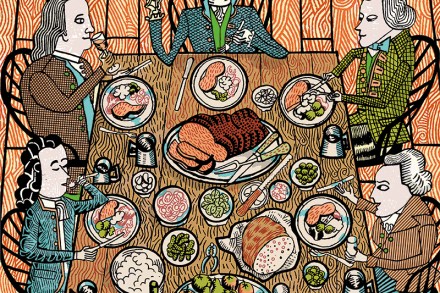
My grandmother lived on a Christmas tree farm in Indiana. December weekends meant hauling evergreens, pulling needles from our socks and pretending I was far more help than hindrance. But the real event – the thing the whole month orbited – was Christmas Day dinner: the good china, the stiff grace and the quiet family rule that no one under 20 offered up an opinion unless asked. The table was a study in American aspiration: a ham glossy with cloves, wassail steaming on the hob, potatoes whipped into obedient fluff, canned cranberry sauce still bearing its aluminum-molded rings… and always, inevitably, the Jell-O. There were several, because my family believed in abundance, even when the abundance quivered. Aunt Deb and Uncle Fritz arrived with their famed Jell-O eggs.

Beneath the foam of the Pisco Sour cocktail lies a border feud

The Pisco Sour is poured by Maria, my business partner’s wife and the quiet boss of a small empire of bars and restaurants. It is served in the living room, the windows cracked open, friends drifting in and out, the kids out of school. It has rained and something in the air has lifted. Then comes the coupe glass: perfectly chilled, capped in silken foam, dots of bitters shaped like a closing parenthesis. I’ve had Pisco Sours before. But this one makes sense. In Peru, the drink is practically sacred, served at protests and presidential inaugurations alike The ingredients shouldn’t work – harsh grape brandy, raw citrus, egg – but in the glass, they harmonize. Chocolate at the edge, grape in the middle, something like spring itself underneath.

pisco sour

Is Shiloh Hendrix the new Luigi Mangione?

When a white mom called a black kid the N-word the immediate expectation was that she’d be canceled, possibly arrested. It was not that just a few days later she would have $700,000 in the bank.Shiloh Hendrix accused a five-year-old Somali boy of rummaging through her diaper bag in Rochester, Minnesota, last week. “Did you call that child the N-word,” a man who filmed her asked. “Yeah,” Shiloh snarled back, “if he’s gonna act like one.”She didn’t back off. She repeated the accusation, then turned on the man filming her with a string of insults. The video quickly went viral. But Shiloh didn’t follow the usual playbook of hunkering down to weather the online storm. She fought back. On GiveSendGo, Shiloh painted herself as the victim.

shiloh hendrix

Will & Harper is a road trip into self-obsession

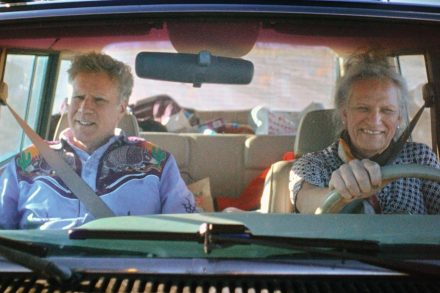
I’ll be upfront: I’m skeptical of the trans movement. Not the individuals within it, but the broader cultural shift that prioritizes feelings over facts and subjectivity over objective reality. Yet, despite my reservations, I have deep empathy for those grappling with identity confusion — an experience that must be profoundly disorienting. My concern is that we’re accelerating this confusion by feeding a culture obsessed with validation. So, when I sat down to watch Will & Harper, I hoped, perhaps naively, that this film might grapple with these, my own very real questions, in a meaningful way. It doesn’t. What I found instead was a film that falls short as cinema and even shorter as a piece of prop art.

will & harper
museum

The death of the American museum

It starts with the promise of skipping school — always an illicit thrill at nine years old. My son and I, seasoned truants, hop the early train to downtown Chicago for what I’ve convinced him is a real education. The day’s agenda: two of the city’s iconic museums — grand, intimidating and, up until recently, somewhat sacred. These sprawling neoclassical behemoths, both originally constructed for the 1893 World’s Columbian Exposition, dot the waterfront like ancient ruins. They once felt like temples to knowledge, where wonder and learning collided, where static displays ignited curiosity. But as we step inside, I can’t shake the feeling that maybe, just maybe, their magic has faded. Can museums as we know them survive my lifetime?

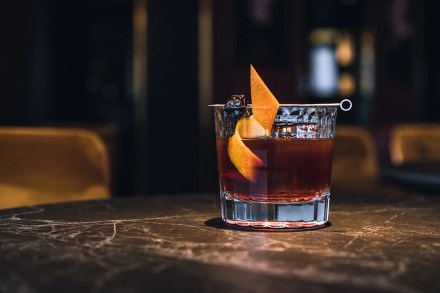
A sip of the Vieux Carré

It’s 1951 and the Hotel Monteleone burns bright, a gilded island of light and liquor adrift in the New Orleans dark. Inside, the air is thick with the sweet tang of cigar smoke and the murmurs of polished conversation. Over in the Swan Room, the trumpets blare, their brassy notes cutting through the gentle chatter, their absence filled with the lively, gravelly voice of Louis Prima. The crowd sways in rhythm, caught between the pulse of jazz and the flicker of chandelier light. Outside, the French Quarter is still alive.

Vieux Carré

The academic legacy of Donald J. Harris

Kamala Harris is a master shapeshifter — whether through codeswitching, pandering or just being phony. One moment she’s rolling up masala dosa with Mindy Kaling on live TV; the next she’s FaceTiming the BET Awards, declaring, “Girl, I’m out here in these streets.” Donald Trump’s bumbling attempts to highlight her cultural inconsistencies briefly shifted the election focus to Harris’s race and ethnicity — and away from far more important qualities. Perhaps it’s because her actual policy ideas have been so scant and vague that attacking them directly has proven difficult. Perhaps her chameleonic history has made anything beyond a surface-level attack difficult.

harris

Are we losing the American dad?

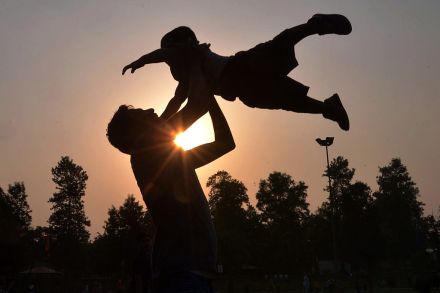
Over the past weeks, a cadre of young men has spent their days marching across the quad, demanding an end to a justifiable, nay honorable, Israeli war on amoral terrorists. An overlapping segment has donned their rainbow buttons and profile-art propaganda to honor the sexual proclivities of their fellow man. They scream borrowed sentiments in all caps, tapped self-righteously into the iPhones their parents have surely furnished. They take over streets and public spaces, inconveniencing the world around them. Their posters, wearing whatever slogan trends on social media, may as well say, “Look at me, world… but let me put the right filter on first.” These are the men of their generation. These are the next generation of American fathers.

father dad

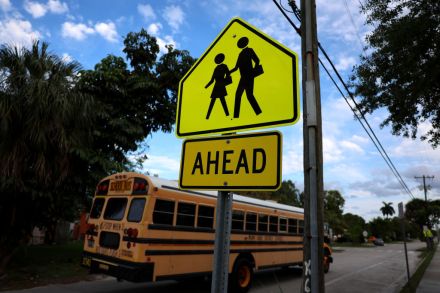
Why can’t America produce proficient teachers?

“Record drops in teen math and reading scores.” “National Math, Reading Scores Hit Historic Lows.” “Test Scores Flashing Red!” The headlines roll in weekly, each more alarming than the last. In February, twenty-six schools in Baltimore failed to bring a single student up to the most basic math requirements. The same month, sixty-seven schools in Illinois couldn’t produce a single proficient reader. We’ve reached a national education crisis, and its roots run deeper than many are willing to admit. The pressing question is: why can’t America produce proficient students? But perhaps a more crucial question is: why can’t America produce proficient teachers?

teachers teaching

Want student loan forgiveness? Make universities pay

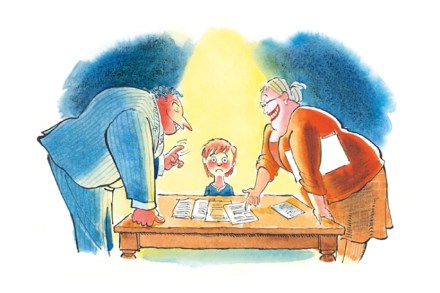
At the turn of the twentieth century, Saturday Evening Post editor and Yale dropout George Lorimer bitingly summed up academia when he said “colleges don’t make fools, they only develop them.” On the heels of yet another multibillion-dollar Biden administration college bailout, it seems we haven’t learned the lesson: colleges might not make fools, but they’re certainly trying to make fools of us. The bailout projects come from a Biden campaign promise: “I will eliminate your student debt.” Half-slogan, half-bribe, this resonated with millions burdened by the unpayable debt brought on by liberal arts degrees that may barely be worth the paper they’re printed on.

debt

New Buffalo’s Bentwood Tavern is an unapologetically tasteful beach town bar

Near the lake in the quaint beach town of New Buffalo, a rotating sign carries the silhouette of a shaggy mutt. A line forms near the door for the boring beachy fare, churned out at factory pace. The souvenir hoodies are out the door as fast as they can print them; the Stray Dog has become a destination in itself. I’ve seen their signature motto — Sit! Stay! — everywhere from Santa Barbara to Brooklyn. You probably have too. And don’t get me wrong, the Stray Dog is great at being what it is: the quintessential beach-town bar. But I prefer it here, half a mile south, in the uncelebrated version of a beach-town bar. There’s no merch store, no zany southwest eggrolls, no Jägermeister dispenser, no television. Just ten velvety bar stools and endless respite.

Bentwood

The Oaxaca old fashioned, America’s spirited new classic 

The sun is ebbing, casting a wash of orange and gold on a city inching towards autumn. There’s that tinge in the air — the crisp, promising whiff of cooler days. Inside, the curtains dance with the gentle wind as the melodious clash of helmets and cheers from the first weekends of football beckon. This isn’t any evening; it’s a bridge between seasons. It deserves an ample companion; a drink that blends seasons, cultures, flavors with the same seamlessness as summer memories fade into autumn anticipation. Tonight, it’s the Oaxaca old fashioned.  Ah, the old fashioned. The name says it all, doesn't it? It harks back to a time of simplicity, of elegance. Of not making a song and dance about, well, a drink.

old fashioned

Inside Biden’s plan to regulate the open internet

The sun sets slowly over rural Indiana. In a quaint, sunlit kitchen, a concerned family gathers around a laptop. The pixelated face of a doctor fills the screen, her voice crackling with urgency. She’s discussing critical, life-saving interventions for the family’s patriarch, the victim of a recent, unexpected stroke. As she tries to explain the diagnosis, the video starts buffering, the voice breaks up and the screen freezes. Why was the internet struggling? Dissuaded by an onerous regulatory environment, investors wouldn’t take a risk on rural infrastructure projects. Lacking incentives to develop new technologies, the local providers fell behind the curve.

biden plan regulate open internet

Four bold but real predictions for public schools this year

Last year’s report card for public schools? A resounding “must do better.” Trans athletes ruined competitive sports, the 1619 Project rewrote American History class and non-gendered bathrooms received their first human litter boxes.  As the final school bells rang on the 2023-23 school year for many Americans, popular opinion of our public schools plummeted. One Gallup poll showed just a quarter of Americans now have either a “great deal” or “fair amount” of confidence in public schooling. That represents a stark downward trend from around 1975 when more than 60 percent were confident in what schools were offering our youngsters. While trust tanked and academics atrophied, spending on education has climbed in direct inverse.

schools

The hijab is not a feminist symbol

The Women’s World Cup has tied a bow around a summer of own goals in feminist ideology. Barbie — yes, that plastic blonde with impossible proportions — became the feminist icon of the summer, trans women silenced the voices of biological females and the story of Lia Thomas’s prowess remains etched in our minds. But for the grand finale of this summer's theater of the absurd? White Western women elevating the hijab onto the pedestal of feminist glory. For those who may not know, the hijab is a religious headscarf traditionally worn by Muslim women. While the practice dates as far back as the fourth century AD, the popularity of the hijab is actually quite new, with a stark rise beginning in just the 1970s.

hijab

Disney’s transgender tampon experts

I should have known when the Disney+ logo splashed across the screen. The last time I saw it, what followed was an impassable disclaimer warning me of the microaggressions I might endure watching a pair of Asian cats. I should have known when we landed again in San Fransokyo — the setting of Disney’s Big Hero 6 and new spinoff, Baymax! — and the cast looked like bad stock art from the Oberlin College DEI handbook. I should have known. But, there I was, two sick kids (two and six) running 102-degree fevers, upset and crying, nestled on either side of me on the couch. We just needed a break. Something wholesome; simple; happy. This was Disney’s sweet spot. Earlier this month Disney+ reported reaching 221.

baymax disney

How Education Week controls the classroom

Once upon a time, at a little Indiana community college, I was on my way to becoming a high-school teacher — or so I thought. What I didn’t know was that our training was a form of brainwashing intended to enlist my fellow teachers and me for a political program. Our key text was a political operation masquerading as a trade publication: Education Week. At teaching college we were pushed to subscribe to EdWeek. Its headlines seemed tame and innocuous. For every story on Obama’s wonderful education policy, there were ten fluff pieces about blue-ribbon teachers, or profiles of decidedly overpriced new tech that could be requisitioned and tossed aside in just a few years.

edweek