Iran

Israel was right to ignore the West

From our UK edition

There are sources in the Jewish tradition that warn against exultation at the downfall of one’s enemies. But I am not Jewish, and so I have exulted greatly these past two weeks. If you follow most of the British media, you may well think that the past year involves the following events: Israel attacked Hamas, Israel invaded Lebanon, Israel bombed Yemen. Oh and someone left a bomb in a room in Tehran that killed the peaceful Palestinian leader Ismail Haniyeh. Kamala Harris warned that the IDF shouldn’t go into Rafah. As she wisely said: ‘I’ve studied the maps’ Of course all this is an absolute inversion of the truth. Hamas invaded Israel, so Israel attacked Hamas.
Iran attacks Israel: what does it mean and what happens next?

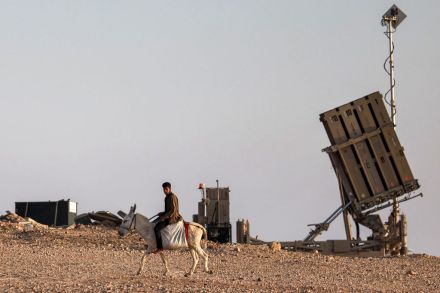
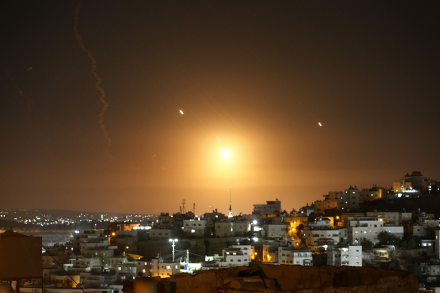
A few hours before Iran launched missiles at Israel, America’s spy satellite saw Iran moving the weapons onto their launching pads. They told Israel (and leaked to the media) that an attack was “imminent.” They were right. Within hours, several hundred Iranian missiles were flying toward the Jewish State, just as they had in April. The earlier attack caused little damage — most of the missiles were intercepted — and early reports are that the recent attack met the same fate. Israel’s success shooting down the missiles is crucial, not only because it saved lives but because it does not require Israel to launch a full-scale counter-attack. Safety from the missiles did not protect all Israelis, though.

With Israel, the US is caught in a world of contradictions

Ever since a 2,000-pound bomb demolished Hezbollah’s headquarters in Southern Beirut last Friday and killed Hassan Nasrallah, the leader of the organization since 1992, there was an expectation among the commentariat that Iran would retaliate. The scope of that response, however, was very much in dispute. The Iranian government was reportedly divided about whether to respond at all, with the newly-elected president, Masoud Pezeshkian, taking the position that an attack against Israel would likely ruin his foreign policy agenda — he offered the West the thinnest of olive branches during his time in New York for the UN General Assembly meetings — and give the Israeli government an excuse to strike inside Iranian borders.

Is Israel trying to drag America into a war with Iran?

From our UK edition

The American general David Petraeus famously asked of the invasion of Iraq: ‘Tell me how this ends.’ That’s the question as Israeli bombs and missiles fall on Lebanon and the few missiles Hezbollah has sent in response are intercepted. Iran’s ‘axis of resistance’ seems paralysed with indecision. Does Benjamin Netanyahu take this as a win, the vindication of the enormous chance he took by opening a new northern front? Or, like a gambler intoxicated by success at the tables, does he press on? More airstrikes, followed by an invasion of Lebanon… and then the bombers fly on to Iran?  Some Israelis commentators are already calling this the Third Lebanon War (after the wars of 1982-2000 and 2006).

Inside the unlikely success of Patrick Bet-David

A right turn off Montauk Highway onto a leafy street in the Hamptons town of Water Mill brings you to a wooden gate, behind which sits a 12,000-square foot modernist estate that rents, with staff, for $75,000 a week. At the moment it’s the vacation home of Patrick Bet-David, an unlikely character to find in this area of New York. Over the last two years, Bet-David has improbably emerged as one of the most prominent voices in right-wing media. His prodigious influence is belied by the fact that around here, he’s more undercover heretic than acclaimed celebrity.

Bet-David

Iran and Hezbollah don’t want a war with Israel

From our UK edition

Hezbollah’s response to the killing of senior official Fuad Shukr, when it finally came, was a more minor event than anticipated. For weeks, both the Lebanese Shia Islamist group and its Iranian patron have been threatening a terrible revenge for the recent assassinations in Beirut and Tehran. It is now clear, however, that neither Hezbollah or Iran wishes to risk a descent to all put war at the present time. Iran appears to have relegated its response to the killing of Hamas leader Ismail Haniyeh in Tehran to some point in the future. Hezbollah, meanwhile, sought to target two sites of high significance – the Mossad headquarters, and the HQ of the IDF’s signals intelligence unit, 8200. Both are located close to Herzliya, north of Tel Aviv, in central Israel.

A brief history of parties

As Enoch Powell pointed out, “all political careers end in failure.” More often than not, those failures are self-inflicted. Without Partygate, for example, Boris Johnson might still be Britain’s prime minister. Although the debacle may not have been the final nail in his professional coffin, it certainly arranged the wake. His fans and critics alike were infuriated by the idea of public servants living it up while the rest of the nation was locked down during Covid in May 2020. That sort of scandal, however, is nothing new — anger at Partygate is nothing to some earlier episodes in history. Alexander the Great was an Olympian boozer who habitually went on weeklong binges after subjugating his enemies.

history

‘I came here to escape radical Islam’: the asylum seekers who understand the rioters’ fears

From our UK edition

Sousou is a 24-year-old Syrian-Palestinian woman who arrived in Britain a few weeks ago in a rubber dinghy from Calais. Her husband was also on the boat, along with 70 other men and women. Sousou was (and is) pregnant and the passengers all nearly drowned – as her aunt had done on a previous crossing attempt. There were too many people on board and the overloaded dinghy began to take in water. Sousou and her husband were rescued by the British coastguard and for a while they felt safe – until the riots began. Now, after things seem to have quietened down, she talks to me from a hotel in south London. ‘I was scared. I was watching it all on the news,’ she says.

The new alliances dedicated to destroying democracy

From our UK edition

After staging a failed coup and going to prison, the Venezuelan army officer Hugo Chavez ran to be president in 1998, campaigning against corruption and offering revolutionary change. His nation was seen as a prosperous beacon of stability, built on its great oil wealth, envied by many people elsewhere in the region. He won by promising to tackle the inequality that scarred it so badly and take on the oligarchs enriching themselves through favours and nepotism. Western celebrities, journalists and politicians, from Sean Penn through to Jeremy Corbyn, started flocking to South America to hail their new progressive hero supposedly fighting for social justice.

Anti-Semitism has returned to French politics

From our UK edition

New Caledonia is an archipelago in the South Pacific not far from Australia. James Cook discovered it in 1774, but, after concluding that too many languages were spoken there, he declined to annex it to the British Empire. France, not as cautious, made it a distant colony under Napoleon III. Today, riots are convulsing the territory. Supposedly ‘decolonial’ in aim, they are most certainly violent and fuelled by the anti-white racism that, from London to Brussels and Paris, has become the trademark of the new radical left. The strangest thing is that among the flags of the Kanak independence movement, one also sees Azeri flags. Why Azeri?

Who has the worst voice in parliament?

From our UK edition

For the first time in more than two decades we are dog-less, and the house feels horribly empty. Our Patterdale terrier, Bonnie, led a long, vigorous life but her balance had gone and her breathing was heavy, so we called the vet. Patterdales are little imps and Bonnie was ‘known to the police’. I never discussed politics with her but she liked Lib Dems; that is, she liked biting them. A public footpath bisects our garden. Most ramblers escaped intact but Bonnie had a habit of nipping tall, grey-ponytailed men with walking poles. She nipped the vicar, too, tearing a cartoon-style square out of the seat of his chinos. The language! Despite that, we remain hopeful Bonnie is in doggy heaven. ‘St Peter won’t know what’s hit him,’ said my wife.

Is Venezuela preparing for war?

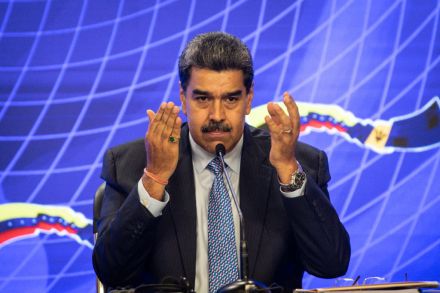
Earlier this month, two American supersonic fighter jets flew over Georgetown, the capital city of Guyana. The US show of force is not only for the attention of Venezuela’s socialist regime who has been escalating toward a military conflict with its smaller neighbor since at least September 2023 when Nicolás Maduro returned from Beijing. The message of sending two F/A-18 Super Hornets flying from a nuclear-powered aircraft carrier sailing in the Caribbean Sea is also for the Islamic Republic of Iran. At first glance, the Venezuela-Guyana conflict is about a century-old border dispute of a dense territory called the Esequibo that makes up two-thirds of Guyana’s land mass but only 15 percent of its population.

nicolas maduro venezuela

Will Iran’s foreign policy change after Raisi’s death?

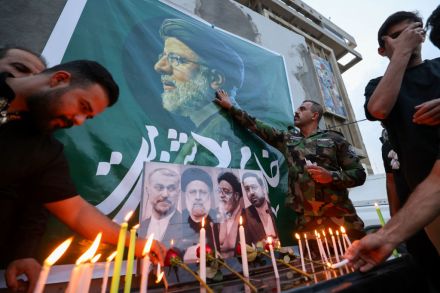
Ebrahim Raisi, the hardliner jurist-turned-president of the Islamic Republic of Iran, died in a plane crash over the weekend after coming back from a ceremony marking a new joint dam project with Azerbaijan. Iranian foreign minister Hossein Amir-Abdollahian, who was also on board, perished in the crash as well.  Few Iranians outside the political system will mourn their deaths. Raisi, for instance, was a notorious, unapologetic defender of the Iranian regime and first got involved in its machinations in his mid-twenties. In 1988, he served on a panel that handed down death sentences for thousands of dissidents.

iran ebrahim raisi

Gangs of Tehran: how Iran takes out its enemies abroad

From our UK edition

‘It was Friday afternoon, around 2.45. I came out of the house and was going towards the car on the driver’s side,’ Pouria Zeraati says casually. Zeraati – a presenter at the London-based TV station, Iran International – is recounting what was probably an Iranian state-sponsored attack. ‘I was approached by a man who pretended to be someone asking for £3. The second man then approached. They held me strong, very firmly, and the first person stabbed me in my leg.’ The Iranian regime is reshaping the murder-for-hire market in the US and parts of Europe Zeraati is talking on his first day back at work since he was knifed on Good Friday in Wimbledon. It’s still too painful for him to sit down, so we’re standing for our conversation.

The ayatollah’s birthday surprise

Did Iran’s ayatollah have the worst birthday ever? His eighty-fifth kicked off with a bang, as Israel retaliated after Iran’s unprecedented strike across the Jewish state that featured a failed barrage of lethal drones over the weekend. What comes next from Iran remains anyone’s guess — but the Israeli response, which struck an Iranian military but not nuclear site, served as an undoubted shot across the bow to the largest state sponsor of terrorism. The message was that it can’t attempt to directly attack Israel’s homeland without consequences and that Israel has the capability to attack Iran’s nukes if they so please. Iranian proxies, like Hamas, not only invaded Israel on October 7, but have been plaguing global shipping routes for months.

Inside the new Arab-Israeli alliance

From our UK edition

As Jordanian fighter jets shot down Iranian drones heading for Israel on Saturday night, there were joyful cries of Allahu Akbar on the ground as some people lent out of their windows to cheer the drones they thought were getting through. King Abdullah II was depicted on social media wearing an Israeli military uniform complete with the Star of David and he must dearly wish that Israelis would shut up about their ‘new strategic alliance’ with old enemies like Jordan, Egypt and Saudi Arabia. Jordan’s foreign minister was forced into an unconvincing declaration that they would shoot down anyone’s drones, not just Iran’s. Yet, the important fact remains: this is the first time, as far as anyone can remember, that Jordan’s armed forces have fought to defend Israel.

My letter from Chris Packham

From our UK edition

I do not know Chris Packham, the BBC nature broadcaster, personally, but he wrote me a letter last month, enclosing a book called Manifesto, The Battle for Green Britain by Dale Vince which, he tells me, ‘has something very important to say at this most important time’. In his letter, Chris says that ‘irrespective of any party politics’, ‘The coming election will be the most important of our lifetimes’ because we are ‘halfway through the last decade’ left to avoid ‘the worst of climate breakdown’. So ‘we must help young voters navigate the new voting rules’. Politics has ‘become the final frontier for a real greener Britain’. What Chris does not mention is that party politics is very important in this most important book.

The Lebanese always return home

From our UK edition

Beirut You might have thought that the threat of the Gaza war spiralling into an all-out regional conflagration, along with breathless travel advice from western governments urging their nationals to leave the country, would have deterred Lebanon’s expats from flying home to celebrate Eid al-Fitr this year. Not one bit. Flights, hotels and restaurants were fully booked despite Iran’s drone strike. The Lebanese know that even if there is fighting (and in South Lebanon, there is on an almost daily basis), if it isn’t on your doorstep, there’s no reason to stop the party. The Lebanese know that even if there is fighting, if it isn’t on your doorstep, there’s no reason to stop the party In any case, the Lebanese always think they have the inside track.

What Iran’s attack on Israel means for the Jewish state, America and the region 

Iran’s unprecedented attack on Israel Saturday night represents a dangerous escalation for three reasons. The first is its scale, some 300 drones and missiles. Second, it marks the first time the Islamic Regime has launched a lethal attack on Israeli territory from Iran itself, rather than through proxies. Most important of all is the combination of the first two: a major attack launched against Israel from Iranian territory. Although Israel, the US, the UK and, surprisingly, Jordan managed to shoot down nearly all the incoming drones and missiles, it was the thought that counts. And it was a very dangerous thought. Within hours, the Iranian attack changed the region’s strategic landscape.

israel iran

On the anniversary of the Iraq invasion, spare us the sermons

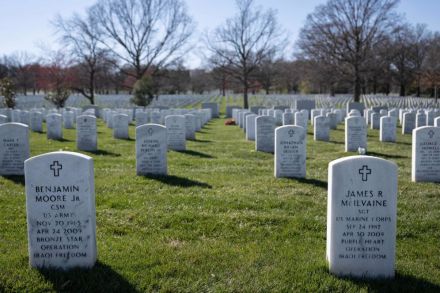
Twenty-one years ago today, the United States committed its worst foreign-policy mistake in generations: invading Iraq to overthrow Saddam Hussein, the despot who ruled the Arab country with an iron fist for nearly a quarter-century. The entire operation was supposed to be a “cakewalk,” in which the mighty US military, stocked with the best technology and weapons the world had to offer, would pummel a decrepit Iraqi army that was hobbled by international sanctions for the better part of a decade. The mood at the time was serious but stoic. Donald Rumsfeld, the US defense secretary, argued that the entire war wouldn’t last more than five months.

iraq war