Seth J. Frantzman

Seth Frantzman is the author of Drone Wars: Pioneers, Killing Machine, Artificial Intelligence and the Battle for the Future (Bombardier 2021) and an adjunct fellow at The Foundation for Defense of Democracies.

Has Iran’s drone threat peaked?

From our UK edition

In response to the US and Israeli attacks on Iran, Tehran has unleashed more than 1,500 drones on countries across the region, including the United Arab Emirates, Iraq, Bahrain, Saudi Arabia and Azerbaijan. But as the drone threat grows, so too do the region’s defences against these threats. As a result, it’s more than possible Iran’s drone war has now peaked. On March 6, the United Arab Emirates published data on drone attacks from Iran. Abu Dhabi said it had detected 1,184 drones in total and 1,110 had been intercepted – a rate of around 93 per cent. The interception rate seems to be increasing. On March 6, the interception rate was 97 per cent for the 112 drones detected that day. On Sunday, only 18 drones were detected and 17 were intercepted.
Have Iran’s kamikaze drones become redundant?

From our UK edition

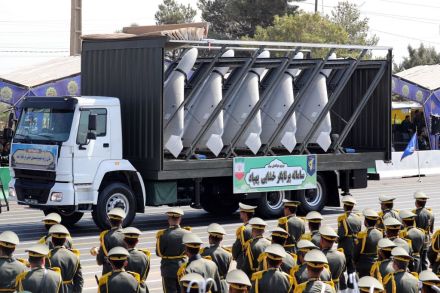
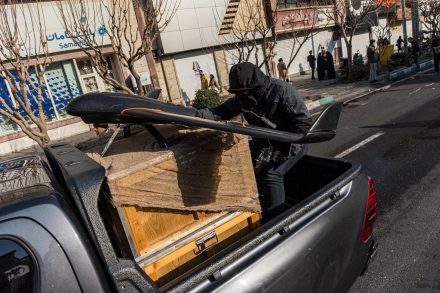
Over the last decade Iran has built up an impressive arsenal of kamikaze drones which can slam into targets more than 2,000 km away. Iran thought that in war it would be able to use these drones for massed attacks, and when Israel attacked Iran in the early hours of June 13, Tehran duly responded by launching its drone army. Yet so far its drones have been unable to terrorise Israel. By June 15, the Israel Defence Forces said they had intercepted more than 100. It seemed like drones would be to warfare what the torpedo bomber was to ships at Pearl Harbor While Iranian ballistic missiles may have penetrated Israel defences with deadly effect, so far the Israeli military has neutralised the drone threat almost entirely. This seems surprising.

What does – and doesn’t – make sense about Trump’s Gaza plan

From our UK edition

‘The US will take over the Gaza Strip – and we will do a job with it, too’, Donald Trump has said. He also stated that the US would ‘own’ it. Some aspects of his proposal make sense. For instance, he said that an increased US role would involve dismantling unexploded bombs and clearing out the rubble from the war. This, he argued, would enable Gaza to be transformed into an economic success. Instead of exporting war, Gaza would export peace. ‘Level the site and get rid of the destroyed buildings, level it out, create an economic development that will supply unlimited numbers of jobs and housing for the people of the area,’ Trump said.

Israel must finish Hamas off

From our UK edition

The death of Hamas leader Yahya Sinwar in a clash with Israeli troops could help transform Israel’s war efforts against Hamas in Gaza and Hezbollah in Lebanon. It has been a difficult year for Israel fighting this long war. Both groups have been aided by the Iranian regime, which has supplied them with weapons and backing. Iran has also been helping other terrorist groups and militias in Yemen, Iraq and Syria, its goal being to surround Israel with threats, and chip away at Israel’s defences. Drones have attacked from Iraq, ballistic missiles have been fired from Yemen, terrorists have crossed into Israel from Jordan. Today two terrorists tried to infiltrate Israel from Jordan’s Dead Sea area. They were killed in a clash with the IDF.

What Israel can learn from the battle for Mosul

From our UK edition

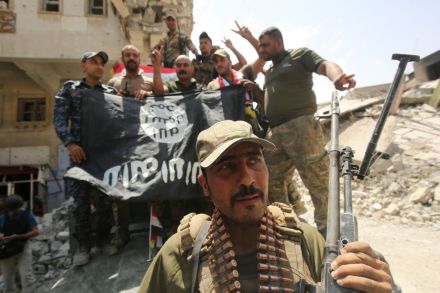
Israel’s fight against Hamas has been compared to the war against Isis between 2015 and 2019. That war was largely waged in Iraq and Syria, and one of the most important battles was the struggle to retake Mosul from the Islamists in 2017. The city and its outlying areas were home to two million people when Isis conquered it in the summer of 2014, and Isis had embedded itself within the local population. Around two million people live in Gaza today. It’s hard to distinguish Hamas from civilians. When the Iraqi offensive against Isis in Mosul began in October 2016, there were warnings about the threat to the civilians in the city.

There should be no ceasefire in Gaza

From our UK edition

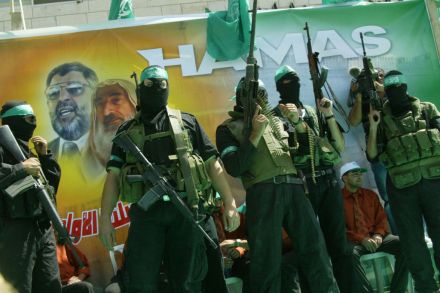
Joe Biden appears to be pushing for a ceasefire in Gaza between Israel and Hamas. 'My hope is that by next Monday we’ll have a ceasefire,' the US president said yesterday. Hamas has said the comments are ‘premature’ and Israeli sources have reportedly said prime minister Benjamin Netanyahu was surprised by Biden’s remarks. Pressure for a ceasefire would benefit Hamas, which has been demanding a stop in the fighting since mid-October after it attacked Israel and massacred 1,000 people and took 240 hostages. Hamas' approach in this latest conflict is nothing new: it has often sought to leverage the suffering of Gazan civilians, which it hides behind to fire rockets and build tunnels, to push for ceasefires after carrying out attacks. This has been Hamas' model for decades.

Has Israel learned the lessons of Ukraine’s war with Russia?

From our UK edition

Israel's ceasefire with Hamas – which has allowed for the release of dozens of hostages – looks set to continue. But make no mistake: this war is far from over. Israel's prime minister Benjamin Netanyahu has vowed to destroy Hamas, a mission that he will not back down from any time soon. The fight against an estimated 30,000 Hamas soldiers will be a long and difficult one. While Israel's firepower vastly outmatches that of Hamas, defeating an insurgent army will prove a difficult endeavour for the Israel Defence Forces (IDF). Israel could find itself in a situation comparable to Ukraine – another country with state-of-the-art weaponry that struggles to deliver a knock-out blow against its adversary.

To win, Israel must destroy the labyrinth of Hamas tunnels

From our UK edition

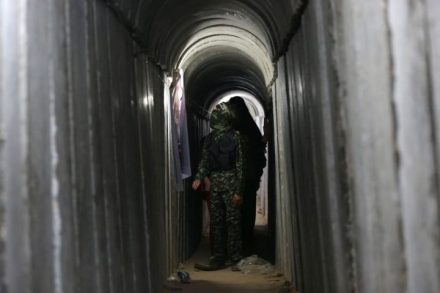
As Israeli forces continue to push into Gaza they face threats from Hamas terrorists who use a network of tunnels under the strip. This is referred to by Israel as a 'metro'. The tunnel network is extensive and exists under civilian homes and streets. In the brief ten-day war between Israel and Hamas in May 2021, Israel said it had struck 62 miles of these tunnels under Gaza. Today Hamas continues to use them. Israel’s Defense Minister Yoav Gallant spoke to IDF combat engineers this week and vowed that Israel has 'unique solutions' for destroying the tunnels and that Hamas members who remained in them would be eliminated.

Israel is trapped in a dilemma

From our UK edition

Hamas’s attack was designed to massacre as many civilians as possible, while also striking at Israeli military posts along the Gaza border. Hamas knew that 7 October was going to be the biggest attack in its history, even if it didn’t know that it would be able to lay waste to 20 border communities, causing 50,000 to evacuate and leading to the deaths of 1,300. As the war grows and Iranian-backed groups begin to threaten a wider conflict, it’s worth looking at what might come next. To understand that we need to know how Hamas got to this point and what are its plans for the region.

Israel faces a new kind of war

From our UK edition

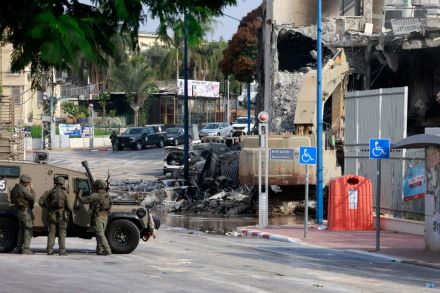
Israelis awoke to sirens on Saturday. They began after six in the morning on the border of Gaza as Hamas began to fire thousands of rockets at Israeli towns and cities. By eight o'clock the rocket fire had reached Jerusalem. By the evening the full extent of the massive attack had become clear. Over 5,000 missiles were fired as Hamas launched an unprecedented attack across the border, infiltrating a dozen communities and massacring civilians.   I drove down to the border of Gaza after hearing the sirens in the morning in Jerusalem. Israel's Iron Dome air defence system was active, intercepting rockets over my head. This is routine in Israel’s wars: the sound of sirens and the percussion of interceptions.

Kamikaze drones are the future of warfare

From our UK edition

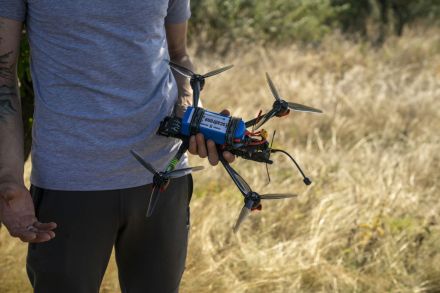
The West is struggling to confront the modern military technologies of Russia, Iran and China. A year and a half of the war in Ukraine has proved it. Iran has exported cheap Shahed-136 kamikaze drones to Russia, and they have been used to terrorise Ukrainians. Putin appears ready to invest further in procuring thousands more. Sir Tony Radakin, chief of the defence staff, said this week that, in response, the British Army wants to create regiments of kamikaze drone pilots. He's right to do so. Iran’s drones are cheap to make, estimates say around £15,000 each, but the air defences needed to shoot them down are far more expensive.

How Saudi Arabia reinvented itself

From our UK edition

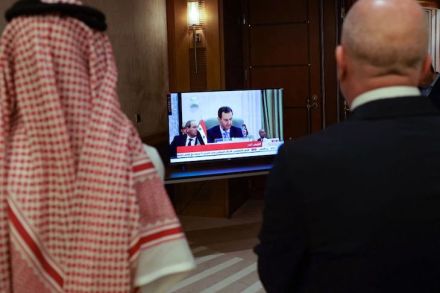
In mid-May, Saudi Arabia welcomed Syrian regime leader Bashar al-Assad to the Kingdom ahead of an important meeting of the Arab League. Ukraine’s Volodymyr Zelensky was also welcomed and invited to the League meeting. The two leaders visiting the country at the same time symbolise Saudi Arabia’s increased role in regional and global diplomacy. Helping to bring Syria’s regime in from the cold can be seen as Riyadh’s willingness to confront western consensus on Syria, while hosting the Ukrainian leader looks like a way to show that the Middle East can play a role in a key conflict reshaping the world today.  Saudi Arabia has reinvented itself in the last few years.

Ukraine has exposed the limits of drone warfare

From our UK edition

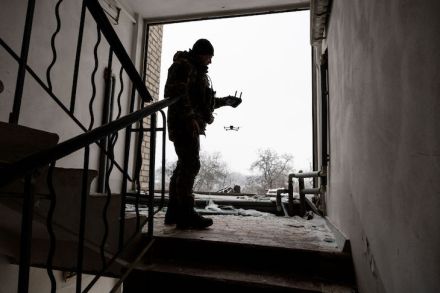
As Ukraine prepares for an expected offensive in the spring or summer, key weapons from western countries are bolstering the country’s armed forces. Among the war machines that are expected to make a major impact on the battlefield are Leopard Tanks and other armoured vehicles from the West. What isn’t getting many headlines today are drones for Ukraine. This is a major contrast from the early days of the war, when Ukrainian drones were heroes of the war effort. On the Russian side the reliance on Iranian-made kamikaze drones has also appeared to have diminishing returns for Moscow. The Ukraine war now illustrates the limits of a future dominated by drones on the battlefield.

Most-read 2022: The drone era has arrived

From our UK edition

We’re finishing the year by republishing our ten most popular articles from 2022. Here’s number six: Seth J. Frantzman’s piece from March about how Ukraine's use of drones changed the war against Russia. The Ukrainian airforce has so far held out in the battle for the skies. Russia continues to rely on missiles for deep strikes into Ukrainian territory while the defenders have been able to contest the airspace by employing drones. Ukraine has proven a turning point in the age of drone warfare. The first great drone superpower, the United States, used its unmanned aerial vehicles in places like Afghanistan where few fighters had the technology to shoot them down.

The drone era has arrived

From our UK edition

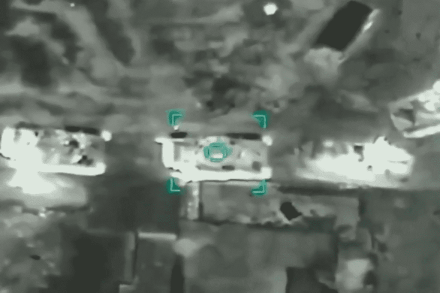
The Ukrainian airforce has so far held out in the battle for the skies. Russia continues to rely on missiles for deep strikes into Ukrainian territory while the defenders have been able to contest the airspace by employing drones. Ukraine has proven a turning point in the age of drone warfare. The first great drone superpower, the United States, used its unmanned aerial vehicles in places like Afghanistan where few fighters had the technology to shoot them down. But Ukraine isn’t primarily using drones to hunt people, loitering over targets for days; rather, it's using them to go after Russian armoured vehicles and supply columns. This seems like a strategy designed particularly for Russia.

Israel’s changing global fortunes

From our UK edition

Israel has been working closely with other countries and international companies, developing and producing vaccines against Covid-19. At the same time, the Middle Eastern country is rapidly improving relations with its Gulf neighbours, the latest evidence being the appointment of a new UAE ambassador to Israel. A major shift has taken place in Israel — 20 years ago the country was under siege from terrorists, with bus bombings rocking Jerusalem and terror attacks in the heart of Tel Aviv. Just a few years ago Israel was fighting a major war in Gaza against Hamas, a war that is the subject of an inquiry by the International Criminal Court. For many years Israel has attempted to re-brand itself using public diplomacy and showcasing its tech sector and vibrant society.

Israel’s vaccine passports could be a model for the world

From our UK edition

In early February I received my green-coloured vaccine certification for having two jabs in Jerusalem. Now Israel is rolling out a 'green passport' that should enable the vaccinated to return to semi-normal life. This could lead to freedom to travel and even entrance to places like gyms and shopping centres, while the unvaccinated will have fewer privileges. Israel has pioneered a mass vaccination program and Israeli Prime Minister Benjamin Netanyahu said in January: 'We will be able to open our economy quickly, the pubs, restaurants, gyms, schools, synagogues and theatres'. Today, Israel begins to roll out these green vaccination passports. Israel's path to providing the vaccinated with privileges has been a rollercoaster.

How Israel became a world leader in vaccination

From our UK edition

On a cold night three days before the end of the 2020 I drove down to Jerusalem’s Pais Arena. The area is usually a sports venue, next to Jerusalem’s stadium and mall, but in December it was transformed into a centre for mass vaccinations, open from morning till ten in the evening. By the first day of 2021 Israel had vaccinated more than 1 million people in two weeks, an unprecedented number, making the country a global leader in vaccinating against Covid-19. I was one of those who received the first jab of the Pfizer vaccine. Israel’s path to this milestone has been a rollercoaster of lockdowns and struggles over the last year. Back in February 2020 the country was on alert for the spread of the coronavirus.

View from the Golan Heights: Israel prepares to take on Hezbollah

From our UK edition

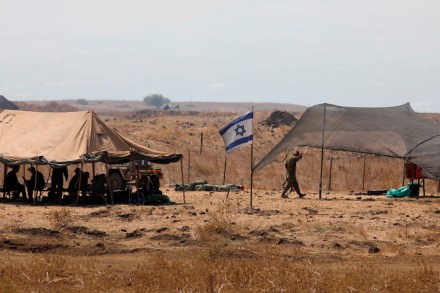
Ain Qana is a pretty pastoral village perched on a hillside in southern Lebanon. On 22 September a large explosion destroyed a building on the edge of the village. It was about 12 miles from the Israeli border. Reports indicated it was a munitions storage linked to Hezbollah, the Iranian-backed Lebanese terror group. Hezbollah is navigating a complicated time in Lebanon today. After Beirut's massive explosion in August, the organisation has come under scrutiny because of its illegal weapons stores across Lebanon. However, the Hezbollah also has members in parliament. In July it accused Israel of killing one of its members in Syria and vowed to respond. What was the Hezbollah member doing in Syria? He was part of the increasing presence of the group in Syria.

Ankara’s aggression has spurred a most unlikely pact

From our UK edition

The monumental accords being signed in Washington between Israel, the UAE and Bahrain represent a new era in Israeli peacemaking. These agreements are being signed with Gulf states and they are a result of shared interests. At the top of the list of Israeli concerns is the Iranian threat. But Turkey's increasingly aggressive stance in the Mediterranean and across the Middle East is easily overlooked as a catalyst for closer Israeli-UAE relations.  In the last year, Turkey has invaded parts of northern Syria, sent mercenaries to fight in Libya, launched a military operation in northern Iraq, and threatened Greece, Cyprus, Egypt and France.