Iran

Will Biden make the same mistakes as Obama on Iran?

The Biden administration seems to be bumbling on all diplomatic fronts these days. Not only is it trying to magic into existence a thaw in the US-China relationship, while Beijing is only throwing on the liquid nitrogen, but it's also trying to resurrect a version of the nuclear deal with Iran. Concrete details are scant, but reporting from both the New York Times and the Wall Street Journal gives a decent sketch of what the White House is contemplating. It’s not pretty. Under the outlines of the agreement, the US would “avoid tightening sanctions,” stop impounding Iranian ships and release billions in cash currently frozen by US sanctions for humanitarian applications.
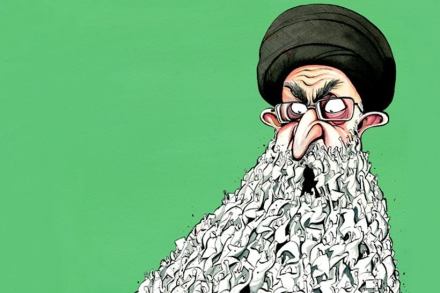

Iran islamic republic

Making a home through food

At the age of sixteen, chef and restaurateur Forough Vakili, now forty, left Iran to meet a brother she barely knew, eventually settling in America. She didn’t return for eleven years. As a member of the minority Baháʼí faith, which teaches the value of all people, regardless of gender or religion, Vakili had hit a wall in her homeland. “I came here so I could continue my education,” she says, when we speak over Zoom. “We didn’t have many rights back in Iran — there wasn’t a lot offered for us after finishing high school.” It was in Vienna, waiting for her American visa, that Vakili reconnected with her brother for the first time since she was a toddler. Six months later she moved in with him, his wife and three daughters in Atlanta.

Vakili
syria peace

After decades of waiting, China goes on the diplomatic offensive

China has been an epicenter of diplomacy over the last month and American officials can’t help but take notice of the shift. Statesmen flying to China, hat in hand, to sign business deals with Chinese firms or enlist Chinese diplomats to assist in solving international disputes gives the foreign policy graybeards ulcers. The general rule seems to be: what’s good for China is bad for the United States. There’s no question that China’s Xi Jinping has had a good few weeks. After being occupied with a nationwide Covid-19 disaster that lasted for three years, Xi, a man whose entire legacy depends on China transforming into a superpower on par with or perhaps even surpassing the US, isn’t wasting any time before injecting his country back into the diplomatic arena.

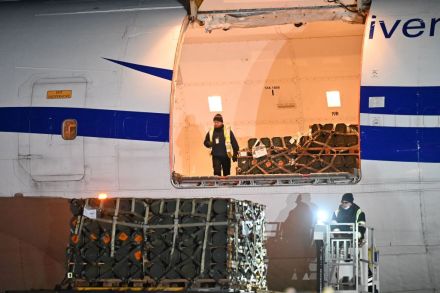
In defense of America the arms dealer

As the world enters a new era of great power competition, countries are arming themselves at a rate unseen since the end of the Cold War. The war in Ukraine, China’s increasing belligerence and angst over rogue states like Iran and North Korea are driving defense spending and weapons purchases the world over. Amid all this, the United States does not have the luxury of being too picky as to who among its friends gets the weapons they need to defend themselves. Nor can Washington continue to avoid drastic reforms to its arms export controls to face the challenges of the twenty-first century. Standards are necessary — they are what should set America apart — but they must not become so onerous that the security of the US and its partners suffer.

Can we brainwash our enemies?

From our UK edition

Disinformation is on the rise, and Britain’s spies are on the back foot. Our intelligence leaders warn about election meddling, and our enemies are trying to undermine public trust in our national institutions. The United Kingdom needs to use covert means to disrupt anti-British activities at their source. That’s what Harold Macmillan said in the 1950s, shortly before becoming prime minister. Over half a century later, in 2017, the Chief of MI6 made the same point: adversaries should be ‘playing in their half of the pitch not ours.’ And half a decade on from that, here we are again. This week’s intriguing peek into the secretive work of the National Cyber Force conjures the old saying: the more things change, the more they stay the same.

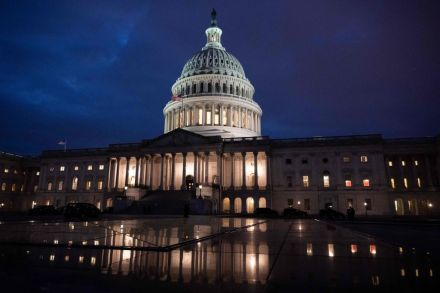
It’s time for Congress to take back its war powers

On March 29, more than twenty years after the United States commenced Operation Shock and Awe in Baghdad, the Senate made history by repealing the military force authorization that green-lit the operation. The bill, which also aims to kill a previous 1991 authorization for the use of military force, or AUMF, against Iraq during the Gulf War, now heads to the House of Representatives where it faces an uncertain future.  On the face of it, repealing both measures would seem like an ordinary event. Saddam Hussein, after all, has been dead for over sixteen years, hanged by an Iraqi court for a litany of crimes against his own people. His regime dissolved within three weeks of the 2003 invasion.

state of the union

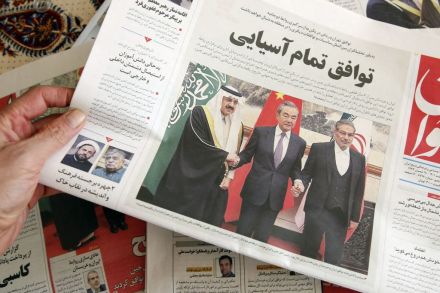
The Middle East catches diplomacy fever

Peace isn’t exactly blossoming like rosebuds in the Middle East. The region is still host to a devastating civil war in Yemen, a humanitarian crisis in Syria, sporadic terrorist attacks in Iraq and an endless tit-for-tat between the US and Iranian-backed militias in Iraq and Syria. Indeed, just last night, President Biden authorized several airstrikes against three militia locations in retaliation for a drone attack on an American base in Syria that killed one contractor and injured six others. But for an area of the world so often regarded as hopeless, the Middle East is suddenly looking like an epicenter of diplomacy.

syria peace

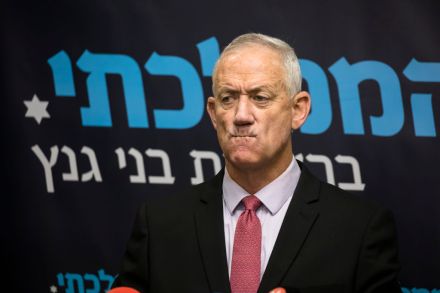
Israel’s wake-up call to America

Last month, then-Israeli defense minister Benny Gantz made headlines when he said that Israel may strike Iran’s nuclear infrastructure within two to three years. Gantz has made readying Jerusalem for this contingency a priority, and in November said that Israel had “achieved preparedness, we have [more] capabilities we are developing and we have long-term processes I don’t want to elaborate on.” But while Israel may have the capability to hit Iran, the US should not force it to risk such a strike.

Why China’s budding relationship with the Saudis spells trouble

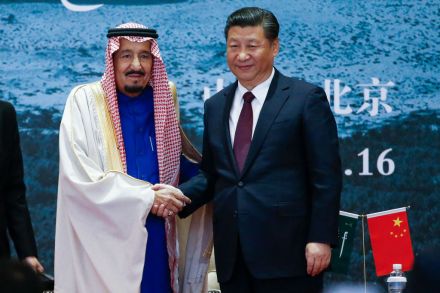
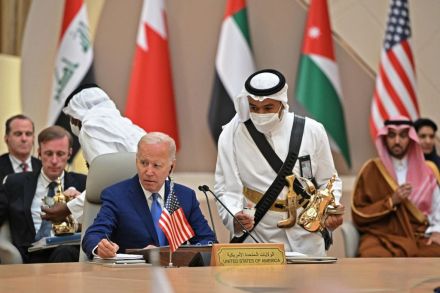
Joe Biden’s chickens are coming home to roost as Chinese President Xi Jinping visits Saudi Arabia. The trip itself has not been especially revolutionary. But it is another indication of America’s declining prowess in the region. Xi was given a welcome befitting an ambitious leader (and notably different from how Biden was greeted in July). Beijing and Riyadh signed numerous economic agreements worth about $29 billion in total, including with Huawei, which will only further the Chinese technology giant’s control over global telecommunications infrastructure. Xi also advanced his desire to make the yuan a competitor to the dollar in the global economy, pushing for the use of the yuan in the oil trade with Saudi Arabia.

Down with the American morality police

When, oh, when will the United States catch up with Iran? Those bearded, bomb-building, Koran-quoting clerics — we underestimate them at our peril. They know enough, the ayatollahs, to get rid of their morality police who have for decades subverted Iranian civic life, as they've reportedly done this week after protests in that country continued. The morality police in Iran were known for harassing Iranians — women especially — who were deemed insufficiently devoted to Islamic purity. Yet when the morality cops apparently killed a young women for her gall in showing too much hair, public protests erupted. Morality is one thing, persecution is another, as the ayatollahs appear to have figured out. Morality requiring visible and painful enforcement can’t be sustained.

The US-Iran match was just a soccer game

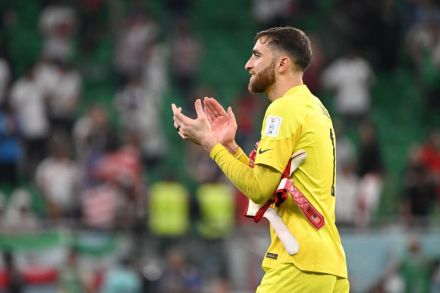
The 1-0 Team USA victory over Iran in a World Cup match that was crucial to both teams seemed to take place in a different universe from the grand geopolitical narratives that swirled around it. This was nothing like the infamous 1956 Melbourne Bloodbath between the Hungarian and Soviet water polo teams, facing off weeks after the USSR's bloody suppression of Hungary's revolution. The stakes in Doha were very high: for Iran, only a win or a draw would see them advance; for America, win or go home. Yet there did not appear to be any tension or enmity between the players on the field. No screaming matches, head butts, or dirty fouls. There were few controversial calls by the referee.

The curious case of the Asian Maradona

From our UK edition

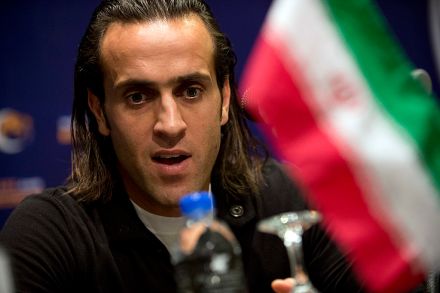
When England line up against Iran in Doha today, the VIP seats should be studded with former players from both sides. But one who almost certainly won’t be present is a player with a solid claim to having been the greatest Iranian footballer in history. Because Ali Karimi is a wanted man. The 44-year-old is hugely influential in Iran – he has 13 million social media followers there. But he has positioned himself as such an overt critic of the country’s regime that he’s now living in exile, threatened with arrest – and worse – should he return to or be forcibly taken back to Iran.

Why Biden’s attempt to revive the Iran deal is faltering

Robert Malley may not technically be a diplomat, but he walks and talks like one. A specialist in the Middle East, Malley has extensive experience in government. He had an integral role in negotiating the Joint Comprehensive Plan of Action, or JCPOA, the deal that limited Iran's nuclear activities in exchange for sanctions relief. President Biden brought him into his administration as his special envoy to Iran in the hope he could find some way to bring both Washington and Tehran back into an agreement. Nineteen months later, Malley himself bluntly admitted that the talks were, if not dead, then frozen for the foreseeable future. Speaking at the Carnegie Endowment for International Peace, Malley said the Biden administration is no longer thinking much about the negotiations.

iran

The inevitable return of Bibi Netanyahu

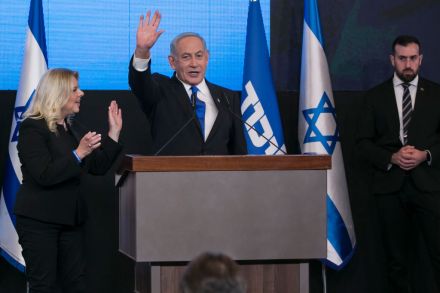
With about 90 percent of the vote counted as of this morning, former Israeli prime minister Benjamin "Bibi" Netanyahu appears set to return to power in a stunning comeback. Having lost power in May 2021, and facing mounting legal challenges, his political career seemed over. Now, with his right-wing alliance set to secure a majority — likely between 61 and 65 seats in the 120-seat Knesset — his return to the premiership seems almost inevitable. The party he leads, Likud, is likely to receive around 32 seats. While Bibi may once again lead his country, his coalition will be different this time around. The far-right Religious Zionist Party (RZP), led by firebrands Betzalel Smoltrich and Itamar Ben Gvir, will have around 14 seats, up from seven before the election.

Why Israel won’t give lethal aid to Ukraine

Israeli defense minister Benny Gantz announced this week that Israel would maintain its policy of not supplying weapons to Ukraine. This drew criticism, including charges that Israel has a moral obligation to help Ukraine and is instead foolishly prizing its relations with Russia. Critics also note that Israel’s archenemy Iran is providing weapons and advisors to Russia. They further point out that Israel’s Ukraine arms embargo puts it out of step with Israel’s most important partners in the West, especially the United States. Yet aiding Kyiv is a far riskier bet for Jerusalem than for most Western capitals. This is no easy call, and the one Israel made is probably the right one.

The right’s dangerous embrace of soft isolationism

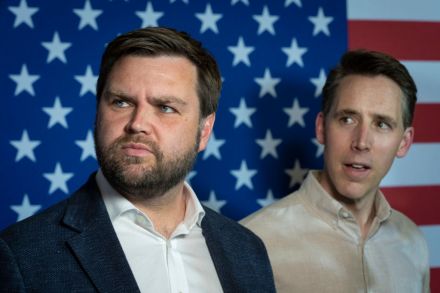
Traditionally, the GOP has been the favorite of those concerned with safety and national security. The party of Ronald Reagan emphasized the need for strong engagement abroad, a willingness to project power when necessary, and a commitment to the free world. Yet the contours of the conservative movement have begun to change in recent years, calling into question the GOP’s credibility on the issue of security. The growing support for a sort of soft isolationism is a problem. It is also fundamentally not conservative. Prominent voices from the American right have been carrying the banner of soft isolationism for years, from Tucker Carlson and J.D. Vance to Senator Josh Hawley and former president Donald Trump.

The Russia-Iran axis that’s menacing Ukraine

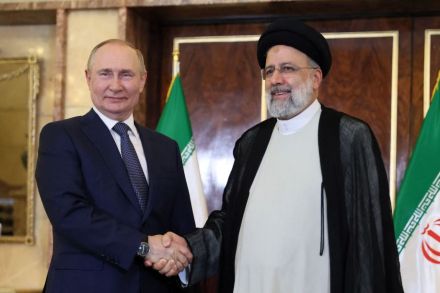
Russia’s brutal war in Ukraine is coming up on its eighth month, and the costs to the Kremlin’s military have been immense. Increasingly isolated on the world stage, Vladimir Putin has joined the world’s club of pariah states, the only group willing to give him support. Chief among his allies is the Islamic Republic of Iran, a state with similarly imperialistic designs and global isolation. This axis has been brewing for some time — the two nations worked together extensively in Syria, for example — but the relationship has reached new heights as the Russian armed forces buckle under the strain of war. Perhaps the most potent symbols of this relationship are the hundreds of Iranian drones flooding into Ukraine to fill a gap in Russia’s weapons inventory.

How the US failed to stop OPEC from cutting oil production

Near the top of President Biden’s to-do list for the past few months has been to keep gas prices down. On Wednesday, this was dealt a likely fatal blow by the Organization of Petroleum Exporting Countries, or OPEC, which, led by Saudi Arabia, agreed to cut its overall production by two million barrels per day. In actuality, the cut will mean a reduction of more like one million barrels per day if it's taken into account that OPEC has been underproducing compared to its previously stated production goals. Still, this is a significant cut, and the effects on oil markets are already being felt.

Don’t expect the protests to topple Iran’s government

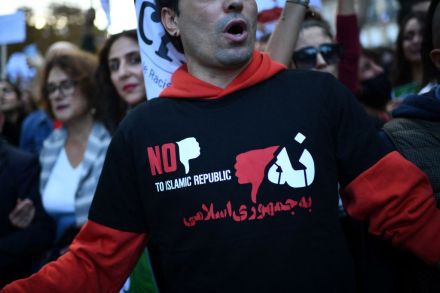
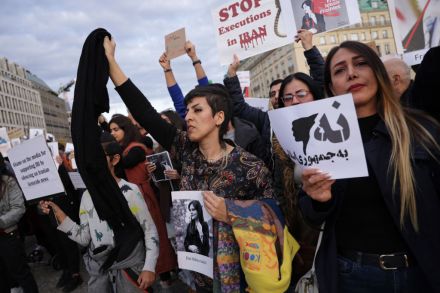
The Islamic Republic of Iran is reeling. Its 43-year-old patriarchal system of bearded clerics is witnessing its biggest nationwide demonstrations in years. Iranians of all classes, regions, and professions are pouring into the streets. All this in the heart of the world’s only theocracy, where voicing any discontent can land you a bloody face and a hefty prison sentence. The protests, which will enter their second full week on Friday, were sparked by a particularly gruesome crime by the Iranian authorities against a young woman named Mahsa Amini, who was detained by the morality police in Tehran for supposedly dressing immodestly.

How two deaths shook Iran to its core

Iran has been transfixed by two deaths: one that didn’t happen and one that shouldn’t have happened. Last week, rumors swept Tehran that Supreme Leader Ali Khamenei had died. Subsequent reporting revealed he may have been gravely ill. He has since made two public appearances, but his health scare was a reminder that the Islamic Republic’s most powerful man has no designated successor. When the old donkey dies, Iran’s factious elite will have to fight it out as to who will take his place. This week, protesters all over Iran gathered to denounce the death of Mahsa (Zhina) Amini, a young woman who died in the custody of Iran’s morality patrols after being picked up for a loose headscarf.