Henry Olsen

Nixing BRICS: how to counter the China-led alliance

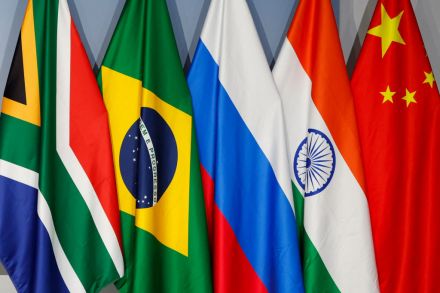
Americans are used to exercising influence through international entities such as NATO, the World Trade Organization or the World Bank. Each of these groups was set up with American leadership or at its instigation; all have been used to advance Washington’s vision of global liberal-democratic capitalism. No comparable international organization or collection of nations has been influential since the Soviet Union’s collapse. That may be changing. The so-called BRICS alliance (its founding countries were Brazil, Russia, India, China and South Africa) recently added new members Iran, Ethiopia, Egypt and the United Arab Emirates.
BRICS

How California’s new trucking regulations threaten standards of living

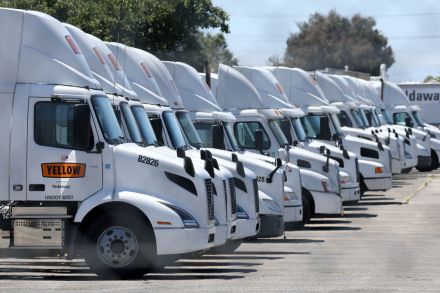
It’s chic to look down on big trucks and their drivers. Former president Donald Trump’s photo op with truckers in 2017 was immediately lampooned on social media and by liberal journalists. It would be fitting, then, if the trucking industry provides the example that kills the push to rapidly move developed economies to “net zero” greenhouse gas emissions. The fact is that any serious attempt to make Western economies “net zero” will be costly, technologically difficult and extremely disruptive to our way of life. Nothing captures these inconvenient truths better than the effort to force the electrification of the trucking industry. Trucks are to the modern economy what the circulatory system is to the body.

trucking

The meaning of Javier Milei

Libertarian economist Javier Milei’s smashing landslide victory is the most radical thing to happen to Argentina in decades. But his win portends more than just a free-market revolution on the pampas. It’s just the latest example of a trend we’ve been seeing for decades: the triumph of blue-collar conservative fusionist populism. Milei is routinely portrayed in the western press as an Argentine Trump with crazy economic policies. There’s some truth to that. His rallies sometimes involve pyrotechnics and he brandishes sputtering chainsaws to symbolically deliver the message that he will take apart the system that impoverishes Argentines.

Milei

Geert Wilders’s win shouldn’t surprise us

Dutch populist leader Geert Wilders win has shocked Europe’s elites. At this point, one has to wonder why they continue to be surprised when voters absolutely frustrated with bickering and incompetence turn to someone who has never held political power. Wilders’s win is much less of an endorsement of his views than it is yet another rejection of the elites’ business as usual. Voters in the Netherlands have been signaling they want change for many years now. Wilders’s Party for Freedom (PVV in Dutch) led polls until the last days before the 2017 election. It faded when Prime Minister Mark Rutte told Holland’s mostly Muslim immigrants to “act normal or go away”.

Geert Wilders

Facing the facts of the West

The century began with a global celebration — the West’s belief in liberal democratic capitalism had battled foes for centuries and emerged victorious. All that remained was for the rest of the globe to melt into the West’s soft and loving embrace. Two decades in, things look much less rosy. China’s rapid rise has not spurred democratization, as many suggested it might; instead it has nourished a massive ideological and political competitor that may supplant the West not only economically but as an arbiter of global culture and behavior. Western decline is not yet inevitable, but Western values will survive and spread only if leaders recognize two clear facts. The first is that the spread of Western values has in large part been due to the dominance of Western power.

west

Why we’re all populists now

Fifteen years ago, populist politicians and parties were seen as a reactionary blip which would soon fade. They are instead not only still present but rapidly gaining strength and power across the developed world. It’s well past time to wonder if populist sentiments will fade. It’s rather time to consider the heretofore unthinkable: perhaps populism will be to the twenty-first century what labor union-backed social democracy was to the twentieth. All of us grew up in the world that social democracy created, so it’s hard to grasp that it has not always been with us. But that’s not so. As late as the 1890s, social democratic parties were either weak or non-existent in most of the (admittedly small) democratic world. That changed quickly as industrialization gained steam.

populists