Iran

Don’t expect much from Biden’s Middle East trip

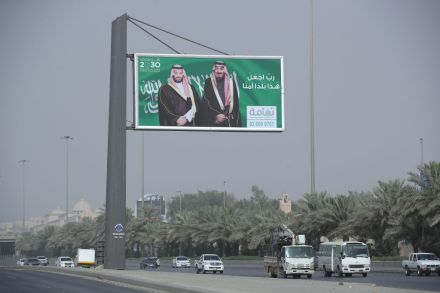
It took Barack Obama less than three months to fly to the Middle East for a visit, landing in Iraq to visit the tens of thousands of US troops stationed there at the time. Donald Trump’s first overseas trip as president was to the Kingdom of Saudi Arabia (also three months into his tenure), where he basked in the limelight, watched in awe as his face was plastered on buildings in Riyadh, and hovered over a glowing orb with King Salman. Now, eighteen months into his presidency, Joe Biden will be spending a few days this week in the region, making stops in Israel, the West Bank, and Jeddah, Saudi Arabia, for a summit of the Gulf Cooperation Council.

The odd couple: Israel and Turkey’s tentative alliance

From our UK edition

 Jerusalem On Friday night, when the Israeli government usually shuts down for Shabbat, the Prime Minister’s office issued an emergency briefing. An attack on Israeli tourists in Istanbul was ‘imminent’, it said. Israelis in Turkey were ordered to stay in their hotel rooms for fear of assassins, sent by Iran. There was no attack that night, as it happened, but the threat to the many Israelis in Turkey remains. Iran’s Islamic Revolutionary Guards Corps has become increasingly enraged by Mossad’s assassinations of IRGC officers in Iran, and decided that the best and easiest way to get revenge is to target the thousands of Israelis in Istanbul. Both Turkish and Israeli intelligence confirm this. This is not as strange as it might sound.

‘America or chaos’ is a false choice

There is an age-old dogma in the US foreign policy establishment: when America pulls back, chaos ensues. Like an anti-inflammatory that keeps arthritis under control, Washington’s presence in this or that region keeps enemies cowed, partners reassured, and the barbarians at the gates. Of course, just because an argument is popular doesn’t mean it’s accurate. There are several problems with the “America must be everywhere, at all times” line of thinking, the most poignant of which is that it turns the US military into an agency of global rent-a-cops.

The Taliban’s Afghanistan quagmire

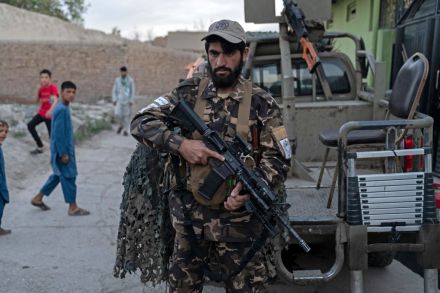
Hibatullah Akhundzada is a secretive man who is only occasionally heard and seldom seen. But on May 1, the Taliban’s supreme leader was delivering a sermon in Kandahar’s central mosque, bragging about his organization’s supposed successes. “Congratulations on this victory, freedom and success,” said the reclusive Akhundzada, surrounded by armed bodyguards. Nine months after the Taliban captured Afghanistan and forced the hapless Ashraf Ghani to flee the country in a helicopter, its chief official remains content with relishing the past. But truth be told, the Taliban has nothing to brag about.

Starmer is playing into Iran’s hands

From our UK edition

Who was to blame for Nazanin Zaghari-Ratcliffe being held captive in Iran? It shouldn’t take a professor of ethics to answer such a question. Mrs Zaghari-Ratcliffe was being held on trumped-up charges by a despotic regime that has used hostage-taking to advance its agenda ever since its formation in the Iranian revolution of 1979. Back then it was said to be 'students' who spontaneously over-ran the US embassy in Tehran and took more than 50 hostages, holding them for more than a year while the new theocratic government ruthlessly exploited the situation to humiliate the US administration of Jimmy Carter. In the case of Mrs Zaghari-Ratcliffe, at least no pretence was made that anyone other than the government of Iran was behind her detention since spring 2016.

Why is Biden copying Obama’s mistakes with Iran?

From our UK edition

There was a picture taken on Tuesday that says more than just a thousand words. The photograph was snapped in Sharm el-Sheikh and shows Abu Dhabi Crown Prince Mohamed bin Zayed Al Nahyan and Israeli Prime Minister Naftali Bennett seated either side of Egyptian president Abdel Fattah el-Sisi. According to the Egyptian president’s office, they met to discuss ‘the repercussions of global developments, especially with regard to energy, market stability, and food security’ but ‘they also exchanged visions and views on the latest developments of several international and regional issues’. That’s a very wordy way of saying ‘Iran’.

A lesson for those calling Nazanin Zaghari-Ratcliffe ‘ungrateful’

From our UK edition

In the latest installment from the idiot age of Twitter, #ungratefulcow has been trending. The reason? Nazanin Zaghari-Ratcliffe had expressed, mildly and politely, some unhappiness that it had taken Her Britannic Majesty’s Government six years to free her from Iranian captivity. Cue a handful of shallow trolls slagging her off, and a lot of other people slagging them off. I say ‘mildy and politely’ because to my mind, the salient characteristic of Zaghari-Ratcliffe’s comments was its restraint. Most people, I submit, would be furious beyond words to miss most of their only child’s first years of life.

Hacks in uproar about Nazanin briefing

From our UK edition

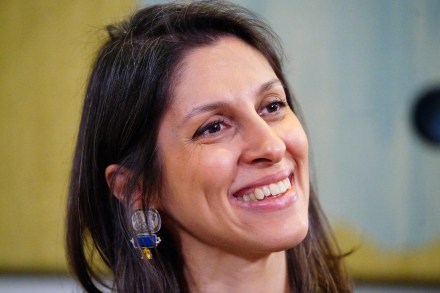
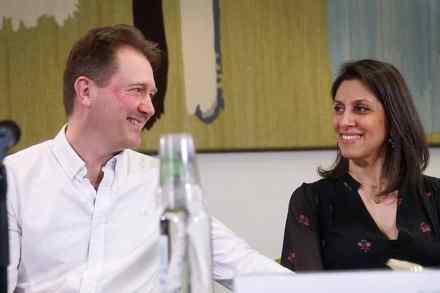
Welcome home Nazanin Zaghari-Ratcliffe, released after six years imprisonment. The 43-year-old returned to the UK last week after the government settled a historical £400 million debt owed to Iran over a cancelled 1970s order for British tanks.  But it seems the mother-of-one is not done generating headlines yet, after she caused something of a stir yesterday with her comments at a press conference in parliament about her return from Iran. 'How many foreign secretaries does it take for somebody to come home?' she said. 'What happened now should have happened six years ago.' The drama of Zaghari-Ratcliffe's appearance in the Macmillan room though was nothing compared to what was going on outside the room.

How the Foreign Office secured Zaghari-Ratcliffe’s release

From our UK edition

There was a rare display of unity in the Commons chamber this afternoon when Liz Truss gave a statement on the release of Nazanin Zaghari-Ratcliffe. While Labour deputy leader Angela Rayner went on the attack at PMQs, asking whether Johnson's comments when he was Foreign Secretary had made things worse, there was a far more conciliatory tone in the Commons when the Foreign Secretary updated MPs on the 43-year-old British-Iranian dual national's safe return, after being detained in Iran for more than five years on charges of plotting to overthrow the Tehran government.

Enough with the 1970s comparisons

The media are abuzz these days about a purported “return to the 1970s.” Generally speaking, such chatter is not intended kindly, for many today would likely agree with the sardonic assessment of the Seventies made by the editors of New West magazine as that decade wound down: “It was the worst of times, it was the worst of times.” And not just because of the popularity of bell-bottom pants, platform shoes, and disco music. In the Seventies, we had problems far more troubling — more troubling even than the pop group ABBA. For starters, we saw a quadrupling of real oil prices between 1973 and 1979. We suffered high rates of both inflation and unemployment, which hitherto varied inversely, leading to the creation of the portmanteau “stagflation.

1970s

Russia’s war is a global cancer

One thing I have always found fascinating about Russia is that when they tell us they are going to do something, they usually do it. So when Moscow struck a military base near the Poland-Ukraine border that was a staging ground for arms shipments, we shouldn't have been surprised. They told us that was their next plan of action just twenty-four hours before they did it. But that’s just the beginning of what Russia likely has in store for the West, NATO, and the entire world if we aren’t careful. Russian president Vladimir Putin’s plan seems simple: chaos on a scale that will extend far beyond Ukraine. You see, Putin is starting to come to grips with the fact that he can’t win the war in Ukraine — at least on paper — unless he destroys Ukraine.

cancer

Can Boris get the Saudis to pump more oil?

From our UK edition

The oil price is up by more than 40 per cent since the start of the year. It is being driven up by the Russian invasion of Ukraine, the lack of investment in oil and turning the world economy on and off again: US production is still not back to pre-pandemic levels. In the immediate term, as I say in the Times today, pretty much the only way to bring the price down is to get Saudi Arabia – which has 1.5 to 2 million barrels a day of spare capacity – to pump more. The West’s relationship with Saudi Arabia has always been morally problematic.

Noninterventionists never win arguments

I’ve been thinking about where I was on the eve of the US invasion of Iraq in 2003, and my memories of the event are quite depressing. What have we learned? As a research fellow at the Cato Institute at that time, I was working with other analysts preparing research, authoring commentaries, publishing op-ed articles and giving interviews to the broadcast media, warning about the consequences of the coming American military conquest in the Middle East. It's not polite to toot one’s own horn, but we were right.

terror

The Ukraine invasion is nothing compared to Iraq

Of the war in Ukraine, New York Times columnist Thomas Friedman writes, “Our world is not going to be the same again because this war has no historical parallel.” In the very next sentence, he describes the Russian invasion of Ukraine as “a raw, eighteenth-century-style land grab by a superpower,” thereby acknowledging that the episode actually has innumerable historical parallels — just not ones that Friedman cares to acknowledge as legitimate. Friedman figures prominently among those claiming to have divined the essential character of the present age. His key finding: tech-driven globalization has rendered old-fashioned power politics obsolete. The rules of the game have changed irrevocably. Practically speaking, nations have no choice but to submit.

invasion iraq

Biden’s confusion over sanctions

Russia’s military aggression against Ukraine requires a swift and effective Western response. But according to neoconservative and liberal internationalist pundits like columnist Walter Russell Mead, the invasion marks nothing less than an assault on the “world order” akin to Nazi aggression at the opening of World War II. “Not since Hitler attacked the Soviet Union in 1941 has a European leader committed an act of aggression as brutal or as nakedly cynical as Mr. Putin’s unprovoked attack on Ukraine,” Mead writes in the Wall Street Journal.

Biden finalizes terrible new Iran deal

Several sources in the negotiating team in Vienna tell Cockburn we can expect a "new Iran deal" between the Biden administration and the mullahs as early as Thursday morning. For the last few months, Iran has been behaving stubbornly in negotiations, refusing to back down from its “red lines,” including lifting sanctions on Supreme Leader Ali Khamenei and the Islamic Revolutionary Guard Corps. Instead, it's kept to the original timeline on the Iran deal, which would allow it to test ballistic missiles next year and remove all restrictions by 2030. Now, Iran’s resolve seems to have paid off. Sanctions: Cockburn's sources say the Biden team is set to waive virtually all sanctions on Iran.

iran

Israel and America are drifting apart

Israeli Prime Minister Naftali Bennett has revealed what members of his country’s national security elite have been chatting about behind closed doors for quite a while. “The United States has been, and will always be our best friend,” the Israeli PM said in a speech delivered before the Institute for National Security Studies (INSS) at Tel Aviv University. Then came the big “but”: “Washington has its own set of interests, which we must honestly admit do not always overlap with ours.” “We are speaking honestly and understand one another,” Bennett elaborated. America’s “interest in the region is dwindling. The United States is currently focused on the Russian-Ukrainian border and it is in a strategic conflict with China.

The Iran nuclear talks are on the brink of collapse

With diplomats fearing that the Iranian nuclear talks will collapse, minds are inevitably turning to what happens the morning after. In the realm of politics, this has amounted to buck-passing. Last week, White House press secretary Jen Psaki told journalists: “None of the things we’re looking at now…would be happening if the former president had not recklessly pulled out of the nuclear deal, with no thoughts about what might come next.” In the real world, meanwhile, with regional peace in the balance, the stakes are rather higher. As the Biden administration’s softly-softly approach plunges towards global humiliation, American negotiators have been waking up to what should have been obvious from the start: you can’t build an effective Iran strategy with carrots.

Biden chickens out of Iran negotiations

We were promised a war of nerves in Vienna between Washington and Tehran, a game of chicken. Instead, President Biden has chickened out. He's also blaming Israel. Call it fowl play. Here's how it should be going. The United States wants Iran to re-commit to refreezing its nuclear program. Iran demands in exchange the revoking of the economic sanctions against it. Each side insists that it won't give up on its demands — even if that could lead to the collapse of the negotiations, the demise of the Joint Comprehensive Plan of Action (JCPOA) and eventually to a military confrontation. The diplomatic and military tensions between the United States and Russia over Ukraine involve just such an exercise in brinkmanship.

iran

Antony Blinken’s soundtrack to failure

Antony Blinken, the secretary of state and first guitarist, has broken with the tired protocols of the past, faced the complexities of the multipolar twenty-first century world, and issued a Spotify playlist. This may be a better way of reaching new audiences than bombing them. But shouldn’t public figures be judged on their records, not their record collections? “The thread that runs throughout my life is probably music,” Blinken told Rolling Stone last year as he meditated his mixtape. Hitler would probably have said the same about painting had Rolling Stone been around to profile the Viennese amateur who was turning the art world upside down.