Iran

If only Britain was as important as Iran thinks we are

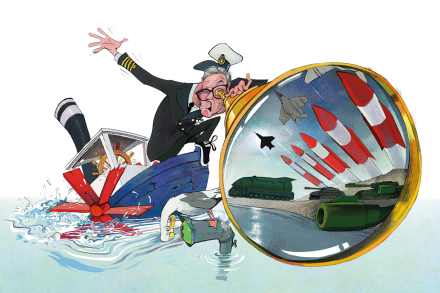
I am becoming rather fond of Prime Minister Starmer’s major foreign policy announcements. In early January, after US forces swooped into Venezuela and took President Maduro to New York to face trial, Keir Starmer was keen to get straight out in front of the cameras. There he said that he wanted to stress that ‘the UK was not involved in any way in this operation’. As though the whole world had been expecting to hear that the British armed forces were indeed central in snatching the narco-terrorist from Caracas. This week it was again Starmer’s turn to stand behind a podium, British flags behind him, and deliver another statement that absolutely no one thought necessary. Speaking about the US-led strikes on Iran, he announced solemnly: ‘I want to set out our response.

Iran’s tradition of martyrdom is key to understanding this conflict

From our UK edition

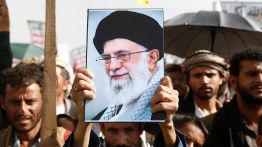
One word stood out in the florid and overwrought announcement of the death of Iran’s Supreme Leader by a tearful state-television newsreader on 1 March: ‘Leader and Imam of the Muslims, His Eminence Ayatollah Seyyed Ali Hosseini Khamenei, on the path of upholding the exaltation of the sacred sanctuary of the Islamic Republic of Iran, drank the sweet, pure draft of martyrdom and joined the Supreme Heavenly Kingdom.’ The dreaded ‘m’ word – martyrdom – immediately takes anyone familiar with Muslim history back to a legendary 7th-century battlefield in central Iraq. In 680, the Prophet Muhammad’s grandson Husayn ibn Ali – regarded as the third Shia imam – faced a much larger army commanded by the Umayyad caliph Yazid I at the Battle of Karbala.

Greek tips on how to beat Iran

In 500 BC, Persia (modern Iran) was the most powerful state in the known world, ruling an area of more than two million square miles from the Balkans and Egypt to central Asia (nearly half of the world’s population). In 499 BC, Athens and a number of other Greek states rebelled against its empire and incredibly defeated it in the ensuing Persian Wars (390-379 BC). The Greek historian Herodotus (d. c. 425 BC) wrote up those wars after travelling extensively around the whole region. He was as fascinated by different cultures as he was by the war itself, contrasting the Persian way of life with the Greek. For example, he said that Persians did not put up statues or temples or altars, or treat their gods as human in nature, as the Greeks did.

Iranian attacks aren’t worrying Washington

Many commentators are already claiming that the war with Iran is “spiraling out of control.” I try not to be uncharitable: I am a Catholic, after all, and the Church tells me it is a sin. But if I were tempted, I should say that the only thing spiraling out of control is cliché. You could argue that drone attacks are a sign that Iran’s ballistic and cruise missiles aren’t actually proving that effective Iran said it would hit out wildly if it were attacked. It also made clear that direct attacks on the leadership of the Islamic Republic would be treated as an existential threat.

President Trump’s game of telephone

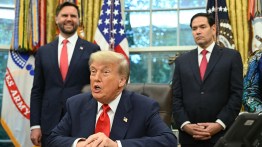
How are you “monitoring the situation,” four days into the joint US-Israeli offensive against Iran? Our Commander-in-Chief has adopted an unorthodox approach: evading the press in person as the strikes and counterstrikes fall, while taking phone calls from basically any journalist with his personal number. By Cockburn’s count, President Trump has given at least 20 “exclusive” telephone interviews to reporters since the early hours of Saturday morning. Old habits die hard. The starting gun was fired by the Washington Post’s Natalie Allison and Tara Copp at 4 a.m., three hours after the bombs started to hit. “All I want is freedom for the people,” Trump told them. Since then, he’s offered a variety of other reasons for US involvement.

telephone

Chaos in Iran spells trouble for the Taliban

The US-Israeli attack on Iran presents an opportunity to get rid of the Taliban in Afghanistan. If there is a collapse of central authority in Iran, tens of thousands of Afghan former soldiers living in exile there could use the power vacuum to mobilize, return home and fight against the Taliban. There are several resistance groups who have advanced plans to fight but need a reliable haven outside the country to launch attacks inside Afghanistan. Iran, which has a 600-mile border with the country, could be the launchpad they need. This represents a unique opportunity for Afghanistan, as for the first time the country faces conflict on both sides.

Will Iran descend into civil war?

33 min listen

Freddy is joined by historian and former diplomat, Charlie Gammell. They discuss the situation in Iran, whether the US is heading for a decisive confrontation, and examine the regional consequences: proxy warfare, Gulf energy security, Pakistan’s delicate position, and migration pressures on Europe.

Will Iran descend into civil war?

When will Kash Patel unleash epic fury on the FBI?

As I write, the Washington Post is carrying an obituary about the Ayatollah Ali Khamenei – or maybe it is about Santa Claus? You tell me. “With his bushy white beard and easy smile,” the Democracy Dies in Darkness paper told its readers,  “Ayatollah Khamenei cut a more avuncular figure in public than his perpetually scowling but much more revered mentor [Khomenei], and he was known to be fond of Persian poetry and classic western novels, especially Victor Hugo’s Les Misérables... Some Iranians who knew Ayatollah Khamenei before he became supreme leader described him as a ‘closet moderate.’” Did they now? Many other Iranians, some say about 250,000, did not have a chance to describe him at all because they were murdered on his orders.

International law should not prevent regime change in Iran

From our UK edition

Liberal supporters of the US-Israeli killing of Ayatollah Ali Khamenei are straining to parry the charge that Operation Epic Fury is illegal. They say that Washington and Jerusalem are returning fire in a continuing war initiated by Iran, which has funded proxy terror organisations to target Americans and Israelis. It’s a good try but once you kill a country’s head of state in a targeted bombing, it’s hard to claim regime change wasn’t the object of the exercise.  If international law says Khamenei should still be in place, maybe international law deserves to be detonated along with him Customary international law, as commonly understood, does not permit the violation of another state’s sovereignty to change its government by force.

Iran islamic republic

Could Iran descend into civil war?

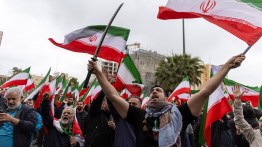
Ayatollah Ali Khamenei, a man whose life has been defined by the harshness of his rhetoric against the West (specifically, the US and Israel) and his ruthless rule, has died a martyr’s death under the rubble of his compound in Pasteur, Tehran.  It was always going to end this way. Khamenei came to prominence as a revolutionary first and then second as a wartime leader when he assumed the role of President of Iran during the Iran-Iraq war. What is needed is a clear plan that can unite Iranians behind a shared, inclusive vision of their country The Islamic Republic is facing its most serious crisis since January, when it set about killing its way out of nationwide protests.

Could Iran descend into civil war?

Ayatollah Ali Khamenei, a man whose life has been defined by the harshness of his rhetoric against the West (specifically, the US and Israel) and his ruthless rule, has died a martyr’s death under the rubble of his compound in Pasteur, Tehran.  It was always going to end this way. Khamenei came to prominence as a revolutionary first and then second as a wartime leader when he assumed the role of President of Iran during the Iran-Iraq war. What is needed is a clear plan that can unite Iranians behind a shared, inclusive vision of their country The Islamic Republic is facing its most serious crisis since January, when it set about killing its way out of nationwide protests.

Why is Vance silent on Iran?

Twenty eight hours or so into the new war against Iran, and America’s Vice President J D Vance has yet to declare his support in public. His social media account on X, which is normally so lively, has been conspicuously silent for the last two days.  He seems keen to position himself apart from the administration’s more ardent hawks when it comes to the Middle East It’s likely that will all change today and Vance, as he did after the Venezuela operation, will take to the airwaves for the big Sunday news shows in order to once again repeat that administration’s line that Donald Trump, the ultimate decider, has boldly done what no other US president would do, and that the evil Iranian regime could never be allowed to have weapons of mass destruction. But for now, nadda.

How Israel killed Khamenei

From our UK edition

Benjamin Netanyahu, the Israeli Prime Minister, was presented with irrefutable evidence yesterday, including footage, confirming the death of Iran’s so-called ‘Supreme Leader’: Ayatollah Ali Khamenei. He was killed in a targeted Israeli airstrike on his compound in Tehran, marking a pivotal blow to the Islamic republic regime. Initially Netanyahu only hinted at the fact that he was dead, but as the evening progressed more and more sources confirmed it until President Donald Trump eventually took to Truth Social to declare ‘Khamenei, one of the most evil people in history, is dead.

Is this Trump’s Sarajevo moment?

Here we go again. Switch out Saddam Hussein for the Ayatollah Khamenei and Ahmed Chalabi for Reza Pahlavi and you have a fresh war for regime change in the Middle East, this time with Israel as America’s sidekick. With Operation Epic Fury, the American and Israeli bombing of Iran and push for regime change, the self-proclaimed “President of Peace” runs the risk not only of triggering wider upheaval in the Middle East, but also globally. Is this a new Sarajevo moment? With Trump’s own generals having warned him that attacking Iran could be a debacle, he may have torched his own presidency Unlike George W. Bush in 2003, who worked to bolster domestic and international support for attacking Iraq, Donald Trump has disdained the slightest effort to justify his war publicly.

iran

Trump launches a remote-control regime-change war on Iran

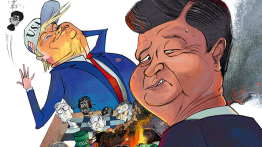
"We’re going to destroy their missiles and raze their missile industry to the ground," said Donald Trump, as he stood at the lectern in his white USA cap and announced the launch of a "massive and ongoing" military operation against Iran.  "It will be totally, again, obliterated." He had to say "again" because he has insisted over and over that Iran’s nuclear facilities had been "utterly obliterated" last summer, after Operation Midnight Hammer.  But the objective of these latest midnight or very early morning strikes, conducted again by US and Israeli forces working together, is already far broader than the wiping out of weapons of mass destruction – whether that be uranium enrichment sites or Iran's ballistic missile capabilities.

Iran is ready for war – is America?

In 2001, Iran’s Supreme Leader Ayatollah Ali Khamenei met privately with Spain’s then-prime minister Jose Maria Aznar. Aznar recounted how Khamenei dubbed Israel a "cancer condemned to disappear" and said that an open confrontation with Israel and the United States was inevitable. Iran, the Supreme Leader insisted, would prevail. Fast forward to 2026, and the war that Khamenei prophesied is getting closer by the day. The Islamic Republic is already operating under the assumption of a US military operation For decades, durable diplomacy between America and Iran has failed because of the ideological nature of the Islamic Republic. It makes its decisions based on a mix of ideology and a desire for self-preservation.

Trump’s worrying appetite for war

As The Spectator goes to press, a great fleet of American war machines is whirring through the skies toward the Middle East. More than 50 fighter jets, plus stealth bombers and support aircraft, are joining what Donald Trump called an “armada” of US naval forces in the Arabian seas. The White House continues to say that it is pursuing a diplomatic solution with Iran. It’s possible that this latest military escalation is another of President Trump’s elaborate bluffs, designed to pressure the Iranian regime into accepting American and Israeli demands. But the President has been unusually mute about the situation on Truth Social.

war

Does Sadiq Khan approve of colonising?

From our UK edition

How to report Iran? It is a huge story. Perhaps as many as 30,000 people were recently murdered there by the tottering regime, but it won’t let western media in. The BBC’s solution is a deal: their correspondent can enter and report, but the report cannot appear on their Persian service. This agreement is rightly explained on air, unlike the BBC’s iniquitous deal with Hamas over Gaza. Do the terms of the deal benefit journalism, however? We are always told that BBC foreign language services are the lifeblood of truth for citizens of dictatorships. Why are Farsi speakers to be deprived of this? Also, what do we learn from Lyse Doucet walking the Tehran streets in a headscarf? (Is it compulsory or voluntary? Either way, she should explain.