


A friend met Mary Wilson on the Isles of Scilly, where she and her husband, Harold, had a home. She confided in him that Harold, now in the grip of senile dementia, was slipping away from her; and she felt the lonelier because in the eyes of the world his achievements as prime minister were slipping away as well.
My friend rehearsed with her the list: the Open University, etc. Then he added this: there is a kind of achievement in high office which by its very nature is unlikely to burn brightly in the world’s imagination after a leader has gone, but is no less luminous for being forgotten. I mean (he said) declining to do something foolish. On behalf of our country (he said), your husband politely declined Washington’s invitation to join the Vietnam war. That may have looked unmemorable: something we didn’t do. But had we done it the consequences for our country and our armed forces would have been huge.
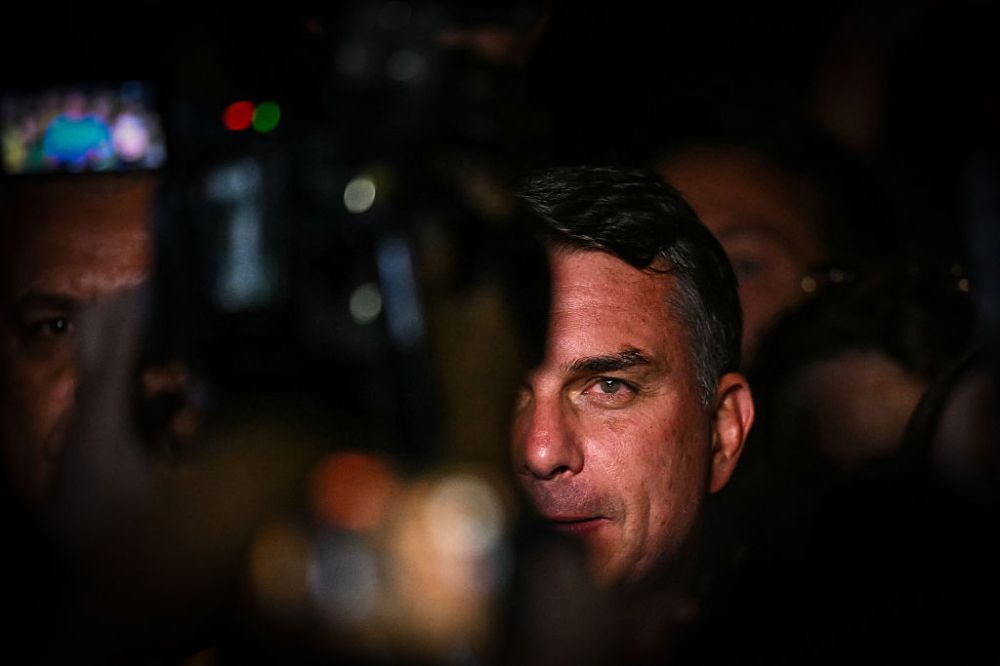
Could it be in the nature of our present Prime Minister to make his mark on history, too, in the same way: by something he stopped us doing?
There is certainly a chance that America’s and Israel’s attack on Iran will in retrospect prove to have been right. But I think there is a greater chance it will not, and a fair chance it will prove a tremendous mistake. We British cannot stop it and should not even try to hinder it. But support it? Join it? No.
In my eighth decade, and my fifth in journalism, I feel a certain weariness, trudging rather than leaping into the fray. My newspaper, which supported the Iraq war, never discouraged me from setting out the case against, which I did with passion. I remember a fierce debate with The Spectator’s own Douglas Murray: his argument for intervention beating mine against, hands down, in front of a New York audience. I remember visiting Basra and describing for the Times the mess we had got ourselves into there.
I remember two visits to Afghanistan and many columns trying to explain the futility of intervention in that mad place. When the Syrian civil war came along I remember inveighing against British involvement on the grounds that we knew the monster we opposed but had no idea what monsters might replace him. And I remember making the same argument when we and the Americans went after Gaddafi in Libya.
And now here we go again. Am I simply wasting my breath reminding readers, once again, that you should not go into a war without a clear and feasible plan for getting out of it? That unless you know your way around the nest of competing forces within a country, and what may be unleashed if the great paperweight of a controlling monster is lifted, it can be counterproductive to wade in? Is it hopelessly ‘ideological’ to argue that revolutions are more likely to stick if they come from below rather than being imposed from above? Am I too pessimistic in fearing those eternal interlopers in domestic and international politics, random and unforeseen events? Reports of an accidental missile strike on a girls’ school right at the start are, if confirmed, a worrying augury.
Be in no doubt that Ayatollah Khamenei was a despot whose wickedness and brutality placed him in the very highest league of tyranny; that under him Iran, with its nuclear ambitions and terrorist proxies, posed a mortal threat to Israel and a simmering challenge to peace in the region. All true.
It’s not as if our participation would make any difference to the outcome, so why try to own the outcome?
But what if intervention fails? If the Islamic Revolutionary Guard Corps (IRGC) ends up still on top, this would be a win for tyranny that will crush hope and stunt home-grown opposition for many years. And what if intervention succeeds, but leads only to chaos and perhaps civil war within Iran? It is this last possibility, which Washington strategists will surely have factored in as very real, that leads me to my final ‘what if?’.
What if Israel’s war aims are not the same as America’s? They may this week seem indistinguishable but as the situation develops a divergence may begin to show. America would presumably wish to see a strong, stable, peaceful Iran: the regional economic powerhouse that the country could be, and a dominant political power. Donald Trump says he wants Iranians to make their country great again.
Israel, however, will be content with mere chaos. Israeli strategists may even prefer it. Benjamin Netanyahu’s interests are well-served by simply smashing the place up. If this intervention leaves a critically weakened Iran in a state of semi-permanent turmoil, economic collapse, hostility from its neighbours and nascent civil war, that suits Tel Aviv fine. For the West, however, it does not.
Such thoughts leave me most uncertain that America is doing the right thing; but more certain that, whether or not this is the case, we British should stand back. It’s not as if our active participation would make any difference to the outcome, so why try to own the outcome?
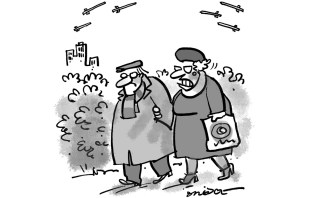
Wilson and the British government were no supporters of Ho Chi Minh when we declined to join the US war effort. We hoped America would succeed but were (perhaps) unpersuaded that the Pentagon was wise and (certainly) unpersuaded that our own interests would be served by rallying to the interventionist cause.
So what should Keir Starmer do? Nothing. No grandstanding for or against the Americans. Keep repeating (if he likes) that Khamenei deserved his fate and the IRGC are an evil force. Pass up every opportunity to wish this American adventure well. Use discreet back-channels to let Washington know that it would save a great deal of unpleasantness for both sides if the Pentagon could manage the attack without using any British bases or (preferably) their base on our own (still) sovereign territory of Diego Garcia. This is what he seems to be doing.
Bold? No. Glorious? Hardly. But if there’s such a thing as Starmerism, this could be its moment.
Is China Trump’s real target? Freddy Gray joins the latest Edition, with Madeline Grant and Labour peer Maurice Glasman, to discuss Iran, Maga – and Trump’s real strategy:






Comments