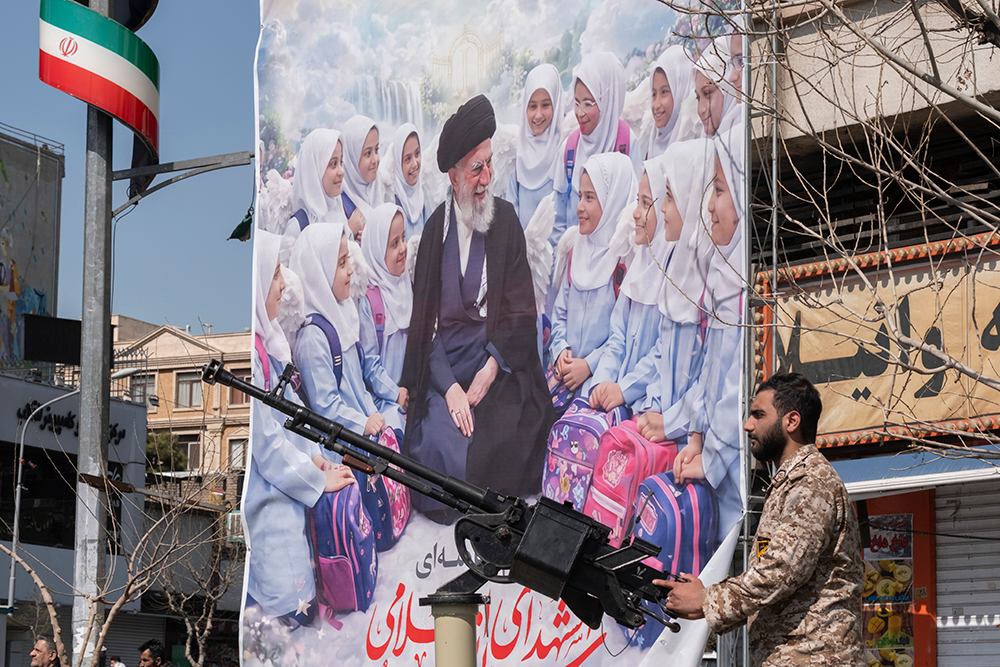
One word stood out in the florid and overwrought announcement of the death of Iran’s Supreme Leader by a tearful state-television newsreader on 1 March: ‘Leader and Imam of the Muslims, His Eminence Ayatollah Seyyed Ali Hosseini Khamenei, on the path of upholding the exaltation of the sacred sanctuary of the Islamic Republic of Iran, drank the sweet, pure draft of martyrdom and joined the Supreme Heavenly Kingdom.’
The dreaded ‘m’ word – martyrdom – immediately takes anyone familiar with Muslim history back to a legendary 7th-century battlefield in central Iraq. In 680, the Prophet Muhammad’s grandson Husayn ibn Ali – regarded as the third Shia imam – faced a much larger army commanded by the Umayyad caliph Yazid I at the Battle of Karbala. He was routed, and he and his men slaughtered and decapitated. The battle entrenched the division between Sunni and Shia Islam and established the elevating narrative of martyrdom in the face of tyranny which courses through Muslim history, particularly Shia Iranian, like a river of blood.
‘The question “How will this end?” should have been asked before this war was triggered’
Ancient history? Of course. Yet the past resonates powerfully in the Middle East as a living force shaping events in a way which outsiders, especially westerners, can find difficult to comprehend. Far from being a vaguely interesting millenarian curiosity, the Iranian tradition of martyrdom is absolutely key to understanding the latest conflict.
‘It’s the most significant aspect of the confrontation between Iran and the US and Israel,’ says Fawaz Gerges, professor of international relations at the London School of Economics and Political Science. ‘Khamenei is going to go down in history as an iconic Shia leader who really followed the path of Imam Husayn.’ Never mind that this is the same man who only last month ordered the machine-gunning of many thousands of street protestors, some Iranians are already likening Khamenei to the saintly and widely revered Husayn.
While the comparison might shock – Pope Leo XIV has rather less blood on his hands than the Butcher of Tehran for starters – assassinating the Ayatollah during the holy Muslim month of Ramadan is like killing the Pope during Lent, Gerges says. ‘This will come to haunt the US and Israel for years. It will resonate in the Muslim imagination for centuries. It’s pouring gasoline on a raging fire.’
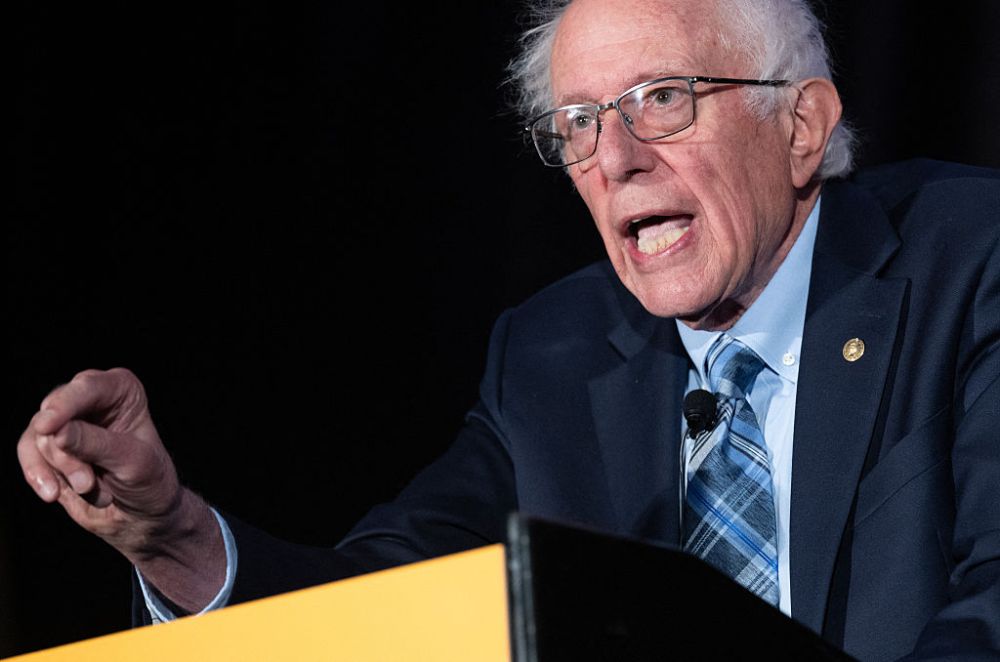
Charles Gammell, a former Foreign Office official and Iran expert, emphasises that the culture of resistance is ‘absolutely central to the DNA’ of the Islamic Republic. Venerating Khamenei now provides the regime – however spuriously – with ‘both religious and nationalist legitimacy to crack down on its people’.
The Husayn-Karbala-martyrdom narrative has sustained the Islamic Republic since its birth. In 1979, as the despised Shah prepared to flee into exile, Ayatollah Khomeini invoked the example of Husayn. He called on Iranians to rise up against a despotic regime led by ‘the Yazid of our time’. Throughout the Iran-Iraq war – of which Henry Kissinger memorably said, ‘A pity they both can’t lose’ – Iran’s fallen soldiers were hailed as ‘modern-day Husayns’ and the war itself a ‘new Battle of Karbala’. When, after eight years of fighting, Khomeini at last agreed to sign a ceasefire in 1988, he declared it worse than drinking from a poisoned chalice. ‘Happy are those who have departed through martyrdom. Unhappy am I that I still survive.’ Perversely, in his assassination Khamenei has now achieved the glory of martyrdom that eluded Khomeini.
But to what extent the theme of martyrdom can meaningfully sustain Iran in its hour of need is a moot point. ‘I think it’s overstated,’ says Ali Ansari, professor of Middle East history at St Andrews. While some Iranians may be happy to bite the bullet, the collapse of the republic into an economic basket case and inferno of repression means that fewer are queuing up for an accelerated pathway to paradise. The regime will only try to hang in there, exhaust the Americans and escalate in order to force a de-escalation because it doesn’t have any other options. ‘They have painted themselves into a corner so it’s fight or be killed,’ Ansari argues. ‘To paraphrase General Patton, they are keener on you being a martyr than themselves.’
So beyond Karbala, what next? Apart from the usual uncertainty about making predictions, ever shifting American objectives make the situation especially difficult to read. Donald Trump’s admission that the US had identified possible candidates to take over from Khamenei but that they had then been killed in the initial attack is not a ringing endorsement of finely tuned planning.
With hostilities already spreading ominously, the Gulf monarchies under fire from Iran and international energy prices surging, the pressure is on to force a conclusion. ‘If President Trump does not rapidly declare victory and return to talks with Iran, we should expect ratcheted escalation on both sides for the foreseeable future and probably an inconclusive outcome,’ says Nicholas Hopton, a former British ambassador to Iran.
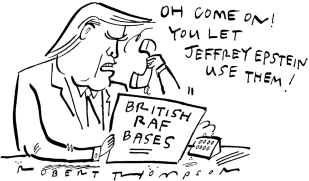
There are also real fears that the war could spiral even further. Last year, in the wake of Israel’s strikes against Qatar, a senior adviser to Turkey’s President Erdogan warned: ‘To the dog of Zionist Israel… soon the world will find peace with your erasure from the map.’ Last month, former Israeli prime minister Naftali Bennett claimed that ‘Turkey is the new Iran’. Belligerence is contagious.
The mood across the region, which has long provided fertile soil for conspiracy theories, is direr than ever. ‘Maybe the objective is chaos, to leave Iran without leadership, totally capitulated, as with what happened in Iraq,’ an Iraqi friend messages me. ‘Israel survives on a country like Iran being in chaos for the next ten years.’
Trita Parsi, of the Quincy Institute for Responsible Statecraft, has a particularly stark response to those wondering how long the conflict will continue. ‘The question “How will this end?” should have been asked before this war was triggered. It wasn’t.’
Many Iranians, and much of the world, are fervently hoping that these are the dying days of the Islamic Republic. The tragedy is that, whatever happens, many more Iranians will drink the sweet, pure draft of martyr-dom in the days ahead.




Comments