Inflation

Runaway inflation is proving costly for Turkey’s oil-wrestlers

Edirne, Turkey There is a distinctive sound that an oiled-up palm makes as it slaps against an oiled-up pair of leather shorts. Both squelchy and sharp, this noise rings around the Thracian town of Edirne each July as it hosts Turkey’s biggest oil-wrestling championship. As the name suggests, contenders are greased up with either olive, corn or sunflower oil before they start to fight. The competition begins with a languid ritual in which the wrestlers stomp around each other, touching the ground and themselves before commencing their tussle. The winner must then flip his opponent on to his back, often by reaching into his shorts and grabbing hold of a tag sewn into the lining. It may look like a novelty event put on for tourists, but oil-wrestling is centuries old.

Letters: Why do we bully PMs’ wives?

Strong leaders Sir: Freddy Gray states that ‘voters seemed most enthusiastic about the leaders who removed their liberties’ (‘Leaderless’, 18 June). I believe people just like to see their government take strong measures. People like to see the effect of a government policy straight away, especially in a crisis. This is probably the reason so many Americans like the idea of Trump’s wall. It is an immediate and physical solution to a large problem that can be seen and felt, even if it is not necessarily the best solution.

The fight for a $15 minimum wage is won

From our US edition

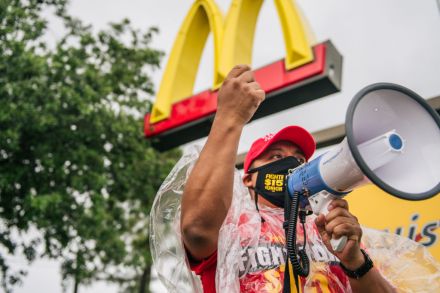
The fight for a $15 minimum wage started in 2012 with a bang. Hundreds of Walmart, port, and fast food workers walked off their jobs in protest of low wages. An organization called Fight for $15 formed in 2014 following two national strikes by laborers. Seattle became the first city to require a $15 minimum wage that same year. The White House issued an executive order that required new federal contracts to include a $10.10 minimum wage because legislation had stalled in Congress. The stalled federal push led to more state and local action. California and New York put together slow-rising $15 minimum wage laws in 2016 and 2017. Eight other states, mostly in New England, followed with plans to reach a $15 minimum wage by 2026 at the latest.

Where’s Boris’s plan to stop the economic chaos?

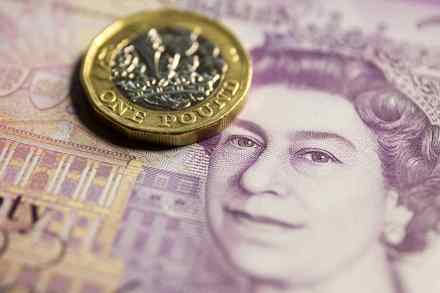
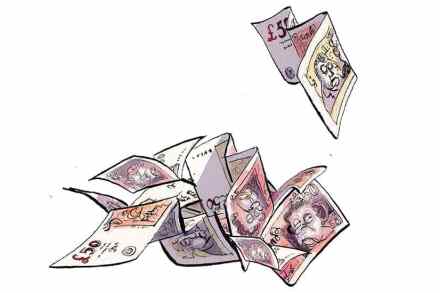
Interest payments on the national debt rose 70 per cent last month to £7.6 billion (compared with a year earlier) – largely because of the impact of inflation on income paid to holders of index-linked gilts, which are inflation-protected government bonds. More worryingly, this was 49 per cent more than the official forecast made in March by the Office for Budget Responsibility (OBR). It suggests the OBR’s forecast that the government will have to pay £87.2 billion in interest payments (a colossal sum) may be too low, especially since the ONS is not factoring in the most recent inflation figures in its calculations of the monthly bill.

The real plan for inflation? To let it rip

Check out these hyperventilating headlines from last week: ‘What the Fed’s largest interest rate hike in decades means for you’ (PBS.org). ‘Federal Reserve interest rate hike opens new era for economy’ (Washington Post). ‘The Fed delivers biggest rate hike in decades to fight inflation’ (National Public Radio). ‘Fed goes for inflation’s jugular with 75bps rate hike’ (Schwab). While it’s true that the US Federal Reserve has not hiked its funds rate by 0.75 percentage points in one go since 1994, the figure prominently missing from those bug-eyed bulletins, and bizarrely unmentioned in all the television news coverage of this ostensibly bold move that I encountered, is what the Fed raised its interest rate to: a miserable 1.

Here comes the next recession

From our US edition

There is no shortage of reasons to feel gloomy about the American economy right now. First, there’s inflation. In 2021, the Biden administration claimed that the cost of a summer barbecue had declined by 16 cents from the year before. It probably now wishes it hadn’t made that claim. This summer, the cost of that barbecue is up not 16 cents but 17 percent. Hot dogs are up 37 percent over a year ago. This is the highest inflation in forty years, with the consumer price index up 8.6 percent from a year ago. Some necessities, such as gasoline and food, have risen even more sharply, with gas having gone from $2.18 a gallon when Biden was inaugurated to $5.

Boris Johnson’s inflation contradiction

As Boris Johnson tries to limit pay rises to bring down inflation, ministers have no explanation for why planned rises in the state pension and benefits would be less inflationary than increasing teachers’ and nurses’ pay. The government is attempting to limit public sector pay to 3 per cent, while allowing pensions and benefits to rise to around 10 per cent.  This is not to argue against protecting the poorest through the standard indexation of pensions and benefits. But it is to say that Mr Johnson’s pay policy is confusing. And he cannot pretend there is no pay policy. Even refusing to engage directly in pay talks with rail workers – despite owning the network and funding services – is a policy.

Inflation is a social evil, so why don’t our leaders care?

It was a ‘destroyer of society’, a ‘tax on ordinary people’s savings’ and a threat to social order. You don’t have to spend very long browsing the history books to find thumping quotes from Ronald Reagan or Margaret Thatcher denouncing rising prices as an evil that had to be defeated. And today? Even with prices in the UK now rising at 9.1 per cent, the fastest for 40 years, there are just a few mumbled apologies, coupled with some evasive excuses. That is not good enough. If we are going to defeat inflation all over again, it will take some leadership. We learned today that inflation has nudged up again, this time well past the 9 per cent barrier.

Biden is strangling small business creation

From our US edition

As a recession looms, policymakers have predictably turned to entrepreneurs to start new businesses and jumpstart the economy. While this may be a good political talking point, the fact is that new business formation has never shortened a recession or reduced its impact. Some economists have looked to Covid to explain the unprecedented number of new businesses that sought IRS tax IDs during the pandemic. Washington’s touted “surge in entrepreneurship” is proving evanescent, however. Many individuals, facing economic lockdowns and the prospect of extended unemployment, decided to create businesses, often from home. Few of these companies will ever employ anyone except their founders — and rates of new business formation are already falling back to pre-pandemic levels.

Is Britain heading into a wage-price spiral?

Are wages about to spiral out of control? Boris Johnson certainly thinks there’s a risk. Last week he warned that the economy was ‘steering into the wind’ and that the UK could be entering a 1970s-style malaise. With inflation shooting up to 9 per cent – and expected to go higher still – rail workers are embarking on the first of three days of industrial action today, demanding a minimum pay rise of 7 per cent. Network Rail has offered just 2 per cent, with the potential for an extra 1 per cent on top if they can meet productivity targets later this year. Barristers too have voted for a walkout, and teachers and doctors are threatening to join the strikes.

Biden’s energy hypocrisy

From our US edition

Joe Biden promised on the campaign trail in 2020 that he would "transition away from the oil industry,” convert to 100 percent "clean" energy by 2035, and "end fossil fuels.” Shortly after taking office, he started to make good on this pledge by suspending all new gas and oil leases on federal property and ending the Keystone XL pipeline. Now, faced with gas prices at a record high $5 per gallon and runaway inflation — aka the consequences of his own actions — Biden is looking for an off-ramp. Somehow, the Biden administration has decided it can still convince oil companies to ramp up domestic production in the short term while simultaneously promising to adhere to the president’s ambitious climate change goals in the long term.

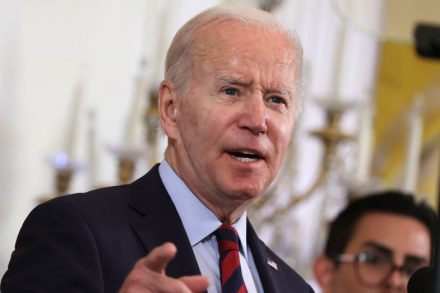
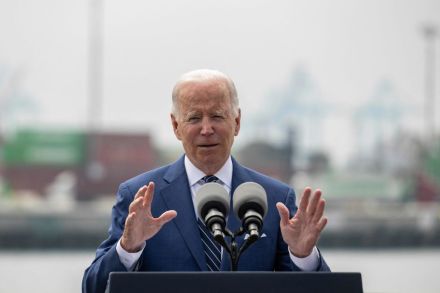
U.S. President Joe Biden (Getty Images)

How high might interest rates go?

To nobody’s surprise, the Bank of England has hiked its base rate, and, equally unsurprisingly, it has chosen to do so by a relatively modest 0.25 per cent, bringing rates to 1.25 per cent. In 25 years of its existence, the Monetary Policy Committee (MPC) has never raised rates by more than 0.25 per cent at a time. That stands in contrast to the Fed’s decision to raise rates by 0.75 per cent on Wednesday. If the modesty of the rise was supposed to calm markets, however, it doesn’t seem to have worked. The FTSE100, already down nearly 2 per cent on the day, plunged further on the announcement.

The post-Covid mental health crisis

From our US edition

Recent mass shootings have reminded us of just how much gun violence has surged since Covid. The record of 45,222 Americans dying from gun-related injuries in the first year of the pandemic could well be topped in 2022, with more than 12,000 fatally shot since the end of April. Many rightly condemn progressive district attorneys in cities for failing to condemn the increased bloodshed. Yet the uptick in violence has been uniform across the nation, plaguing rural counties as much as urban ones, which is why most psychological experts put the blame squarely on the emotional residue of lengthy Covid lockdowns.

moran

‘Villain’ Elon Musk votes Republican for first time ever

From our US edition

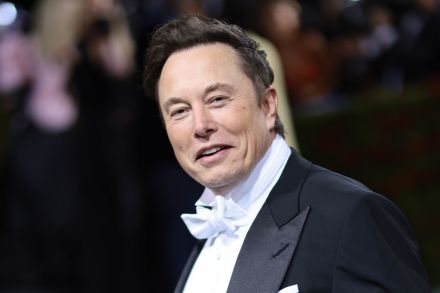
They say you never forget your first. Your first Republican, that is. For Elon Musk, that is Mayra Flores, the Trump-endorsed candidate who flipped the Congressional seat in Texas’ 34th District from blue to red with a vote from the world's richest man (as well as from thousands of other Texans). Cockburn discovered the news while perusing Twitter this morning (at 3:28 a.m.) to see how the political discourse was doing (not well, as expected). His mood, however, lightened when he stumbled upon this  tweet from Elon Musk: I voted for Mayra Flores – first time I ever voted Republican. Massive red wave in 2022. — Elon Musk (@elonmusk) June 15, 2022 Musk has been increasingly on Cockburn’s radar, especially since he vowed to make Twitter "fun.

The soaring cost of a Biden barbecue

From our US edition

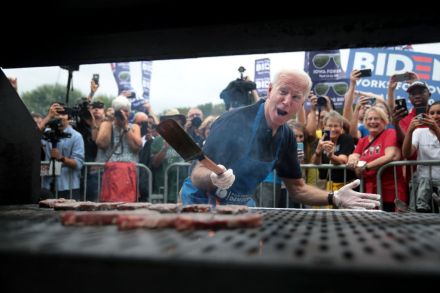
Last year, someone inside the Biden administration had a bright idea: let’s tweet about food prices on the Fourth of July! The staffer surely scanned an American Farm Bureau news release, and thought, wait until people hear they’ll save a whole 16 cents on their cookouts compared to last year! The staffer no doubt ran this brain wave by his higher-ups, who agreed. We'll even do a GIF that people can readily retweet! To quote the last administration, it’ll be YUUUUUUUGE! Of course, the graphic may have been tweaked slightly before it was sent out. Otherwise everyone might have noticed that prices were up on hamburger buns (6 percent), chocolate chip cookies (11 percent), and strawberries (22 percent!).

Levelling up is failing

First the good news: the Office for National Statistics figures released today show that pay is rising at its fastest rate in two decades, with regular pay up by 4.2 per cent in the three months for February to April compared with a year earlier. Now the bad news: such is inflation that, in real terms, regular pay was actually down 2.2 per cent – lower than at any time in the past two decades except for a brief period in the autumn of 2011. So, yes, it isn’t just an illusion: we really are getting poorer. That is a big problem not just for households trying to make ends meet but also for the government, which at some point over the next two years will have to try to persuade voters to trust it with the economy.

Cardi B says we’re in a recession, Janet Yellen responds

From our US edition

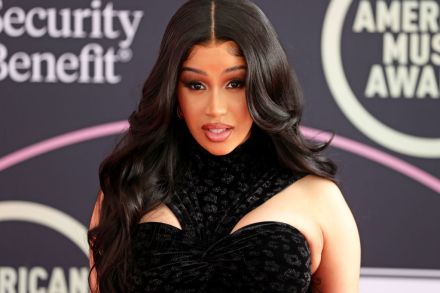
Cardi B, the well-known rapper and mixologist, has finally acknowledged the financial reality facing many Americans today. Last week, she tweeted, “When y’all think they going to announce that we going into a recession?” Cockburn notes that such astute words perfectly capture how the Biden administration has raised costs for everyone, from the working class to those who can afford to live in this economy, also known as millionaires. Thankfully, the administration responded to her concerns. Janet Yellen, the secretary of the treasury, replied, “Don’t look to me to announce it. I’m not going to announce it. I don’t think we’re going to have a recession. I expect growth to slow down. We have a very strong economy.

Gas prices are the new Covid

From our US edition

Soaring gasoline prices (they’re up 49 percent since President Biden took office) are due to “Putin’s price hikes,” claims Biden. But last I checked, Putin wasn’t stateside canceling the Keystone XL Pipeline, pursuing efforts to end federal oil and gas leasing programs, and careening our country toward more Covid-like lockdowns, social isolation, supply chain shortages, and another summer crime wave. A brief recap of Biden’s oil and gastastrophe: in January 2021, during his first days in office, the president revoked the Keystone Pipeline permit and issued an executive order that, in his own typically eloquent words, directed the “Secretary of the Interior to stop issuing new oil and gas leases on public lands and offsh- — and offshore waters, wherever possible.

Why Biden’s inflation plan will fail

It sounded impressive at the time. On the last day of May, a whole ten days ago, president Biden laid out a three-part plan for bringing inflation back under control. It consisted of making sure the Federal Reserve was allowed to do whatever it took to control prices, releasing oil and gas reserves to try to bring down the soaring costs of energy, and fixing supply chains to try to make industry and retailing more competitive. ‘I have made tackling inflation my top economic priority,’ he announced grandly. To listen to the rhetoric from the White House, you might think that this was an issue that could be fixed with a few tweaks to public policy, after which the President could happily go back to taxing and spending on an unprecedented scale. The problem would be solved.

Why woke culture wants you to be fat

From our US edition

Americans are fat and getting fatter. “More than two-thirds of adults in the United States are overweight or have obesity,” reports Heathline.com. The CDC (I actually trust them on this one) says that between 1999 and 2020, “obesity prevalence increased from 30.5 percent to 41.9 percent,” and severe obesity “increased from 4.7 percent to 9.2 percent.” And so, in the wake of woke, Old Navy and other clothing companies are (trying to) cash-in on our widening waistlines by disguising their latest capitalistic campaign as “inclusive sizing.” I gave up shopping for Lent. I made my return recently by perusing a Lands’ End catalog with my mother.