Inflation

Is the Biden gas pump sticker arrest 2022’s greatest artwork?

From our US edition

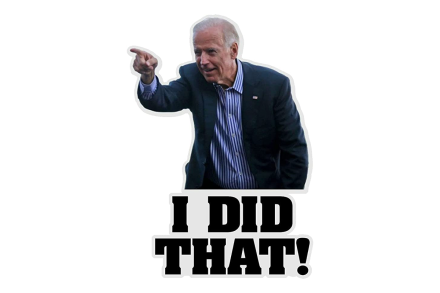
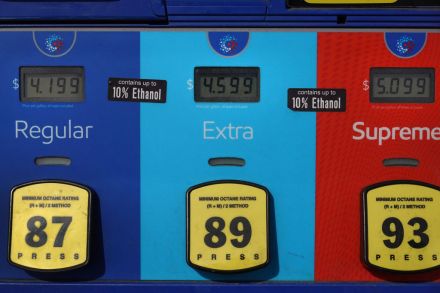
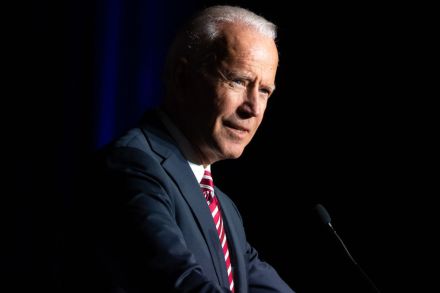
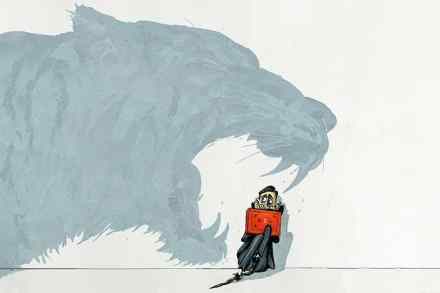
Who is the most intriguing political artist of the Biden era? Cockburn is happy to welcome a new contender to the fray: Thomas Richard Glazewski of Manor Township, Pennsylvania. Glazewski is part of a daring street collective who have been posting stickers of Joe Biden on gas pumps. They show the president pointing with the caption “I did that!” and are placed next to the price of gasoline — which has risen significantly in the past year or so. The vinyl stickers — available on Amazon — are manufactured in China. Just like the Biden presidency, right? But Glazewski took his piece to a whole new level: risking his freedom last month, he turned his sticker protest into performance art by getting himself arrested. A viral video shows the artist’s arrest.

i did that biden sticker

Is this the end of borrow and spend?

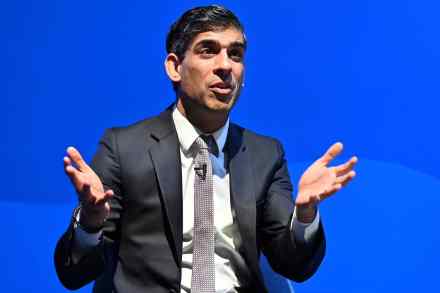
Since the spring statement last week, Rishi Sunak has been dealing with complaints from all sides: the right have been arguing he should have been bolder with tax cuts, the left insists more support is needed to help people with the rising costs.  With the Office for Budget Responsibility projecting the biggest fall in living standards since records began, rumours of U-turns and further announcements started bubbling over the weekend. The media, the opposition, and even some Tory MPs have been asking Treasury representatives over and over again: is that all? In a keynote address hosted by the Institute of Economic Affairs this morning, chief secretary to the Treasury Simon Clarke answered that question in no uncertain terms: yes, for now, that is all.

How to eat well for less

Inflation is (if you’ll excuse the pun) biting. So how can you keep down the cost of the weekly shop and get maximum bang for your buck in the kitchen without compromising? I have always shopped by the yellow sticker and the discount aisle. When I first started getting creative in the kitchen as an early teen, I wanted to try searing scallops and practice filleting Dover sole, French-trim a rack of lamb, and prepare artichoke hearts – and none of that comes cheap. So, I went to the supermarket an hour before closing and bought from the man in the hairnet who I knew and who I liked to think knew me: I took home whatever was most reduced from the fresh counter and then tried to work out how to cook it.

Will inflation bring back austerity?

The return of inflation has changed politics, I say in the Times today . Until recently, it was possible to argue that the government should borrow to slashes taxes, or to cover almost any additional spending. It was so cheap to do so that it was almost rude not to, the argument went. Inflation was also dismissed as a dog that hadn’t barked since the early 1990s. Johnson was relaxed, while last September Liz Truss thought that – if necessary – borrowing would be a better way to pay for the government’s social care policy than raising National Insurance. But debt payments are now expected to quadruple. They will absorb an extra £96 billion between now and 2027, which puts a limit on how much more the government should want to borrow.

Welcome to the new era of high inflation

There was a time when a chancellor would have bitten off the hand of a national statistician who offered him an inflation rate of 6.2 per cent. But that takes us back to the days of Denis Healey and the early months of Geoffrey Howe’s time in Number 11. There is little disguising this morning’s grim news, however. The last time the Consumer Prices Index (CPI) was at 6.2 per cent was in March 1992 – although at that time the index was little used as the government’s preferred measure of inflation was then the Retail Prices Index (RPI).

What to expect at the spring statement

The big story of Wednesday's spring statement by the Chancellor will be the impact of inflation – which has soared from almost zero just over a year ago to perhaps 10 per cent in coming months – on living standards and the public finances. I expect Rishi Sunak to provide limited protection from the ravages of inflation to those on low and middling incomes, probably by increasing universal credit and the threshold for paying national insurance.  But quite how far the Chancellor inflation-proofs the take home pay of low earners will be the most important question he will answer tomorrow.

Will Rishi Sunak stick to his ‘golden rule’?

Here’s the Rishi Sunak paradox: he proudly defines himself as a low-tax Tory but under his watch taxes are reaching a 71-year high. There are plenty of Tories who want to ditch next month’s National Insurance increase but Sunak is firmly opposed – mainly because he wants to link up in people’s minds that more money for the NHS and social care doesn’t manifest out of thin air. But pressure is on at tomorrow’s spring statement to make clear what kind of Chancellor he really is. Does he come from the long line of Tories who like tax cuts in theory but not in practice – or does he have another agenda? Sunak’s starting position is that to cut tax, you need to restrain spending. For the Chancellor, it’s a simple point about trade-offs.

What does the Fed’s interest rate hike mean?

From our US edition

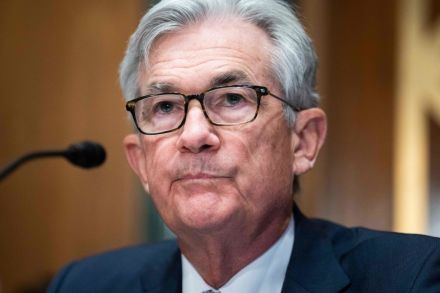
The Federal Reserve raised interest rates by 0.25 percent last week, the first increase since December 2018. Back then, Donald Trump had been very vocal in his criticisms of the Fed and its chair Jerome Powell, demanding no more rate increases. There was no resistance from the White House this time with press secretary Jen Psaki saying that the Biden administration respected the Fed’s independence. Powell called the rate increase necessary due to inflation coupled with rising prices. “As we emphasize in our policy statement, with appropriate firming in the stance of monetary policy, we expect inflation to return to 2 percent while the labor market remains strong,” said Powell, before warning that it will take longer than expected for inflation to sink.

interest inflation

The Bank of England is playing catch up with inflation

The Bank of England has voted to hike interest rates to 0.75 per cent, the third successive rise, which puts rates back to their pre-pandemic levels. Historically, we’re still at ultra low levels, but the rise is anything but insignificant. After the Federal Reserve made its first move to lift interest rates by 0.25 per cent (its first rise since 2018), it was all but guaranteed that the Bank would vote to lift interest rates again. The Fed had been holding out longer than most, with CPI in the United States hitting nearly 8 per cent, a 40-year high, before it took action. But the narrative that price hikes are ‘transitory’ finally broke down and no one – on either side of the pond – is credibly pretending this is a temporary phenomenon any longer.

Don’t buy Biden’s ‘Putin price hike’

From our US edition

The Putin price hike. That’s the line the Biden administration is using to absolve itself of blame for higher gas prices. “Russia is one of the three largest oil producers in the world,” White House spokeswoman Jen Psaki said in a social media video meant to deflect criticism from President Joe Biden. “And the fact that they started this conflict, invaded a foreign country, and they are such a big producer of oil in the world is the reason why the global oil markets are disturbed and why gas prices are going up.” The administration banned Russian oil imports this week, with the House of Representatives approving a similar ban on Thursday.

Rishi Sunak’s energy bill dilemma

This morning’s revelation that the UK economy grew 0.8 per cent in January, the fastest growth since April last year, is welcome news after a Christmas plagued by Omicron – but it’s news that’s out of date, too. As Capital Economics warns: ‘This is as good as it gets for the year'. Russia’s invasion of Ukraine, the commodity price jump and the cost-of-living crisis will soon show in the figures. Today’s ONS release warns that even in January, businesses were already reporting significant rises in the cost of energy and staff wages. The week after next, Rishi Sunak will present a mini-Budget. The Chancellor faces a conundrum: how to explain the inflation and energy bill hikes that are still to come?

Biden fails to fill his office

From our US edition

"The test of a first-rate intelligence,” F. Scott Fitzgerald wrote, “is the ability to hold two opposed ideas in the mind at the same time, and still retain the ability to function.” Fitzgerald wrote that in 1936 in an essay called “The Crack-Up.” At the time, the US economy was coming out of the Depression. A Democratic administration was expanding the reach and influence of the federal government, notably into areas of the economy where it did no good, and war was on the horizon. On the bright side, inflation in 1936 was 1.46 percent and GDP was growing at 12.9 percent per year, which is even higher than the capitalists of the CCP have recently claimed for China.

president

Our monetary bubble is about to burst

OK, I finally watched Netflix’s Don’t Look Up. Surprisingly, I enjoyed it — especially before its effective subtitle for us thickos, THIS IS A METAPHOR FOR CLIMATE CHANGE, YOU F-ING MORONS. Otherwise, the film might have playfully dramatised the more general phenom of fiddling with celebrity bodices while Rome burns. The comet at which I’m looking up could arrive far more immediately than perilous global warming. Money is in trouble. I’m not only referring to a cost-of-living crisis. Money itself is in trouble. Let’s contemplate, to coin a phrase, a basket of deplorables. US inflation just hit 7.5 per cent, the highest in 40 years. UK inflation, now 5.5 per cent and the highest in 30 years, is expected to reach 7 per cent by spring.

The ONS’s inflation measurement change isn’t ‘new’

The way we measure inflation is changing, and there could hardly be a less crucial time for it to do so. The ONS will be updating the method for collecting individual prices from supermarkets, and will also publish new figures on inflation rates for different types of household. The anti-poverty campaigner Jack Monroe has tweeted that the ONS ‘have just announced that they are going to be changing the way they collect and report on the cost of food prices and inflation to take into consideration a wider range of income levels and household circumstances’. But Monroe, who hope that the new metrics will show that inflation is hitting poorer families harder, will be disappointed.

This government’s greatest failure is economic

‘The main job of a government is to ensure that the economics don’t go wrong.’ So argued an economist friend of mine to me many years back. And I must admit that my first response was uncommonly cynical. ‘Well, you would say that, wouldn’t you?’ I replied. ‘You’re a political economist.’ It is to be expected. In the same way a military-defence type might say that the most vital job of government is to be able to defend these islands and project military force. Or Lulu Lytle might explain that the most important thing in government is to get the interiors right. But as the years have gone by, I have realised that my cynicism was wrong and my friend’s argument was true.

Britain’s cost of living crisis worsens

If Boris Johnson manages to cling on to his job, he’ll have much more than the parties of lockdowns past to worry about. Britain’s cost of living crisis is worsening still, with CPI inflation rising by 5.4 per cent in the 12 months leading up to December last year. This has, once again, outpaced consensus, surging even further past the Bank of England’s most recent official forecast. There’s little doubt left that heavy government spending is playing a significant role in the inflation we’re experiencing now Inflation is now at a 30-year high. And it’s still rising. Capital Economics now estimates a peak of 7 per cent around April, and there is once again increasing speculation that December’s interest rate rise to 0.

The inevitable return of inflation

From our US edition

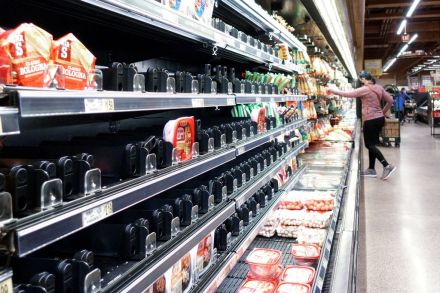
The Labor Department reported this week that the December inflation rate hit 7 percent on an annualized basis, the highest since 1982. That was when the country was just beginning to recover from the inflation of the 1970s, the highest peacetime inflation in the nation’s history. The inflation rate for the last three months of 2021 was 9.1 percent. The price of gasoline is up almost 50 percent over a year ago, used cars are up 37 percent and furniture is up 17 percent. Shortages cause by supply-chain disruptions are partly responsible for the upsurge (supermarket shelves have been notably empty in recent days). As grocery and food workers return to work after the latest surge of Covid, those prices should begin to drop.

inflation

Blame Congress, not companies, for staggering inflation

From our US edition

Observers had mixed reactions to yesterday’s announcement that inflation rose 7 percent last year. It all depended on where they fell on the ideological spectrum. President Joe Biden attempted to spin the report, saying that gas and fuel price growth was starting to slow, while acknowledging that more work needed to be done. He’d previously blamed rising inflation on used car prices and supply chain issues, swearing that increased government spending had nothing to do with it. The White House also compared America's Consumer Price Index report to indices in other countries, calling inflation a global phenomenon. Other Democrats blamed big business for the inflation jump.

Can the Bank of England get a grip on soaring inflation?

Yet again, inflation has surged past expectations – this time hitting 5.1 per cent in November, a ten-year high, up from 4.2 per cent in October. This threatens a political crisis as well as tough economic times: unless inflation is quelled, next year will be one of declining living standards for most people. Anyone whose pay is not rising by at least five per cent will, in effect, feel like they’ve experienced a pay cut. It was assumed that five per cent would be about as high as inflation would go but all this is proving hard to predict. This has gone past the Bank of England’s peak forecast, which wasn’t expected to be hit until next year.

Inflation stays for the holidays

From our US edition

No issue has been more politicized over the last six months than the sudden reemergence of inflation. For those keeping score at home — and many of us are whenever we buy our groceries — the latest report puts the current inflation rate at 6.8 percent, the highest since 1982. How one perceives the inflation threat depends as much on one’s political beliefs as it does on economics. Many conservatives are inclined to see this inflation as a more permanent fixture of the economy, believing it to be a consequence of the ongoing profligacy of the Biden administration. Democrats, in contrast, have tended to characterize the phenomenon as largely transitory and more a result of ongoing supply issues related to the pandemic.