Inflation

The death of saving

I was intrigued to learn from Tom Daley – that young man who became famous for jumping off a platform into some water – that homophobia is a ‘legacy of colonialism’. The Ugandan President, Yoweri Museveni, begs to differ. He believes that it is homosexuality which is a legacy of colonialism and had been brought to his benighted country by effete whitey – and so he may well think Tom is indulging in the disagreeable act of ‘whitesplaining’. However, it is possible, if not likely, that both Tom and Yoweri are correct – after all, it is difficult to be homophobic if you have around you a complete absence of homosexuals, as I have discovered since moving back to the north-east of England.

A strange kind of recession

It’s possible that I owe Joe Biden some sort of an apology, however mealy-mouthed it might be. Last week I mentioned here the weird prevarication from the US government and its supporters over whether or not the US is technically in a recession. It arose from the news that the US had two successive quarters of negative GDP growth. Biden’s critics – myself included – leapt to declare the US in recession. According to the Bank of England, the UK is heading for a recession too, so there should be no especial shame in accepting the fact and then trying to deal with it. But then last Friday the US jobs figures landed and it became clear that the situation in the country is curiouser than we might have predicted. Everybody was expecting a contraction in the economy.

Is Britain really ‘on the brink?’

From our US edition

There’s a macabre joke in Britain these days that my friends and family also play. We compete to see who has had to wait the longest for medical treatment. It starts relatively innocuously. People talk of the ordinary things: like having to wait days to get an appointment with a doctor. They call up in the morning at 8 a.m., only to be told that all of the slots are gone. Best of luck tomorrow. Then someone will say that they’re waiting for minor surgery. Perhaps a small corrective procedure. It was put off first for the pandemic, and now is lost amid a sea of backlogged work. They wonder if someone has lost their details in the slush. Normally I win, although not always. My old general practitioner retired before the pandemic, and his practice was transferred over to another doctor.

Will Dobbs create a blue wave to match the red one?

From our US edition

Amid a Senate primary season that's seen wins by a number of inexperienced candidates with serious question marks, the attitude of the Republican consultant class in Washington has been straight out of Douglas Adams's The Hitchhiker's Guide to the Galaxy: DON'T PANIC! Yes, the argument goes, these candidates are not ideal; yes, it's going to take some effort to hold the seats of key retiring Republicans with so many new faces; and yes, the gubernatorial candidates in some key contests aren't doing the GOP any favors. But overall the attitude remained positive, at least through the first six months of the year. Now, all of that has changed.

Will there be blackouts this winter?

The debate about energy has, understandably, concentrated on what is going to happen to households bills. The numbers are alarming. The energy price cap is now predicted to peak at £3,649 in April 2023, meaning that the average household bill will be above £3,000 for more than a year. As I say in the Times today, this is going to require a response from whoever is prime minister. As Covid showed, in times of crisis contracts across borders are not always honoured But less attention has been paid to the question of whether there’ll be sufficient energy this autumn and winter. National Grid is suggesting that the UK will avoid blackouts. But it is not hard to see how they could end up taking place.

Why British Gas’s owner is right to restore its dividend

‘What’s worse, they’re paying the profits to shareholders,’ said a grey-haired woman ahead of me in the Co-op queue. ‘Bloody shareholders,’ her friend of similar age and class spat back. I guessed they were talking about Centrica, parent of British Gas, which at a time when domestic energy bills are rising 23 times faster than wages (as Frances O’Grady of the TUC puts it) has announced half-year operating profits of £1.3 billion, up from £262 million last year – and the restoration of a penny-per-share interim dividend after a three-year gap. Both ladies looked likely to be beneficiaries of pensions nourished by dividends from the likes of Centrica, Shell and BP.

China delayed its 2008 financial crisis until 2022

From our US edition

The year 2008 was consequential by many measures. The collapse of the US investment bank Lehman Brothers sparked a worldwide financial crisis. Yet China appeared to emerge out of it relatively unscratched after Beijing introduced a massive stimulus package in the world, about three times the size of the United States government's rescue program. Thanks to this expansionary fiscal policy and the easy credit that came with it, the Chinese economy quickly returned to its robust growth by growing 8.7 percent in 2009 and 10.4 percent in 2010. After 2008, the Chinese Communist Party leaders concluded that China "escaped" the financial crisis because of its outstanding leadership and the superiority of the Chinese political system over deeply flawed western democracies.

paul krugman

The top five things Paul Krugman has gotten wrong

From our US edition

Every two years or so, the Spectator World issues a takedown of New York Times columnist and “expert” economist Paul Krugman, who has a notable history of being wrong about absolutely everything. Well, it seems it's that time of year again. The Australians are getting in on the Krugman-dunking game so why shouldn't we? Here’s Cockburn's authoritative ranking of Paul Krugman's Greatest Hits. Krugman denies the recession Fresh from his New York Times opinion piece titled “I Was Wrong About Inflation,” Paul Krugman decided it was time to be wrong about the recession. On Brian Stelter's CNN show Reliable Sources, Krugman said, “I think that what's happening now is that there's been a kind of a negativity bias in coverage.

Inflation is the great destroyer

From our US edition

In the summer of 1981, the American air traffic controllers’ union PATCO rejected a salary and benefits deal that had been put forth by the Reagan administration. What happened next lives on in the annals of Republican lore and in labor movement horror stories: PATCO opted for an illegal strike. More than 12,000 air traffic controllers walked off the job, and in one of the most successful union-busts in history, Reagan fired almost all of them. That’s the official account anyway. But there’s much more about the strike that’s less known, or at least misunderstood. For example, did you know that PATCO had actually endorsed Reagan for president in 1980, finding Jimmy Carter too intransigent?

Are we in a recession? Does it matter?

From our US edition

Since the latest growth numbers have come out, much ink has been spilled over the question of whether the economy is in a recession. Perhaps unsurprisingly, the Biden administration tried to get out ahead of Thursday’s release with a press statement noting that back-to-back quarters of negative growth doesn't necessarily mean a recession. Also predictably, Republicans strongly rebuked the idea, saying, “You can’t change reality by arguing over definitions.” Both sides of the debate will continue to play out, and both sides will continue to miss the point. Ultimately, it doesn’t matter very much whether growth goes up or down by 0.2 percent. What matters is the general trajectory of the economy. And on that front, the Biden track record is mixed at best.

democrats abortion

Is the US in recession or not?

There's an almighty debate ongoing in the US about what exactly a 'recession' is. Treasury secretary Janet Yellen said the US economy is not shrinking, saying it is in a state of 'transition', not recession. But in a clip from 2000 being circulated on Twitter that is comically apt, Bill Clinton said 'a recession is two quarters in a row of negative growth'. https://twitter.com/DailyCaller/status/1552720121445105666?ref_src=twsrc%5Etfw Regardless of who's right, the US is currently in Bill Clinton's definition of a recession. Figures show that the economy shrank by 0.2 per cent in the second quarter of this year, following a 1.6 per cent fall in the first quarter. Over the year, the US economy is now 0.9 per cent smaller than it was a year ago.

The next PM’s growing to-do list

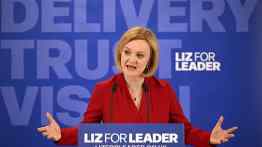
In theory, the Conservative leadership contest could have stretched to the autumn, but the 1922 Committee and CCHQ decided to crunch the timetable due to the sheer number of crises facing the country. So Tory MPs had only a fortnight to choose the final two candidates, which did perhaps change the course of the race. Given the support that Kemi Badenoch managed to raise in a short period, it is not hard to imagine her being in the last two if she had been given more time to make her case. A longer contest would also have allowed the Tories more time to think about what changes they need to make if they are to win a fifth term. But for all the problems posed by a short competition, the essential logic of that judgment holds.

Trussonomics doesn’t add up

I’ve been lucky enough in my working life so far to hold a string of jobs that have allowed me – if not actively encouraged me – to be critical of government. Coming up through Westminster thinktanks in my twenties, I had great fun putting out press releases that tore apart bad public policy. When I had the opportunity to speak to MPs, they’d remind me of the ‘political realities’ that tied their hands and prevented change. In other words, check your policy privilege. Thinktank wonks, commentators and journalists can make all the punchy points they want; they don’t face re-election.

Inflation destroys the small town soul of America

From our US edition

My friend Dave Sr. owns the diner up the road and runs it with his son, Dave Jr. The family business is coming up on its fortieth anniversary, and Dave Sr., who’s eighty now — though you’d never guess it — reflected to me recently on the mom ‘n pop shops that have disappeared over the last fifty years or so. He and another local old-timer counted dozens that used to dot the two-lane road between our town and the next town over. “Now, I don’t think you can count more than five or six [small businesses]!” Dave Sr. said. “And they all made a living out of these places. Between government intervention and red tape and so forth, people are afraid to get into small business.” Running a small business is the epitome of the American Dream.

How Biden made the energy crisis worse

From our US edition

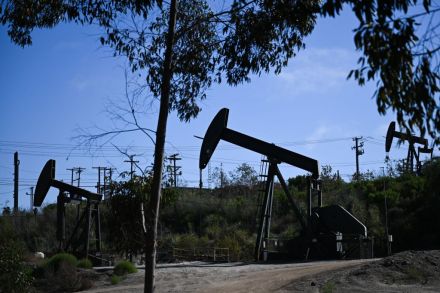
During the course of my daily media interviews, one of the most frequent questions I hear is, “when will things get better?” Being the bearer of bad news is frustrating, but unfortunately that’s all I see for the next few years. Following the basic laws of economics, energy prices can only come down based on two factors: increase the supply or decrease the demand. They may not like to admit it, but President Joe Biden and his team understand the need for a supply increase. It explains the president's trip to Saudi Arabia to ask their king to increase oil production. He has dispatched envoys to Venezuela and Iran for the same purpose. Unfathomably, his administration continues its relentless attacks on domestic oil production.

energy

The problem with euro-dollar parity

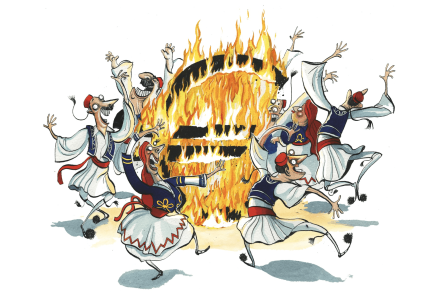
The euro is nearly level with the dollar. It should not matter in theory, because of the relatively low share of the US in EU trade. But it does in practice. Some predict that the euro will fall below parity. There is a straightforward explanation for this: the war in Ukraine and unpredictable Russian gas supplies to Europe make the dollar a safe haven for investors. On top of this, US interest rates offer a higher return on investment. But it is not only the dollar. Looking at the broader picture, the European Central Bank's measure of the euro's real effective exchange rate against 42 partner countries confirms this trend towards a new historic low: really bad news comes from the combination of the euro's falling value, the energy crisis, and the return of inflation.

Don’t expect much from Biden’s Middle East trip

From our US edition

It took Barack Obama less than three months to fly to the Middle East for a visit, landing in Iraq to visit the tens of thousands of US troops stationed there at the time. Donald Trump’s first overseas trip as president was to the Kingdom of Saudi Arabia (also three months into his tenure), where he basked in the limelight, watched in awe as his face was plastered on buildings in Riyadh, and hovered over a glowing orb with King Salman. Now, eighteen months into his presidency, Joe Biden will be spending a few days this week in the region, making stops in Israel, the West Bank, and Jeddah, Saudi Arabia, for a summit of the Gulf Cooperation Council.

The numbers are in: red states are winning

From our US edition

Americans are voting with their feet and the results are in: red states are winning. An incredible 46 million people moved to a new ZIP code over the year to February 2022, the highest annual total since Equifax, a credit agency, began tracking moves in 2010. Republican-leaning red states gained the most residents — led by Florida, Texas, and North Carolina — while the blue states of California, New York, and Illinois were the biggest migratory losers. The most popular pandemic-era moves were from New York to Florida and California to Texas — so much so that U-Haul ran out of moving trucks leaving California last year. Given the chance to flee high-cost cities, Millennials did so in droves.

desantis

Taking a page from Lenin’s playbook

From our US edition

I have often been struck by the number of pithy observations — revelatory, pointed or simply true — that were not said by the person to whom they are attributed. Vladimir Lenin apparently never said (in Russian or in English) that “the way to crush the bourgeoisie is to grind them between the millstones of taxation and inflation.” Mark Twain, to whom many amusing remarks have been falsely attributed, apparently did not contend that reports of his death had been greatly exaggerated. Edmund Burke neither said nor wrote that evil would triumph if good men did nothing.

inflation

Is our card-only culture fuelling inflation?

Is anything anywhere getting noticeably better – economically speaking – or at least less bad? Are commodities and manufactured goods beginning to move more freely, for example, to ease the demand pressures that are stoking inflation? It’s good news that the number of container ships anchored off Los Angeles-Long Beach waiting to unload has fallen from more than 100 in January to around 20 at the latest count, but I note also that dockers there are demanding a 10 per cent pay rise. Drewry’s World Container Index – the handiest indicator of global shipping costs – has fallen 32 per cent from its peak last autumn, but remains five times higher than in the autumn of 2019.