Inflation

The inevitable Boris Johnson

From our US edition

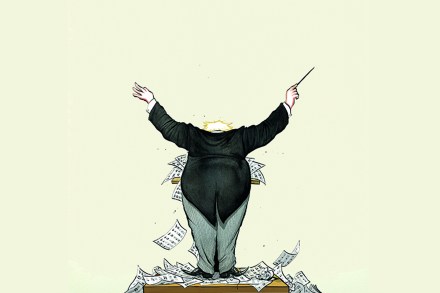
London, England When I checked the date that Boris Johnson resigned as prime minister, I thought it must have been wrong. July? The psychodrama that ensued felt as if it had been going on for years. If Boris’s tenure was the main show, Liz Truss’s stint as Britain's shortest-serving PM was the slapdash encore that no one asked for. You know, when the music restarts as you’re eyeing up a taxi home and secretly thinking the act needn’t have bothered. Boris’s downfall, the real one — not the multiple wobbles — began with Partygate. A steady drip of salacious stories for months, each one getting slightly more unforgivable, recounting incidences of Boris and members of his government breaching the strict lockdown rules he himself had set in place.

boris johnson right neoliberalism

Biden is in no position to attack Liz Truss

From our US edition

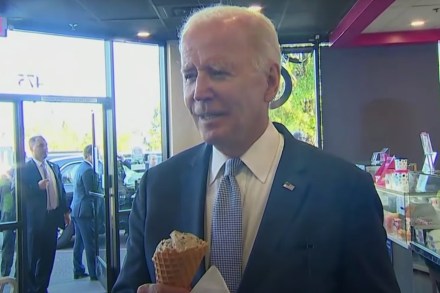
A transatlantic tiff is in the works. During a recent visit to an ice cream shop in Oregon, President Joe Biden lit into British prime minister Liz Truss and her recent (and recently withdrawn) tax proposals. Because this is how we do foreign policy in this country now: spouting off at random while the Chunky Monkey melts all over our hands. "I wasn’t the only one that thought it was a mistake," said Biden of Truss's tax cuts, brandishing a vanilla cone all the while. "I think that the idea of cutting taxes on the super-wealthy at a time when…I disagree with the policy, but it’s up to Britain to make that judgment, not me." And lest the Brits think they were being singled out, Biden also had tough words for the globe's other 193 countries.

Two cheers for grocery store shopping during inflation

From our US edition

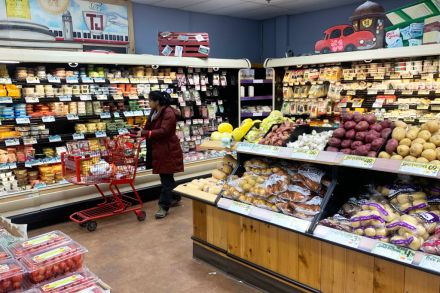
The other day I attempted to have sushi rolls for dinner. I ended my night disappointed, and excited to go shopping for overpriced groceries. Back in college, in central Jersey, I used to go to a Japanese restaurant in town, order the triple spicy roll combo, claim a student discount, and walk out with a perfect dinner for about $13. The filling was just pure fish, and enough spicy mayo to complement it. No crunchy flakes, no cucumber, no cost-cutting measures. Sure, it was a lot of rice despite feeling healthy, but I told myself the hours of studying would burn it off. So the other night, with my wife at the office and out for a work dinner, I was on my own for dinner and went searching for my old college favorite.

trader joe’s petitions

What crisis? A tough week for Trussonomics

What’s the sign of a successful Budget? Chris Philp, the new chief secretary to the Treasury, gave his answer moments after Chancellor Kwasi Kwarteng’s statement last Friday: a strong pound. ‘Great to see sterling strengthening on the back of the new UK growth plan,’ he tweeted out. A (temporary) rising pound made sense to Truss supporters, who argued that markets would support their transition to a lower-tax, higher-growth economy. This was, they thought, their vindicating moment. The moment didn’t last. Within minutes, the pound had entered a steep descent and UK borrowing costs surged. But Kwarteng is not a politician who panics.

You, too, can shoot feral hogs from a helicopter with Marjorie Taylor Greene

From our US edition

A little bleary-eyed from not yet partaking in his morning Bloody Mary, Cockburn thought at first that he was hearing one of those Newsmax commercials for Tanto Paronto’s HD Vision Night Ops glasses. He listened more closely, and thought it might be “Top Gov” Ron DeSantis dogfighting with the corporate media. But upon closer inspection, it was something altogether more extreme: Representative Marjorie Taylor Greene’s latest YouTube video, in which she braves a lightning storm to carry a gigantic gun toward a camera, then appears to be struck by the lightning, giving her white glowing eyes à la Storm from the Marvel comics. It gets way more normal after that, don’t worry.

Can the Bank of England inspire confidence?

It has dawned on the government that last week’s mini-Budget might have been a bit too one-sided: £70 billion worth of extra borrowing and not a single mention of spending cuts or efficiency gains has seen borrowing costs spike (up by 0.3 per cent just today). As James Forsyth reports on Coffee House, this afternoon’s announcement that a ‘medium term fiscal plan’ will be announced next month is an attempt by the Treasury to reassure markets – and convince them that fiscal responsibility has not totally disappeared from this government’s agenda. Emphasis is being placed on previous promises to make sure debt falls as a percentage of GDP in the coming years. But what about the other side of the coin?

Why the interest rate rise might frustrate Liz Truss

Rising interest rates is a key pillar of Trussonomics. Liz Truss herself has always stopped short of saying this explicitly, pointing fingers instead at the Bank of England for its failure to curb spiralling inflation. But the economists advising her have made clear, in no uncertain terms, that they think interest rates have been too low for too long.  Right from the start of her leadership campaign, Truss was far more vocal about her criticisms of the Bank; a point made even clearer once she entered No. 10 and her Chancellor Kwasi Kwarteng set up bi-weekly meetings with the Bank’s governor Andrew Bailey. With this new pressure being applied on the Bank, many thought it would make history today by implementing its first 0.

The painful road to lower inflation

In the end, it could have been worse. The Federal Reserve might have followed Sweden’s lead, with a whole one point rise in interest rates, or it could have even decided to short-circuit the whole process and go straight for a 1.5 per cent increase. Instead, it opted for the safer course, imposing a 0.75 per cent increase in rates much as the market expected. Even so, it made one thing absolutely clear. It is not going to let up in its battle to bring inflation back under control – and the rest of the world will have no option but to follow its lead. The markets were primed for another rise in rates from the Fed chairman Jay Powell today. That was precisely what he delivered. American interest rates will go up to 3.

Has inflation peaked?

This morning’s surprise update from the Office for National Statistics shows headline inflation at 9.9 per cent on the year to August, down slightly from 10.1 per cent in July. While consumer inflation remains at a 40-year high, the drop from double digits back into single digits has the optimists whispering: might inflation have peaked? This update is no doubt good news, but this is likely to be a brief moment of calm in an ongoing storm. The slight fall in headline inflation has primarily been driven by easing fuel prices, as the cost of oil has been on a downwards trajectory. That at least is an early sign that global markets are starting to fill in the gaps created by the West’s decision to shun Russia’s crude oil supplies.

Can anything halt the pound’s fall?

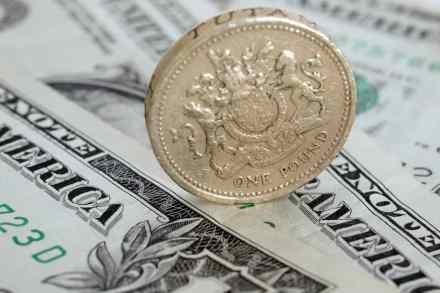
My predecessor Christopher Fildes looked at exchange rates through a cocktail glass: three negronis for the Italian lira equivalent of a tenner, good; a $2 martini for £1, even better. That latter ratio applied briefly 30 years ago when, he wrote, the favoured tipple ‘brushed against my lips like an angel’s kiss’. It recurred during the financial crisis of 2007-08, when no one was really able to enjoy it, and has never been seen since. On Monday, as Liz Truss was crowned, the pound dipped below $1.15, in sight of its 1985 all-time low of $1.05. ‘The prospect of …parity versus the dollar,’ said Bloomberg, ‘is becoming ever less outlandish.’ What cocktail of misfortunes brought us to this?

How the Saudis embarrassed Biden over oil prices

From our US edition

As Americans confront high inflation rates, tumbling prices at the gas pump are at least giving them a little relief. Brent Crude, the global benchmark for oil, has declined by 27 percent from its $127 peak six months ago. Gas prices in the United States, which were averaging just over $5 a gallon earlier in the summer, are now in the $3.72 range. That means Americans are saving $10 to $15 every time they fill up their tanks. Yet crude is a global commodity, and its price can fluctuate for any number of reasons — war, recession, and an economic slowdown in China to name but a few.

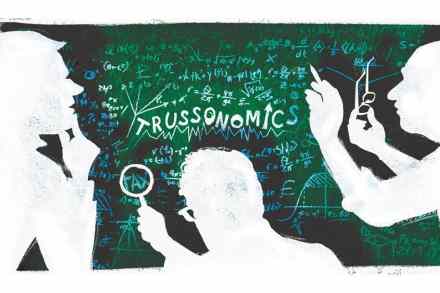
Trussonomics: a beginner’s guide

When polls started to show Liz Truss miles ahead of Rishi Sunak in the Tory leadership contest, her team adopted a cautious campaign strategy. Why gamble on another interview with Nick Robinson when last time she had struggled to name a single economist who backed her economic plans? Eventually she landed on Professor Patrick Minford, an academic at Cardiff Business School and a bullish Brexiteer. Minford went on the record calling for interest rates to rise to 7 per cent, which Truss then had to defend and deflect. But that moment in the Robinson interview, widely reported as a humiliation, turned out to be one of the most helpful points in her campaign. Within days, like-minded economists were grouping together to praise her tax-cutting agenda.

Eating well at a time of inflation

From our US edition

Inflation having topped 9 percent this summer, Americans are looking for ways to cut their spending. Rising prices at the grocery store are impossible to avoid, but we can learn to adjust. There’s no better inspiration than M.F.K. Fisher. Fisher, a food writer who hung around with Julia Child and James Beard during her lifetime, felt the pain of wartime rationing acutely. Her 1942 book How to Cook a Wolf addressed the problem of hunger — “the wolf on the doorstep” — with a few clever recipes and a great deal of philosophy. Survival of the crisis, she predicted, would require first and foremost an attitude of abundance. Fisher ascribes virtues like honesty, dignity and nobility to simply prepared foods.

Portrait of the week: Drought in Europe, property crisis in China and barristers and binmen strike

Home Inflation would reach 18.6 per cent by January and the energy price cap £5,816 in April, according to a forecast by Citi, the investment bank. An annual National Grid exercise simulating a gas supply emergency has been extended from two days to four in September. Workers at Felixstowe, Suffolk, Britain’s biggest container port, handling 48 per cent of traffic, went on strike for eight days. Strikes by Scottish dustmen spread from Edinburgh. Barristers belonging to the Criminal Bar Association voted to go on an indefinite strike in England and Wales after their demand for a 25 per cent increase in pay for legal aid work was denied. A man was charged with the murder of Rico Burton (a cousin of the boxer Tyson Fury), who was stabbed to death in Altrincham at 3 a.m.

Ukraine is the first streaming service war

From our US edition

Russia has invaded Ukraine, and the images are all over the news. CNN has gone to round-the-clock coverage of bombs falling near Kyiv, refugees pouring into Hungary, Putin’s war machine rolling down a misty highway. We’re outraged by this, roused to action, as we righteously hang a blue-and-yellow Ukrainian flag off the porch and learn to spell the names of places like Kherson and Mariupol. The West, listless and fractured, seems suddenly united again as opposition to Russian imperialism grows and... ...and it’s summer. The weather is warm and a gentle breeze is tinkling through the chimes. The kids are off from school, horsing around the kitchen, and the lawn isn’t going to mow itself.

war
fracking

The revenge of the analog economy

From our US edition

The last few decades have seen the emergence of two rival economies: an older analog one built on the actual production of goods, and another that profits from financial transactions, images and customer surveillance. The contest between the two has been rather one-sided, with the “laptop economy” the big winner, particularly during the pandemic. But while lockdowns made this one-sidedness clear, recent developments have been an unwelcome reminder that the pain suffered in the analog economy still matters. Whether through inflation, energy shortages or supply chain issues, we are getting an uncomfortable lesson in the enduring relevance of the material world. Sadly, the needs of the analog economy aren’t taken seriously enough in Washington.

Vintage motorcycles and human nature in Ohio

From our US edition

Each July, the American Motorcyclist Association — the policy advocacy organization for motorcycle riders — holds Vintage Motorcycle Days, a weekend-long celebration of old bikes. My father and I attend in whichever years the work and family commitments of summer allow for a momentary escape. Vintage Days is indeed an escape from all of these things, and in many ways, from the normalcy of polite society. This is because the AMA, an organization which normally stresses safe and courteous riding, allows Vintage Days attendees to cut loose. The event is held at Mid-Ohio Sports Car Course, a race track with a large campus that allows for a swap meet, seminars, campgrounds, bike shows and all disciplines of dirt and road racing. Those are only the organized activities, however.

vintage days ohio motorcycles

Inflation hits double digits. Is it out of control?

Long gone are the days when politicians and experts dared to claim inflation was simply ‘transitory’. Now it’s hang-on-to-your-hats as prices spiral faster than anyone predicted. This morning the Office for National Statistics reveals that headline CPI inflation hit 10.1 per cent on the year in July. This double-digit figure takes inflation to a 40-year high, outpacing consensus yet again, which was 9.8 per cent. That figure means all those horrors that have been discussed for months have become more immediate: the instability that comes with spiralling prices, the risk of stagflation, increasing fears of recession as consumers grow more cautious, not to mention the very real fear that people will struggle to afford basic necessities.

Unpicking the armed IRS agent hysteria

From our US edition

For a profession more hated than telemarketers and meter maids, last week the Internal Revenue Service put up a job ad that sounded so cool it even made Cockburn consider it. The IRS is in the market for a Special Agent, specifically one that can fire a gun and is “willing to use deadly force if necessary,” for its law enforcement division, Criminal Investigation (CI). The agency is set to double in size and is recruiting more staff following the passage of the Inflation Reduction Act, a Democratic spending bill which President Biden is set to sign today.

irs

The Biden team’s ‘0 percent inflation’ lie

From our US edition

To all of the bitter skeptics who doubted President Joe Biden, Treasury secretary Janet Yellen and the Federal Reserve, I have a message for you: come forth now with your most heartfelt apologies. For a few months the Ivy League know-it-alls had to back-pedal their claims that inflation was transitory. But that changed this week. After months of ridicule, it is Joe Biden and his team of Nobel Laureates (all seventeen of them) who are getting the last laugh. Inflation changed faster than anyone could have imagined. In fact, according to the White House, we went from 9.1 percent inflation in June to 0 percent inflation in July. Joe Biden — as pleased with himself as ever — couldn’t wait to break the news to the American people.