Harry potter

Harry Potter and the millennial mind

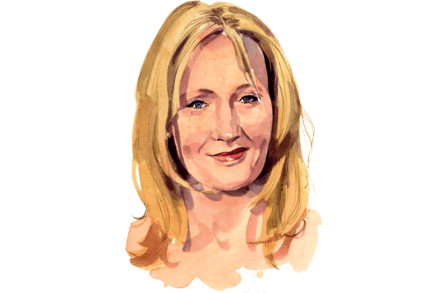
Which Hogwarts house would you be in? There are four options, and everybody fits into one. The brave and chivalrous are put in Gryffindor. Patient and loyal types head to Hufflepuff. Ravenclaw is for the witty and intelligent. The cunning and ambitious — and potentially evil — are destined for Slytherin. In the Harry Potter books, a pugnacious talking hat, known as the ‘Sorting Hat’, carries out the selection. If you are like me and under 35, you probably didn’t need that explaining. Almost every young person who can read has read Harry Potter — 450 million copies have been sold worldwide. Not to do so was an act of rebellion. On Monday, fans will celebrate the 20th anniversary of the first book’s publication — two decades on and J.K.

Sink or swim | 15 June 2017

I used to worry that I would never be a good writer because my childhood wasn’t interesting enough. I now think there must be some other explanation. Because the truth is that, when I was still pretty young, my parents banished me to an isolated community where for years on end I was compelled to dress in heritage costume, endure the uncanny absence of women and participate in ritualistic group activities, often of a physical or religious nature. That’s right. I am an Old Harrovian. On the face of it, this seems like an odd choice for my parents to have made for me — although it isn’t as bat-cave crazy as Alex Renton tries to suggest in Stiff Upper Lip, his rich, righteous diatribe against the public school system.

Ersatz erudition

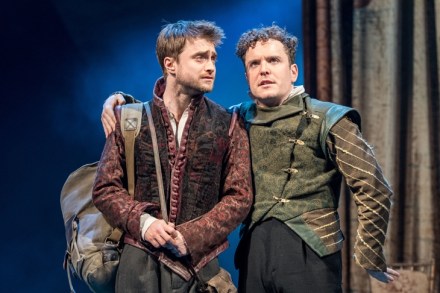
Harry Potter, who uses the stage name Daniel Radcliffe, is a producer’s delight. By now it’s becoming clear that the four-eyed wizard lacks distinction as an actor. He’s not a comedian, certainly not a leading man or a heart-throb, and he hasn’t the ugliness or eccentricity to be a villain. But this Polyfilla quality means he can be dropped into anything without harming the fabric. His presence in Rosencrantz and Guildenstern Are Dead — a difficult and at times flimsy exhibition of varsity wit — is an insurance policy that will guarantee brisk business at the box office.

From page to stage

Reading Elena Ferrante’s Neapolitan quartet is a heady experience. You not only see, hear, know her characters — you can almost taste them. The villain of the first of the four books, which follow the friendship of mercurial Lila and striving Lenù from childhood into their sixties, is Don Achille, an ‘ogre’ who sweats the smells of ‘salami, provolone, mortadella, lardo and prosciutto’. Lila herself, always wriggling free of the nets of others, is ‘skinny, like a salted anchovy’. Nino, loved by both Lila and Lenù, is ‘an anomalous, sweet fruit’.

Munchkins and mischiefs

Arthur Rackham shouldn’t have lived in anything as conventional as a house. It should have been a gingerbread cottage, like the one he drew for Grimms’ Fairy Tales, with cakes for a roof and boiled sugar for windows. Or a Rapunzel turret, for letting down ropes of long, blonde hair, except he was so very goblin-bald. Or a Sleeping Beauty palace with a spinning-wheel in the topmost tower. As it was, he lived in Chalcot Gardens, north of Primrose Hill and south of Hampstead Heath, with his wife Edyth Starkie, a portrait painter, and their daughter Barbara, at the end of an 1880s row set back from the road.

The lonely passion of Beatrix Potter

The story of the extraordinary boom in children’s literature over the last 100 years could be bookended with a ‘Tale of Two Potters’ — Beatrix and Harry. The adventures of the latter have sold millions, but the foundations of his success were laid by the former, whose series of ‘little tales’ Matthew Denison estimates in his equally condensed new biography, ‘are purchased somewhere in the world every 15 seconds’. That is not bad for an author whose first book, The Tale of Peter Rabbit, came out in 1902 — 40 million copies sold so far, and counting — with neither the benefit of the internet or a movie franchise to spread the word. Much has been presumed about the effect of J.K.

Can this sweet little girl get out of Aleppo alive?

Every morning, after the children go to school, I turn on my computer to check that Bana Alabed is alive and unharmed. I do the same at night. I have never met Bana. She is a sweet-faced, skinny seven-year-old girl who tweets from rebel-held east Aleppo with the help of her mother, Fatemah, an English teacher. Last weekend, as the Syrian government, Russian and Hezbollah forces took over north-eastern Aleppo amid heavy bombardments, Bana tweeted: ‘Tonight we have no house. It’s bombed and I got in rubble. I saw deaths and nearly died.’ As she and her family contemplated their rapidly narrowing options, Bana wrote to her escalating number of followers: ‘I want to live, I don’t want to die.

Losing the plot | 4 August 2016

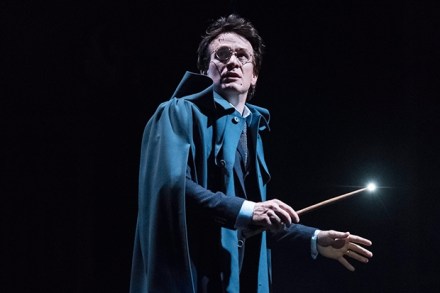
Consider it commercially. So powerful is the pull of the Potter franchise that the characters could simply re-enact the plot of ‘Incy-Wincy Spider’ and the fans would swoon with joy. The stage show has been written by a two-man committee, Jack Thorne and John Tiffany, with the help of billionaire equality campaigner J.K. Rowling. Harry is now 37 and working as a Whitehall clodhopper at the Ministry of Magic. He’s troubled by his stompy bed-wetter of a son, Albus, whose tantrums cause the middle-aged miracle-worker to suffer agonies of weepy self-doubt. Together they visit Hogwarts and the multifarious plotlines start to punch each other in the face.

Recent children’s books | 19 May 2016

Martin Stewart’s Riverkeep (Penguin, £7.99) has a list of books and writers on the cover: Moby-Dick, The Wizard of Oz, Ursula Le Guin, Charles Dickens and, less ambitiously, Neil Gaiman, Philip Pullman and Skellig. And, right in the middle, Riverkeep. Pff, you think: they wish! But you know what? Having read the book, there are elements of all these authors in it: Moby-Dick for the quest for a great sea monster; The Wizard of Oz for a homunculus who retains his self, even when he loses his stuffing; Ursula Le Guin for the creation of a coherent other world where magic is part and parcel of things; and perhaps Dickens for a dank, watery atmosphere.

How cool is Britannia?

Is it true that, having lost an empire, we reinvented ourselves as an island of entertainers? Do we channel the same rigour and vigour into film and music and literature as once went into conquering continents? Is there a residual colonialist bias in our arts, seen, for instance, in our cinematic penchant for creating patriotic period dramas such as Henry V or The King’s Speech? How much of our cultural success depends on the US market and the accident of a shared language? To what extent does our cultural expression reflect not our idea of ourselves but an American distortion?

A myth is as good as a mile

We live in disenchanted times. We barely do God, most of us don’t do magic and frenzied consumerism occupies our minds more than any local spirit of place. At first glance it looks as though the supernatural folktales of old — those witches and giants who lend their names to pools or hilltop crags in Britain’s remoter spots — are all but lost. From this premise, the medievalist Carolyne Larrington examines the stories that characterise some of Britain’s place names, and considers how the mythological patterns of fairy brides and rampaging dragons might have shaped the way our ancestors saw both the places they inhabited and the world at large.

Putting away the fear of childishness

Go to any bookshop — always supposing you’re fortunate enough to have any left in your neck of the woods — and chances are that lots of window space will be given over to two genres — children’s books and cookbooks. Step inside, and the children’s books are under your nose. Last year, children’s books were the fastest growing section of the books market. Yet the amount of space given over to children’s fiction and literature in the forums — newspapers and arts programmes — where we talk about books is remarkably small.

Barry Humphries’s diary: The bookshop ruined by Harry Potter

Do fish have loins? Last Tuesday, in a pretentious restaurant, I ordered a ‘loin of sea trout’. It looked just like an ordinary piece of fish — a bit small, as is usual in pretentious restaurants — on a plate sprinkled and drizzled as though the chef had perhaps coughed over it rather violently or vigorously scratched his head before giving it to the waiter. In Australia, I was once offered a shoulder of some other fish, so I suppose one might even be able to enjoy a rump of whitebait or even a saddle of flounder. But generally speaking I don’t mind loin when applied to the loinless, and somehow a loin of fruitcake sounds appetising, or even a loin of sourdough bread.

Daniel Radcliffe: why are the leaders of our political parties so uninspiring?

Daniel Radcliffe is wearing the standard rehearsal outfit of T-shirt, black jeans and trainers. ‘Ah, this is for The Spectator. I probably shouldn’t have worn my fake Che Guevara T-shirt.’ It’s the classic Guevara image with a cartoon smiley face substituted. ‘I bought it because I’m so sick of people using him as a fashion icon.’ Radcliffe is 5ft 5in and his head looks slightly big on his body. But it’s the big pale blue eyes that you notice. Under dark, chaotic eyebrows, they give him an air of innocent frankness before he’s said anything. Being cast as Harry Potter aged 11 and spending his teenage years as the lead in the highest-grossing film franchise of all time could have turned his head, but Radcliffe is modest.

Deathly dull

By the time a film franchise arrives at its seventh and penultimate instalment, you probably know if it is something you enjoy or not, or at least I would hope so. Generally, Harry Potter is not something I’ve enjoyed over the years so, by the same logic, I shouldn’t have bothered with this but, having skipped the last one, I was curious. Have the characters grown up, and has the franchise grown up with it? To save you having to skim to the end for an answer, I will give it to you now: no. This film is the same as all the other films, which is fine if you like this sort of film, and not if you don’t and now here we are, back at the beginning. But by this stage in the game, there may not be anything else to say. This review is probably pointless, but that’s OK.