Government

Everyone is a libertarian at the end of a pandemic

From our US edition

There are lots of libertarians at the end of a pandemic — and for good reason. For more than a year now Americans have watched the actions of dysfunctional government officials play out like the worst reality show of all time. If the ineptitude wasn’t so infuriating, it might make for entertaining TV. There was the episode when the smug governor who asked his constituents to stay home got caught dining at French Laundry. Or what about the one when the White House coronavirus response coordinator broke her own travel restrictions to winterize her vacation home — and got ratted out by members of her own family? The past 12 months have showcased non-stop hypocrisy from our federal and local officials.
libertarian

The art of the public information ad

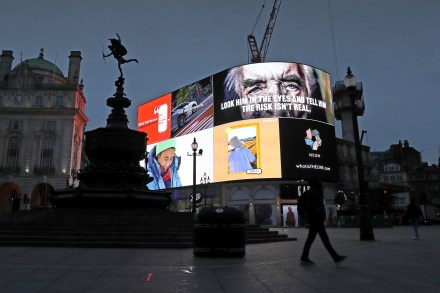
Bring back the Tufty Club. Bring back the Green Cross Code. Bring back ‘Charley says’. Bring back ‘Only a fool breaks the two-second rule’. Bring back Vinnie Jones and ‘Stayin’ Alive’. Bring back the Country Code and ‘Always take your litter home’. Bring back public information films. Bring back the Central Office of Information. For younger readers, I probably need to explain what the hell I am talking about. Tufty was created for the Royal Society for the Prevention of Accidents, and was an implausibly sensible young squirrel whose behaviour (in contrast to the foolish antics of the louche Willy Weasel) gave lessons to children on road sense. At its height, the Tufty Club had two million members.

The Covid trap: will society ever open up again?

The great pandemic of 2020 has led to an extraordinary expansion of government power. Countries rushed to close their borders and half of the world’s population were forced into some sort of curfew. Millions of companies, from micropubs to mega corporations, were prohibited from carrying on business. In supposedly free and liberal societies, peaceful strollers and joggers were tracked by drones and stopped by policemen asking for their papers. It’s all in the name of defeating coronavirus; all temporary, we’re told. But it’s time to ask, just how temporary? As Milton Friedman used to warn: ‘Nothing is so permanent as a temporary government programme.’ Measures that seemed unthinkable a few months ago have been implemented in haste and without debate.

Government jobs don’t have to be in the capital

Boris Johnson has put a huge amount of stock in persuading reluctant civil servants to return to their desks in Whitehall. His campaign this week to get more people back to the office was tinged with the suggestion that those who were slow to return might be in danger of losing their jobs. This divided the cabinet, with Matt Hancock pointedly suggesting that he was happy with many in his department continuing to work from home. Never one to miss the opportunity for a battle with Westminster, Nicola Sturgeon suggested that the government’s campaign to get people back to the office amounted to ‘intimidation’. But why not see the slow return to the office as an opportunity? The government should be using the aftermath of the crisis to rebuild the state.

Can Boris build support for his planning reforms?

The government always knew it would have to expend political capital to get its planning reforms through. Making it easier to build houses was never going to be popular with Tories in leafy areas. The benefit of an 80-seat majority was meant to be the ability to push through difficult but important changes. The problem is, as I say in the magazine this week, that the government has been expending political capital on rather a lot of other things recently. Tory MPs are in a fractious mood, irritated by the number of U-turns, and opposition to planning reform is beginning to build up. One normally mild-mannered former cabinet minister tells me: ‘If you think A-levels were bad, wait until people get their heads round these reforms.

Burke’s work

From our US edition

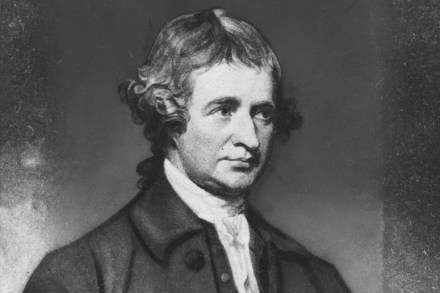
Edmund Burke wrote the authoritative Western defense of cultural traditionalism in modernity, Reflections on the Revolution in France. How could he also compose a tract called Thoughts and Details on Scarcity, in which the same writer provided steadfast support for Enlightenment, market-based principles that were perceived by contemporaries as a threat to settled social conventions?Burke’s opposition to state intervention in the domestic agricultural economy bursts through in his very first statement in Thoughts and Details. ‘Of all things, an indiscreet tampering with the trade of provisions is the most dangerous,’ he writes, ‘and it is always worst in the time when men are most disposed to it: that is, in the time of scarcity.

burke

Boris Johnson needs to be more open about Covid’s risks

The Prime Minister wants us back to normal by Christmas. If he is serious, then his government needs to take a big step forward in how it communicates evidence on Covid-19 with the public. Every day we get new insights about the coronavirus from research and statistics. Yet, for some reason, the government is holding its cards close to its chest about how it is assessing new scientific developments, and how this may affect policy decisions. Government communications currently seem to avoid telling people where their risks from Covid are actually low. There is a general reluctance to speak openly about how risk is assessed and the trade-offs there are with other competing health risks and economic impacts.

Mission impossible: Boris’s attempt to rewire the British government

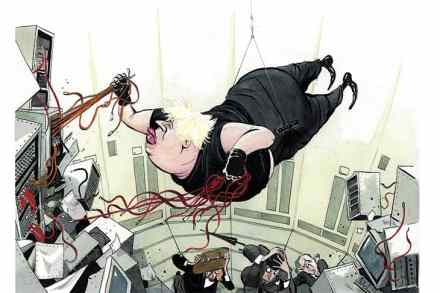
It’s never a good sign when a government relaunches itself. Look what happened at the end of Theresa May’s time in power — there was a relaunch almost every other week, each one with diminishing effect. But although it has been over-hyped, Boris Johnson’s attempt to start again isn’t a mere re-branding exercise. It is not just about rehashing policy proposals but about trying to tackle the dysfunction at the heart of the state. The PM is attempting to do something past leaders have thought to be an impossible job: to rewire the whole system. Johnson has time on his side — four years to get things back on track — and a Commons majority.

Tiberius and the ‘phantoms of liberty’

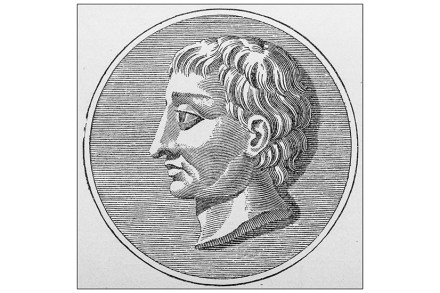
Word has it that ministers already do not bother to argue their corner with the government’s inner ring, while a slimmer, streamlined cabinet office threatens to disempower them still further. Ministers could soon resemble senators under Rome’s second emperor Tiberius (ad 14-37). The historian Tacitus painted an extraordinary picture of Tiberius’s early days in office. The fact was that his stepfather Augustus had exercised autocratic power after he ‘restored’ the republic that had collapsed in 31 bc. The question for senators, therefore, was what change to expect under the new man in power. Their experience suggested precious little. They already knew Tiberius as a cryptic, devious and heartless character, whose word could never be trusted.

The privilege of public service

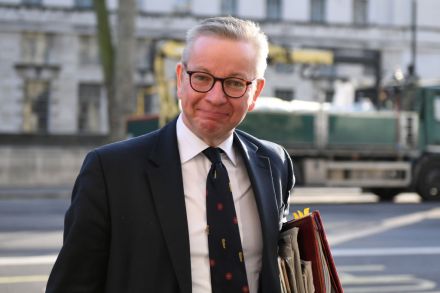
Michael Gove gave the Ditchley Annual Lecture on Saturday in which he discussed the responsibility of government and the need for Whitehall reform. The full speech is below. Writing in his Prison Notebooks, ninety years ago, the Italian Marxist thinker Antonio Gramsci defined our times. “The crisis consists precisely of the fact that the inherited is dying – and the new cannot be born; in this interregnum a great variety of morbid symptoms appear”. Gramsci’s analysis was developed between 1929 and 1935. The stability of the Edwardian Age – of secure crowns, borderless travel, imperial administrative elites and growing economic globalisation – was a memory. The inherited world of aristocratic liberalism had gone.

When will the two-metre rule go?

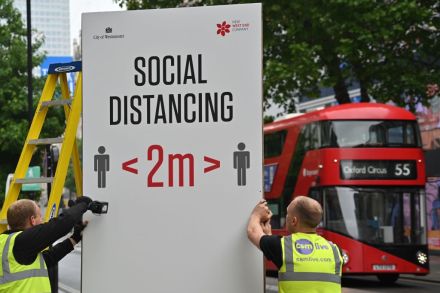
The Tory parliamentary party is in a febrile mood. As I say in the Times on Saturday, the two-metre rule has become a particular focus of MPs ire. It is now symbolic for them of a cautious approach to lockdown easing, which they fear could lead to the UK having one of the slowest economic recoveries, as well as one of the worst death tolls, in Europe. Optimists in government are confident that the two-metre rule will be gone by the time that pubs and restaurants reopen on the 4 July. Interestingly, the guidance to those establishments that will be given the go-ahead to resume then doesn’t emphasise the two-metre rule.

Trade minister quits after loan threats

Trade minister Conor Burns has resigned from the government, after a parliamentary inquiry found that he had used his position as an MP to intimidate a member of the public in February 2019. In a statement announcing his resignation, the MP said it was ‘with deep regret I have decided to resign as Minister of State for International Trade.’ Adding that ‘Boris Johnson will continue to have my wholehearted support from the backbenches.’ According to the Committee on Standards, Burns used parliamentary stationery to contact a member of the public about a dispute over a loan with Burns’s father. In his letter, Burns implied that he could use parliamentary privilege and his status as an MP to raise the profile of the dispute.

The government’s political capital is waning

Upon how many fronts can a government fight at any one time? Political capital has a short-enough half-life as it is without the risk of it being diluted through simultaneous multiple battles. Concentration of political firepower matters. At a rough count, Boris Johnson’s ministry is currently fighting the civil service, the media, the European Union and now, of course, a looming public health emergency from a likely coronavirus epidemic. There is also the small matter of a budget and the government’s actual – or, if you prefer, notional – plans for ‘levelling-up’ the United Kingdom. Some of these are more significant problems than others, and some of them required no super-forecasting skills to foresee.

Judgment day: the danger of courts taking over politics

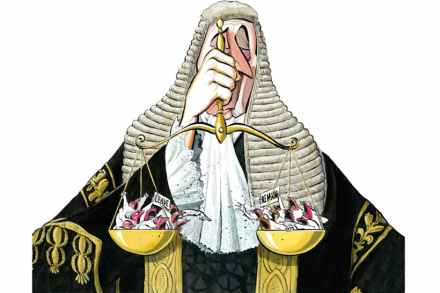
Who runs Britain? When Boris Johnson’s lawyers made their case in front of the Supreme Court this week, defending his right to prorogue parliament, they in effect brought it back to this simple question. This was a controversy for politicians to settle, not courts. Judges, they said, should think twice about ‘entering the political arena’ and unsettling the UK’s ‘careful constitutional and political balance’. He may be the first prime minister to frame the matter so starkly, but no previous prime minister has had to. This is about far more than Brexit. Britain is witnessing political litigation on a hitherto unseen scale. We have a government that has lost a working majority and is being forced by legislation to act against its own central policy.

Jeremy Corbyn’s no-deal plan is unusually smart politics

On the surface, Jeremy Corbyn's pitch to become caretaker prime minister of a government of national unity after overthrowing Boris Johnson looks like a messy failure. The Liberal Democrats have said they won't back him, two of the Tories who he wrote to have backed away too, and the Independent Group for Change (which he didn't write to) have said this evening that they will 'not support nor facilitate any government led by Jeremy Corbyn'. Instead, everyone is talking about the possibility of a government led by Ken Clarke. The former Tory chancellor today said he wouldn't object to taking over if it was 'the only way' to stop a no-deal Brexit.

The great ministerial merry-go-round

‘Annual reshuffles are crazy,’ remarked one of the prime minister’s most trusted advisers in July 1999 as I hovered outside the cabinet room, waiting to be anointed as the lowest form of ministerial life in John Prescott’s vast department — environment, transport and the regions. He went on: There is massive in-built insecurity. Ministers, who may not be there in a year, are on top of a civil service which is permanent and who have nothing more to worry about than who gets what gong. The chances of moving anything more than 0.1 per cent are slim. Crazy as reshuffles may be, most prime ministers are addicted to them. On New Labour’s watch, John Reid held nine different ministerial posts in ten years.

Monkey business | 15 November 2018

The opening episode of BBC1’s Dynasties — the new Attenborough-fronted series from the Natural History Unit — introduced us to ‘a territory ruled by a strong and determined leader: an alpha male known as David’. Despite what you might think, though, this wasn’t a reference to the Natural History Unit itself, but to a troop of chimps in Senegal, whose power struggles unfolded on Sunday in an almost Shakespearean way. As ever, Sir David started by demonstrating that he can still handle a spot of location shooting, in this case bellowing a few lines from a jeep speeding across the African savannah. But after that, he was again content simply to supply an authoritative voice-over and the occasional joke.

The better the wine, the less bad it is for you

I don’t hold out much hope for Drink Free Days, a new campaign launched by Public Health England and the alcohol industry to persuade people to abstain for two consecutive days a week. That was also the recommendation of the House of Commons Science and Technology Committee in 2012, as well as the advice of England’s Chief Medical Officer in 2016, but it doesn’t seem to have had much impact. According to a recent YouGov poll, more than 20 per cent of UK adults ignore the government’s drinking guidelines and are consuming more than 14 units a week. That may be an underestimate. A recent study published in the Lancet, which looked at alcohol use and its health effects in 195 countries, found that British men and women consume, on average, three drinks a day.

Why austerity is ending

The last day of the parliamentary term is usually an occasion for the government to get a whole bunch of bad news out of the way all at once. But this summer’s end-of-term announcements were used as a chance to put out some seemingly good news. Teachers, prison officers and members of the military will all receive pay increases of above 1 per cent for the first time in five years. The lifting of the public sector pay cap is another reminder of how politics and the Tories have moved on from the age of austerity that George Osborne announced in his 2009 conference speech. Much has been written about the 2017 election and how the loss of the Tory majority changed Brexit. But it had almost as big an impact on government spending rules.

The great Tory health splurge

A fortnight before Philip Hammond delivered his last Budget, the chief executive of the NHS gave a speech making the case for more funding. Simon Stevens had brought with him picture of a Vote Leave poster, promising £350 million a week for the health service, which he showed to his audience. What a good idea, he said. He wasn’t coming out as a Brexiteer, but he did think the Leavers had a point about giving an extra £350 million a week to the National Health Service. In fact, he went so far as to say that the ‘public want to see’ this promise honoured. And if politicians don’t cough up?